Artwork
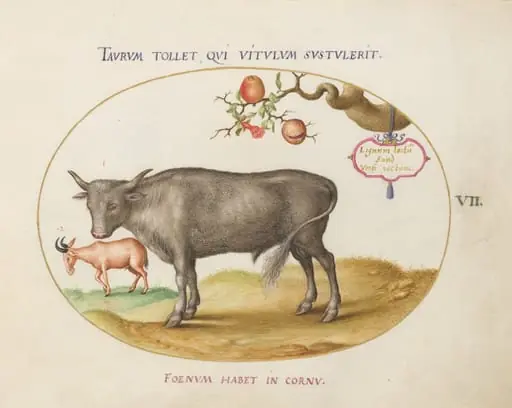
Plate 8: A Cow
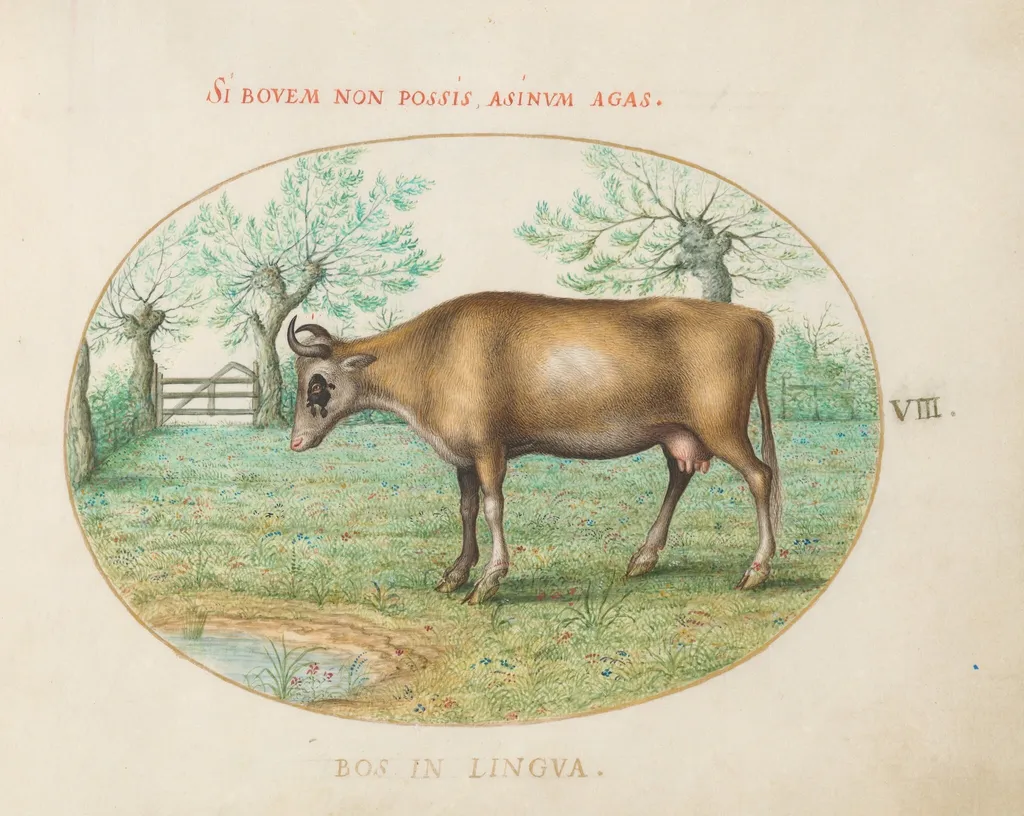
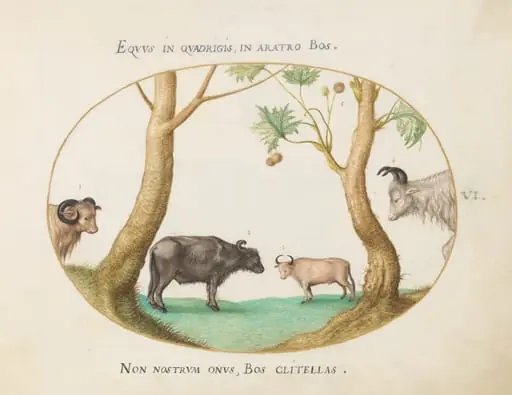
Plate 8: A Cow is a gouache drawing by the Renaissance artist Joris Hoefnagel. It dates from 1594 and is held in the collection of the National Gallery of Art.
- Inscription
- Inscribed:upper center in red ink: SI BOVEM NON POSSIS, ASINVM AGAS.; center right in brown/black ink: VIII.; animal in image numbered .1.; lower center in (gold?): BOS IN LINGVA. Facing page: upper center in brown ink: Fertilior seges est alieno semper in agro / vicinumq[ue] pecus, grandius uber habet.; lower center in brown ink: Non equa munus equum, non taurum Vacca poposcit: / Non aries placitam, munere captat onem.
About this work
Overview
Created circa 1594, Plate 8: A Cow is a small-scale work by the Flemish artist Joris Hoefnagel. Executed in watercolor and gold pigment on a sheet of parchment, the image forms part of a larger illustrated manuscript. The composition presents a single bovine figure rendered with meticulous observation, surrounded by modest botanical elements.
Subject & Meaning
The central figure is a domestic cow portrayed with a high degree of anatomical accuracy, a rarity in late‑sixteenth‑century visual culture. By emphasizing realistic texture and posture, Hoefnagel appears to celebrate the natural world’s intricacy, aligning the animal’s presence with the surrounding flora to suggest a harmonious, studied study of nature.
Technique & Style
Hoefnagel employed fine watercolor washes to model the animal’s hide, layering delicate brushstrokes that capture the sheen of fur.
Hoefnagel employed fine watercolor washes to model the animal’s hide, layering delicate brushstrokes that capture the sheen of fur. Gold paint highlights selective details, adding a luminous accent to the cow’s eyes and ornamental borders. The overall approach reflects the precision of manuscript illumination while anticipating the more naturalistic still‑life tradition that would develop in northern Europe.
History & Provenance
The drawing belongs to the final phase of Hoefnagel’s career, when he was among the dwindling number of artists still working within the illuminated manuscript tradition. It was likely produced as a plate for a scientific or decorative codex, illustrating the artist’s dual interest in natural history and ornamental design. The work has remained in collections that focus on early modern prints and drawings.
Context
Hoefnagel’s oeuvre bridges the decorative elegance of Renaissance illumination and the emerging interest in empirical observation. His detailed renderings of plants and animals contributed to the early development of floral still‑life painting in the Low Countries, influencing later artists who pursued a more realistic depiction of botanical subjects.
Own this work as a print
Artist & collection

Artist
Joris Hoefnagel or Georg Hoefnagel (1542 – 24 July 1601) was a Flemish painter, printmaker, miniaturist, draftsman and merchant.

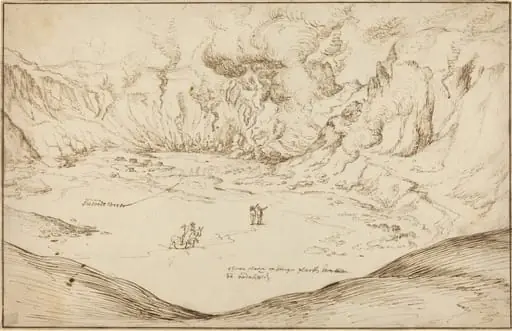 Forum Vulcani: The Hot Springs at Pozzuoli
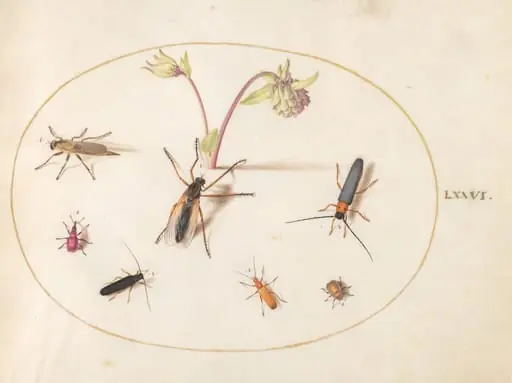 Plate 76: Insects with a Pink and Cream Columbine
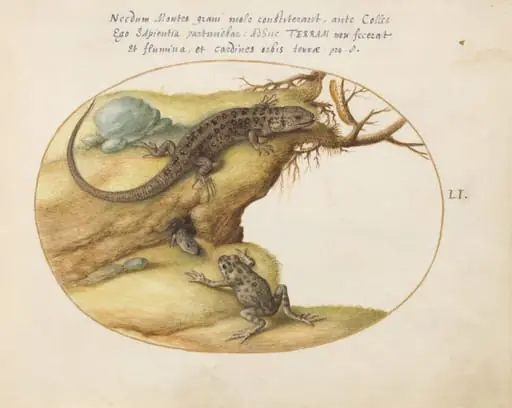 Plate 51: Two Sand Lizards, a Common Parsley Frog(?), and a Caterpillar
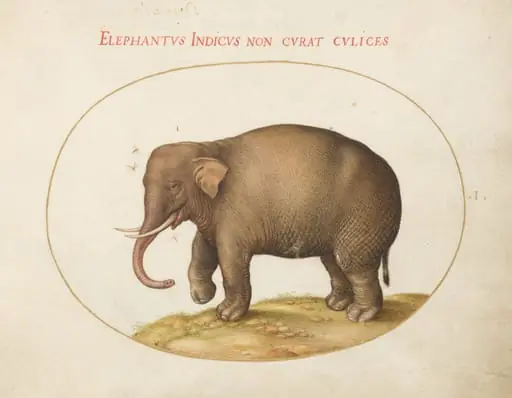 Plate 1: Elephant with Insects
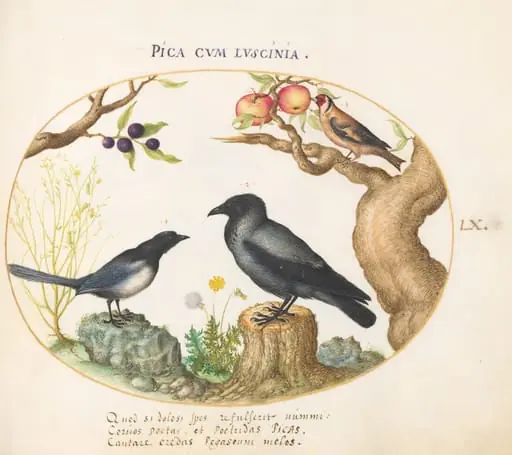 Plate 60: Magpie, Crow, and Goldfinch
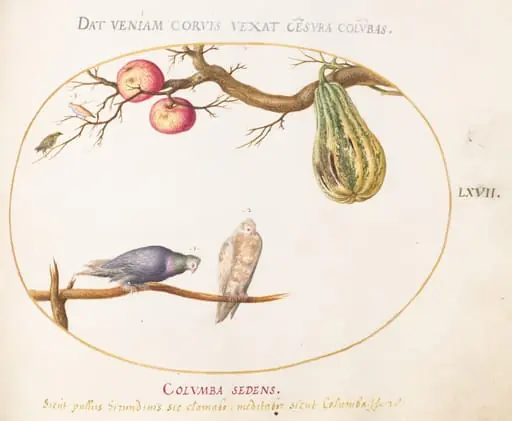 Plate 67: Two Doves beneath a Gourd and Apples
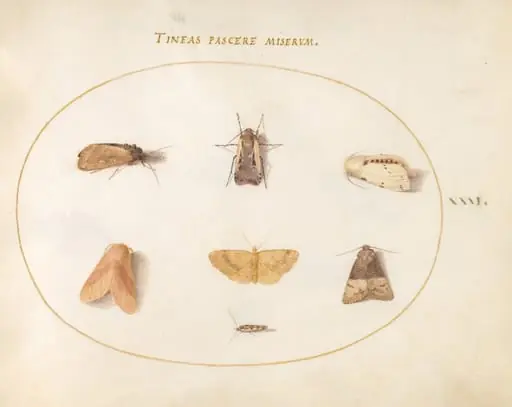 Plate 31: Seven Moths
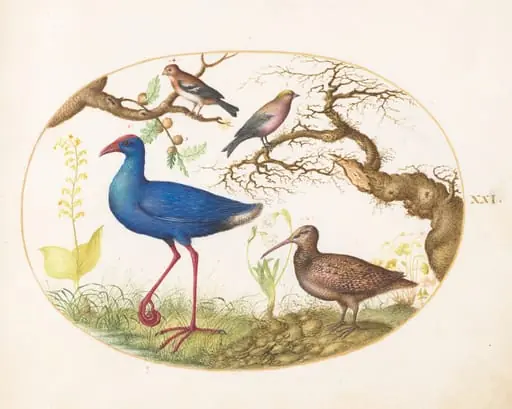 Plate 21: Swamp Hen and Woodcock with a Streaked Rosefinch, a Finch, and Oak Galls