Artwork
Plate 6: A Variety of Oxen with a Ram and a Water Buffalo(?) by a Plane Tree
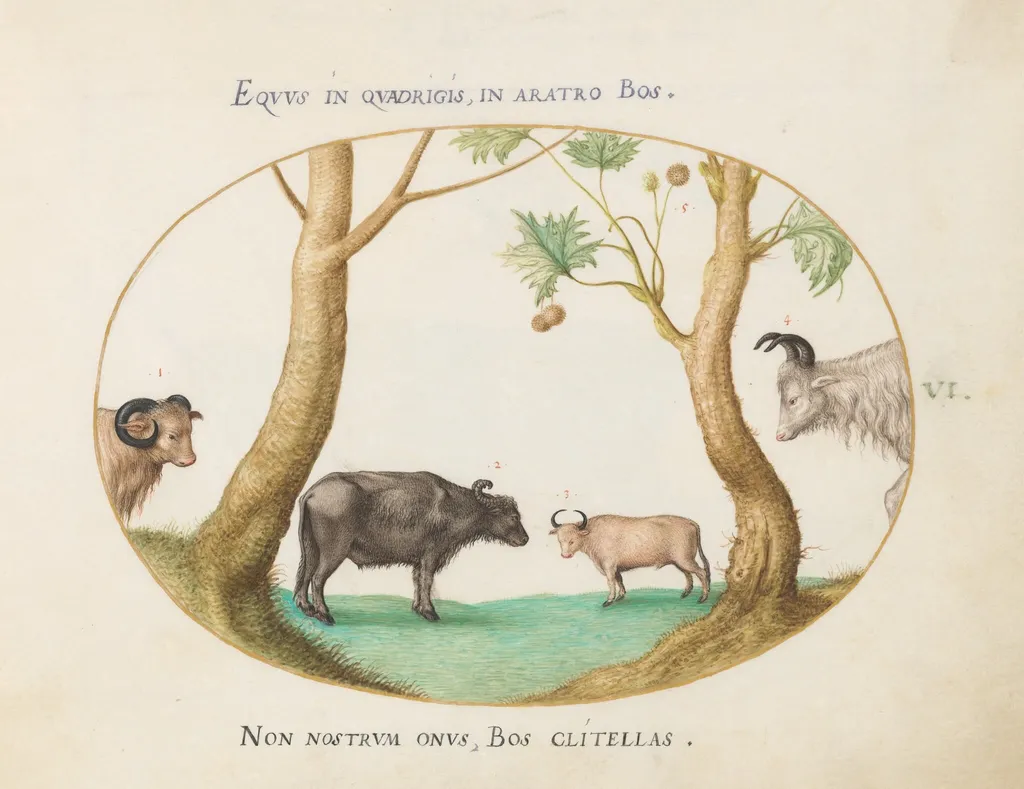
Plate 6: A Variety of Oxen with a Ram and a Water Buffalo(?) by a Plane Tree is a gouache drawing by the Renaissance artist Joris Hoefnagel. It dates from 1594 and is held in the collection of the National Gallery of Art.
- Inscription
- Inscribed:upper center in black ink: EQVVS IN QVADRIGIS, IN ARATRO BOS.; center right in black ink: VI.; animals in image numbered .1., .2., .3., and .4., in red ink; tree in image numbered .5., in red ink; lower center in black ink: NON NOSTRVM ONVS, BOS CLITELLAS. Facing page: upper center in brown ink: Obsequium tigresq[ue] domat, Tumidosq[ue] leones: / Rustica paulatim, Taurus aratra subit.; lower center in (gold?): Quam Platanus rivo gaudet, quam populus unda; / Et quam limosa canna palustris humo: / Tam Venus otia amat: qui finem quaeris amoris, / cedit amor rebus: Res age: tutus eris.
About this work
Overview
Created circa 1594, this miniature drawing by the Flemish artist Joris Hoefnagel depicts a small herd gathered beneath a plane tree. Rendered on parchment with watercolor and touches of gold, the composition presents five domesticated animals, a group of oxen, a ram and a water buffalo, arranged in a naturalistic setting that emphasizes both their individual forms and their collective presence.
Subject & Meaning
The work records a variety of livestock commonly found on northern European farms, highlighting the diversity of species that a farmer might keep together. The ram, positioned slightly apart, draws the viewer’s eye, perhaps suggesting a watchful guardian role, while the oxen’s warm brown coats and the water buffalo’s distinctive silhouette convey a study of comparative anatomy and behavior.
Technique & Style
Hoefnagel employed delicate watercolor washes to model the animals’ bodies, using subtle gradations of brown, tan and gray to suggest texture.
Hoefnagel employed delicate watercolor washes to model the animals’ bodies, using subtle gradations of brown, tan and gray to suggest texture. Gold paint accentuates the horns, hooves and certain highlights, adding a luminous quality that enhances the three‑dimensional effect. The precise line work and careful observation reflect the artist’s background in natural‑history illustration, merging scientific accuracy with decorative elegance.
History & Provenance
The piece belongs to the final phase of manuscript illumination in the Low Countries, a period when artists like Hoefnagel began to transition from hand‑bound books to independent drawings. It later entered the collection of the National Gallery of Art in Washington, where it is displayed alongside other works that illustrate the emergence of topographical and floral still‑life genres in northern European art.
Own this work as a print
Artist & collection

Artist
Joris Hoefnagel or Georg Hoefnagel (1542 – 24 July 1601) was a Flemish painter, printmaker, miniaturist, draftsman and merchant.

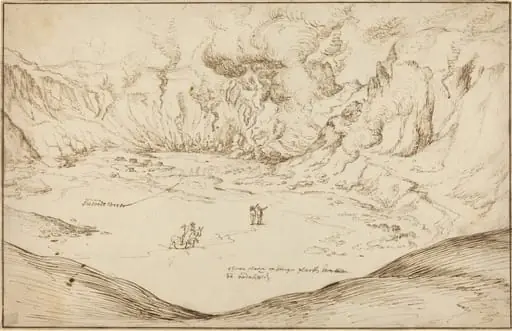 Forum Vulcani: The Hot Springs at Pozzuoli
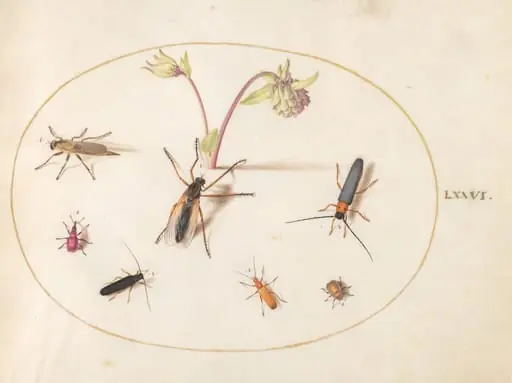 Plate 76: Insects with a Pink and Cream Columbine
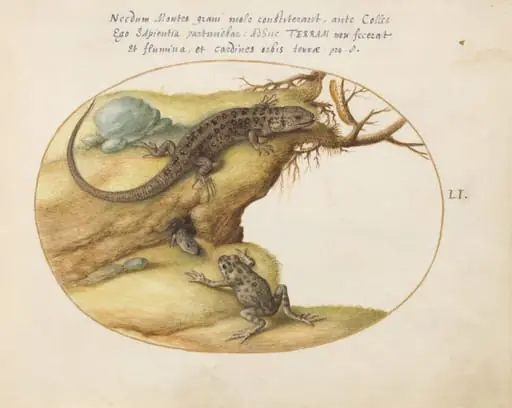 Plate 51: Two Sand Lizards, a Common Parsley Frog(?), and a Caterpillar
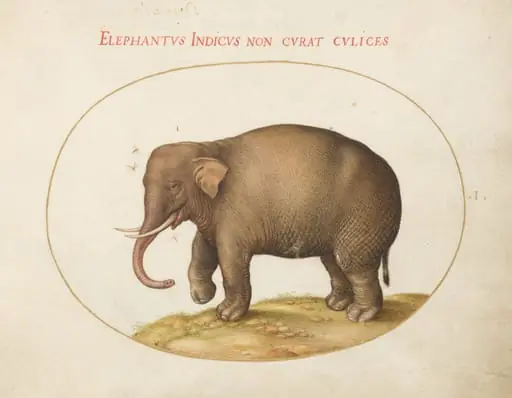 Plate 1: Elephant with Insects
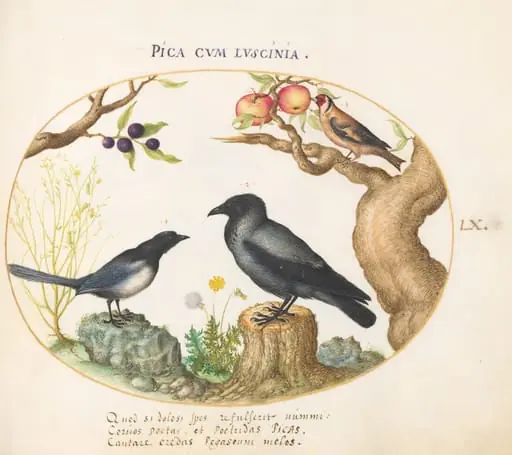 Plate 60: Magpie, Crow, and Goldfinch
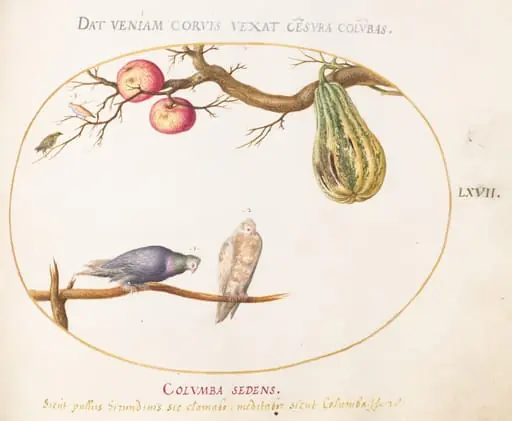 Plate 67: Two Doves beneath a Gourd and Apples
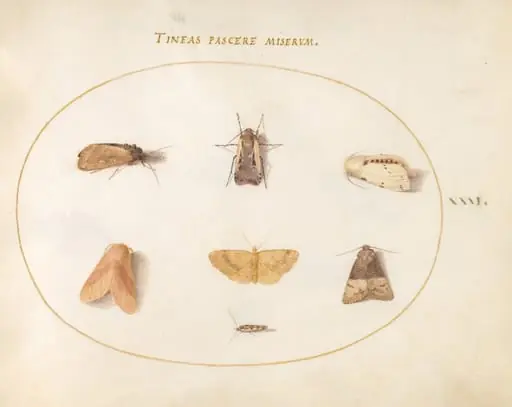 Plate 31: Seven Moths
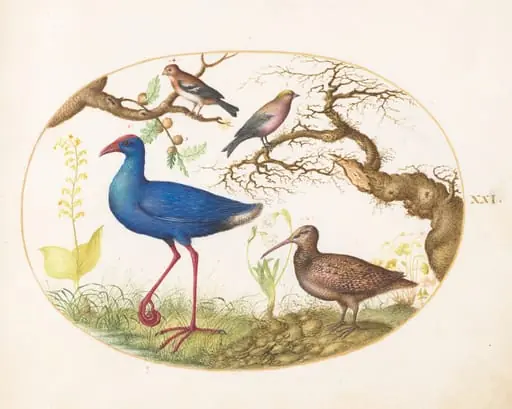 Plate 21: Swamp Hen and Woodcock with a Streaked Rosefinch, a Finch, and Oak Galls
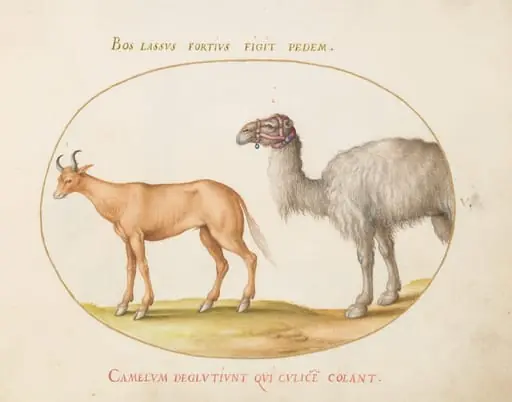
- Plate 5: An Ox and a Camel
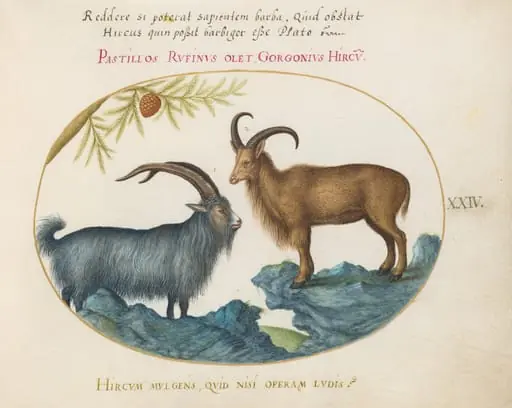 Plate 24: A Wild Goat and a Barbary Sheep(?)
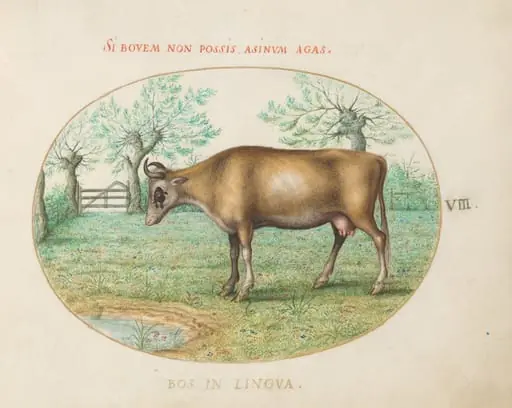 Plate 8: A Cow
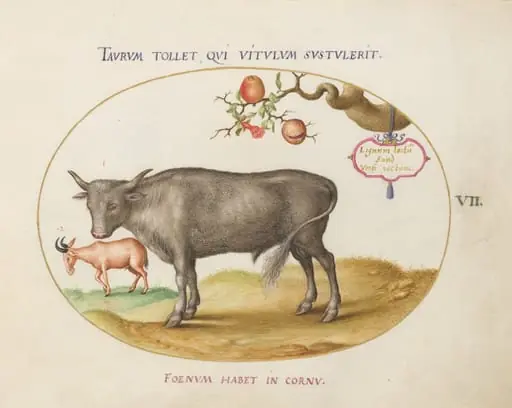 Plate 7: A Bull and a Horned Animal
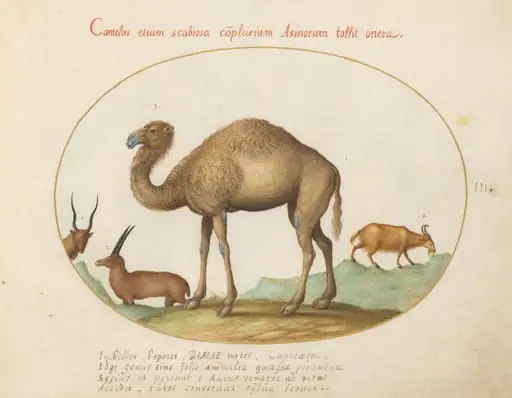 Plate 3: Camel, Ibex, and Goat
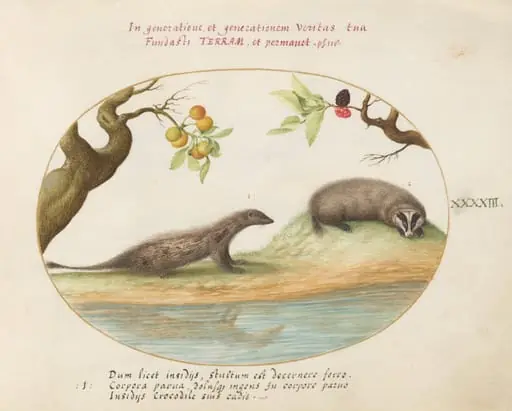 Plate 43: Mongoose and Badger with Fruit Trees
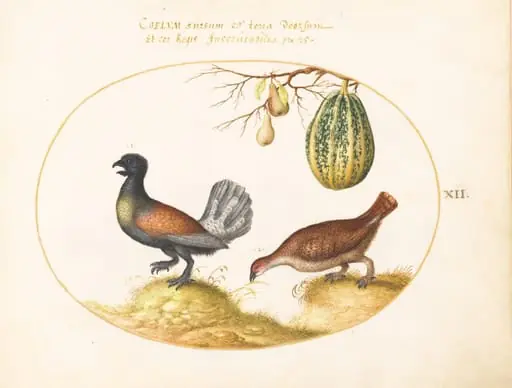 Plate 12: Pair of Wood Grouse with a Melon and Pears
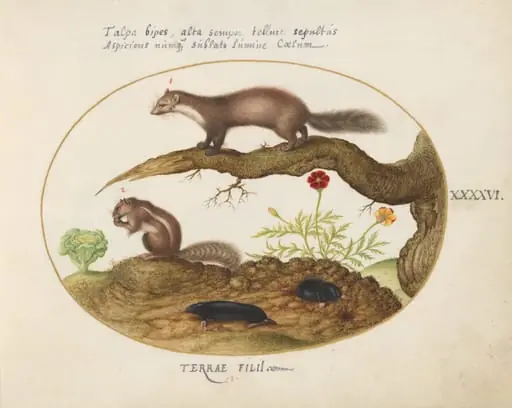 Plate 46: Stone Marten, Chipmunk, and Moles with a Marigold and Lettuce
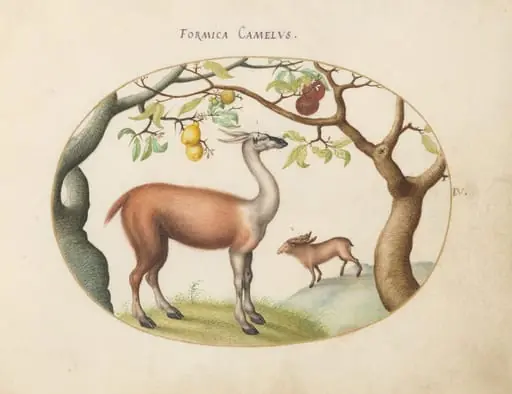 Plate 4: Llama and Moose
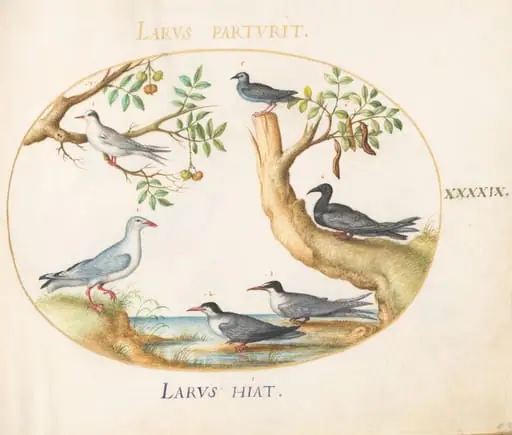 Plate 49: Gulls with a Carob Tree and a Pistachio Tree(?)