Artwork
H Beard Print Collection
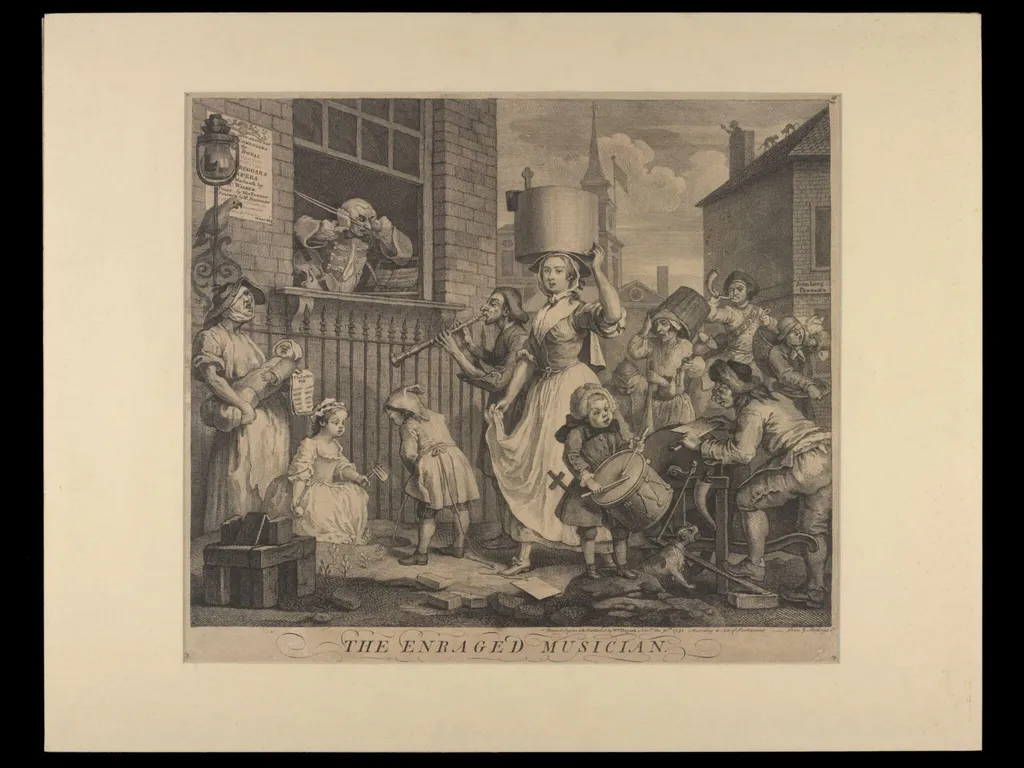
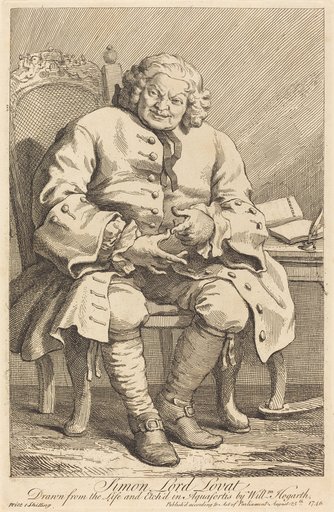
H Beard Print Collection is a print by the Baroque artist William Hogarth. It dates from 30 and is held in the collection of the Victoria and Albert Museum.
About this work
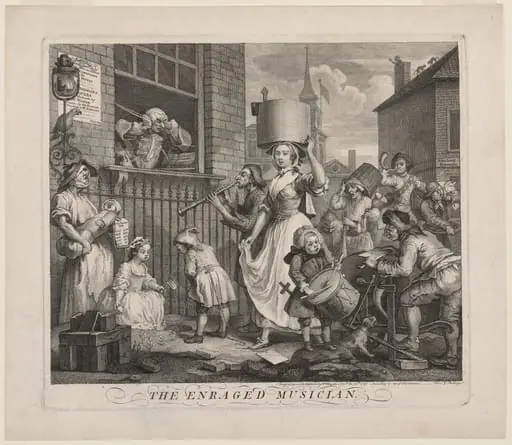
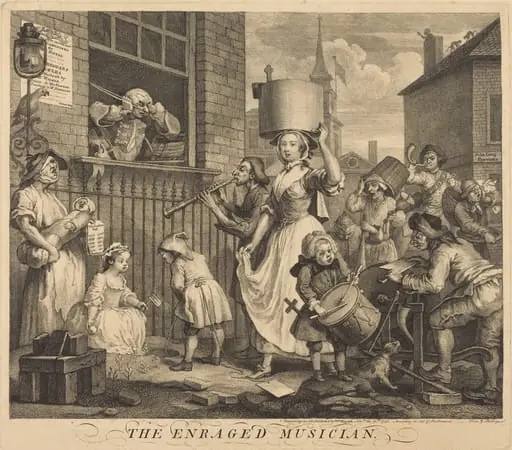
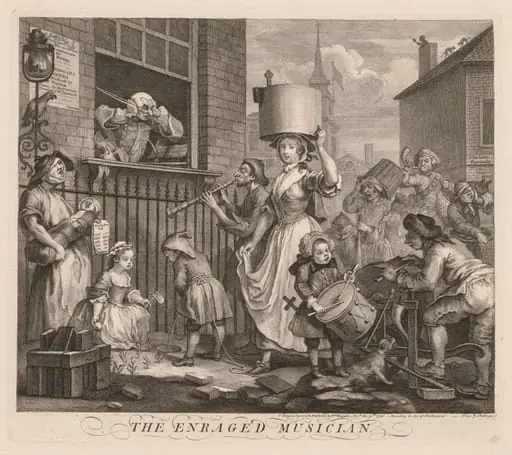
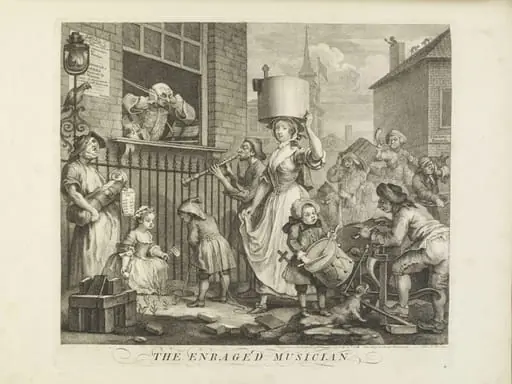
In this 1741 print, a fussy violinist glares out a window while neighbors below scream, play drums, and fight. The noise seems to rattle his sheet music.
William Hogarth made this to mock London’s noisy streets. He wanted to show how chaos ruined quiet moments. Look for the drummer boy banging right below the musician’s window.
If you like this prickly humor, check out Hogarth, William next.
Overview
Created in 1741, this print by William Hogarth depicts a violinist in a state of agitation as he peers from his window at the disorder below. The scene captures a moment of urban tension, where the musician’s attempt at quiet concentration is shattered by the cacophony of street life. It belongs to a series of works that satirize the social fabric of 18th-century London.
Subject & Meaning
The print centers on a musician overwhelmed by the noise of his neighbors, drumming children, brawling adults, and shouting passersby. His furrowed brow and scattered sheet music suggest frustration and helplessness. Hogarth uses this moment to critique the lack of personal space and civility in crowded city life, turning domestic disturbance into a broader commentary on urban decay.
Technique & Style
Hogarth employs fine line engraving to render intricate details of facial expressions and chaotic movement. The composition directs the viewer’s eye from the musician’s tense posture down to the rowdy street scene below, creating visual contrast between stillness and motion. His use of exaggerated gestures and precise architectural framing enhances the narrative clarity and satirical tone.
History & Provenance
The print was produced as part of Hogarth’s series on urban life, widely circulated in his lifetime. It was published independently and later included in collections of his moral satires. The H Beard Print Collection acquired it during the 19th century, preserving it as an example of early British graphic satire. Its survival reflects its popularity and cultural resonance at the time.
Context
In 18th-century London, rapid urbanization led to overcrowded neighborhoods and diminished privacy. Hogarth’s work responded to these conditions, capturing the friction between individual desire for order and the relentless noise of public life. This print aligns with broader Enlightenment-era interests in social behavior and the consequences of modern living.
Legacy
The print remains a key example of Hogarth’s ability to fuse humor with social observation. It influenced later illustrators and cartoonists who used everyday scenes to critique society. Though not widely exhibited today, it continues to be referenced in studies of urban history and visual satire, underscoring its enduring relevance as a document of civic life.
Own this work as a print
Artist & collection
Artist
William Hogarth (; 10 November 1697 – 26 October 1764) was an English painter, engraver, satirist, cartoonist and writer.