Artwork
Honing Knives
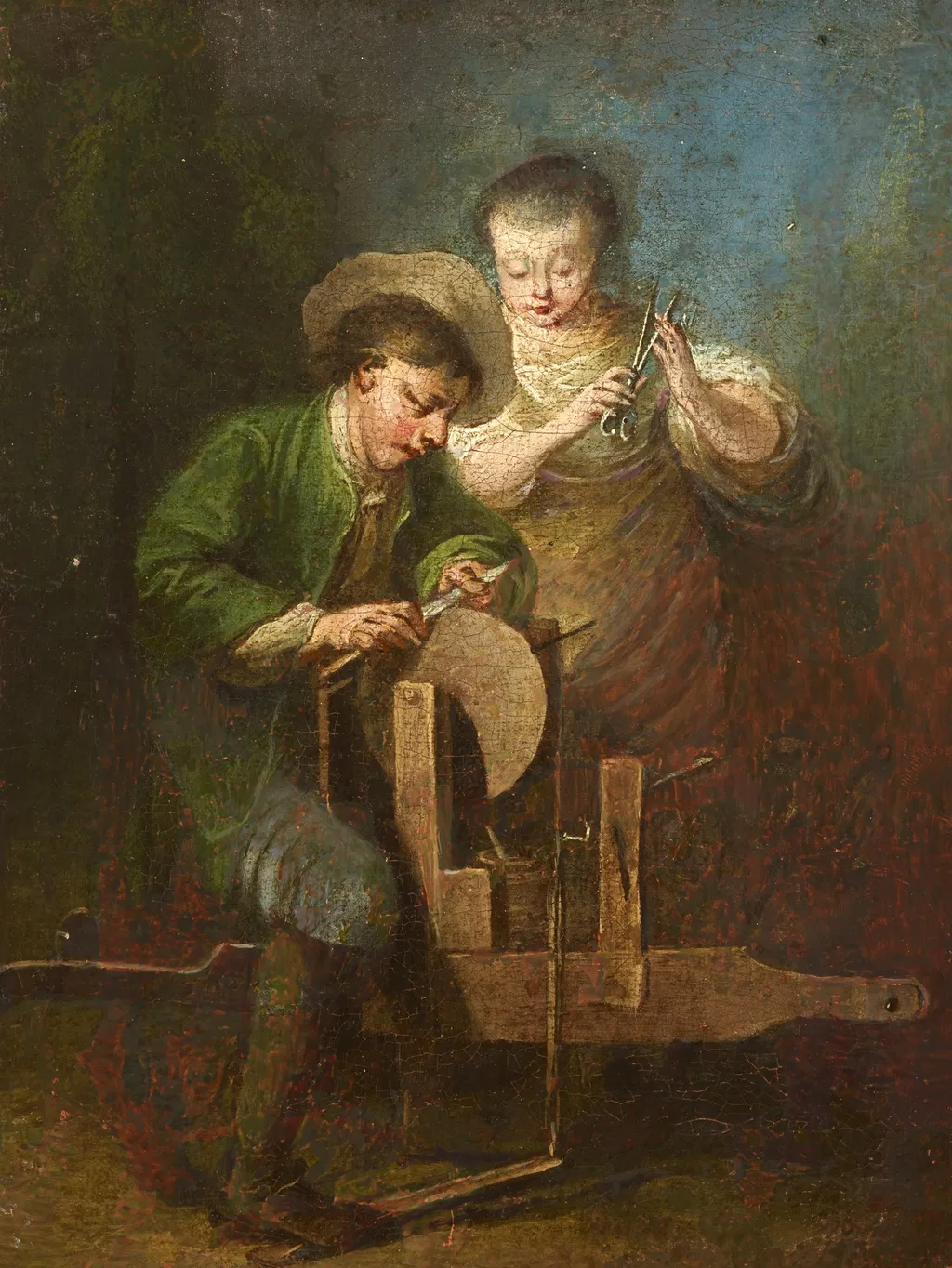
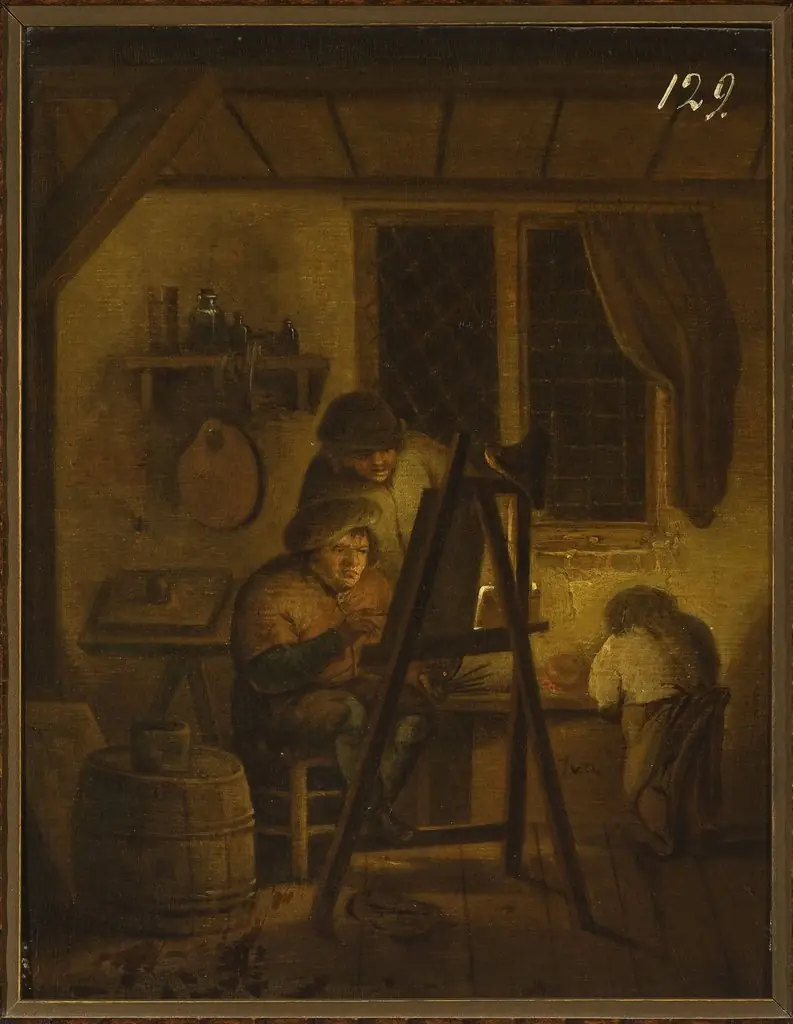
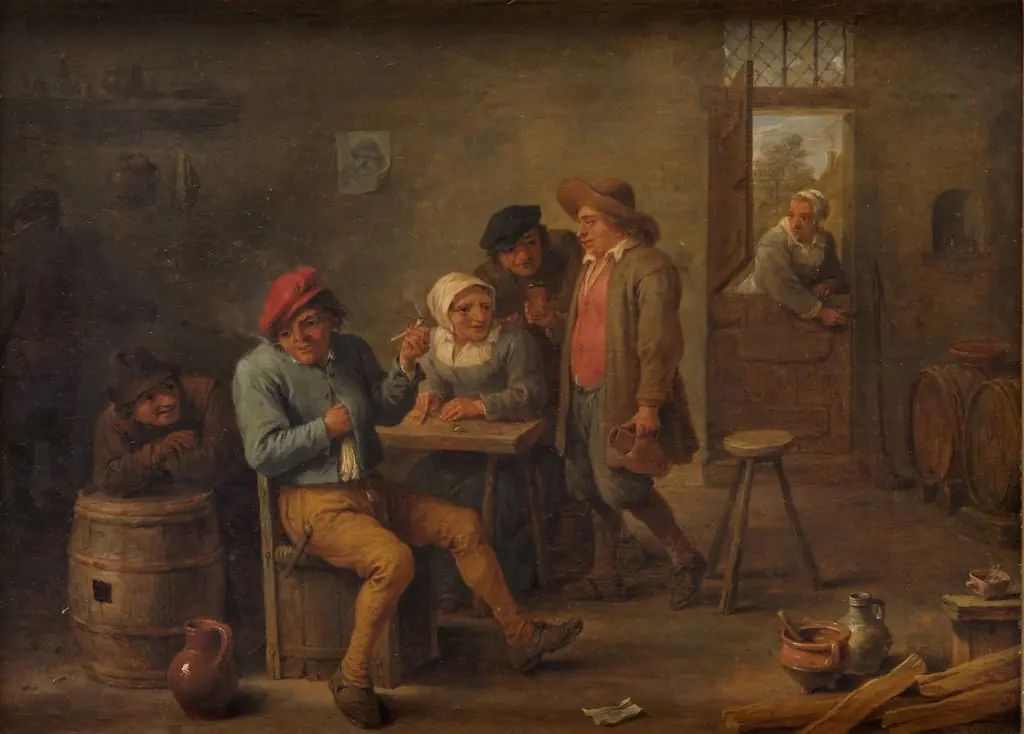
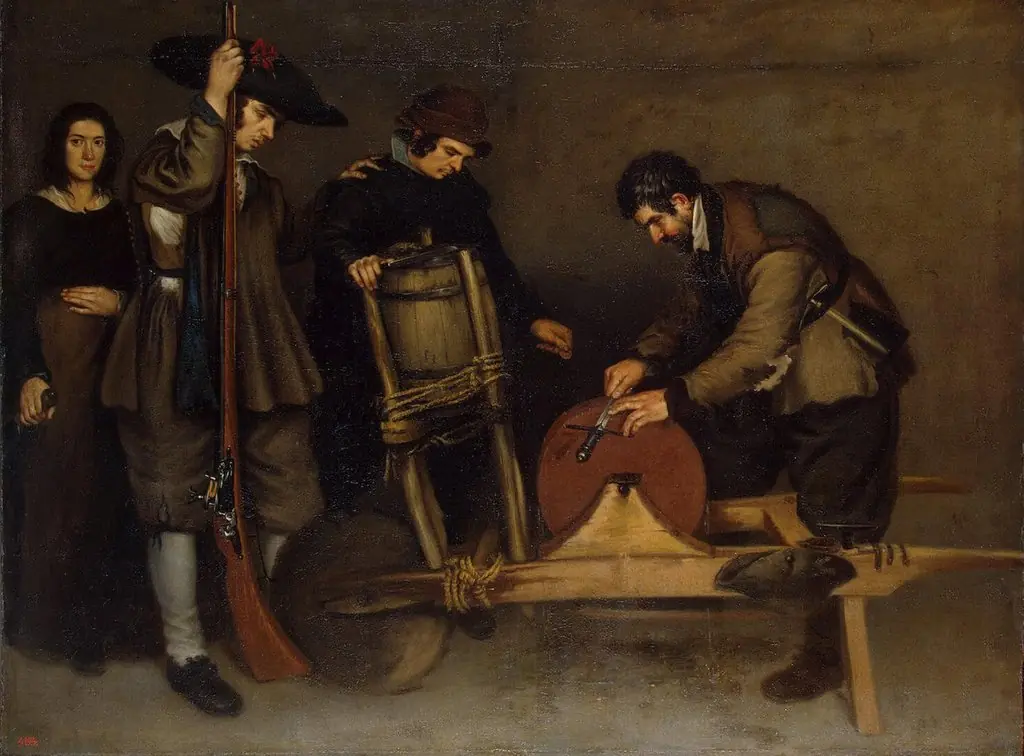
Honing Knives is an oil painting by the Biedermeier artist Unknown. It dates from 1799 and is held in the collection of the National Museum in Kraków. This oil painting depicts a quiet domestic moment in which a man sharpens a knife on a whetstone while a woman observes nearby.
About this work
Overview
This oil painting depicts a quiet domestic moment in which a man sharpens a knife on a whetstone while a woman observes nearby. Set in a dimly lit interior with a blue-walled background, the scene emphasizes stillness and focused labor. The composition centers on the interaction between the two figures, their postures and expressions conveying a shared, unspoken rhythm of daily work.
Subject & Meaning
The figures engage in the routine act of knife maintenance, a task essential to household and craft life in the 17th century. The man’s intense concentration contrasts with the woman’s calm gaze, suggesting complementary roles within domestic labor. The absence of narrative drama invites contemplation of ordinary routines, elevating mundane activity through attentive observation.
Technique & Style
The artist employs chiaroscuro to model forms with subtle gradations of light and shadow, giving volume to the figures and objects. The dark interior is pierced by a soft, directional light that highlights the man’s hands and the blade, drawing attention to the precision of his motion. Brushwork is restrained yet expressive, avoiding theatricality in favor of quiet realism.
History & Provenance
The painting is attributed to Rembrandt van Rijn, though its exact date and early ownership remain uncertain. It entered public collections in the 19th century and has since been studied for its intimate portrayal of labor. While not among his most famous works, it reflects his enduring interest in human gesture and domestic atmosphere.
Context
In mid-17th century Dutch society, domestic scenes were increasingly valued as subjects for art, reflecting a broader cultural shift toward private life. The depiction of manual labor, especially among non-elite figures, aligns with the genre’s rise in Amsterdam and Leiden. This work contributes to a tradition that found dignity in everyday acts.
Legacy
Though less widely exhibited than Rembrandt’s portraits or biblical scenes, this painting exemplifies his ability to imbue simple moments with psychological depth. Its quiet intensity influenced later realist painters who sought to capture unadorned human experience without sentimentality or grandeur.
Artist & collection

 Domestic Scene
 Giacomo and Cardinal Marco, investing Andrea, Abbot of San Zeno, with his Benefice
 The Nymph of Fontainebleau
 Portrait of a Woman
 Madonna and Child with Saints in the Enclosed Garden
 Venus and Minerva
 Family Group of Four on Sofa
 Wall painting from Room H of the Villa of P. Fannius Synistor at Boscoreale