Artwork
The mousetrap
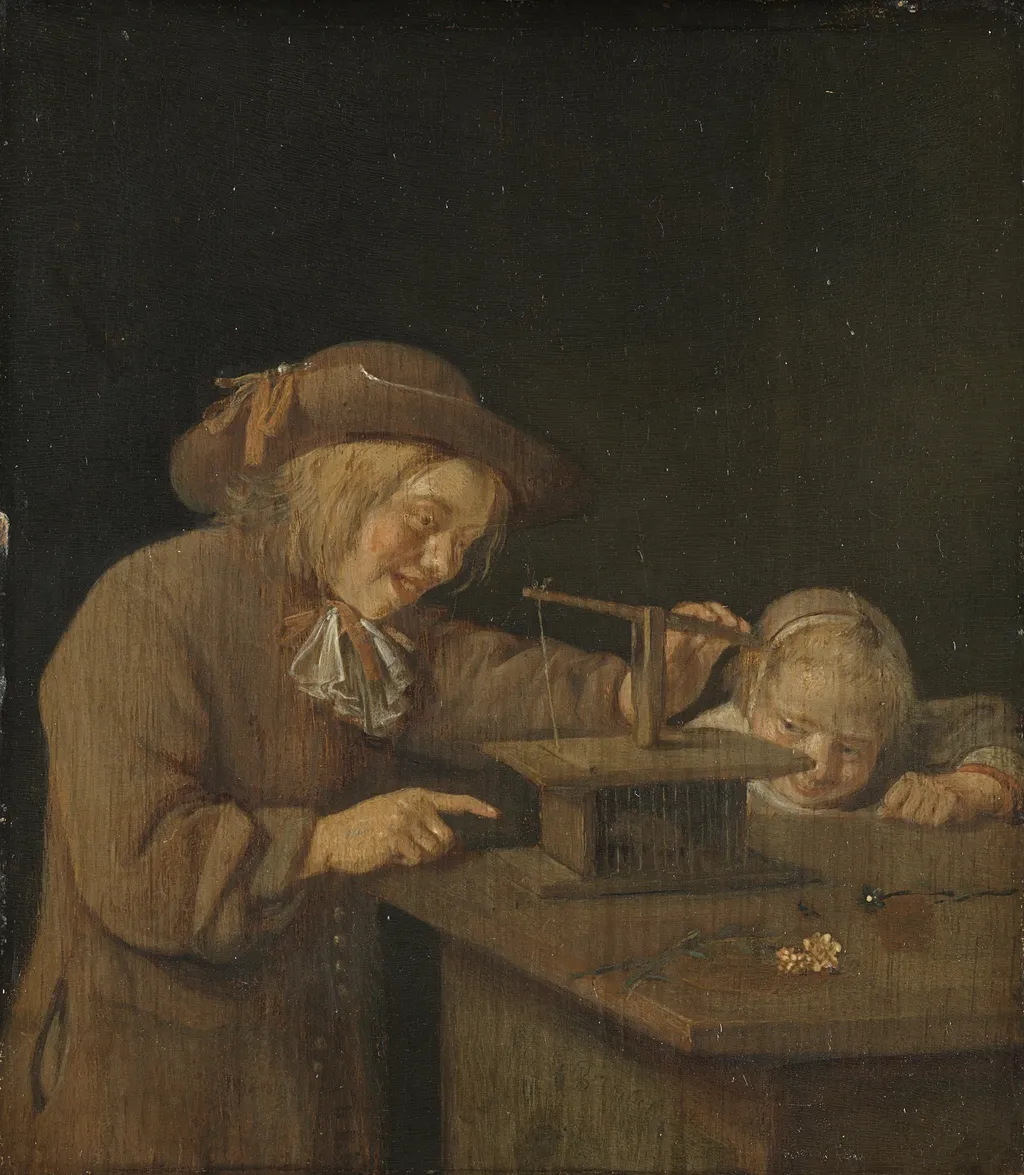
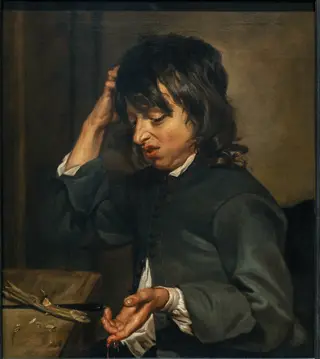
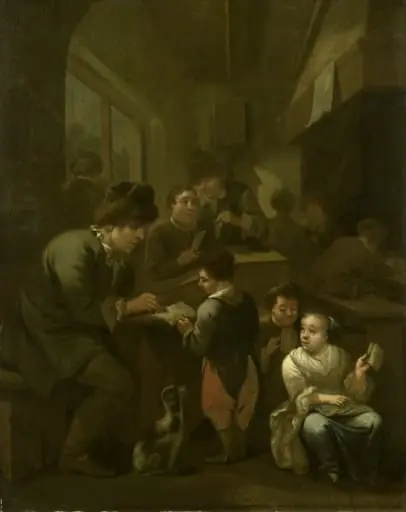
The mousetrap is an oil painting by the Dutch Golden Age artist Quirijn van Brekelenkam. It dates from 1660 and is held in the collection of the Rijksmuseum.
About this work
Subject & Meaning
As a genre piece, the subject matter centers on the everyday life and activities of the boy, highlighting the object that gives the artwork its title.
The painting depicts a simple genre scene featuring a young boy interacting with a mousetrap. Created in 1660, the work focuses on this specific domestic interaction rather than a complex narrative or allegorical tableau. As a genre piece, the subject matter centers on the everyday life and activities of the boy, highlighting the object that gives the artwork its title.
The composition presents the figure and the trap as the primary visual elements, capturing a moment of ordinary existence.
Technique & Style
The painting is executed in oil on wooden panel, a technique typical of 17th‑century Dutch genre scenes. Its modest dimensions of 18.5 cm by 16.5 cm emphasize the intimate domestic setting, while the careful rendering of light and texture highlights the everyday activity of a boy with a mousetrap.
History & Provenance
The mousetrap is an oil painting created in 1660 by Quirijn van Brekelenkam. It measures 18.5 cm in height and 16.5 cm in width and depicts a boy with a mousetrap. The work belongs to the genre scene category and was painted on panel. It is part of the Rijksmuseum collection and is housed in Amsterdam.
The painting is held in the collection of the Rijksmuseum, where it is listed under the inventory number SK-C-5. It was created in 1660 and has been part of the museum’s exhibition schedule, appearing in displays of Dutch Golden Age genre scenes.
Overview
Quirijn van Brekelenkam, a Leiden‑based painter of the Dutch Baroque, executed The Mousetrap in 1660 with oil on canvas. The work belongs to the genre tradition that records ordinary domestic moments, and it is presently part of the Rijksmuseum’s collection.
Context
The Mousetrap aligns with a broader Dutch interest in moralizing genre scenes that use simple domestic objects to suggest lessons about vigilance and education. Its focus on a single, functional object mirrors contemporary didactic themes prevalent in Leiden’s artistic circles.
Own this work as a print
Artist & collection
Artist
Quirijn or Quiringh Gerritsz van Brekelenkam (1622/29, Zwammerdam – 1669/79, Leiden) was a Dutch Baroque genre painter.