Artwork
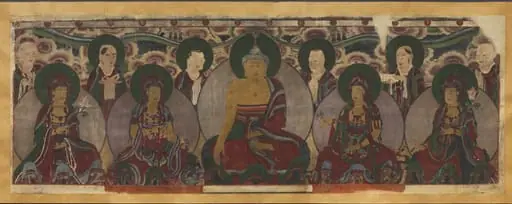
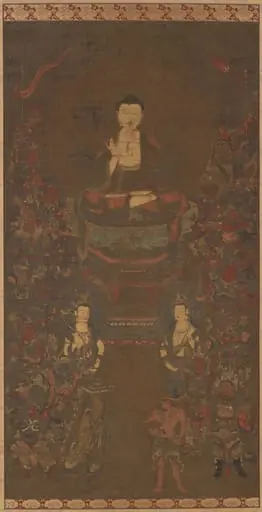
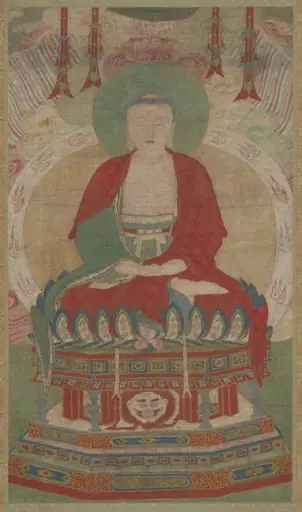
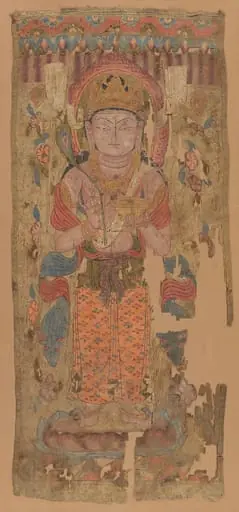
First and Second of the Buddhas of the Seven Stars of the Big Dipper (Chilseong Yeorae): Uneui Tongjeung Yeorae with Tamlang Seongun
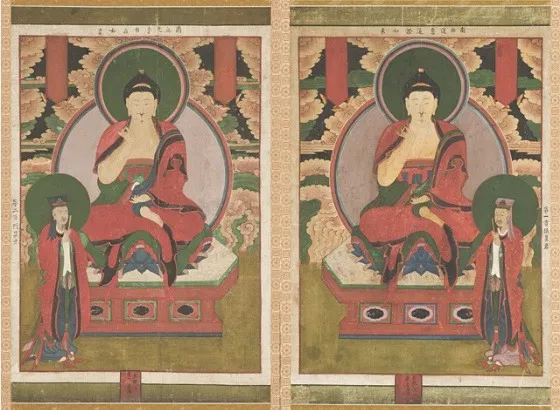
First and Second of the Buddhas of the Seven Stars of the Big Dipper (Chilseong Yeorae): Uneui Tongjeung Yeorae with Tamlang Seongun is an unspecified painting by Unknown. It dates from 1850 and is held in the collection of the Los Angeles County Museum of Art. The work is a mid‑nineteenth‑century painting entitled *First and Second of the Buddhas of the Seven Stars of the Big Dipper*.
About this work
This painting is titled First and Second of the Buddhas of the Seven Stars of the Big Dipper.
It was created in 1850, a time when art often reflected spiritual themes. The artist's use of a specific title suggests a deep understanding of Buddhist mythology.
You can learn more about this type of art at the Los Angeles County Museum of Art.
Overview
The work is a mid‑nineteenth‑century painting entitled *First and Second of the Buddhas of the Seven Stars of the Big Dipper*. Executed in 1850, it belongs to a tradition of Korean Buddhist visual culture that depicts celestial deities associated with the Dipper constellation.
Subject & Meaning
The composition portrays two Buddhas linked to the seven stars of the Big Dipper, known in Korean as Chilseong Yeorae. Their presence reflects the syncretic belief that celestial bodies embody protective Buddhist figures, a theme common in devotional art of the period.
Technique & Style
Rendered with ink and mineral pigments on silk, the painting employs delicate line work and subtle washes to delineate the figures and their surrounding space. The stylised halos and flowing drapery echo the aesthetic conventions of late‑Joseon court painting, emphasizing both reverence and elegance.
History & Provenance
Created in 1850, the piece remained within private Korean collections before entering the holdings of a major American institution. Its documented trail includes acquisition records from the Los Angeles County Museum of Art, where it is catalogued among East Asian Buddhist paintings.
Context
During the mid‑1800s, Korean artists frequently integrated astronomical motifs into religious imagery, aligning celestial order with Buddhist cosmology. This painting exemplifies that practice, situating the Dipper’s seven stars within a spiritual framework that reinforced both celestial and doctrinal harmony.
Artist & collection

 Domestic Scene
 Giacomo and Cardinal Marco, investing Andrea, Abbot of San Zeno, with his Benefice
 The Nymph of Fontainebleau
 Portrait of a Woman
 Madonna and Child with Saints in the Enclosed Garden
 Venus and Minerva
 Family Group of Four on Sofa
 Wall painting from Room H of the Villa of P. Fannius Synistor at Boscoreale