Artwork
Shakyamuni with the Sixteen Benevolent Deities
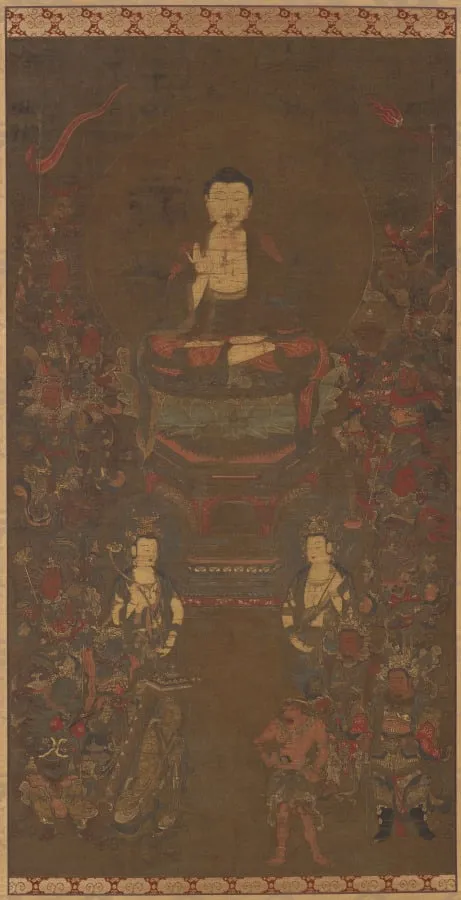
Shakyamuni with the Sixteen Benevolent Deities is an unspecified painting by the Joseon dynasty painting artist Unknown. It dates from 1304 and is held in the collection of the Cleveland Museum of Art. This painting depicts a sacred Buddhist scene, featuring the historical Buddha Shakyamuni and attendant figures.
- Accession no.
- 1941.279
- Credit line
- Gift of Mrs. Henry S. Upson, 25th Anniversary Gift
About this work
You see a golden Buddha sitting on a lotus, flanked by two smaller figures and ringed by sixteen colorful deities.
You see a golden Buddha sitting on a lotus, flanked by two smaller figures and ringed by sixteen colorful deities. Below them stands a monk in red robes.
This painting comes from a time when Japan was split between two rival courts. The artist used bright colors and gold leaf to show the sacred world, no shadows, just light. The monk at the bottom is Xuanzang, the real-life traveler who brought Buddhist texts from India to China.
To see more art from this time, look up the subject: japan, nanbokuchō period (1336–92).
Overview
This painting depicts a sacred Buddhist scene, featuring the historical Buddha Shakyamuni and attendant figures. Created during Japan's Nanbokuchō period, it showcases the artistic style of the time, characterized by the use of bright colors and gold leaf.
Subject & Meaning
The central figure, Shakyamuni, is flanked by the bodhisattvas Fugen and Monju, while sixteen deities protecting the Great Perfection of Wisdom Sutra surround them. The monk Xuanzang, a renowned Buddhist scholar and translator, is depicted at the bottom left, highlighting the significance of Buddhist scriptures and their transmission.
Technique & Style
The painting is executed in a style typical of the Nanbokuchō period, with a focus on bright, unmodulated colors and extensive use of gold leaf, creating a luminous, shadow-free representation of the sacred world.
Context
The artwork was created during a time of political division in Japan, when the country was split between two rival courts, a period that nonetheless saw significant cultural and artistic developments.
Artist & collection









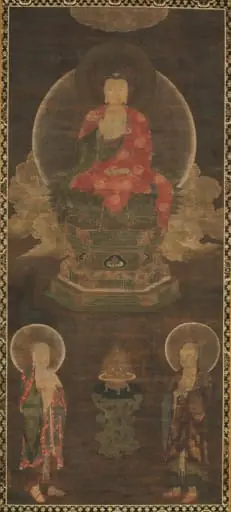
- Shakyamuni Triad: Buddha Attended by Manjushri and Samantabhadra (Buddha)
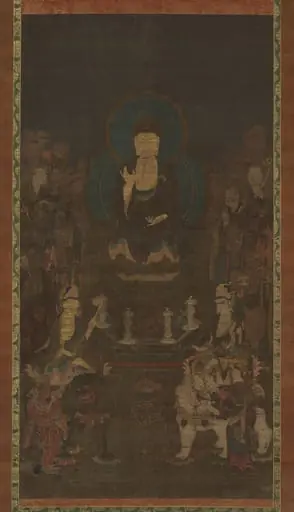 釈迦三尊十大弟子像|Shaka (Shakyamuni), the Historical Buddha, with Two Attendant Bodhisattvas and the Ten Great Disciples
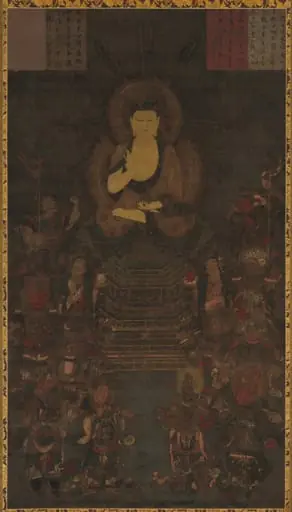 Medicine Master Buddha and the Twelve Divine Generals
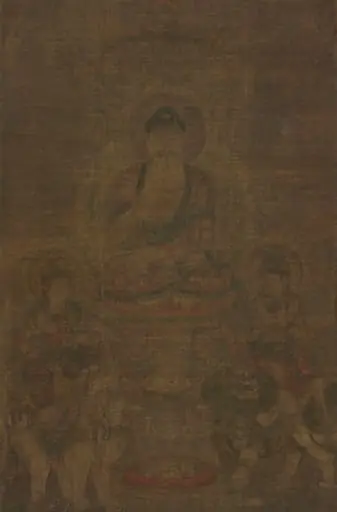 Shakyamuni Triad: Buddha Attended by Manjushri and Samantabhadra
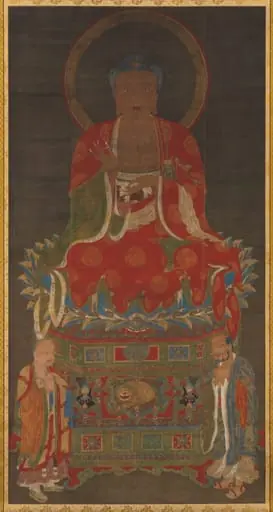 Shakyamuni with two attendants
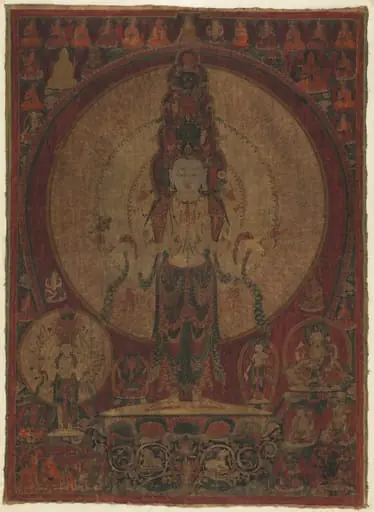 Eleven-Headed, Thousand-Armed Bodhisattva of Compassion (Avalokiteshvara)
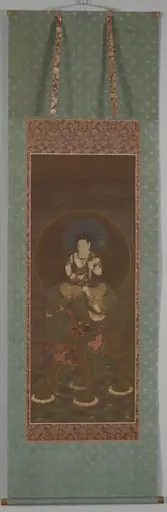 Monju with Five Hair Knots
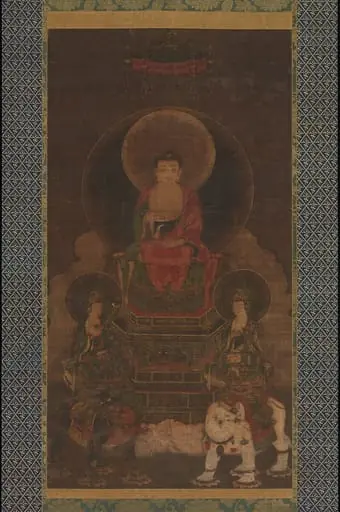 釈迦三尊像|Shaka (Shakyamuni) Triad
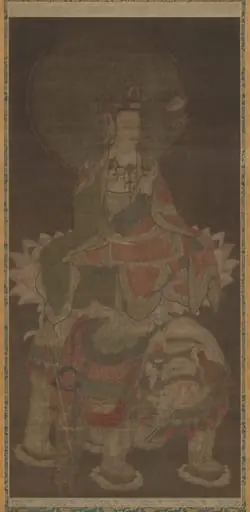 Samantabhadra
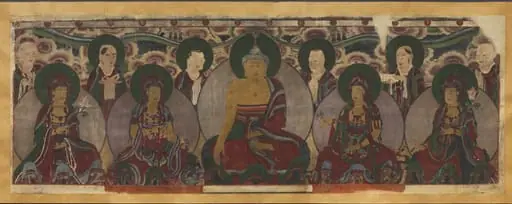 Assembly of Buddhist Deities