Artwork
Portrait of the Duke of Antin
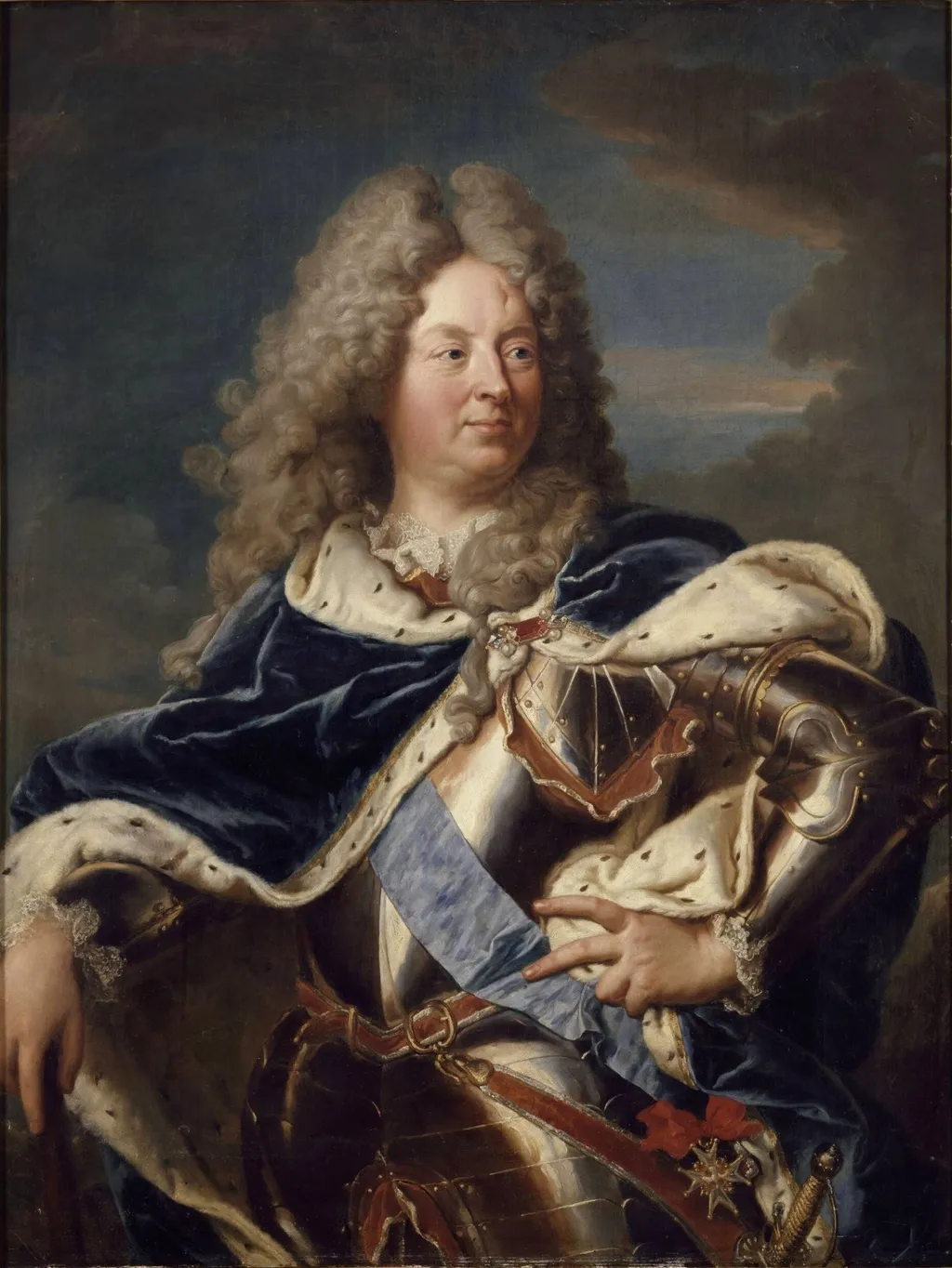
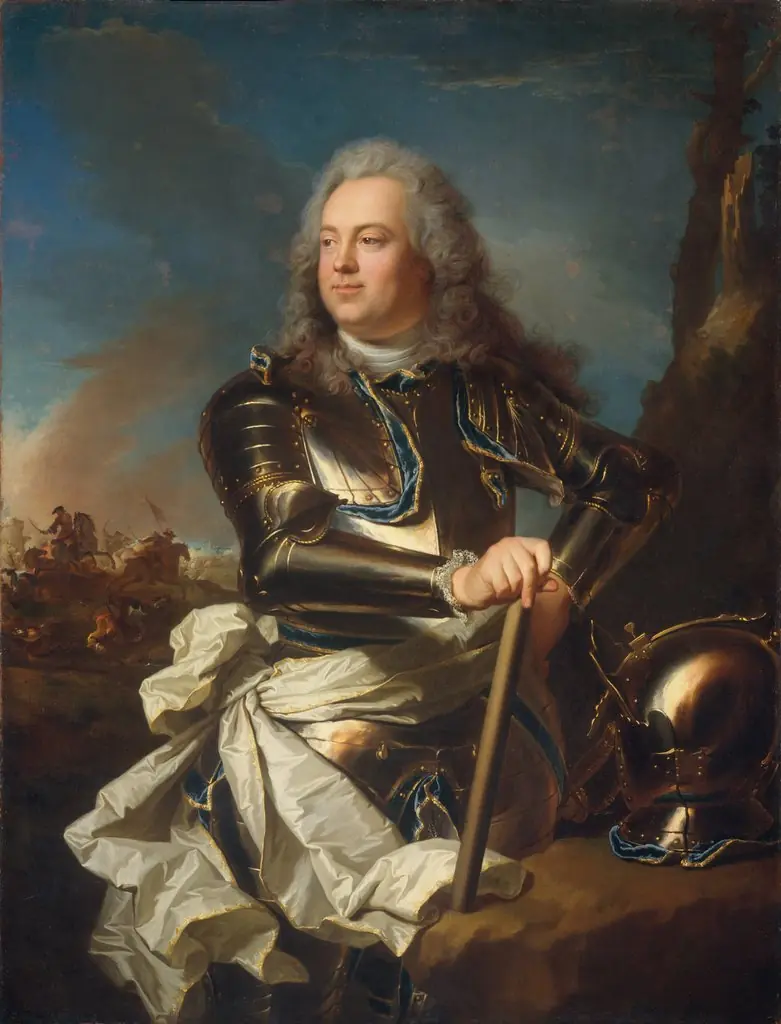
Portrait of the Duke of Antin is an oil painting by the Baroque artist Rigaud Hyacinthe. It dates from 1708 and is held in the collection of the Palace of Versailles. Hyacinthe Rigaud’s oil painting from 1708 portrays Louis Antoine de Pardaillan de Gondrin, the Duke of Antin, in full military dress.
About this work
Subject & Meaning
Rigaud captures the subject in traditional armor draped with a voluminous ermine-lined cloak, signifying his high rank and noble status.
The painting depicts Louis Antoine de Pardaillan de Gondrin, the Duke of Antin, portrayed as a military officer to commemorate his 1708 appointment as Director of the King's Buildings and Protector of the Royal Academy. Rigaud captures the subject in traditional armor draped with a voluminous ermine-lined cloak, signifying his high rank and noble status. The Duke wears the blue sash of the Order of the Holy Spirit, a prestigious chivalric distinction, while one hand rests on a command baton placed upon a rocky outcrop.
A helmet in the background and the stormy sky reinforce his martial identity and the gravity of his new responsibilities. The composition utilizes a successful formula established by the artist for other military leaders, emphasizing the Duke's authority, robust physique, and role as a patron of the arts and sciences.
Technique & Style
The portrait was executed in oil paint on canvas, a standard support for Baroque portraiture in early 18th-century France. The composition depicts the duke in military attire, wearing a traditional armor and a fur-trimmed mantle, with one hand resting on a command baton placed on a rock and the other on his hip; a helmet appears in the background. The work measures 115 cm in height by 92.5 cm in width, reflecting the dimensions recorded for the original canvas at the Palace of Versailles.
The painting employs a dramatic, idealized realism characteristic of Rigaud’s court portraits, emphasizing the sitter’s aristocratic status through rich textures, precise rendering of armor, and the inclusion of the Order of the Holy Spirit ribbon. The background features a turbulent sky, contributing to the grandeur of the scene, while the figure is positioned to convey authority and command. The date of execution is documented as spanning 1708 to 1719, with the work likely completed around 1719 when Rigaud presented it to the Académie Royale.
The technique demonstrates Rigaud’s mastery of chiaroscuro and meticulous attention to material detail, particularly in the depiction of fabric and metal surfaces.
The handling of the brushwork reveals a refined surface finish, typical of Rigaud’s approach to elite portraiture, where smooth transitions and polished edges enhance the lifelike presence of the subject. The use of oil paint allows for deep color saturation and layered glazing, contributing to the lifelike rendering of skin tones and the reflective qualities of armor. The composition’s formal balance and the sitter’s direct gaze reinforce the ceremonial purpose of the portrait, intended for display within the Académie Royale’s assembly hall.
The work’s condition is noted as stable, having been preserved within the French national collections since its donation in 1719.
Multiple versions and copies of the portrait exist, including a 138 × 103 cm version at the Palace of Versailles and a smaller 80 × 65.1 cm variant sold at Christie’s in 2004, underscoring the painting’s enduring influence and replication across European collections.
History & Provenance
The portrait was commissioned in 1708 by the Académie Royale to commemorate the duke's appointment as directeur des Bâtiments du Roi, Académies et Manufactures and protector of the Academy, a role confirmed that year. Rigaud began work shortly after, with workshop records indicating activity around 1710, and the painting was likely completed by 1719 when it was presented to the Academy. Evidence from the artist's autobiography (1716) and the Academy's minutes confirms the commission and delivery, though Hulst's catalogue cites 1713 for the original.
The work depicts Louis Antoine de Pardaillan de Gondrin, duc d'Antin (1665–1736), in military dress with a command baton, armor, ermine mantle, and the blue ribbon of the Order of the Holy Spirit, reflecting his status and the ceremonial context of his new position. The precise delivery date remains uncertain, but the work was formally given to the Academy in 1719, later entering the collections of the Palace of Versailles and the Louvre.
The painting is held at the Musée national des Châteaux de Versailles et de Trianon, in the Palace of Versailles, where it forms part of the Museum of the History of France collection. Its inventory numbers are MV 4333, INV 7560, and B 2081.
According to the artist's autobiography, Rigaud was commissioned by the Académie Royale de Peinture et de Sculpture in 1708 to paint the portrait of its new protector, the Duke of Antin, for display in the academy's assembly room, and he presented the finished work to the Académie in 1719. The canvas subsequently entered the Louvre in 1824 before being transferred to Versailles during the reign of Louis-Philippe (1833). A half-length variant from the Académie Royale was likewise moved to Versailles under Louis-Philippe and is now on deposit at the museum of Metz.
Context
The critical reception of the Portrait of the Duke of Antin centers on its official commission and placement within the Académie Royale, reflecting its political and artistic significance. Scholarship emphasizes the work's role in commemorating Louis Antoine de Pardaillan de Gondrin's appointment as directeur des Bâtiments du Roi, Académies et Manufactures and protector of the Academy in 1708. Contemporary accounts, including Rigaud's autobiography and Académie Royale minutes, document the commission in 1708 and delivery by 1719, though precise completion remains debated.
The painting's stylistic influence is noted in Rigaud's recurring pose, later replicated for other subjects like the comte de Hyom (1716) and Prince of Liechtenstein (1740), establishing a canonical format for aristocratic military portraiture. Its placement in the Académie's assembly hall and subsequent transfer to Versailles underscore its institutional importance.
Overview
Hyacinthe Rigaud’s oil painting from 1708 portrays Louis Antoine de Pardaillan de Gondrin, the Duke of Antin, in full military dress. The work is held in the collection of the Palace of Versailles and exemplifies the baroque portrait tradition that emphasized precise likeness and formal presentation of aristocratic rank.
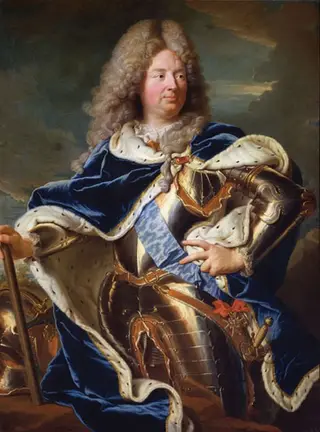
Own this work as a print
Artist & collection
Artist
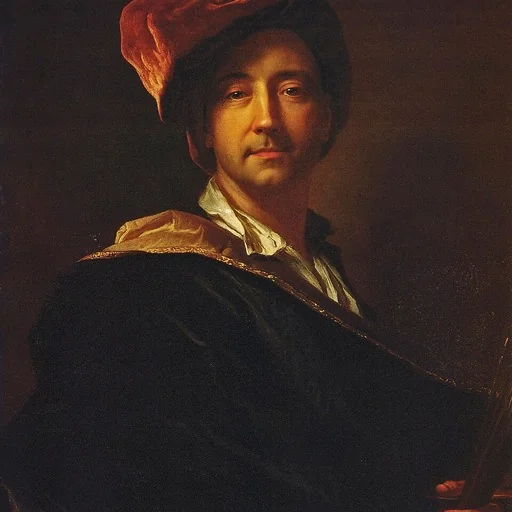
Jacint Rigau-Ros i Serra (Catalan pronunciation:; 18 July 1659 – 29 December 1743), known in French as Hyacinthe Rigaud (pronounced ), was a Catalan-French baroque painter most famous for his portraits of Louis XIV and other members of the…

 Felipe de Orléans regente de Francia
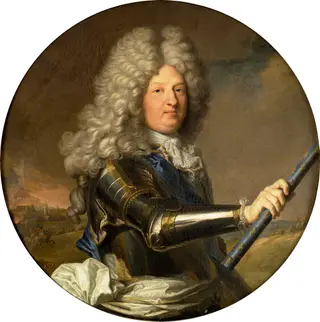 Portrait of Louis of France, Grand Dauphin
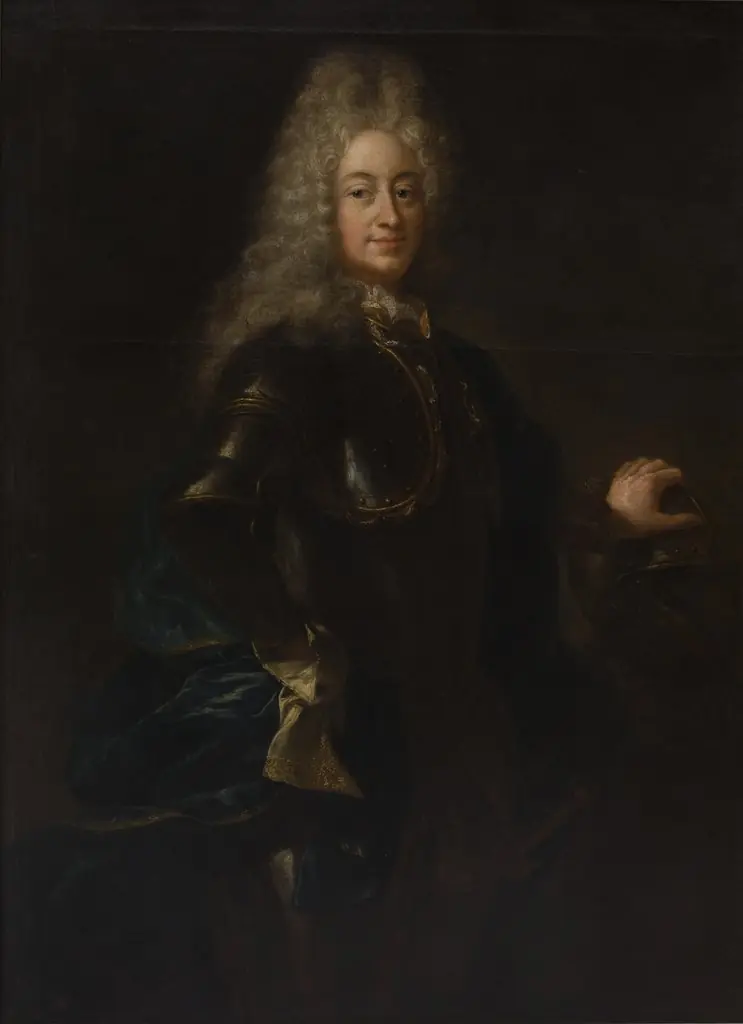 Portrait of a Nobleman in Armour
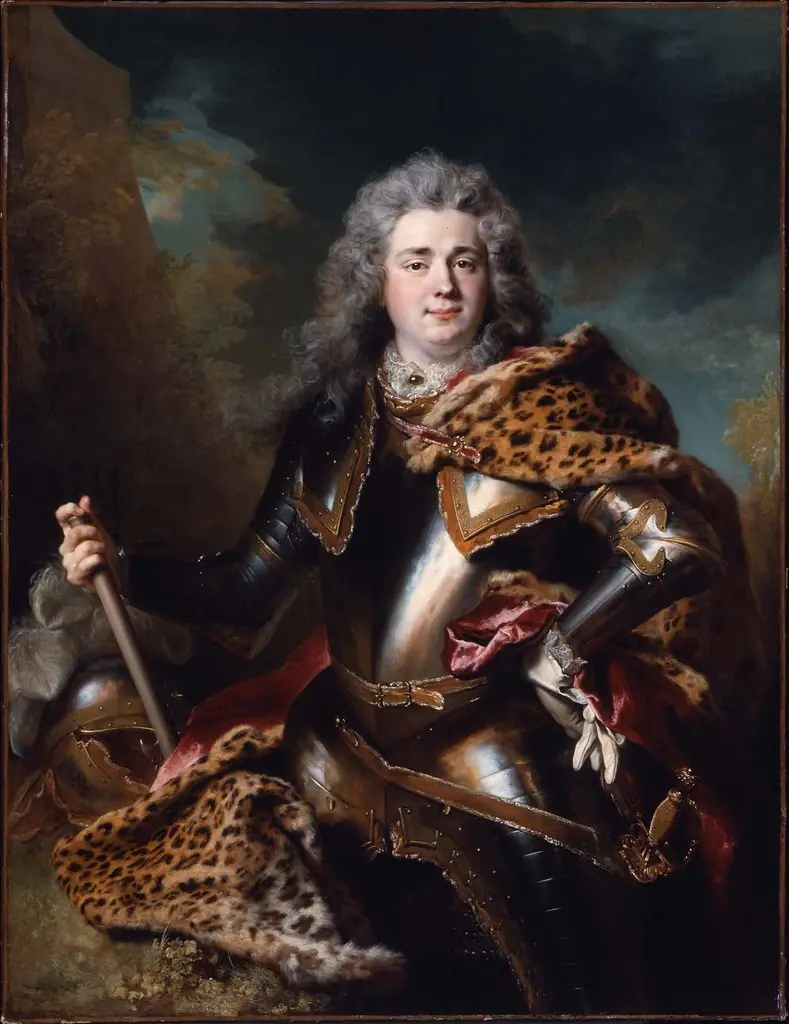 François Armand de Gontaut, Duc de Biron
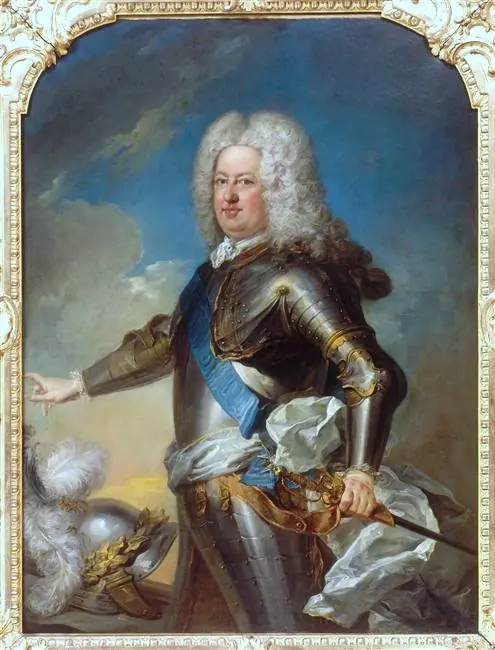 Portrait of Stanisław Leszczyński (1677-1766), King of Poland
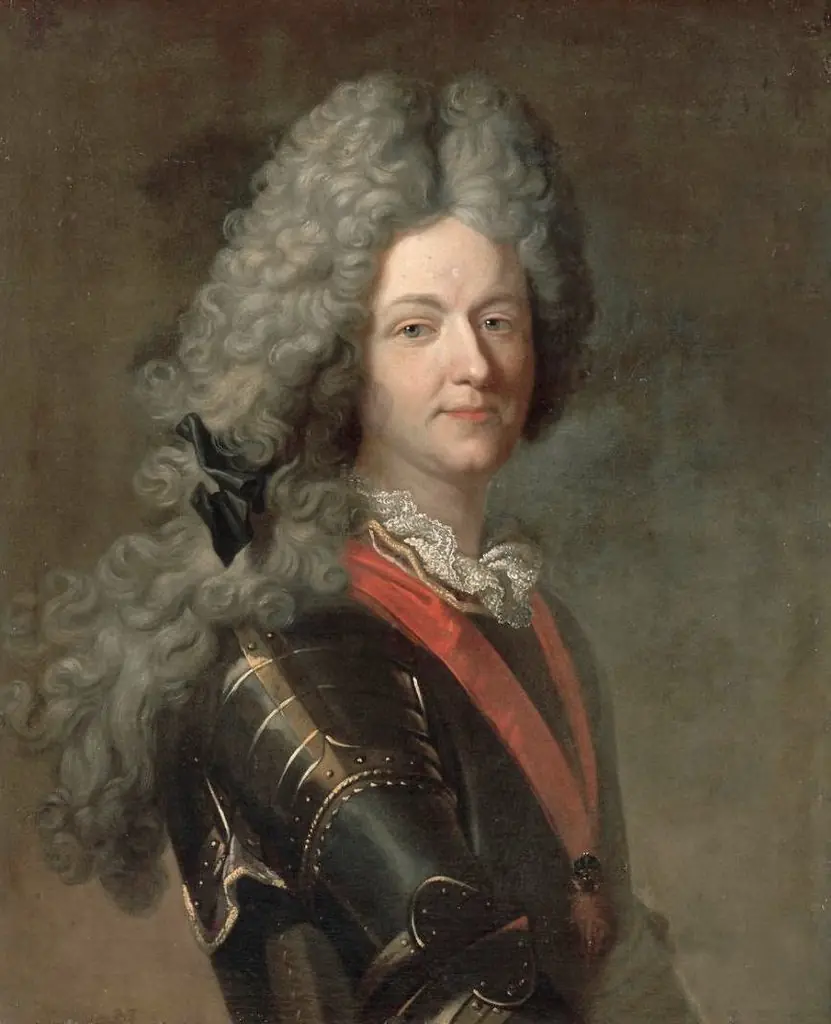 Jacques de Fitz-James, duc de Berwick
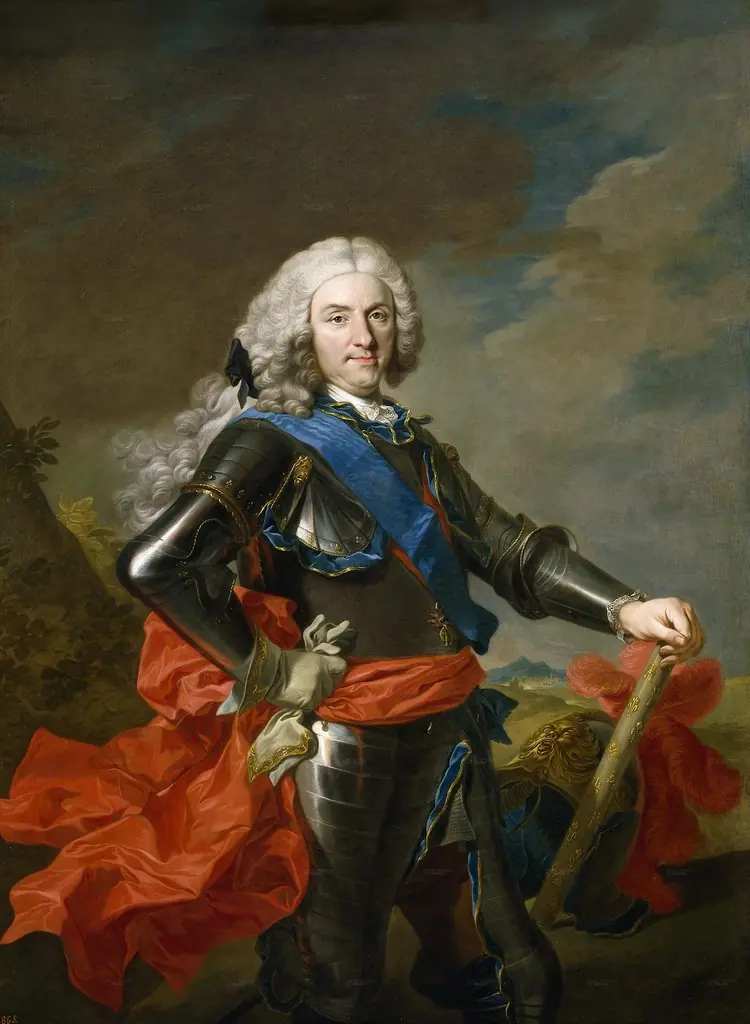 Felipe V, King of Spain
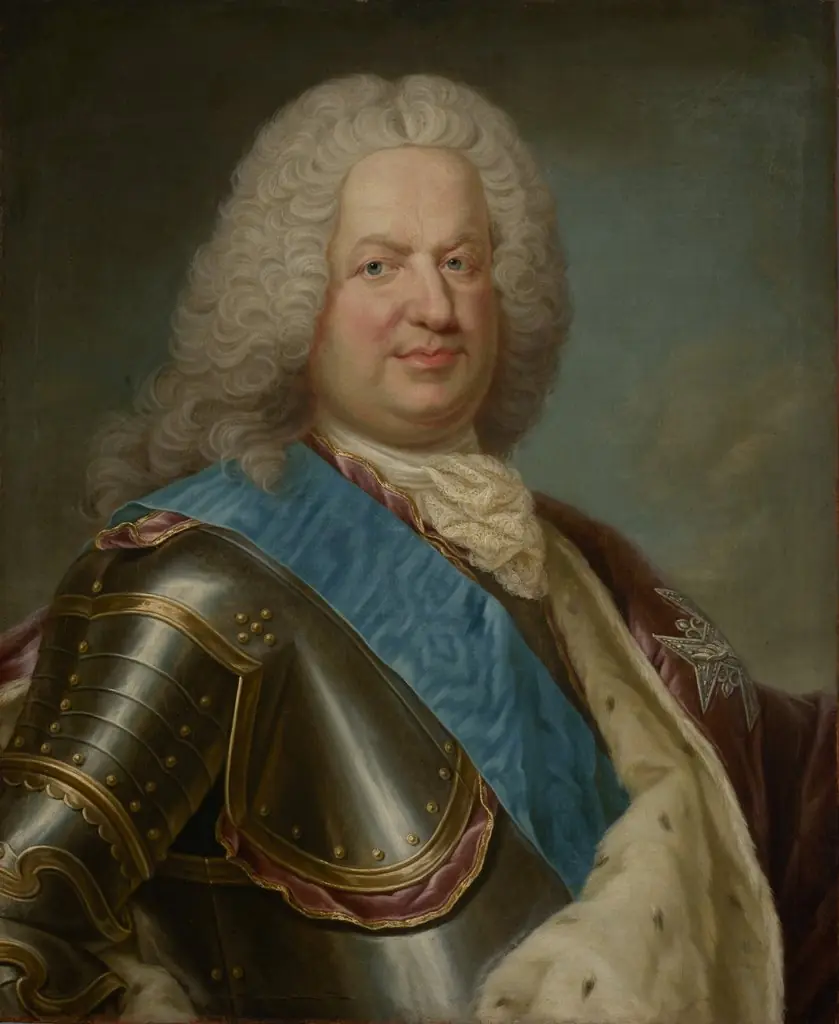 Portrait of Stanislaus Leszczyński (1677–1766))
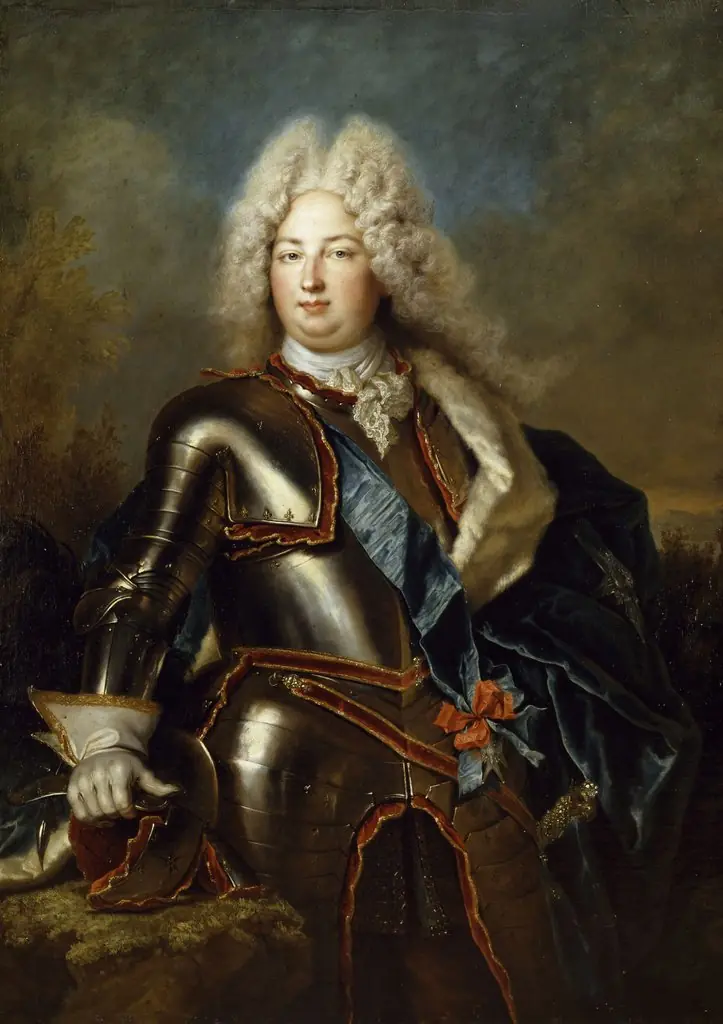 Charles of France, Duke of Berry
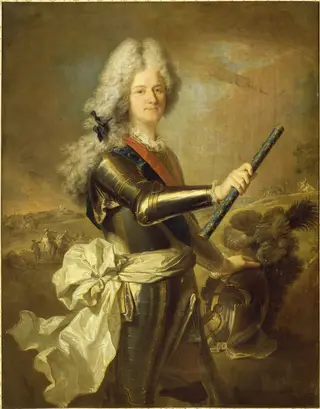 Portrait of James FitzJames, 1st Duke of Berwick (1670-1734)
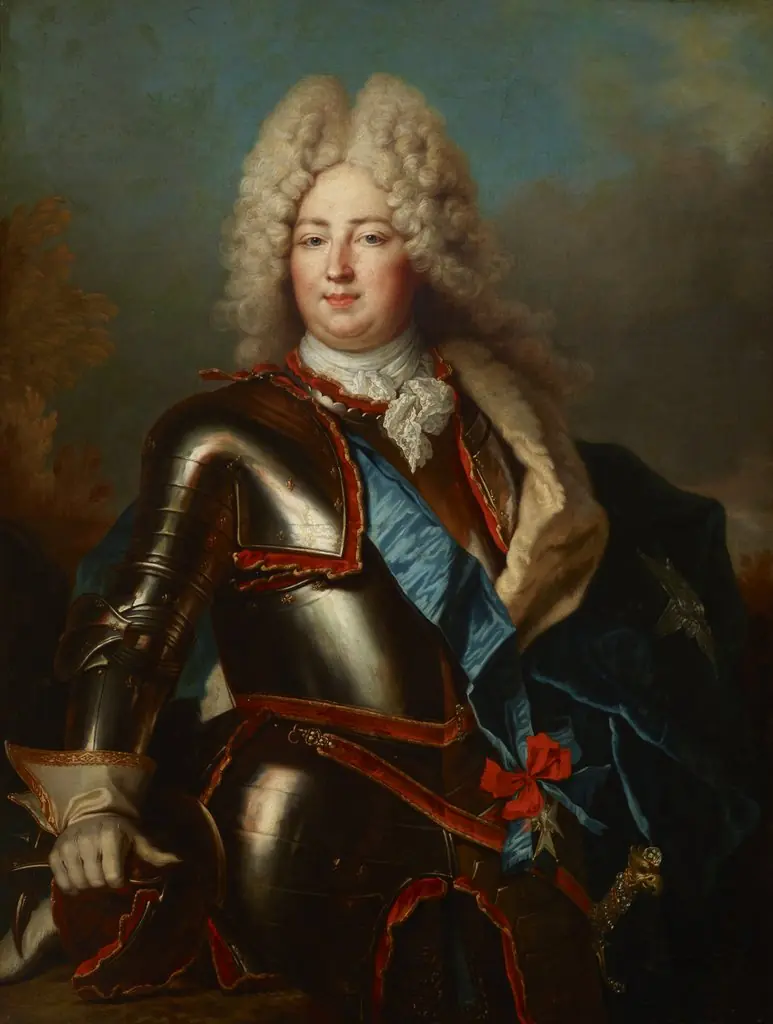 Portrait of Charles de France (1686–1714)
- Portrait of the Duke of Antin