Artwork
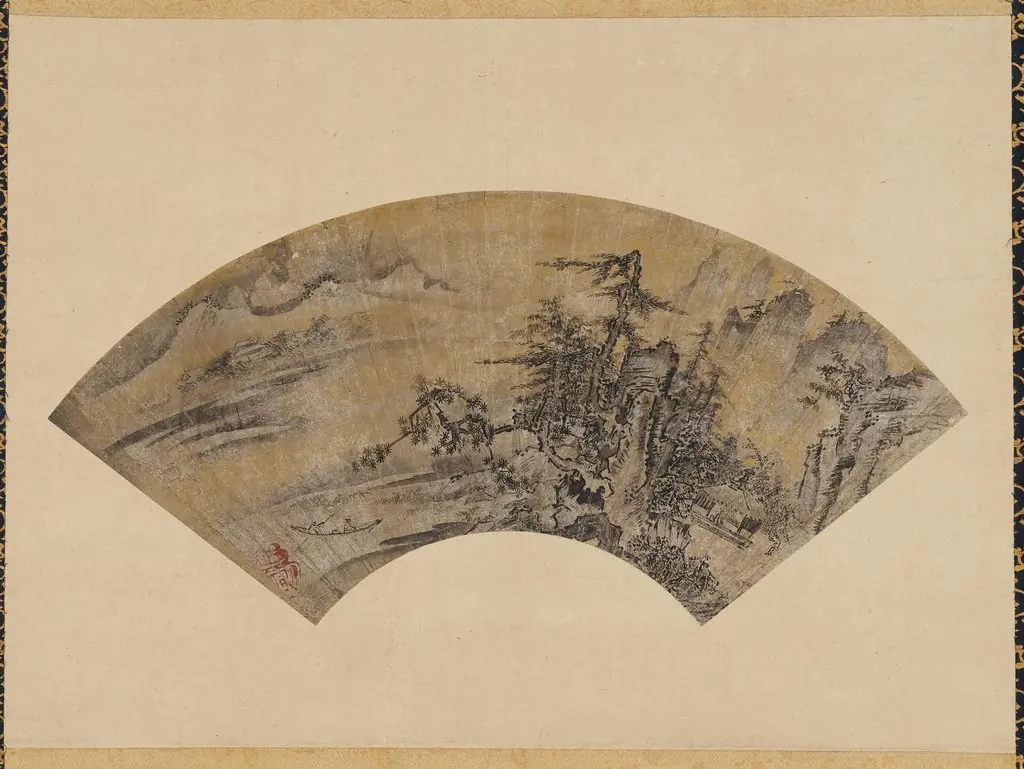
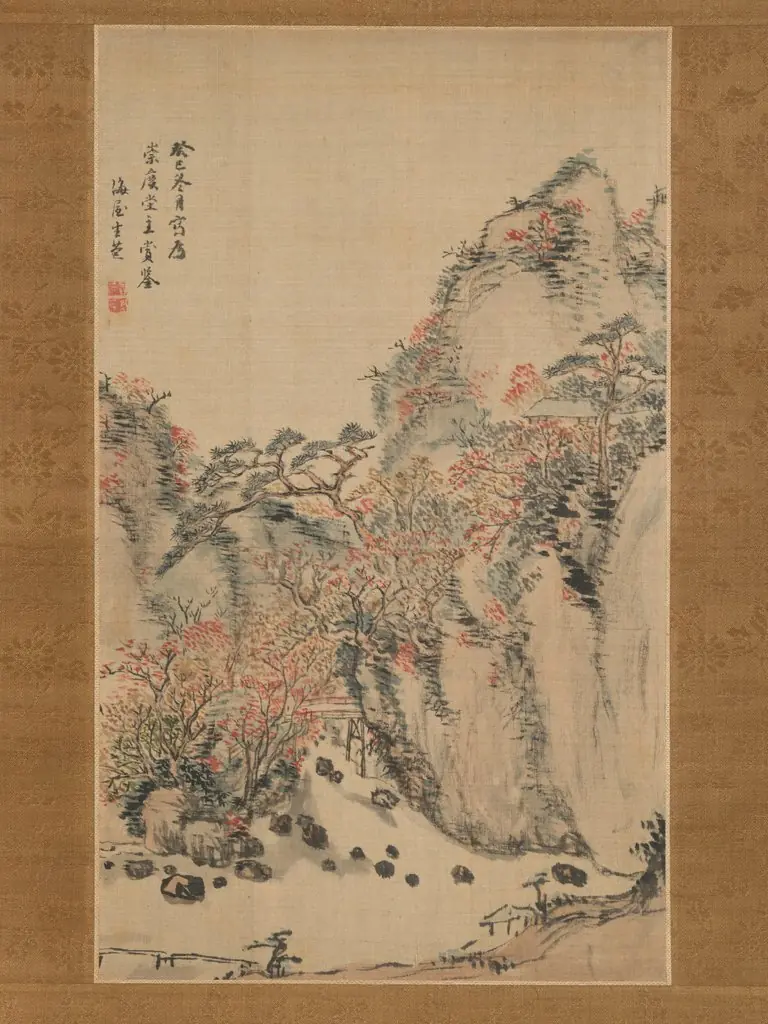
池(徳山)玉瀾筆 秋山水図扇面|Autumnal Landscape with a Waterfall
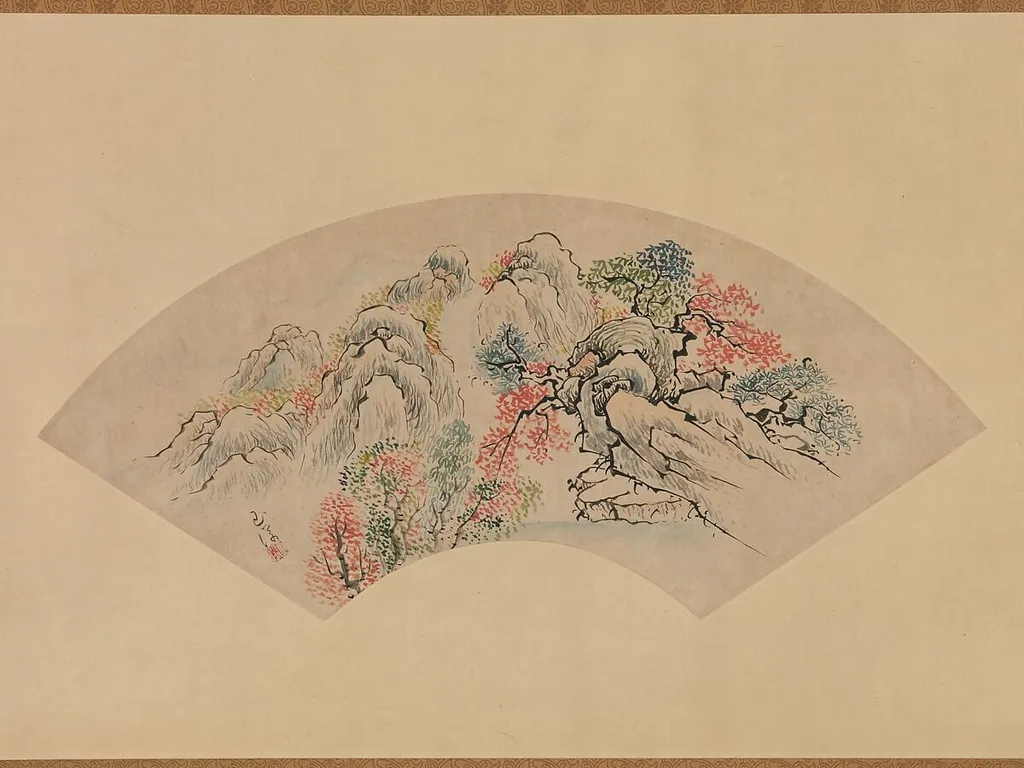
池(徳山)玉瀾筆 秋山水図扇面|Autumnal Landscape with a Waterfall is an ink painting by the Baroque artist Ike (Tokuyama) Gyokuran. It dates from 1756 and is held in the collection of the Metropolitan Museum of Art. Ike Gyokuran created "Autumnal Landscape with a Waterfall" in 1756.
About this work
Technique & Style
The application of color alongside ink suggests a refined, delicate handling suited to the fan's constrained surface.
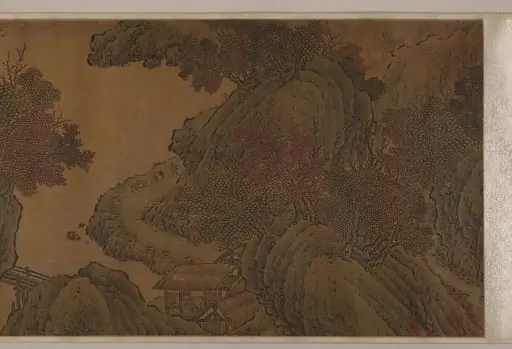
The work is executed in ink and color on paper, presented as a fan mounted as a hanging scroll. This format reflects the intimate scale and portable nature typical of fan paintings (ōgi-e) from Japan's Edo period, later converted for display as a hanging scroll to preserve and elevate the object. The artist employs traditional East Asian ink painting techniques, using graded ink washes to render the landscape elements and atmospheric depth characteristic of the genre.
The application of color alongside ink suggests a refined, delicate handling suited to the fan's constrained surface. The landscape genre treatment emphasizes natural scenery, specifically autumnal mountains and a waterfall, through compositional conventions of Japanese painting.
Context
The work titled 池(徳山)玉瀾筆 秋山水図扇面 (Autumnal Landscape with a Waterfall) was created in 1756 by Ike (Tokuyama) Gyokuran as an ink and color painting on paper, originally mounted as a fan and later adapted as a hanging scroll. It belongs to the landscape genre and is part of the artist’s body of work. The painting is held by the Metropolitan Museum of Art in New York, where it is listed in the museum’s collection.
Legacy
Autumnal Landscape with a Waterfall, painted in 1756 by Ike (Tokuyama) Gyokuran, exemplifies Edo‑period landscape art through its delicate ink and color washes on paper. As a fan‑mounted hanging scroll, the piece demonstrates the integration of poetic subject matter with refined brushwork characteristic of the period. Its inclusion in the Metropolitan Museum of Art’s collection has positioned it as a reference work for studies of Japanese screen and scroll painting, contributing to broader scholarly appreciation of Gyokuran’s role in the development of landscape motifs.
The work’s compositional treatment of water and foliage continues to inform analyses of later Japanese artists who adapted similar naturalistic themes.
Overview
Ike Gyokuran created "Autumnal Landscape with a Waterfall" in 1756. This artwork, originally a fan, is now presented as a hanging scroll, utilizing ink and color on paper. It represents a distinctive approach to landscape painting, combining traditional materials with an unconventional format. The piece offers insight into the artist's engagement with natural themes during the mid-18th century.
Subject & Meaning
The painting portrays a tranquil autumnal landscape, featuring prominent mountains rendered in various shades of gray. Interspersed throughout the mountainous terrain are trees, depicted with touches of green and red, indicative of the changing seasons. A dynamic waterfall cascades through the scene, providing a focal point and animating the otherwise serene natural environment.
Artist & collection