Artwork
Untitled
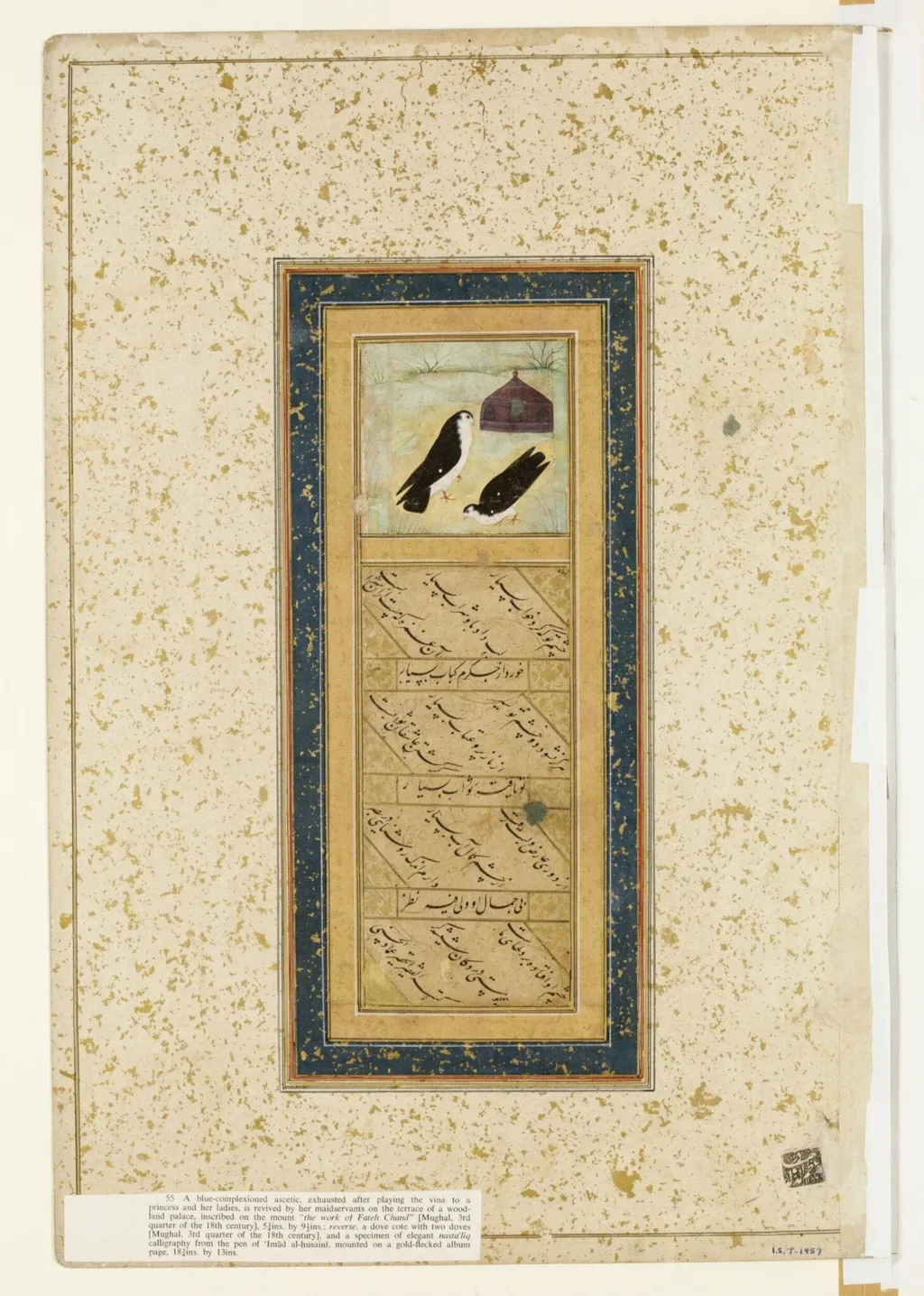
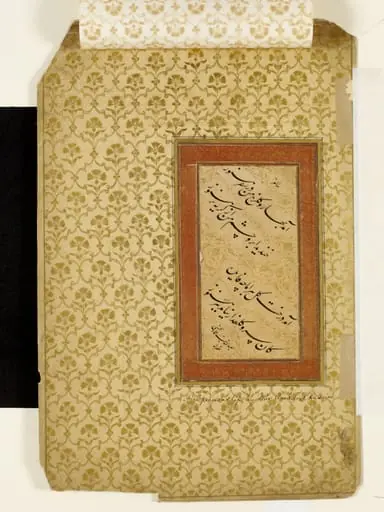
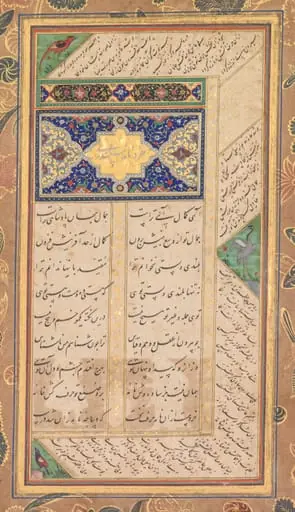
Untitled is a paint painting by the Romanticist artist Imad al-Husaini. It dates from 1750 and is held in the collection of the Victoria and Albert Museum. This work is an 18th-century opaque watercolor and gold leaf painting on paper, created around 1750.
About this work
Overview
This work is an 18th-century opaque watercolor and gold leaf painting on paper, created around 1750. It combines calligraphic text with a miniature scene of birds and architecture. The piece was crafted as a cohesive visual and literary object, typical of Persian manuscript traditions, where image and script complement one another in both form and meaning.
Subject & Meaning
Two doves, one black-and-white and one pure white, rest near a small structure with a red roof, possibly a dovecote.
Two doves, one black-and-white and one pure white, rest near a small structure with a red roof, possibly a dovecote. The birds, often symbols of peace or divine communication in Persian poetry, are rendered with quiet simplicity. The accompanying Nasta'liq verse, composed by 'Imad al-Husaini, likely reflects themes of love, longing, or spiritual yearning, aligning the imagery with poetic tradition.
Technique & Style
The painting employs opaque watercolor with meticulous detail, using soft, muted tones to render the birds and architecture. Gold leaf accents the calligraphy and borders, creating a luminous effect. The calligraphic script, executed in Nasta'liq, flows with rhythmic elegance.
The composition reflects a revival of earlier 17th-century motifs, reinterpreted with refined restraint and attention to delicate surface texture.
History & Provenance
The painted scene of doves and dovecote appears to be a reworking of a fragment from the early 1600s, repainted in the mid-18th century. The calligraphy, attributed to 'Imad al-Husaini, was added to accompany the revised image. The work was likely part of a bound album or manuscript, where such composite pieces were assembled for private contemplation and aesthetic appreciation.
Context
Created during a period when Persian artistic circles valued the fusion of poetry and painting, this work reflects the enduring influence of Safavid-era aesthetics. Artists often reused or reworked older compositions, layering new calligraphy over revived imagery. Such pieces were collected in albums (muraqqa) by connoisseurs who prized subtle interplay between text and visual motif.
Legacy
This piece exemplifies the continuity of Persian manuscript traditions into the 18th century, where calligraphy and miniature painting remained central to elite artistic culture. Though not widely exhibited, similar works are held in major collections, including the Victoria and Albert Museum, preserving the quiet elegance of a practice that valued restraint, harmony, and poetic resonance over grandeur.
Own this work as a print
Artist & collection
Artist
Imad al-Husaini spent his life tucked inside the clatter of Baghdad’s book bazaars, sketching between bites of spiced lamb kebabs.

- Untitled
 Untitled
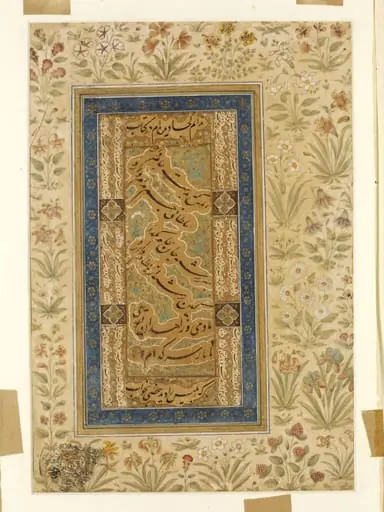
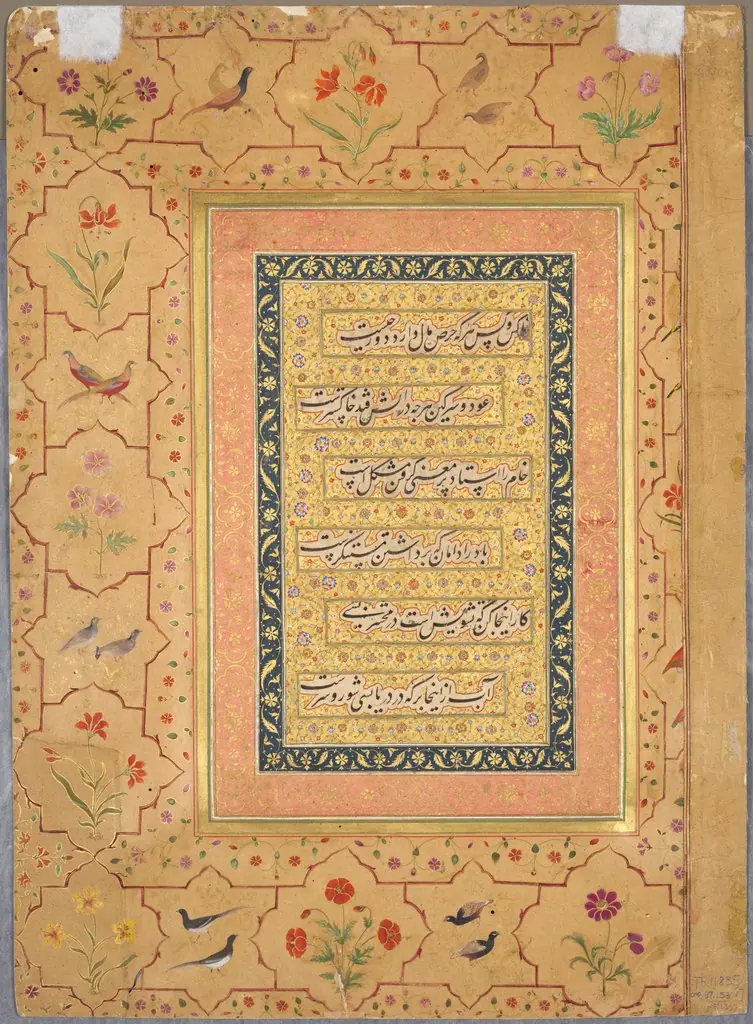 Page from the Late Shah Jahan Album: Calligraphy Framed by an Ornamental Border with Poppies and Pairs of Birds (verso)
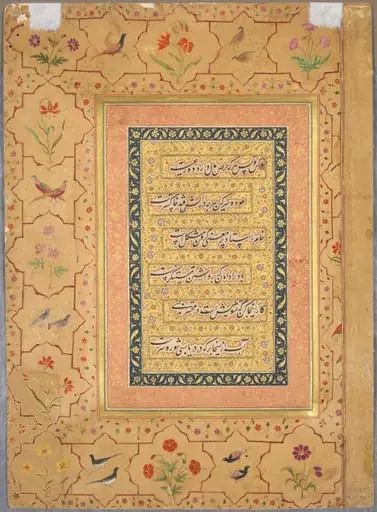 Calligraphy framed by an ornamental border with poppies and pairs of birds, from the Late Shah Jahan Album (verso)
 Untitled
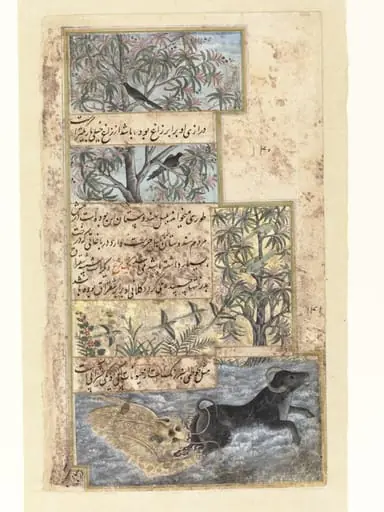
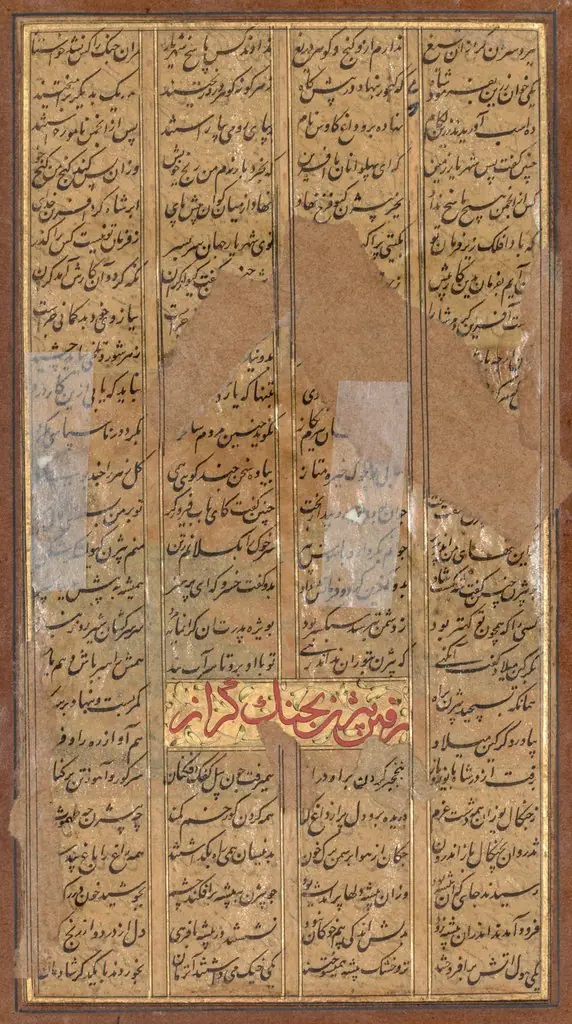 Bijan killing the wild boars of Irman, from a Shah-nama (Book of Kings) of Firdausi (Persian, about 934–1020), (recto)
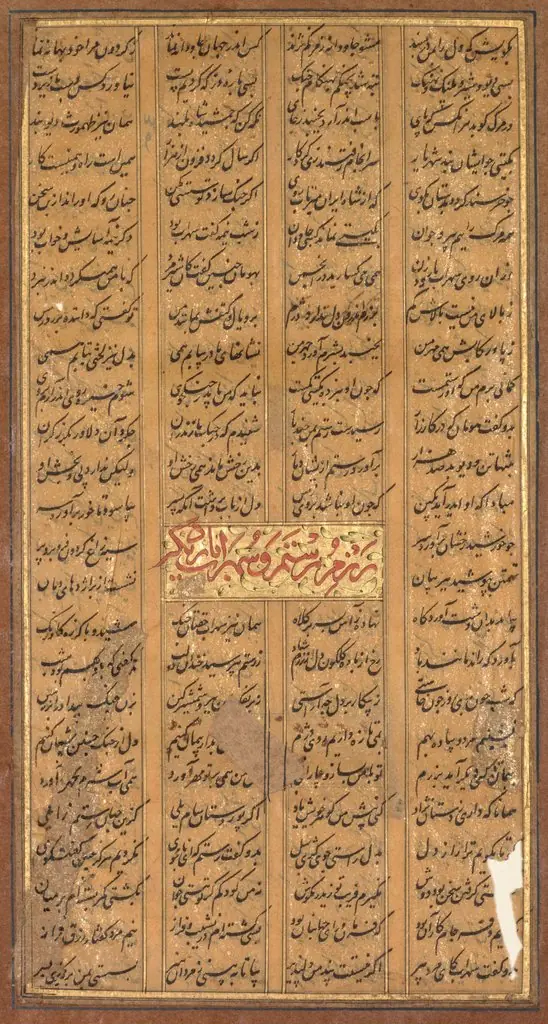 Text of Rustam and Suhrab, from the Shah-nama of Firdausi (Persian, c. 934–1020) (verso)
 Untitled
 Untitled
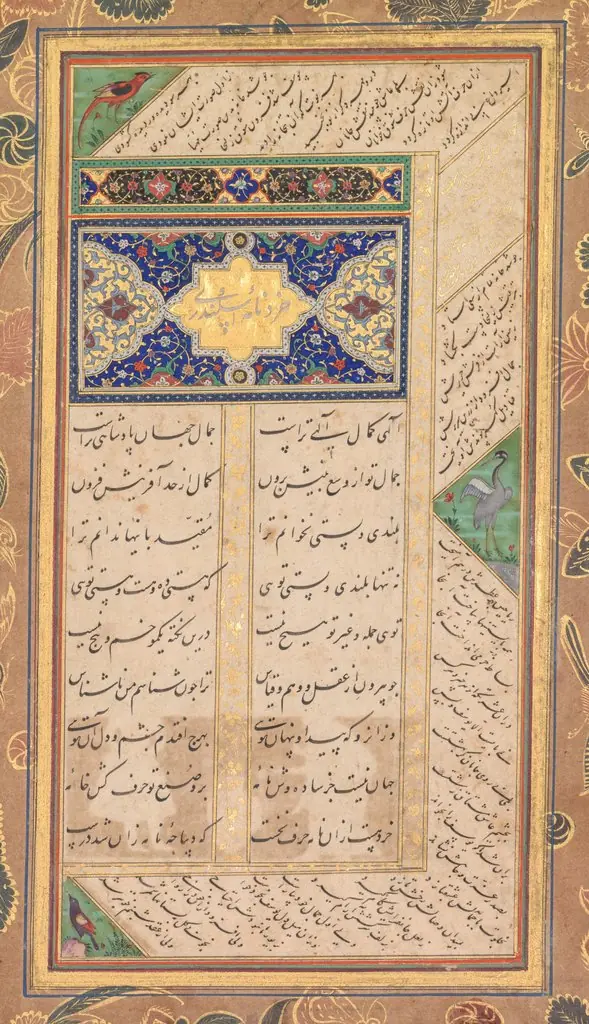 Illuminated page (verso), from a Panj Ganj (Five Treasures) of Abd al- Rahman Jami (Persian, 1414–1492) with two Persian masnavis: Yusuf va Zulaykha (Joseph and Zulaykha) and Khirad-nama-i Iskandari (Alexander’s Book of Wisdom)
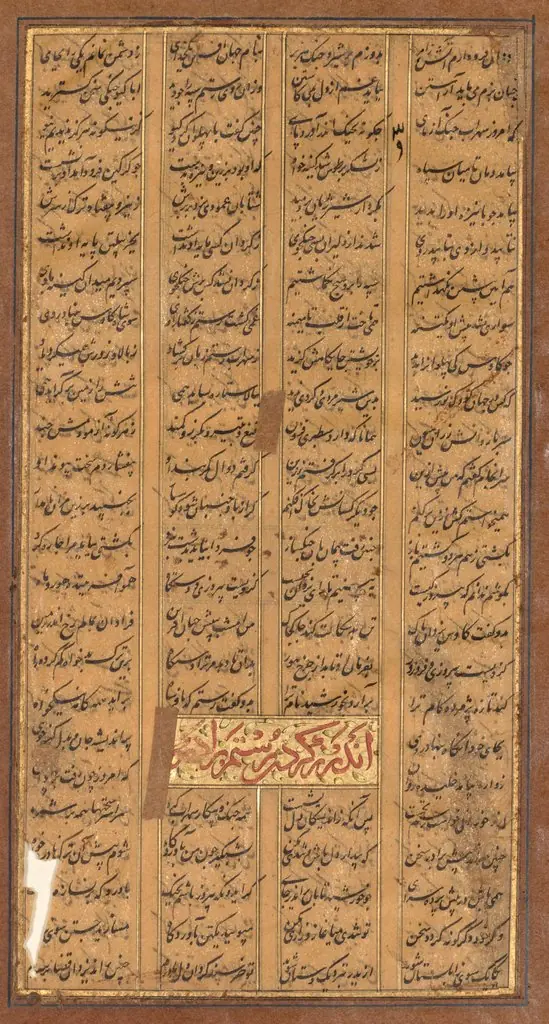 Text of Rustam and Suhrab, from the Shah-nama of Firdausi (Persian, c. 934–1020) (recto)
 Illuminated page (verso), from a Panj Ganj (Five Treasures) of Abd al- Rahman Jami (Persian, 1414–1492) with two Persian masnavis: Yusuf va Zulaykha (Joseph and Zulaykha) and Khirad-nama-i Iskandari (Alexander’s Book of Wisdom)