Artwork
Golden Autumn
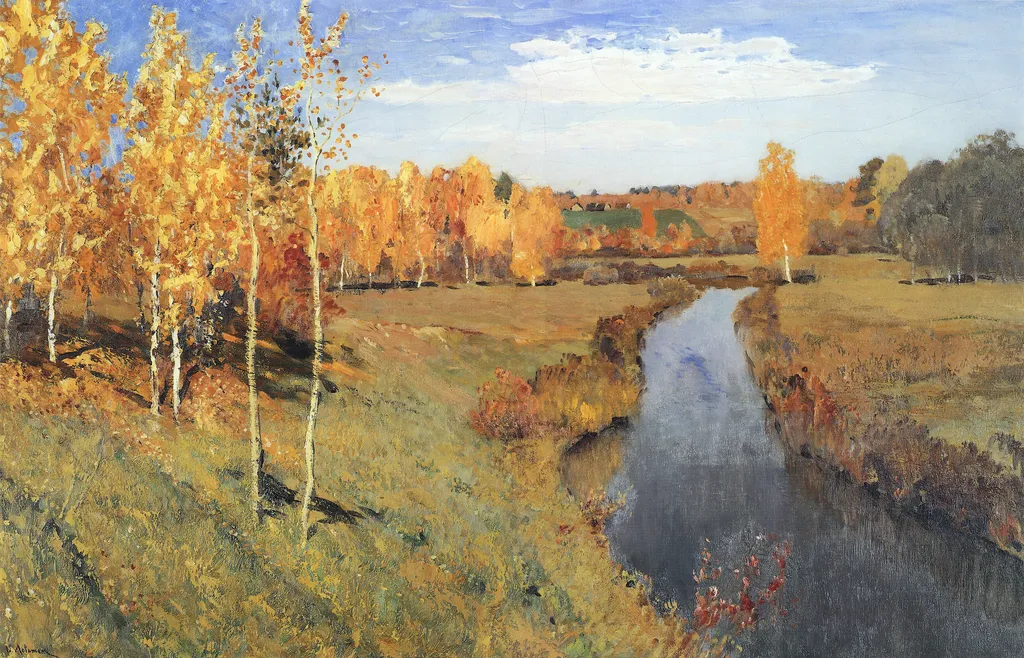
Golden Autumn is an oil painting by the Impressionist artist Isaac Levitan. It dates from 1898 and is held in the collection of the Tretyakov Gallery. Created in 1895 by Russian landscape artist Isaak Levitan, this oil on canvas measures roughly 82 by 126 centimeters.
About this work
Subject & Meaning
The scene centers on the Syezha River, framed by birch and aspen trees whose foliage glows in warm golds against a clear blue sky.
Golden Autumn depicts a luminous late-autumn river landscape near Ostrovno in Tver Governorate, where Levitan spent time in 1895. The scene centers on the Syezha River, framed by birch and aspen trees whose foliage glows in warm golds against a clear blue sky. The composition emphasizes the seasonal contrast between the river’s reflective surface and the vivid autumn palette, with art historians noting the deliberate interplay of gold and blue tones as central to the work’s emotive power. Critics and scholars interpret the painting as conveying not merely seasonal beauty but a deeper harmony and poetic integrity, situating it within Levitan’s broader lyrical approach to landscape during the mid‑1890s.
Technique & Style
Golden Autumn is executed in oil on canvas and measures 82 × 126 cm. The handling emphasizes a luminous palette dominated by golden ochres and warm yellows that contrast with cool blues in sky and water, aligning with art historians’ observations on the central role of gold, blue opposition in the composition’s color structure. The foliage and riverbank are rendered with broad, confident brushwork that conveys the season’s vibrancy while preserving atmospheric unity. Stylistically, the work exemplifies Levitan’s mature synthesis of plein-air observation and studio refinement, producing an effect of immediacy that scholars attribute to the artist’s exceptional visual memory rather than literal on-site execution.
History & Provenance
Golden Autumn was painted by Isaac Levitan in 1895, with initial work begun that autumn at the Gorka estate near Ostrovno in Tver Governorate. The artist produced sketches on site, particularly along the Syezha River, before completing the canvas in Moscow by the end of the same year. The work was exhibited at the 24th traveling exhibition of the Peredvizhniki in Saint Petersburg in February 1896 and again in Moscow the following month. It also appeared at the All-Russia Industrial and Art Exhibition in Nizhny Novgorod in 1896. Pavel Tretyakov purchased the painting directly from Levitan in May 1896 for 700 roubles, though the transaction was finalized in early June.
Golden Autumn is held in the collection of the State Tretyakov Gallery in Moscow, where it is cataloged under inventory number 1490. The work was first publicly displayed in February 1896 at the 24th exhibition of the Society for Travelling Art Exhibitions in Saint Petersburg, before moving to Moscow in March of the same year. Later that year, it appeared at the All-Russia industrial and art exhibition in Nizhny Novgorod. Following these exhibitions, Pavel Tretyakov acquired the painting from the artist in May 1896. During a subsequent tour in November 1896, the canvas was transported to Kharkiv, where it sustained damage when a copper radiator part fell onto it, causing a tear that required professional repair.
Context
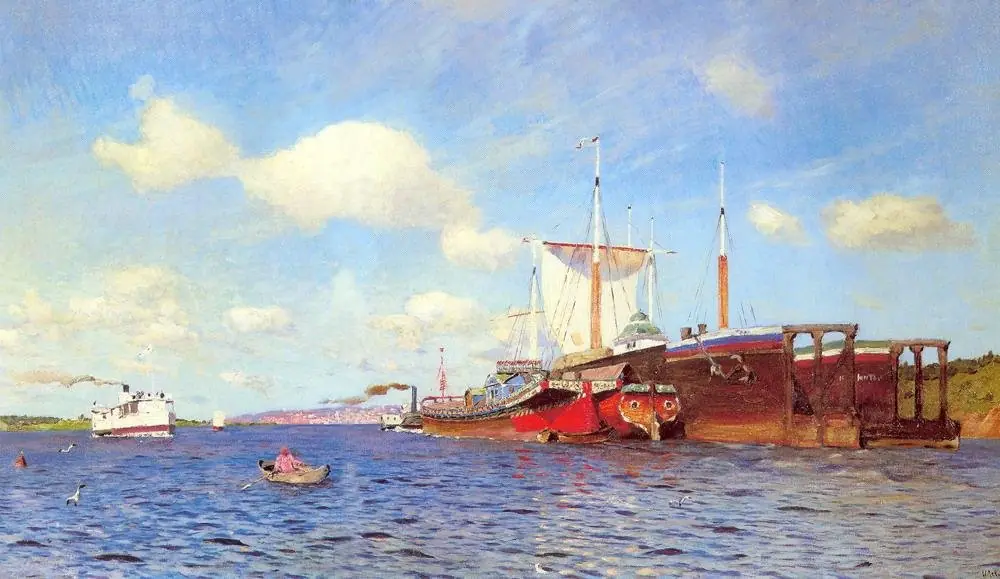
Golden Autumn (1895) stands as a defining example of Isaac Levitan's late style, marking a distinct shift toward a more joyous palette and Impressionist influence. Art historians classify it within a pivotal series of works created between 1895 and 1897, which includes March and Fresh Wind. Volga. Critics such as Alexei Fedorov-Davydov have praised the canvas for its emotional fullness and the splendor of its golden coloring, while Dmitry Sarabianov highlighted the striking contrast between gold and blue as central to its composition. Faina Maltseva notes that beyond mere color, the work reveals a poetic integrity and elegance. Although initial critical reception at the 24th Peredvizhniki exhibition in 1896 was mixed, with some contemporaries finding certain tones too harsh, the painting was quickly acquired by Pavel Tretyakov. It remains a significant testament to Levitan's ability to capture the vibrancy of the Russian autumn landscape.
Legacy
Golden Autumn became a cornerstone of Isaac Levitan’s late oeuvre and a touchstone for Russian landscape painting. Exhibited at the 24th Peredvizhniki show in 1896 and promptly acquired by Pavel Tretyakov for 700 roubles, the canvas entered the Tretyakov Gallery’s permanent collection, where it remains a centerpiece.
Art historians Alexei Fedorov-Davydov and Dmitry Sarabianov underscored its emotional and chromatic innovation: the juxtaposition of gold foliage against a blue sky was read as a distillation of Impressionist influence within the Russian realist tradition. Faina Maltseva further argued that the work transcended mere seasonal depiction, embodying a poetic synthesis of nature’s ephemeral beauty. Its reputation was cemented by inclusion in major 1896 exhibitions in Saint Petersburg, Moscow, and Nizhny Novgorod, ensuring broad visibility among contemporaries and subsequent generations of artists and critics.
Own this work as a print
Artist & collection
Artist
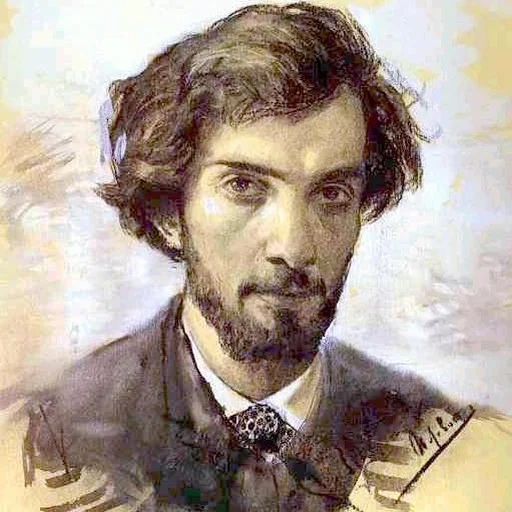
Isaac Ilyich Levitan (Russian: Исаа́к Ильи́ч Левита́н; 30 August 1860 – 4 August 1900) was a Russian landscape painter who advanced the genre of the "mood landscape".