Artwork
The Sint-Antoniuswaag in Amsterdam
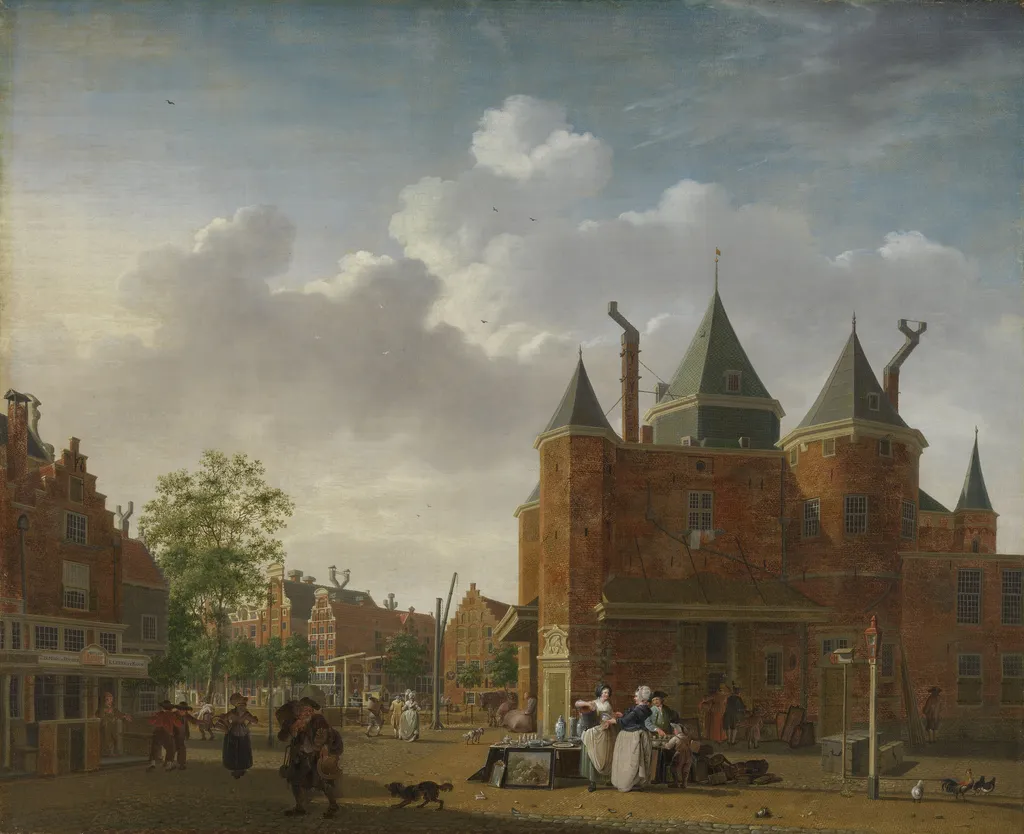
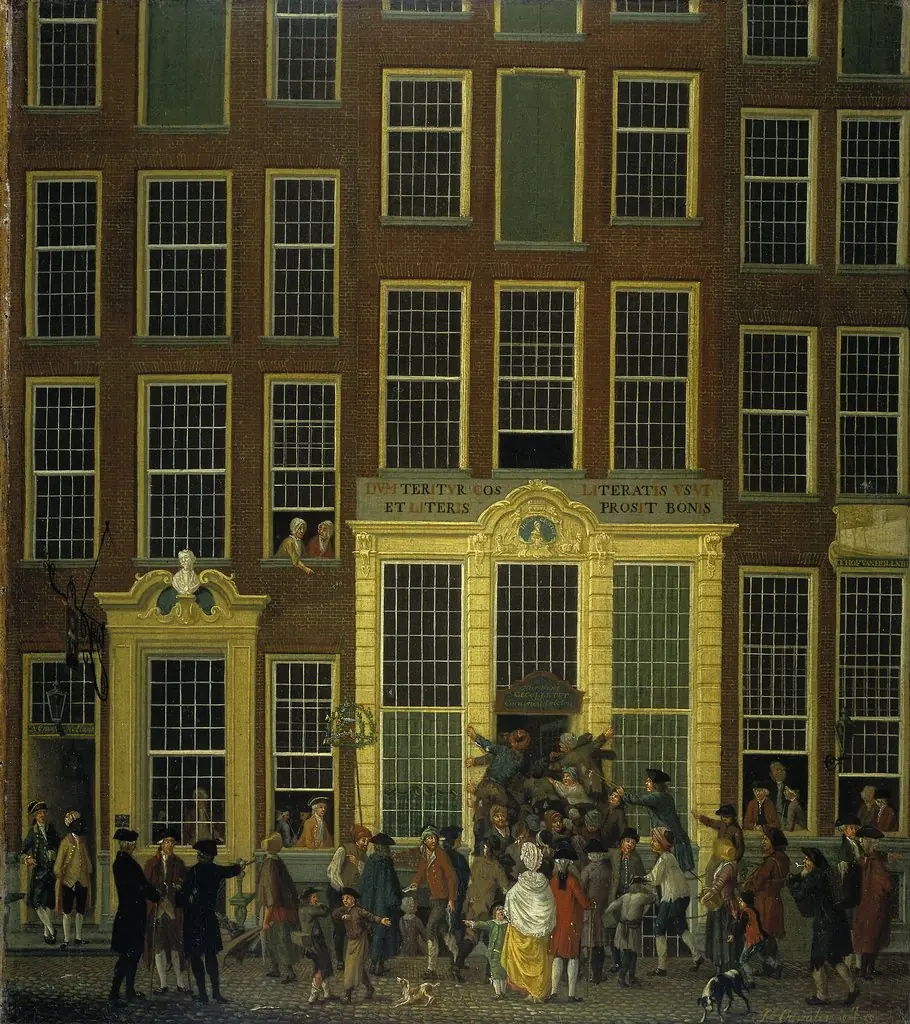
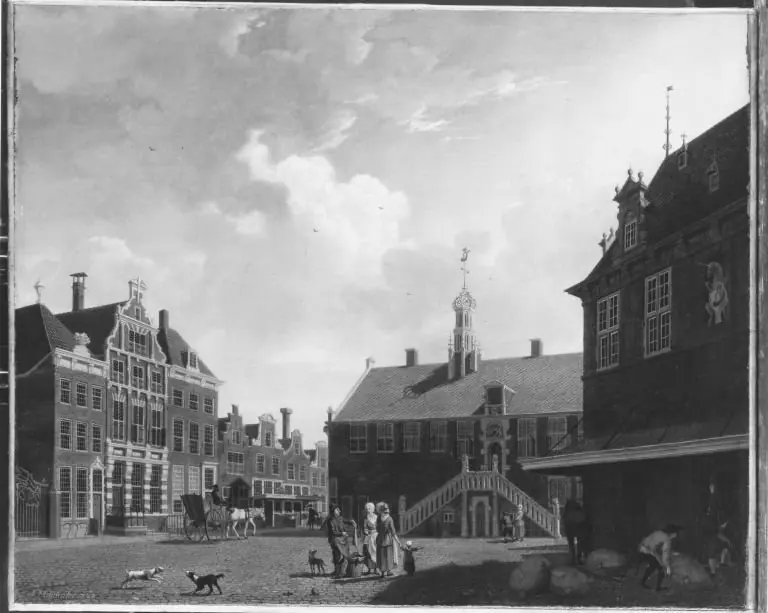
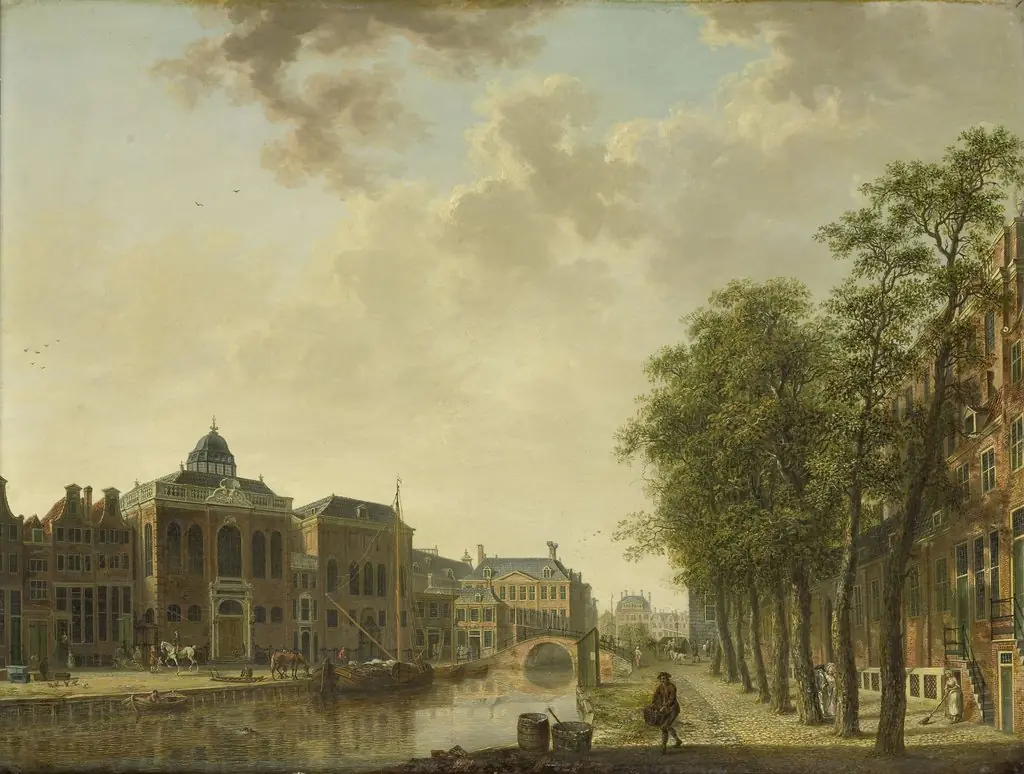
The Sint-Antoniuswaag in Amsterdam is an oil painting by the Rococo painting artist Isaac Ouwater. It dates from 1793 and is held in the collection of the Rijksmuseum.
About this work
Technique & Style
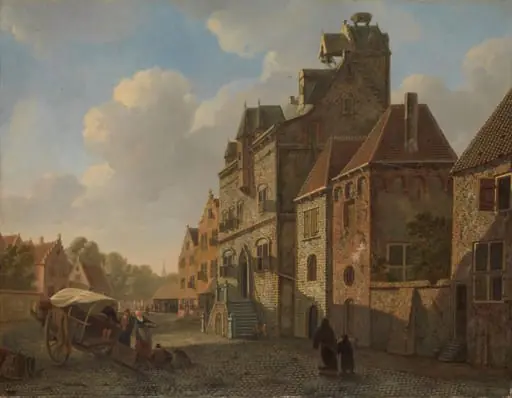
The composition is characterized by a restrained, topographically precise handling typical of late eighteenth-century Dutch cityscapes.
The painting is executed in oil on canvas. The composition is characterized by a restrained, topographically precise handling typical of late eighteenth-century Dutch cityscapes. Architectural and figural elements are rendered with clear contours and smooth transitions, avoiding visible impasto.
The palette is muted, dominated by earth tones and subdued greens and blues, consistent with the documentary aims of the genre. The scene’s clarity and measured perspective underscore the building’s civic function as a weigh house, aligning with the painting’s evidential rather than atmospheric purpose.
History & Provenance
The painting titled The Sint-Antoniuswaag in Amsterdam was created by Isaac Ouwater in 1785. Executed in oil paint on canvas, the work measures 60 cm in height and 74 cm in width. It is classified as a cityscape genre piece depicting the historic weigh house in Amsterdam. The artwork is currently held in the collections of both the Rijksmuseum and the Amsterdam Museum.
The Sint-Antoniuswaag in Amsterdam, painted by Isaac Ouwater in 1785, is held jointly by the Rijksmuseum and the Amsterdam Museum. Both institutions are listed as the painting's collections and locations. The work is executed in oil on canvas and measures 60 by 74 centimetres. No specific inventory or accession numbers, nor any exhibition history, are recorded in the available sources.
Overview
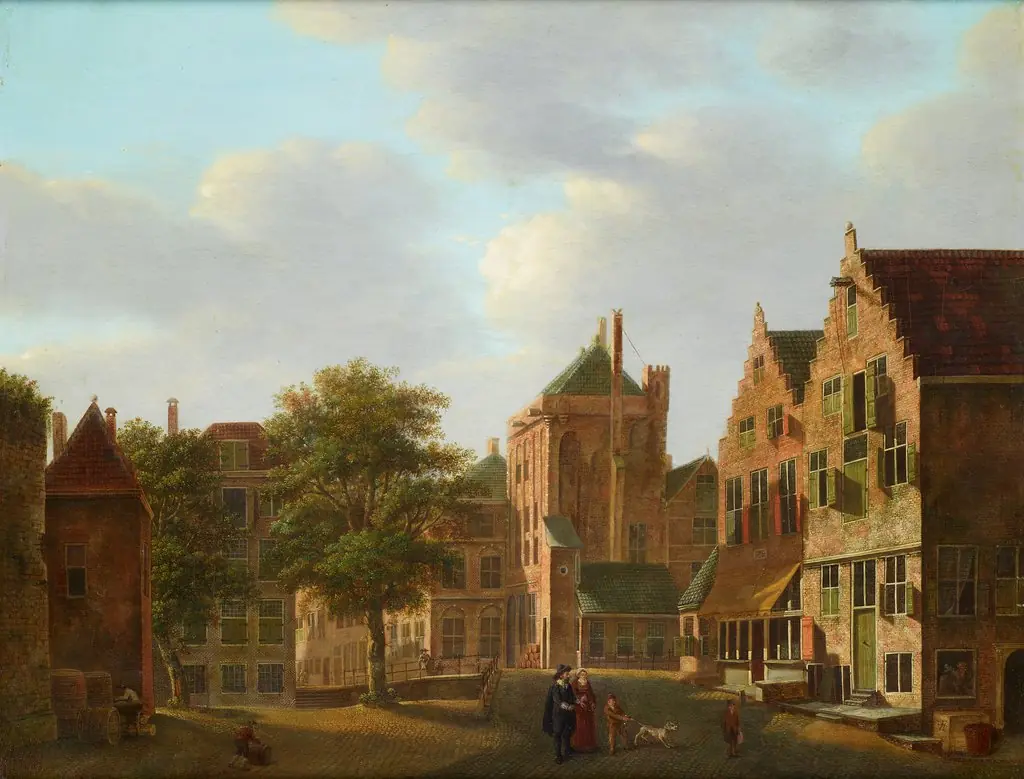
Isaac Ouwater’s 1793 oil painting depicts the Sint‑Antoniuswaag, a prominent brick weighing house in Amsterdam, framed by its tall towers and gate. The bustling street scene captures pedestrians in period attire, a small market table with jars, and a dog, all set beneath a bright sky dotted with voluminous clouds.
Subject & Meaning
The work records everyday urban life in late‑18th‑century Amsterdam, emphasizing the waag’s role as a commercial hub. Figures are shown conversing and trading, suggesting the building’s function as a gathering point for merchants and townspeople, while the surrounding architecture underscores the city’s mercantile prosperity.
Context
The Sint‑Antoniuswaag was a central weighing house for goods entering Amsterdam’s markets. Ouwater’s depiction aligns with a broader Dutch tradition of cityscape painting that recorded civic architecture and daily commerce, offering a visual record of the city’s economic infrastructure.
Own this work as a print
Artist & collection