Artwork
Stephen Paschasius
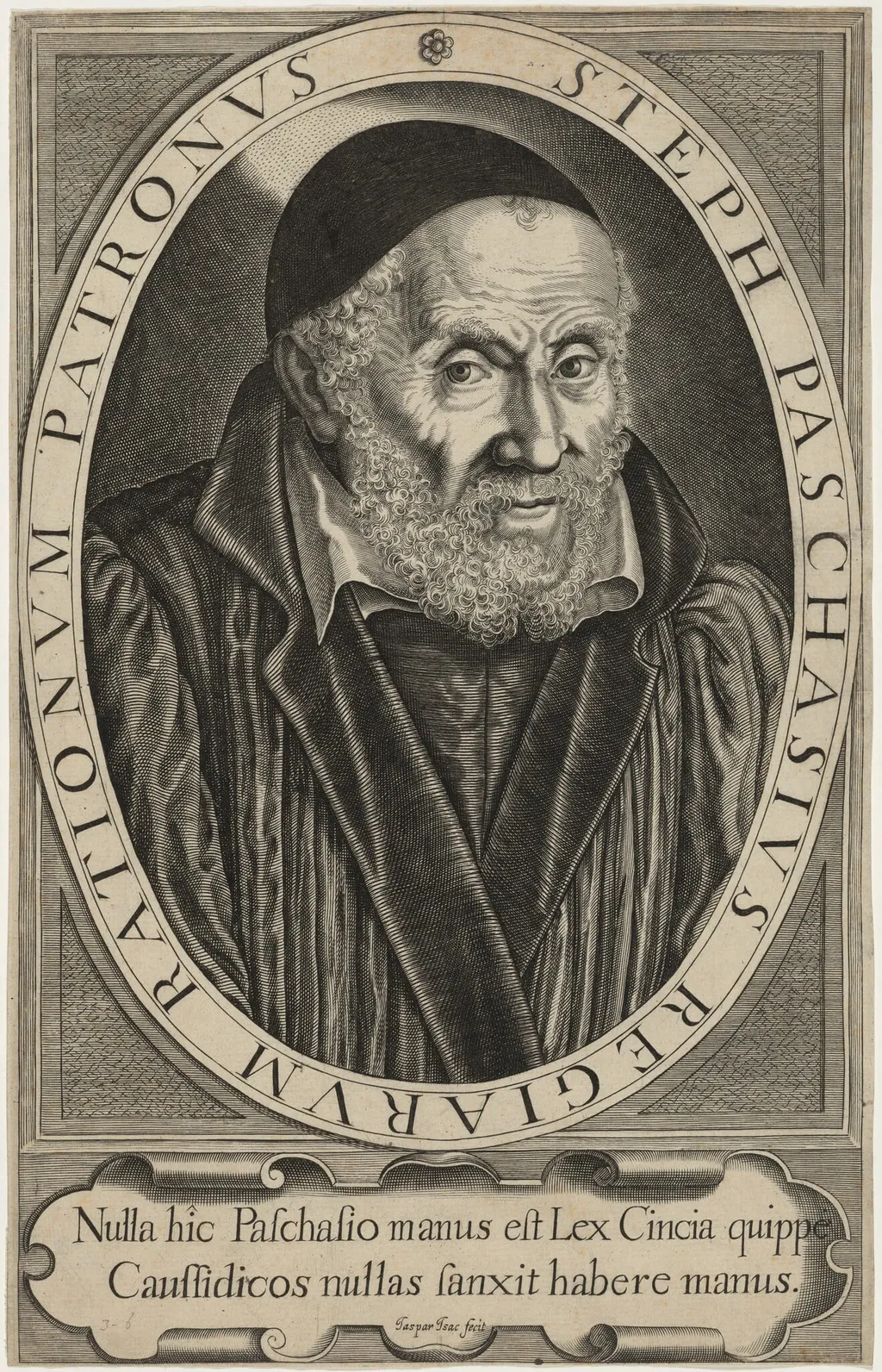
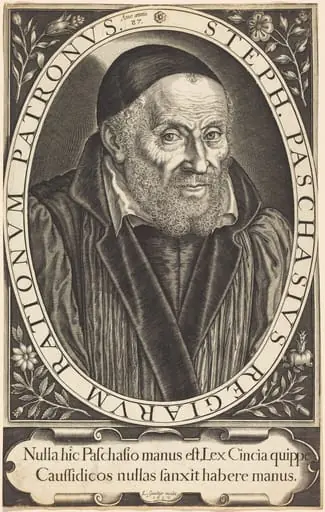
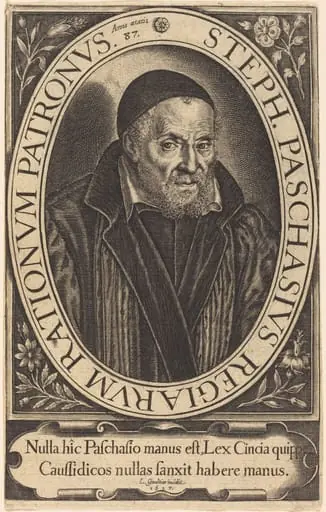
Stephen Paschasius is an ink print by the Renaissance artist Jaspar Isacsz. It dates from 1614 and is held in the collection of the National Gallery of Art.
About this work
Overview
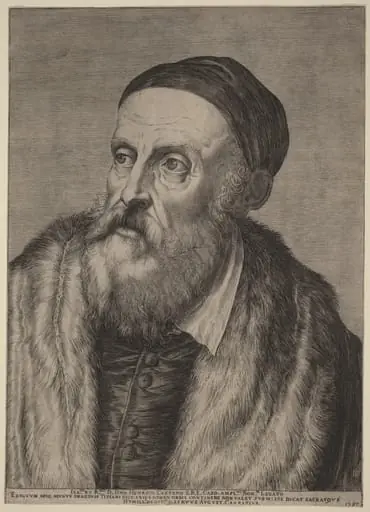
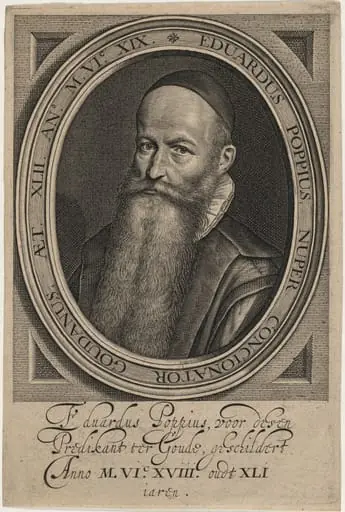
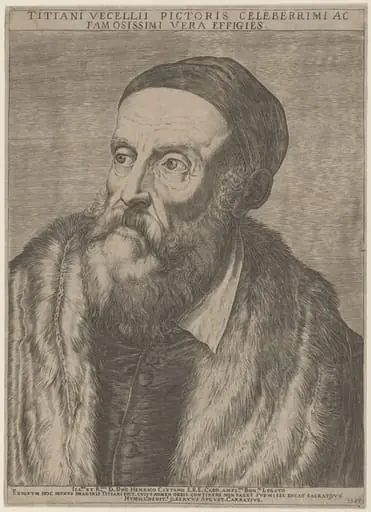
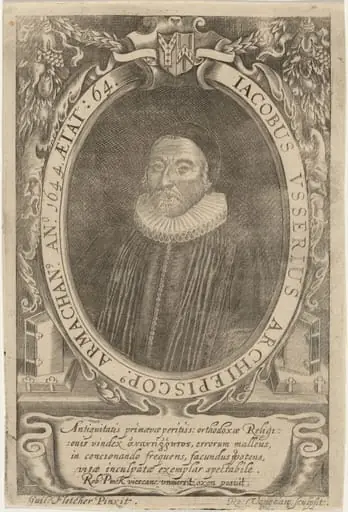
Stephen Paschasius is an early‑17th‑century portrait executed as an engraving by the Dutch printmaker Jaspar Isacsz in 1614. The image presents a solitary, elderly male figure rendered in stark black‑and‑white contrast, typical of the period’s portrait prints.
Subject & Meaning
The sitter is depicted with a long white beard, curly hair, and a high‑collared, formal robe, conveying status and gravitas. An elaborate Latin inscription, “STEPHANVS PASCHASIVS,” arches above his head, while a smaller Latin motto beneath adds a customary moral or commemorative element common in contemporary portraiture.
Technique & Style
Isacsz employed the engraving process, incising fine lines into a metal plate to achieve precise detailing of facial features, hair, and garment folds. The stark tonal range and crisp line work emphasize the sitter’s age and seriousness, reflecting the disciplined aesthetic of Northern European printmaking.
History & Provenance
Created in 1614, the print likely circulated among learned circles or patrons interested in portraiture of notable individuals. No specific ownership record precedes its appearance in modern collections, but its survival attests to the durability of metal‑based prints.
Context
The work belongs to a period when engravings served both documentary and decorative purposes, often used to disseminate images of scholars, clergy, or civic leaders across the Low Countries. Its formal attire and Latin legend align with the conventions of early Baroque portraiture in the Dutch Republic.
Own this work as a print
Artist & collection