Artwork
Leaf 3 from an antiphonal fragment
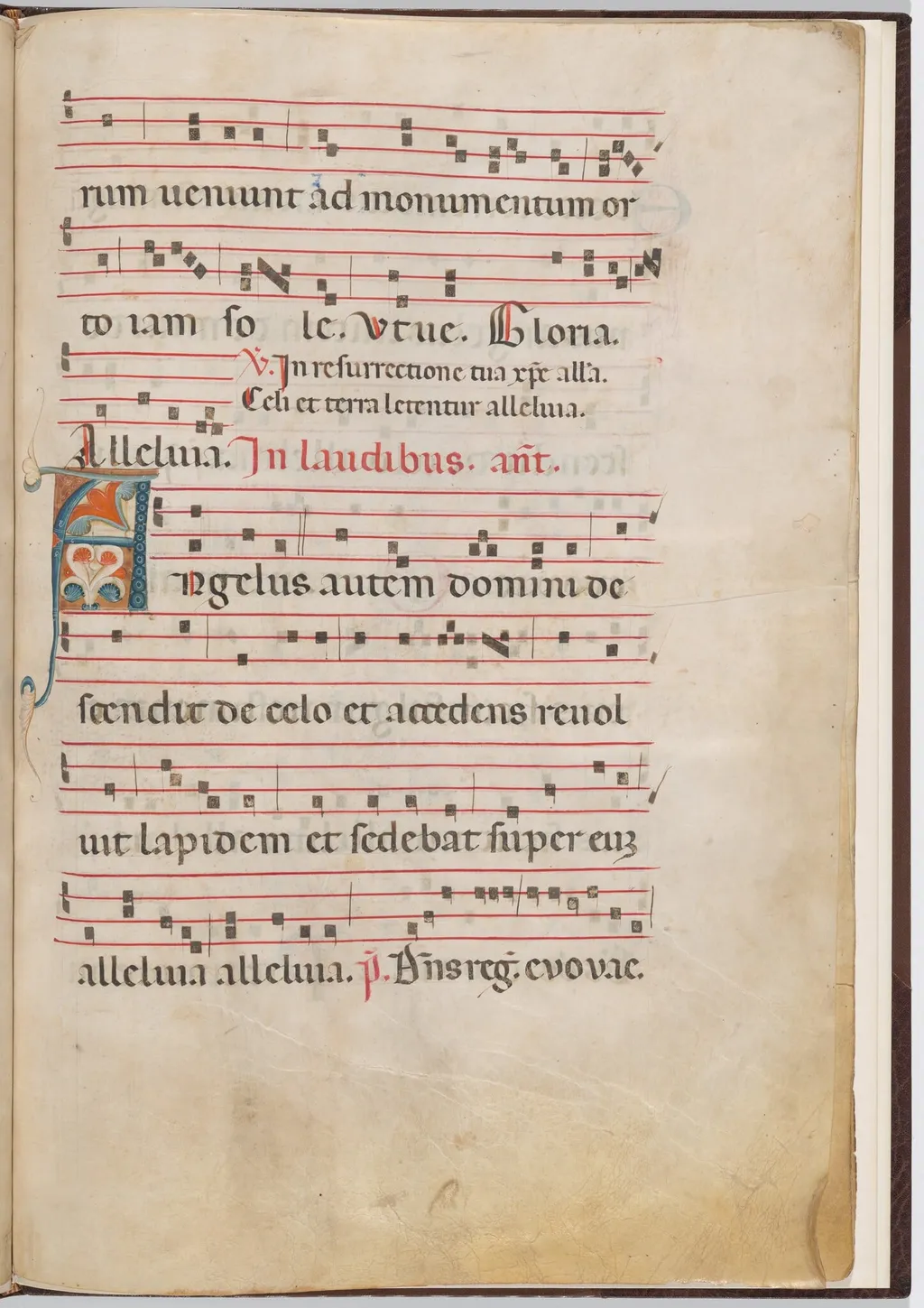
Leaf 3 from an antiphonal fragment is a tempera drawing by Italian 13th Century. It dates from 1275 and is held in the collection of the National Gallery of Art.
About this work
Overview
A large decorated initial 'D' anchors the page, displaying the characteristic Gothic style of the period with intricate blue, red, and gold swirls.
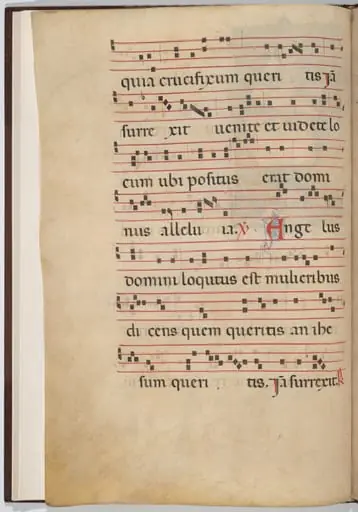
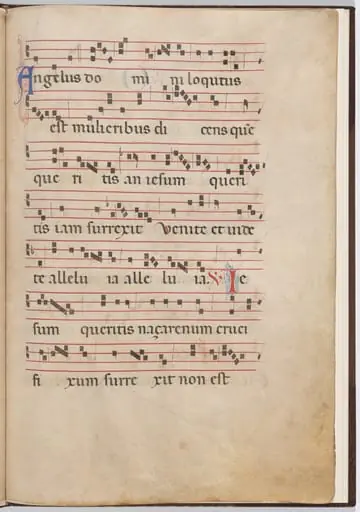
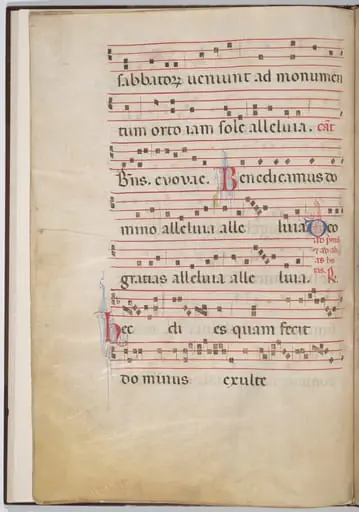
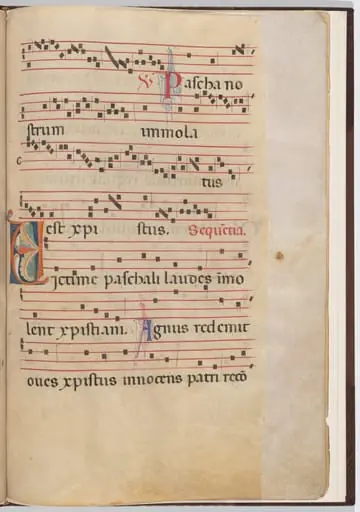
Leaf 3 from an antiphonal fragment is a mid-13th-century Italian manuscript page created circa 1275. Executed in red and brown ink with tempera decoration on vellum, the work preserves a portion of a liturgical antiphonary, a book containing the chants sung by a choir during the Divine Office. The composition features handwritten Latin text arranged in columns, accompanied by red musical neumes that indicate the melody.
A large decorated initial 'D' anchors the page, displaying the characteristic Gothic style of the period with intricate blue, red, and gold swirls. Within the foliate ornamentation of the initial, a small human face is integrated, a common motif in medieval marginalia. The vellum support shows signs of age, including yellowing and localized ink fading, consistent with its historical usage and preservation.
This fragment represents the high level of craftsmanship found in Italian monastic scriptoria during the late Duecento, where calligraphy and illumination were unified to enhance the spiritual function of the text. As a detached leaf, it serves as a surviving example of the large-format choir books produced before the widespread adoption of the codex format for such volumes.
Subject & Meaning
The page functioned as a practical tool for liturgical singers, combining the sung Latin verses with their corresponding neumatic notation. The illuminated initial serves both as a visual marker for the beginning of the chant and as a decorative element typical of medieval antiphonaries, reinforcing the sacred nature of the material.
Technique & Style
Ink was applied with a fine pen for the script, while the decorative initial was painted in tempera, a medium mixing pigment with egg yolk, allowing vivid blues, reds and gold leaf to adhere to the vellum. The red neumes, simple square‑head symbols, reflect an early stage of musical notation before the development of staff lines.
History & Provenance
Created on thin, yellowed vellum, the leaf likely dates to the high Middle Ages, a period when antiphonal books were produced for cathedral and monastic choirs. The wear and fading of the ink suggest extensive handling, consistent with its use in regular liturgical practice. Its current location is unspecified, but such fragments are often found in manuscript collections or archives.
Context
Antiphonal fragments like this were part of larger choirbooks that contained the responsorial chants for the Divine Office. The integration of text, notation, and illumination reflects the medieval emphasis on unifying visual art, music, and worship, facilitating memorization and performance of the sacred repertoire.
Artist & collection

Artist
This artist shaped the look of church music between 1250 and 1299, painting bold red-and-blue initials on vellum pages meant for choirs.

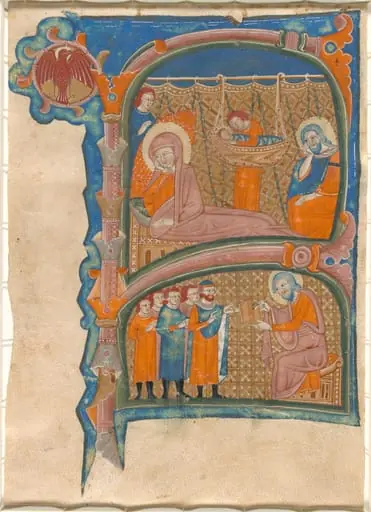 Birth and Naming of John the Baptist
- Leaf 7 from an antiphonal fragment
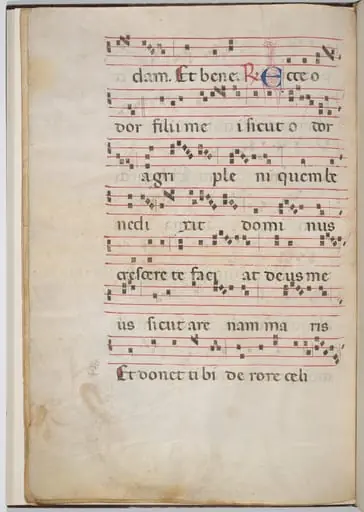 Leaf 8 from an antiphonal fragment (verso)
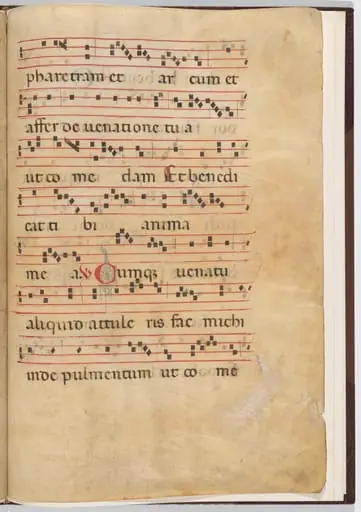 Leaf 8 from an antiphonal fragment
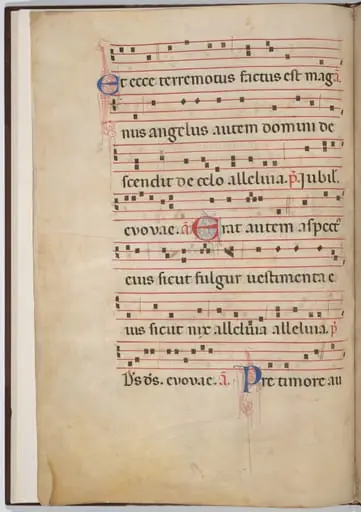 Leaf 3 from an antiphonal fragment (verso)
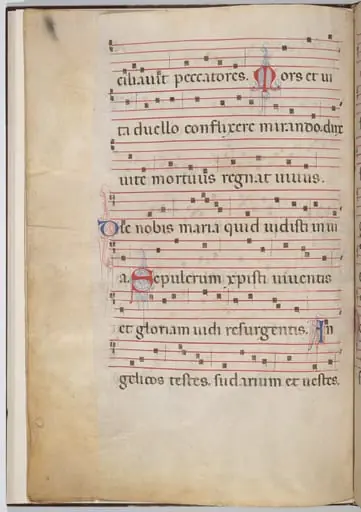 Leaf 6 from an antiphonal fragment (verso)
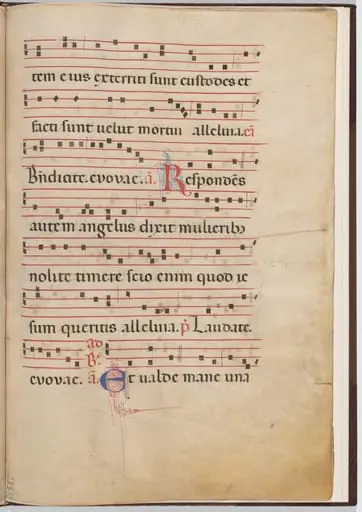 Leaf 4 from an antiphonal fragment
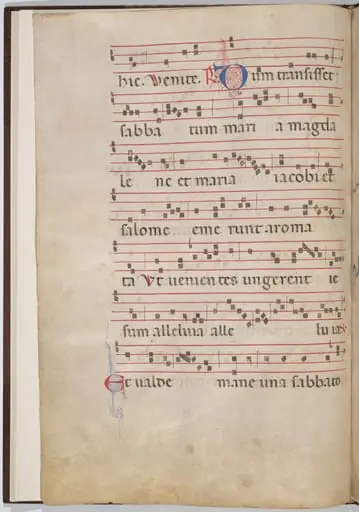 Leaf 2 from an antiphonal fragment (verso)