Artwork
Mona Lisa Bela
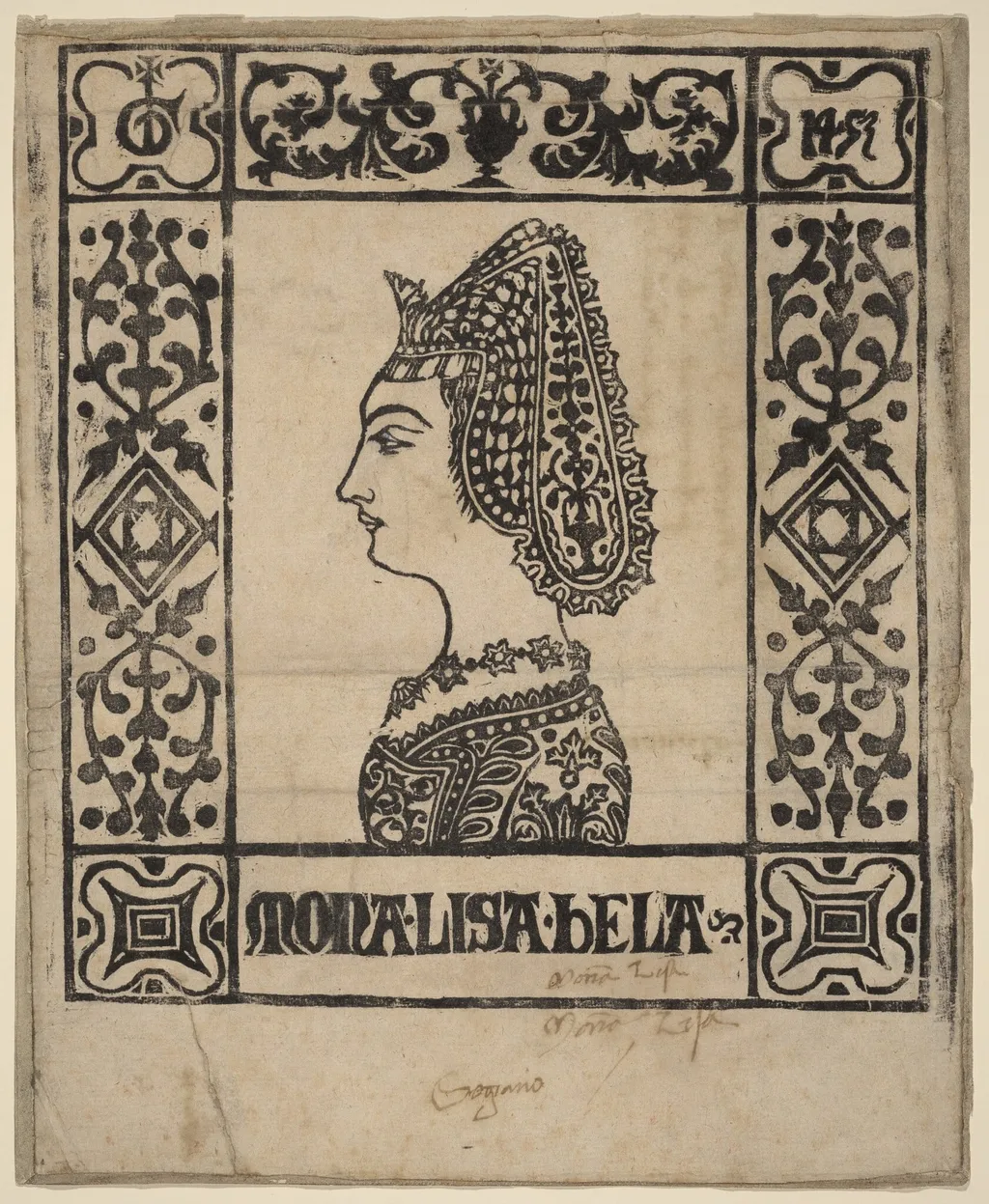
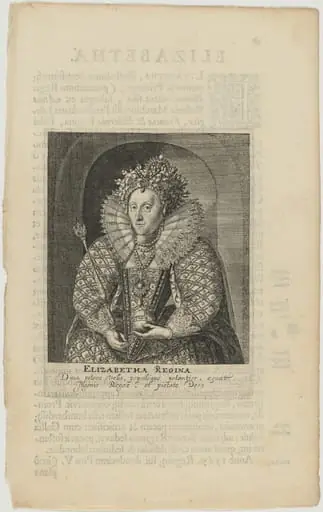
Mona Lisa Bela is an ink print by the Renaissance artist Italian 15th Century. It dates from 1460 and is held in the collection of the National Gallery of Art.
About this work
Overview
Unlike traditional portraits, this work reimagines the Mona Lisa through the lens of printmaking, using carved wood to transfer ink onto paper.
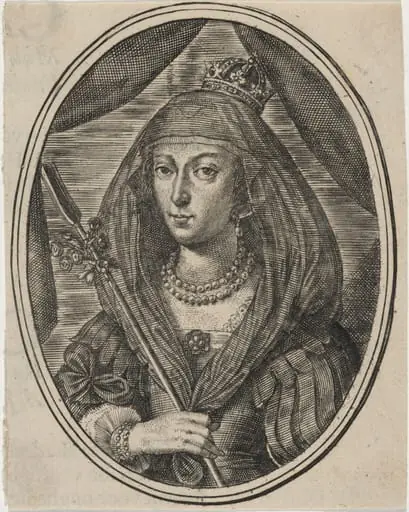
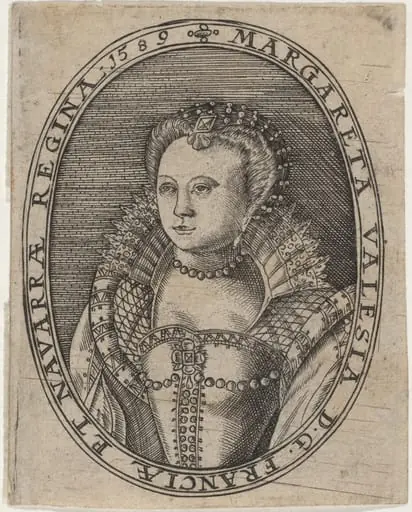
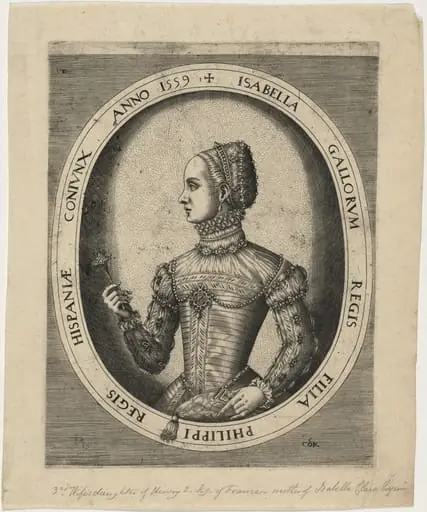
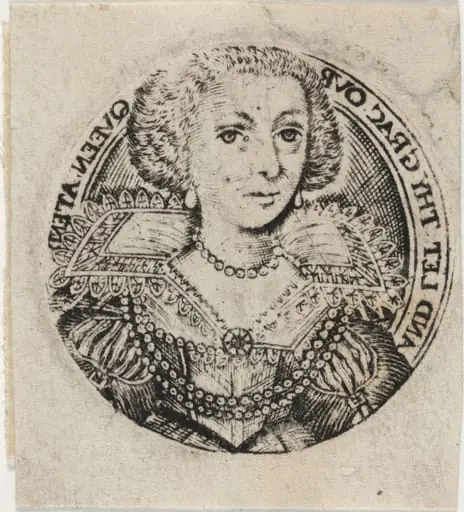
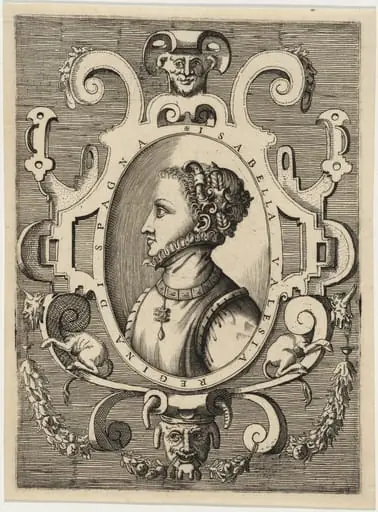
Mona Lisa Bela is a black-and-white woodcut print depicting a woman’s profile face, framed by ornamental border patterns of stars, flowers, and geometric shapes. The title appears beneath the image, identifying the subject. Unlike traditional portraits, this work reimagines the Mona Lisa through the lens of printmaking, using carved wood to transfer ink onto paper. The style is stylized rather than naturalistic, emphasizing pattern and silhouette over anatomical precision.
Subject & Meaning
The subject is a reimagined version of the Mona Lisa, identified by the name 'Mona Lisa Bela.' The addition of an elaborate headpiece and stylized hat suggests a fusion of Renaissance iconography with decorative or folkloric elements. The profile view and minimal facial detail distance the image from Leonardo’s psychological depth, instead presenting the figure as a symbolic or archetypal form, possibly commenting on cultural repetition or the commodification of famous imagery.
Technique & Style
Executed as a woodcut, the image was created by carving lines into a wooden block, inking the raised surfaces, and pressing it onto paper. The bold, linear quality of the contours and the repetitive border motifs reflect the inherent constraints and strengths of the medium. The absence of shading and the use of flat, high-contrast areas emphasize form over texture, aligning with the graphic nature of printmaking and the artist’s intent to prioritize design over realism.
History & Provenance
The origin of Mona Lisa Bela is not documented in major art historical records. It appears to be a contemporary or modern reinterpretation, likely produced by an artist engaging with popular imagery through printmaking traditions. Its title and composition suggest a deliberate reference to Leonardo’s portrait, but without clear ties to known artists or exhibitions, its provenance remains unverified and likely private or independent.
Context
This work emerges from a broader tradition of artists reworking canonical images through alternative media. Woodcut, historically used for religious prints and broadsheets, was revived in the 20th century by modernists seeking accessible, reproducible art. Mona Lisa Bela fits within this lineage, using a humble technique to engage with an enduring cultural symbol, possibly as a critique, homage, or playful subversion of high art conventions.
Legacy
As a limited-run print, Mona Lisa Bela contributes to the ongoing dialogue between mass reproduction and artistic originality. Its use of a familiar face within a decorative, non-naturalistic framework invites viewers to consider how images are transformed across media and time. While not widely exhibited, it exemplifies how contemporary artists repurpose historical icons through craft-based methods, extending their relevance beyond the canvas.
Artist & collection

Artist
An anonymous Italian engraver from the 1490s carved images that could be peeled apart like paper dolls.


![The Destruction of the Egyptian Idols [verso], by Italian 15th Century](https://artifactworldgallery.com/img/italian-15th-century--the-destruction-of-the-egyptian-idols-verso--646d3c2b8098cfee-w320.webp)
![The Flight into Egypt [recto], by Italian 15th Century](https://artifactworldgallery.com/img/italian-15th-century--the-flight-into-egypt-recto--8f4d5275d7f90f98-w320.webp)