Artwork
The Tomb of Julius II
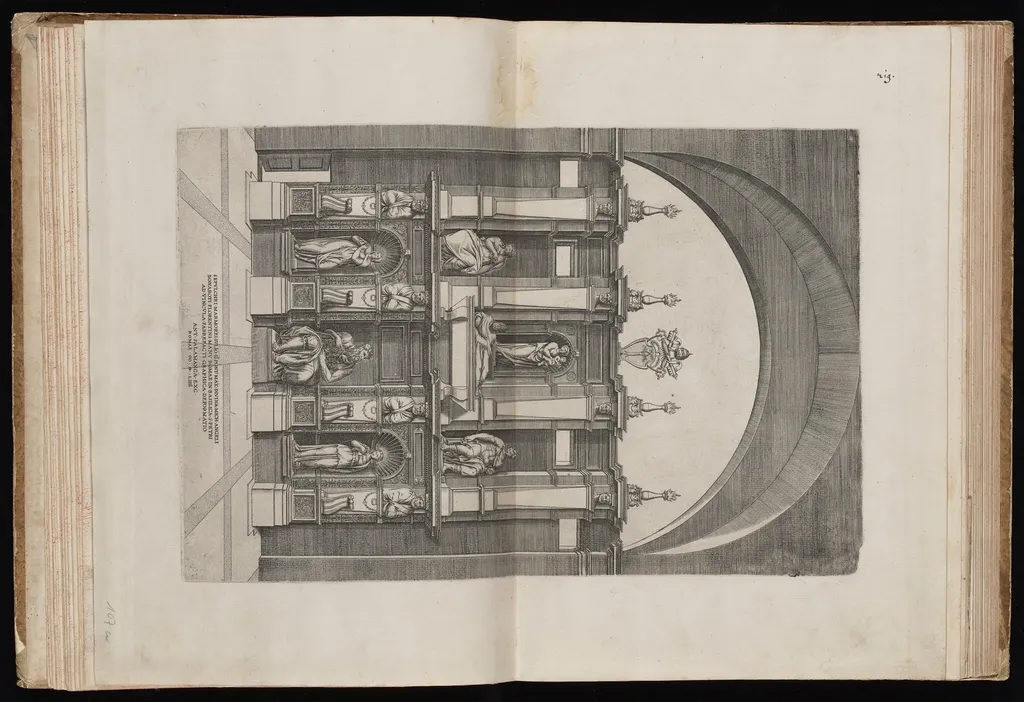
The Tomb of Julius II is an ink print by the Renaissance artist Italian 16th Century. It dates from 1554 and is held in the collection of the National Gallery of Art. This engraving depicts Michelangelo's planned tomb for Pope Julius II, a complex sculptural ensemble that was never fully realized.
- Inscription
- Inscribed:Lettered LC: "Sepulchri Marmorei Iulio II Pont. Max. Divina Mich.Angeli Bonaroti Florentini Manu Romae in Basilica S. Petri ad Vincula Fabrefacti Graphica Deformatio" and "Ant. Salamanca Exc. Romae MD LIIII"
About this work
Overview
This engraving depicts Michelangelo's planned tomb for Pope Julius II, a complex sculptural ensemble that was never fully realized.
Subject & Meaning
The tomb design features numerous figures and intricate details, conveying the ambitious scale and complexity of Michelangelo's original conception.
Technique & Style
The engraving is characterized by deep shadows and sharp lines, effectively capturing the monumentality and intricacy of the planned tomb.
History & Provenance
The tomb's design underwent multiple revisions, initially conceived with over 40 statues before being simplified several times.
Artist & collection

Artist
An anonymous 16th-century Italian sculptor left a handful of small bronzes in dark brown and gilt.


![Orthographia Partis Interioris Templi Divi Petri [Interior View of Saint Peter's Basilica], by Étienne Dupérac](https://artifactworldgallery.com/img/etienne-duperac--orthographia-partis-interioris-templi-divi-petri-interior-vi--59b448ec2f3049cc-w320.webp) Orthographia Partis Interioris Templi Divi Petri [Interior View of Saint Peter's Basilica]
Orthographia Partis Interioris Templi Divi Petri [Interior View of Saint Peter's Basilica]![Templum Fortunae Virilis [The Temple of Portunus], by Nicolas Beatrizet](https://artifactworldgallery.com/img/nicolas-beatrizet--templum-fortunae-virilis-the-temple-of-portunus--e7d66fe3775fa1c7-w320.webp) Templum Fortunae Virilis [The Temple of Portunus]
Templum Fortunae Virilis [The Temple of Portunus]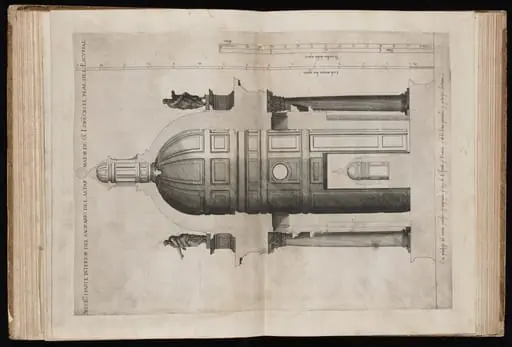 Section and Interior of the Sanctuary of San Lorenzo de El Escorial
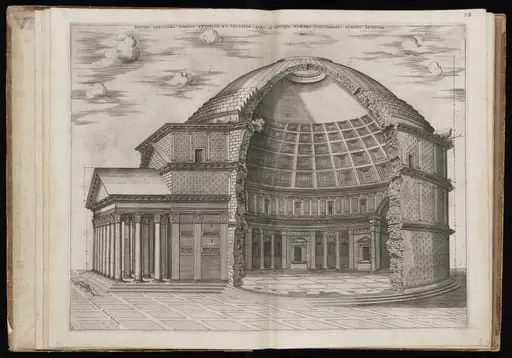 The Pantheon
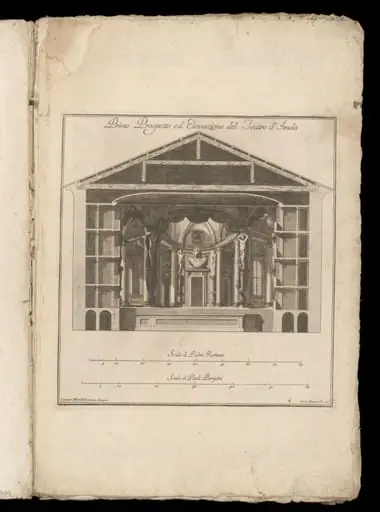 H Beard Print Collection
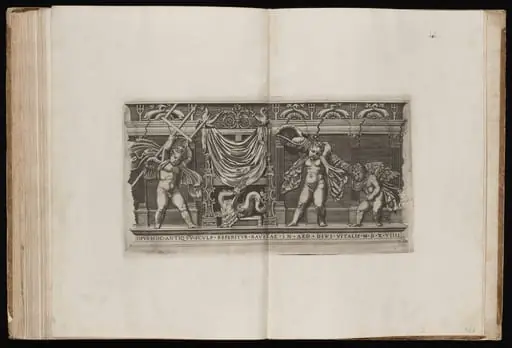 The Throne of Neptune from San Vitale in Ravenna
 Chandeliers de Sculpture en Argent