Artwork
The Worship of the Golden Calf
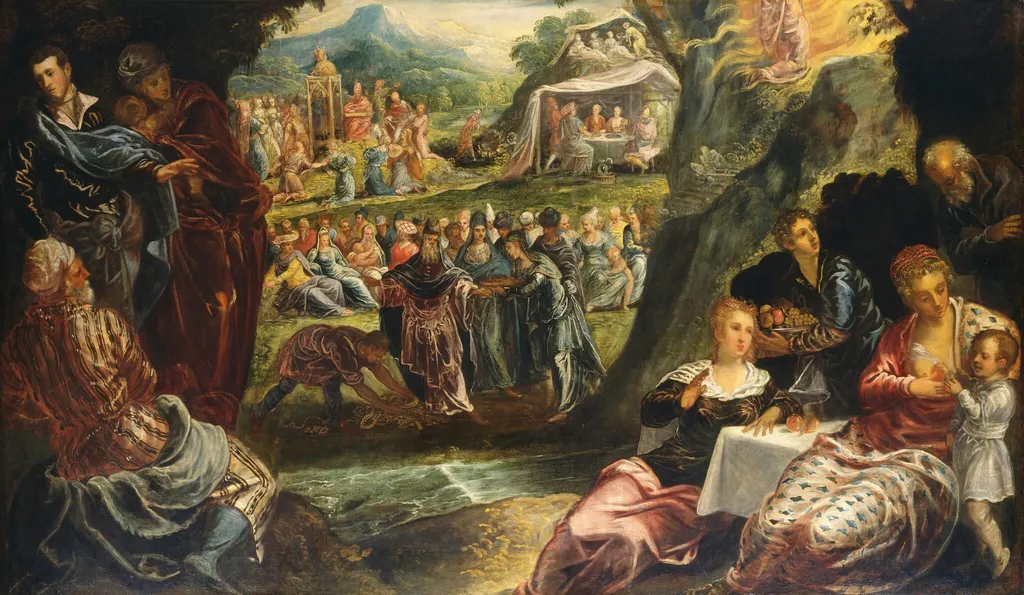
The Worship of the Golden Calf is an oil painting. It dates from 1594 and is held in the collection of the National Gallery of Art.
About this work
Subject & Meaning
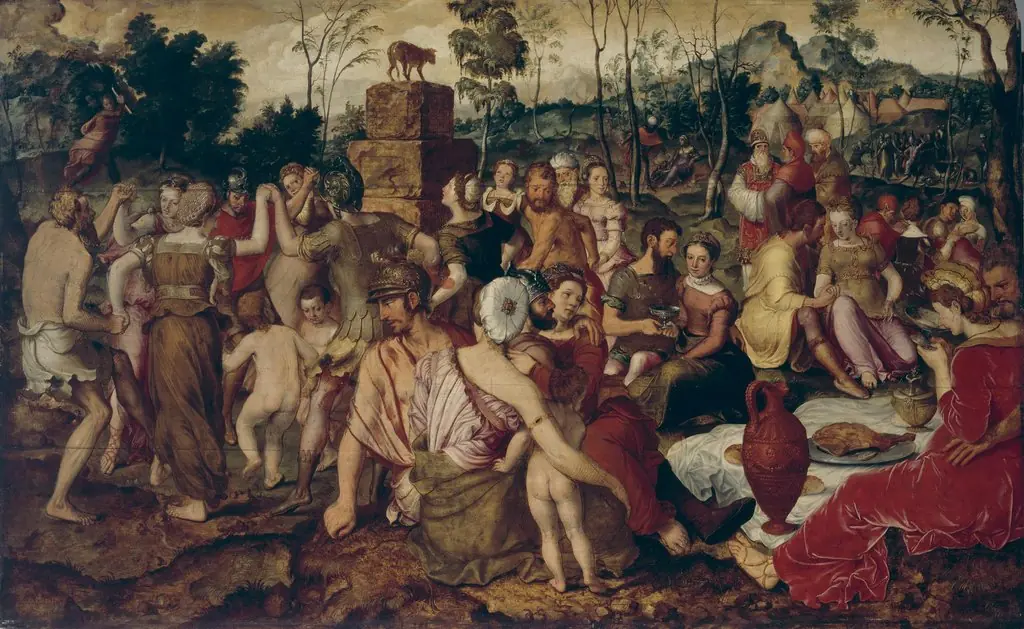
The composition focuses on the 'golden calf' itself as the central object of veneration, surrounded by a crowd of figures engaged in celebration and reverence.
The painting depicts the biblical narrative of the Israelites worshiping a golden calf while Moses is absent on Mount Sinai. As a work of religious art, the scene illustrates the idolatry and collective apostasy of the Hebrew people, serving as a cautionary representation of faithlessness and the dangers of abandoning divine law for material idols. The composition focuses on the 'golden calf' itself as the central object of veneration, surrounded by a crowd of figures engaged in celebration and reverence.
Created in 1560, the work functions as a visual exegesis of the Exodus story, emphasizing the moral and spiritual consequences of turning away from covenantal obligations. The depiction underscores the tension between divine command and human frailty, a recurring theme in Renaissance religious iconography.
Technique & Style
The Worship of the Golden Calf is an oil painting executed on a canvas support. Measuring 159.1 centimeters in height and 271.8 centimeters in width, the work presents a large, horizontal format characteristic of a grand religious composition featuring many figures. Historical evidence suggests the painting's current physical state may reflect past alterations; a mid-20th-century account indicates the canvas was possibly acquired in three separate parts, with a conservator speculating that a missing fourth section likely comprised trees at the top of the composition.
History & Provenance
The Worship of the Golden Calf is dated to circa 1560 based on stylistic analysis and provenance records. The painting entered the Hastings (or Hasting) collection in England before 1833, when a work matching its subject was offered at Christie’s, Bath, as part of the John Puna sale. By 1935, the canvas was with Count Alessandro Contini Bonacossi in Florence, who sold it on 26 June 1935 to the Samuel H. Kress Foundation in New York.
The Kress Foundation gifted the painting to the National Gallery of Art, Washington, D.C., in 1939, where it remains in the Samuel H. Kress Collection.
The painting is held in the collection of the National Gallery of Art in Washington, D.C., specifically within the Samuel H. Kress Collection. Its path to the museum began when the work was sold on June 26, 1935, from the collection of Count Alessandro Contini Bonacossi in Florence to the Samuel H. Kress Foundation in New York. The foundation subsequently gifted the artwork to the National Gallery of Art in 1939.
Prior to its acquisition by Contini Bonacossi, the piece was reportedly part of the Hastings collection in England, though the specific identity of this collection remains unconfirmed. There is also a suggestion in curatorial files that the dealer David M. Koetser may have owned the work temporarily before it entered the Kress Foundation.
Overview
This oil on canvas painting, titled The Worship of the Golden Calf, depicts a pivotal moment from the biblical narrative. It presents a bustling assembly of figures engaged in an act of idolatry, centered around a sculpted golden calf. The artwork serves as a visual interpretation of a significant Old Testament event, illustrating a lapse in faith among the ancient Israelites.
Artist & collection

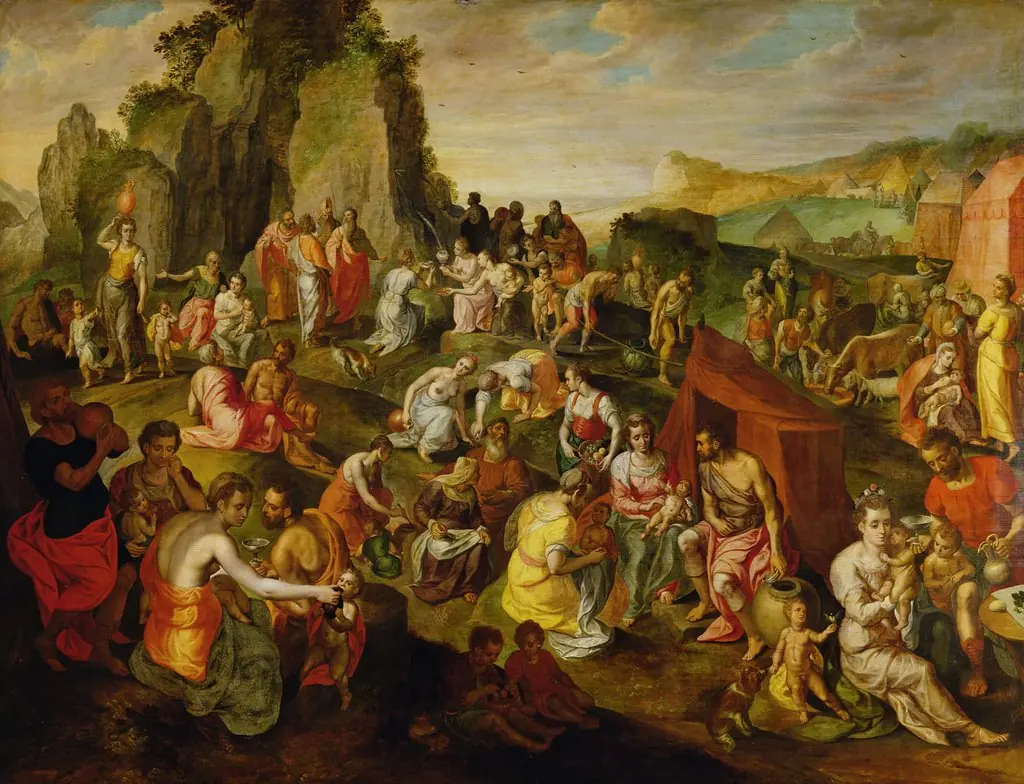 Moses strikes water from the rock
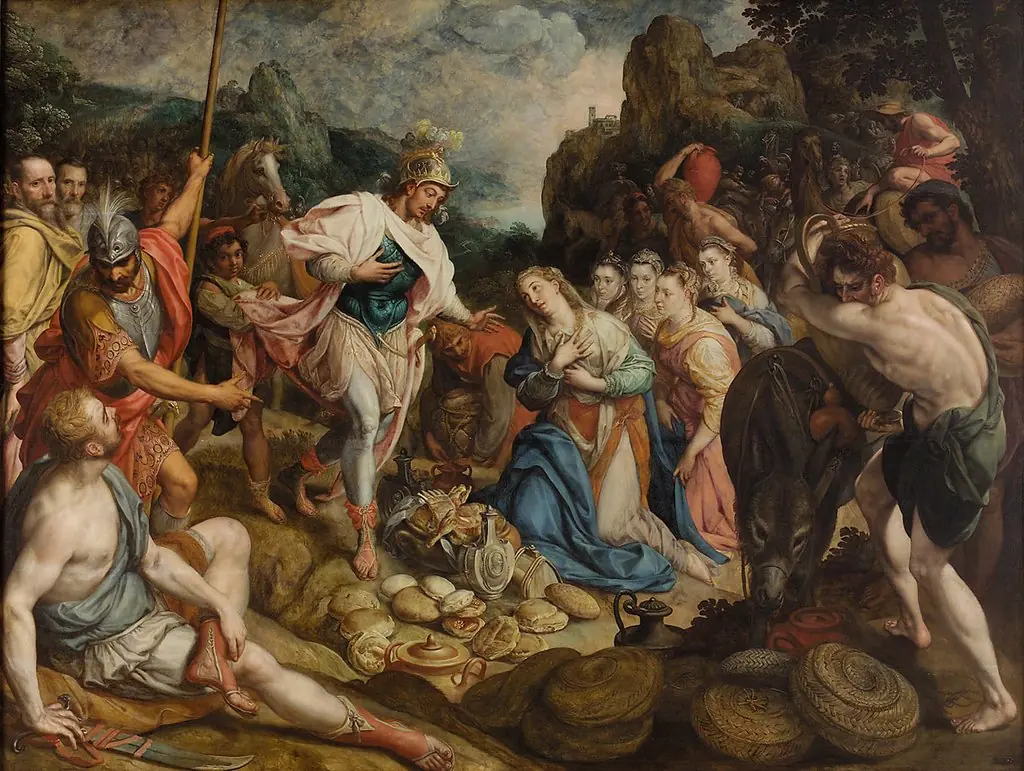 David and Abigail
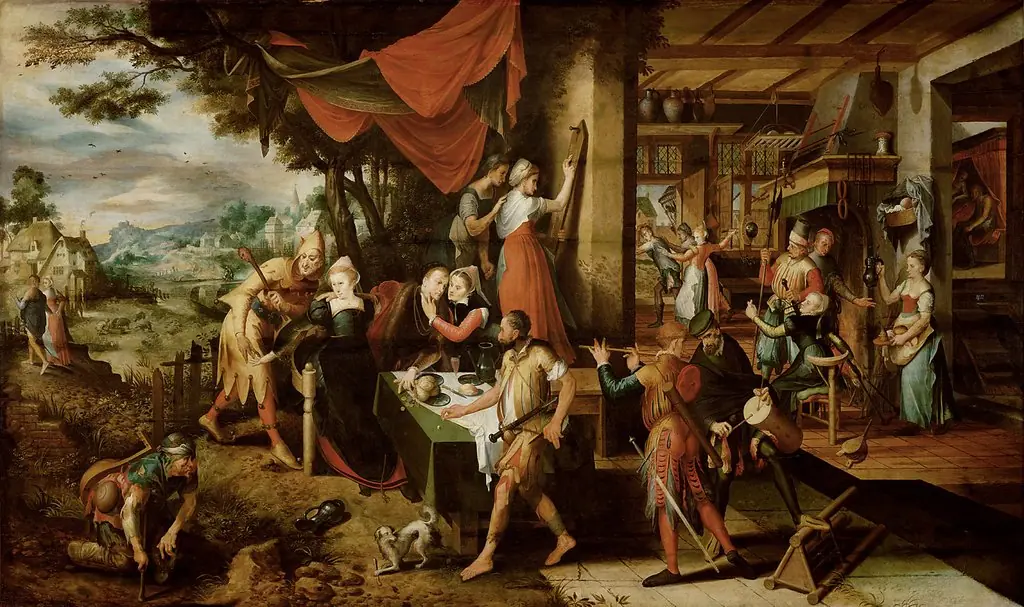 Return of the Prodigal Son
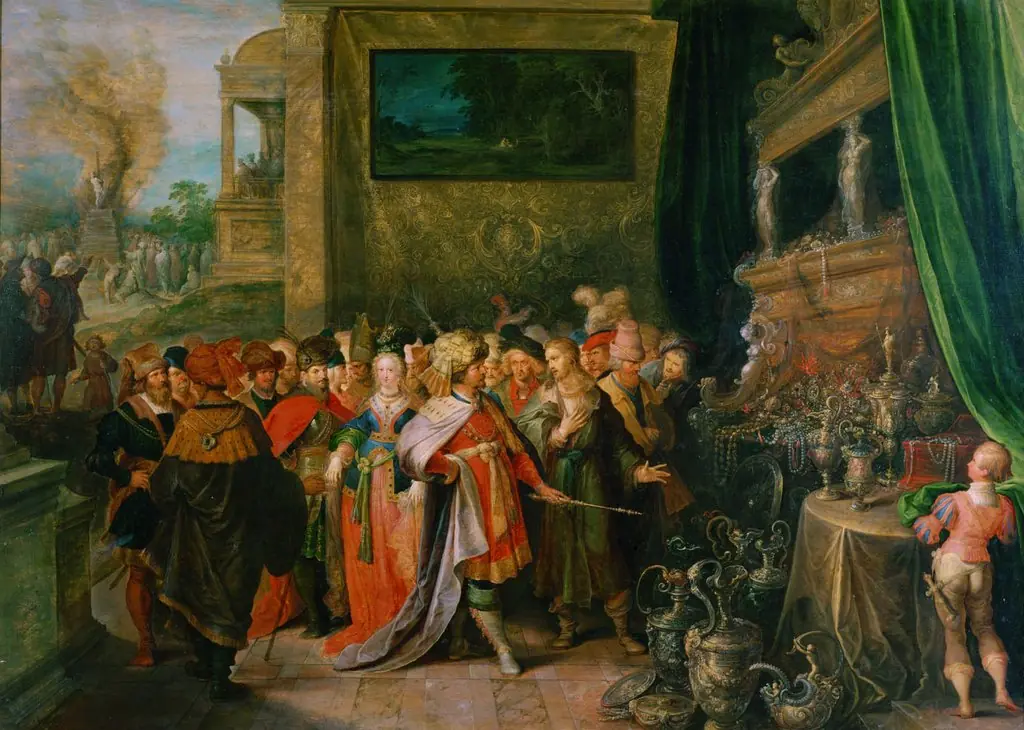 Croesus displays his treasures to Solon
 Moses Striking the Rock
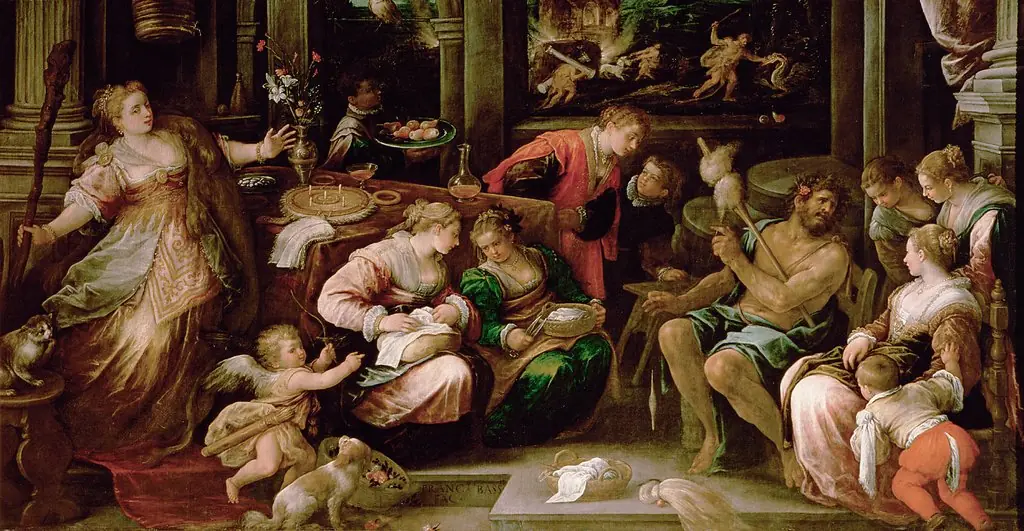 Herkules und Omphale
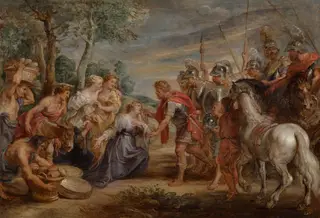 The Meeting of David and Abigail
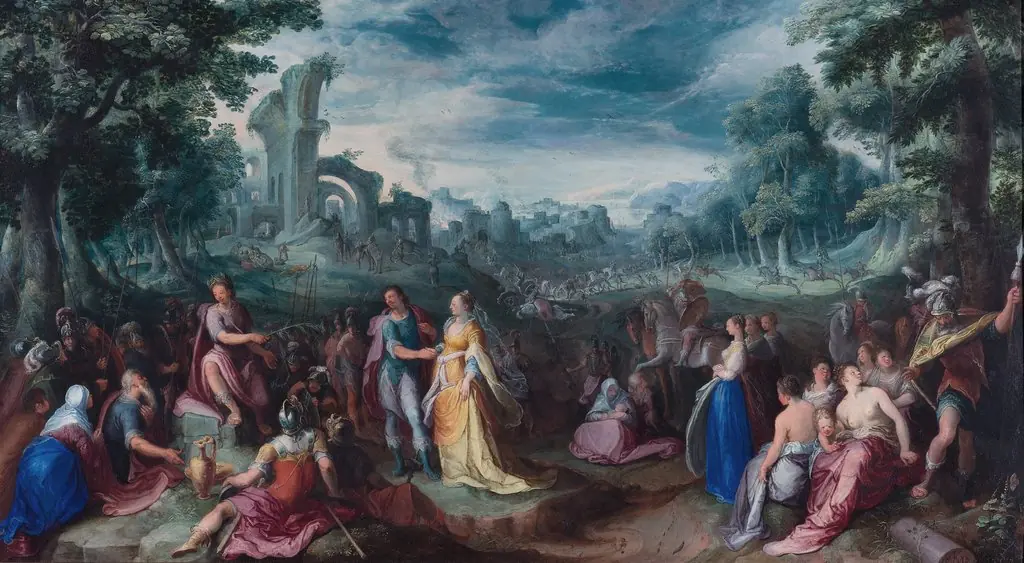 The Continence of Scipio
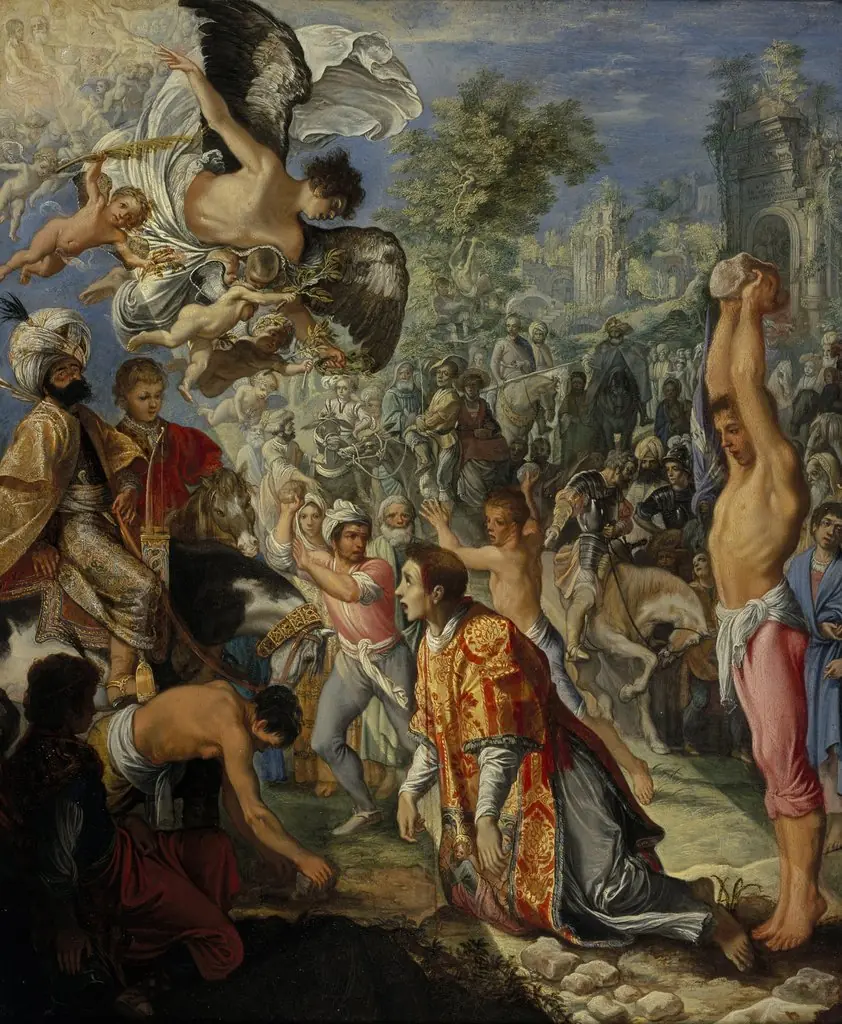 The Stoning of Saint Stephen
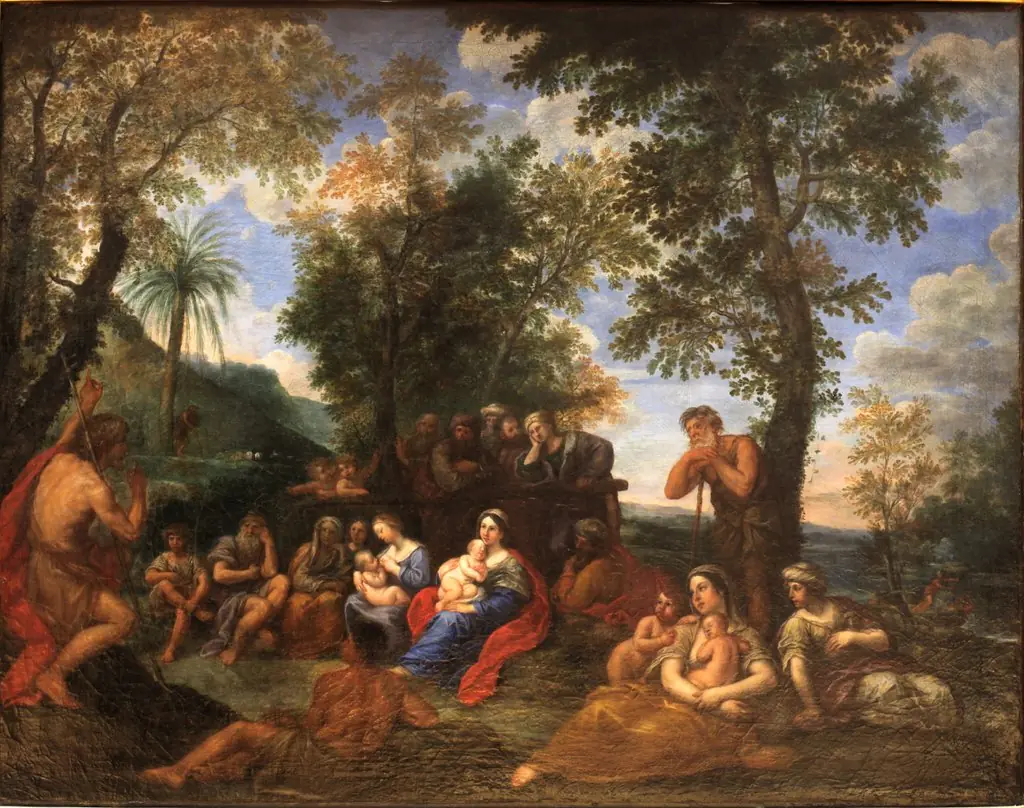 Predication of Saint John the Baptist
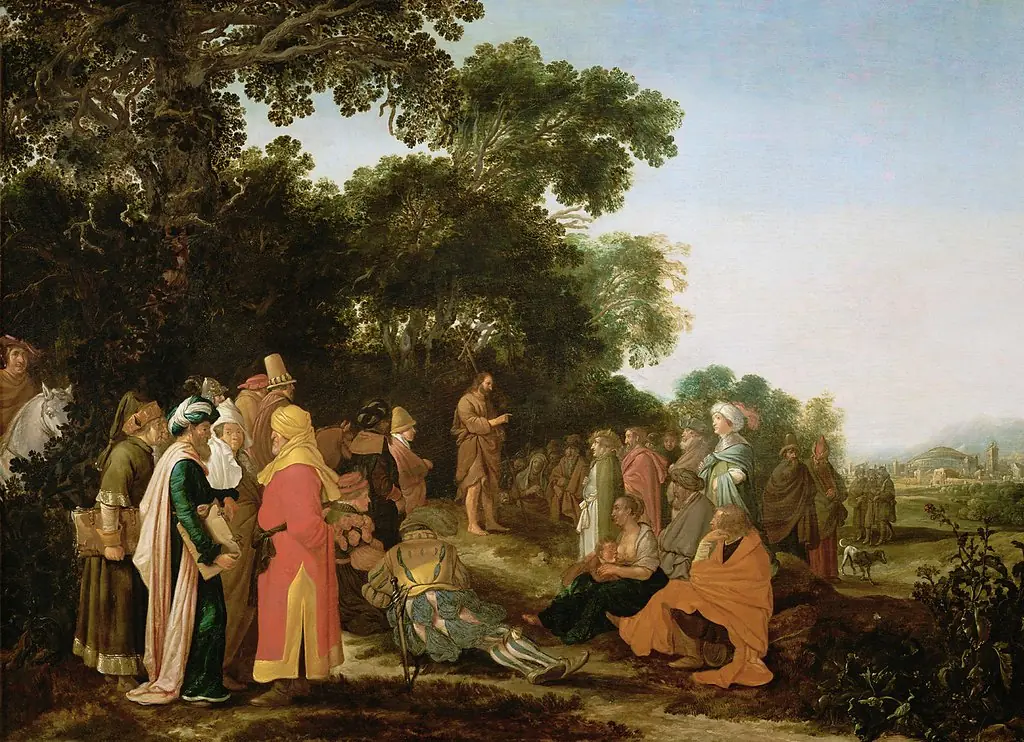 Predigt Johannes des Täufers
- The Golden Calf