Artwork
Anemones
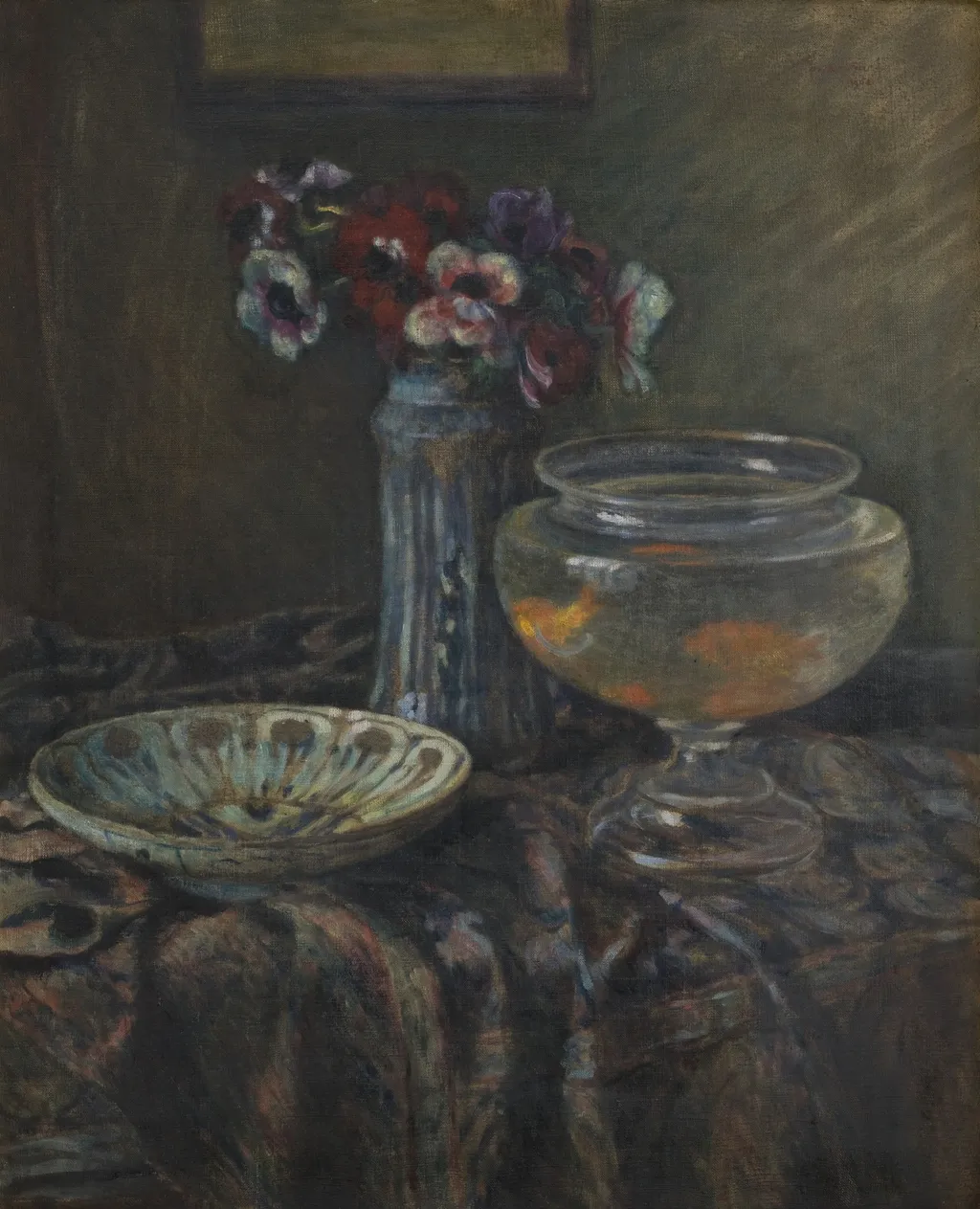
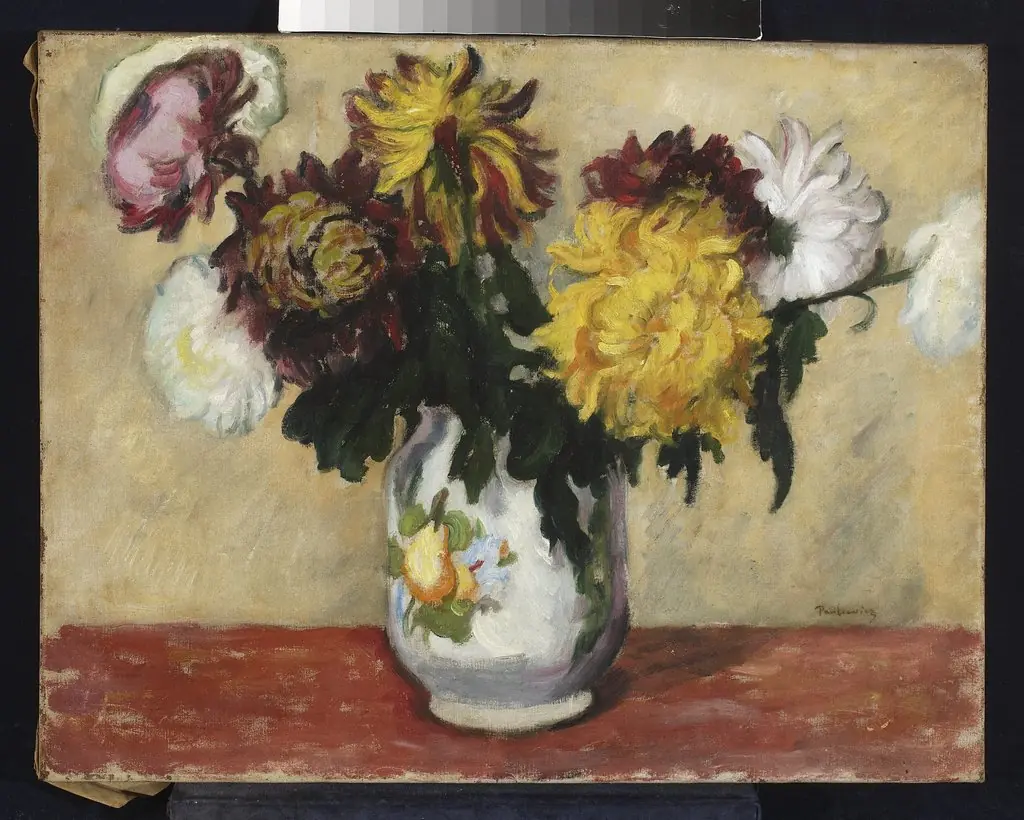
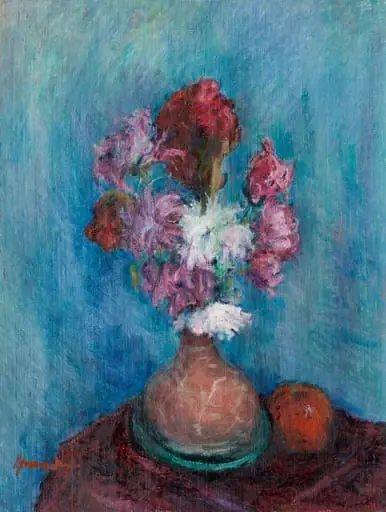
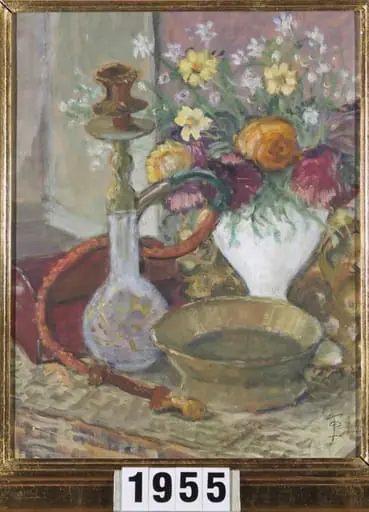
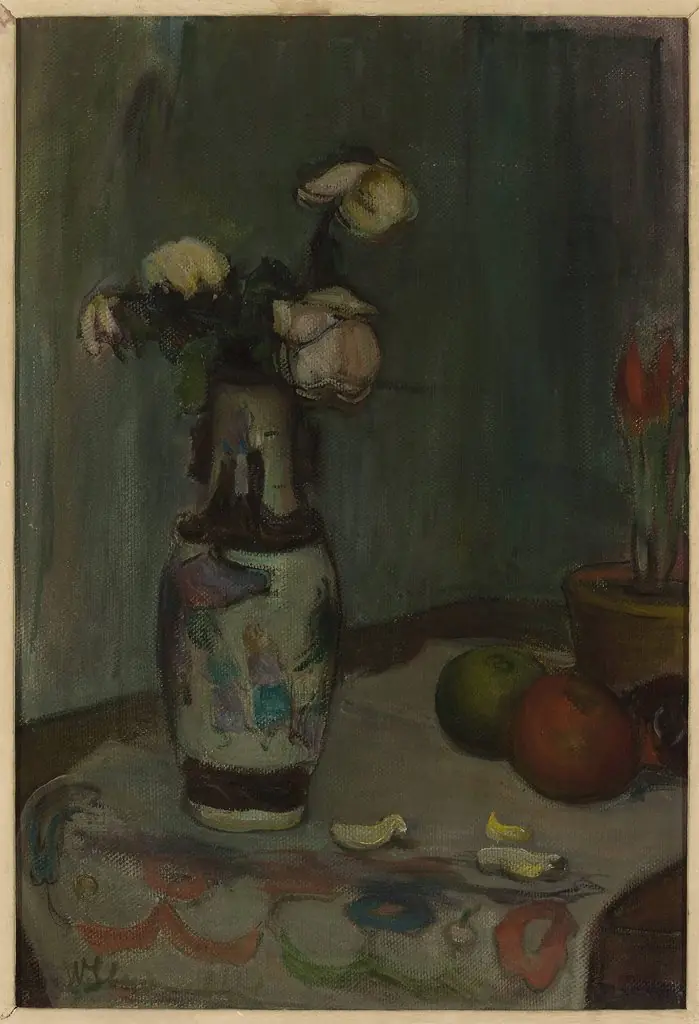
Anemones is an oil painting by the Post-Impressionist artist Józef Pankiewicz. It dates from 1908 and is held in the collection of the National Museum in Kraków.
About this work
Overview
Józef Pankiewicz painted Anemones in 1908 using oil on canvas. The work is a still life featuring red and white anemones in a slender vase and a patterned bowl, set against a dark, unobtrusive background. It reflects the artist’s time in France and his engagement with post-impressionist approaches to form and color. The painting is part of the National Museum in Kraków’s permanent collection.
Subject & Meaning
The composition centers on a modest arrangement of anemones, a vase, and a ceramic bowl. These everyday objects are rendered without narrative or symbolism, emphasizing quiet observation over dramatic expression. The flowers’ delicate structure and the bowl’s subtle decoration invite attention to texture and form, suggesting an appreciation for the beauty in ordinary, transient things.
Technique & Style
Pankiewicz employed loose, deliberate brushwork to define the petals and surfaces, avoiding rigid outlines in favor of tonal shifts and textured strokes.
Pankiewicz employed loose, deliberate brushwork to define the petals and surfaces, avoiding rigid outlines in favor of tonal shifts and textured strokes. The dark background enhances the luminosity of the flowers and vessel, creating contrast without theatricality. His approach aligns with French post-impressionist practices, prioritizing emotional resonance through color and gesture rather than strict realism.
History & Provenance
Created during Pankiewicz’s years in France, Anemones emerged from a period when Polish artists were deeply influenced by Parisian modernism. The painting remained in the artist’s possession until it entered the National Museum in Kraków’s collection, where it has been preserved as an example of his mature style and cross-cultural artistic dialogue.
Context
In early 20th-century Europe, many Polish artists studied abroad, absorbing developments in French art. Pankiewicz, like his contemporaries, moved beyond academic traditions toward more personal, expressive modes. Anemones reflects this shift, embodying a quiet modernism that valued sensory experience over grand themes, resonating with broader European trends in still-life painting.
Legacy
The painting stands as a representative example of Pankiewicz’s contribution to Polish modernism. While not widely exhibited internationally, it remains a key work in Kraków’s collection, illustrating how Polish artists adapted post-impressionist principles to their own aesthetic sensibilities. Its enduring presence underscores the quiet influence of exile and cross-cultural exchange in early modern art.
Own this work as a print
Artist & collection
Artist
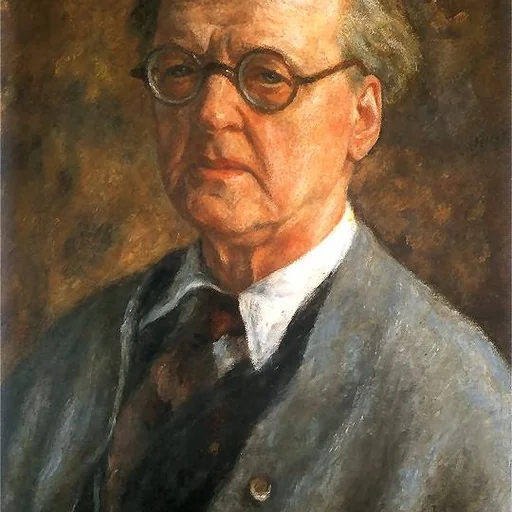
Józef Pankiewicz (29 November 1866 – 4 July 1940) was a Polish impressionist painter, graphic artist and teacher. He spent much of his career in France.