Artwork
Still Life with Flowers and Prickly Pears
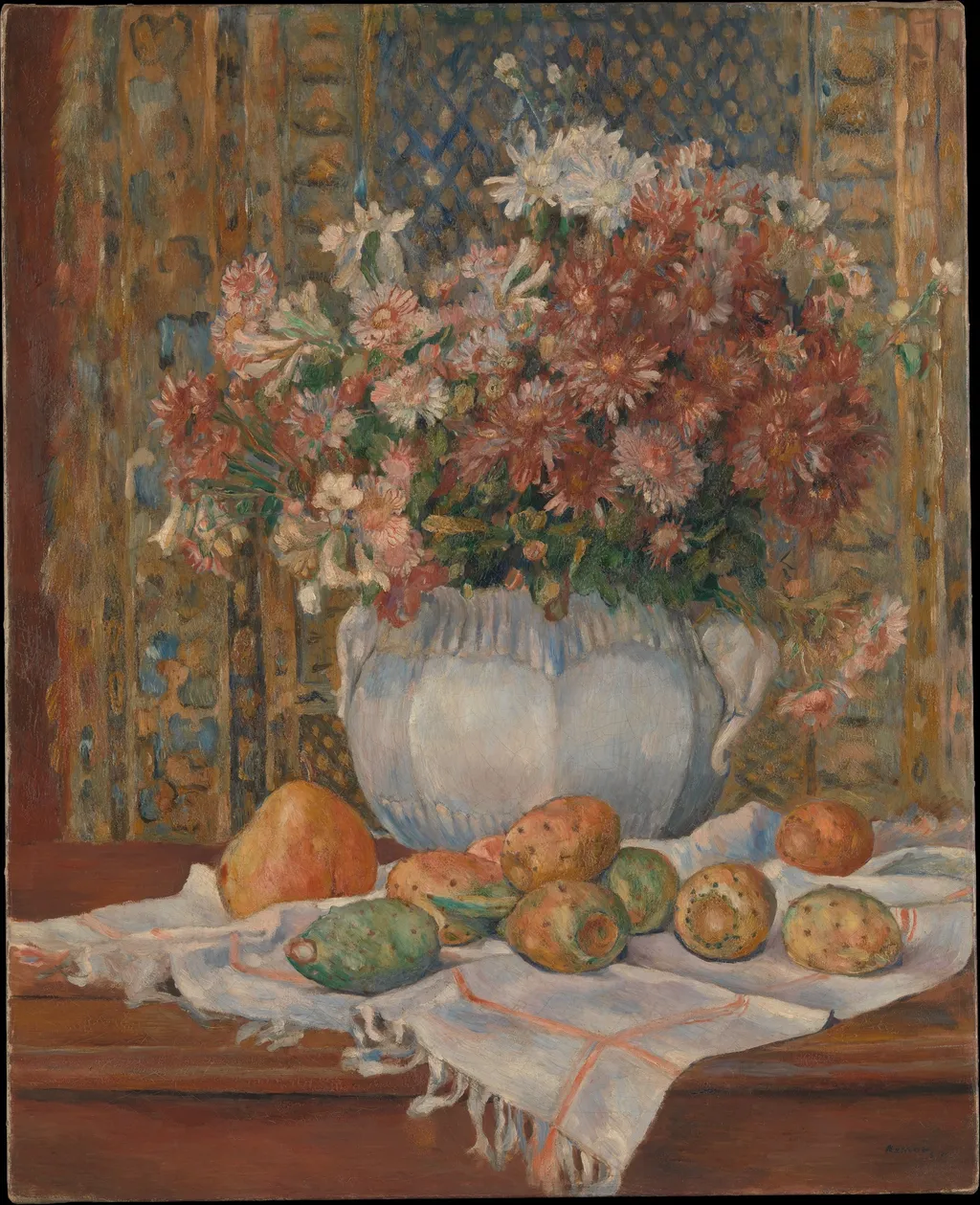
Still Life with Flowers and Prickly Pears is an oil painting by the Impressionist artist Pierre-Auguste Renoir. It dates from 1893 and is held in the collection of the Metropolitan Museum of Art.
About this work
Subject & Meaning
The arrangement conveys aesthetic balance and the artist's interest in everyday objects without narrative allegory.
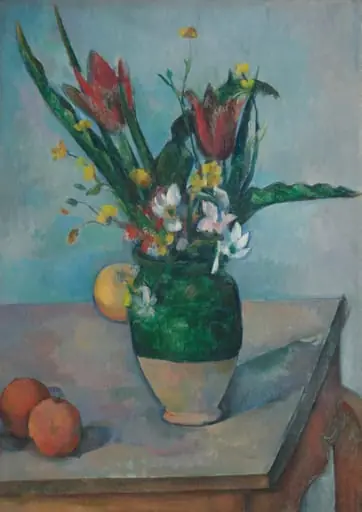
The work presents a conventional still-life composition that includes a ceramic vase filled with blossoms alongside prickly pears, as documented in the Metropolitan Museum of Art record. By grouping these botanical elements within a single frame, the painting exemplifies the still-life genre popular in late 19th-century French art, emphasizing the careful rendering of texture and color in oil on canvas. The arrangement conveys aesthetic balance and the artist's interest in everyday objects without narrative allegory.
Technique & Style
Executed in oil paint on canvas, the work measures 73.3 by 59.4 centimeters and is classified as a still life painting. The composition presents a vase of flowers alongside prickly pears, rendered with the painterly technique associated with Impressionist still life practice, emphasizing color and form over precise linear definition.
History & Provenance
Still Life with Flowers and Prickly Pears is an oil on canvas painting by Pierre-Auguste Renoir, dated 1893. The work measures 73.3 cm in height and 59.4 cm in width and portrays a vase of flowers together with prickly pears. The painting is part of the Metropolitan Museum of Art's collection, where it is listed under the still life genre.
Overview
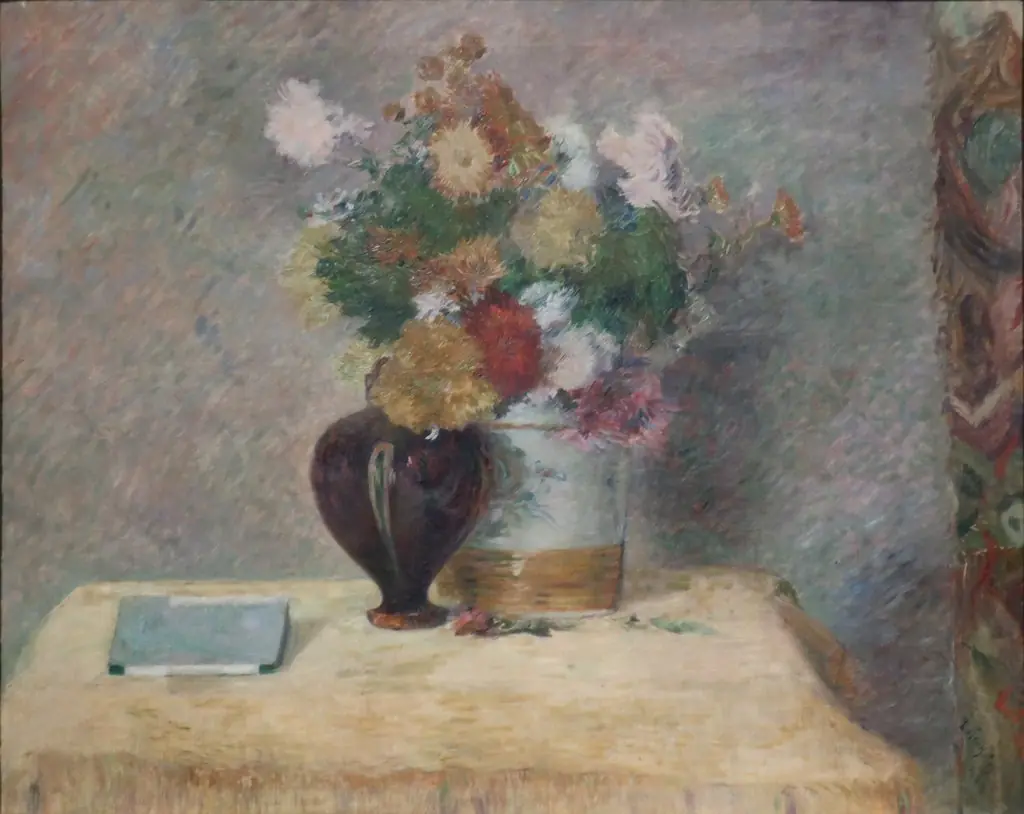
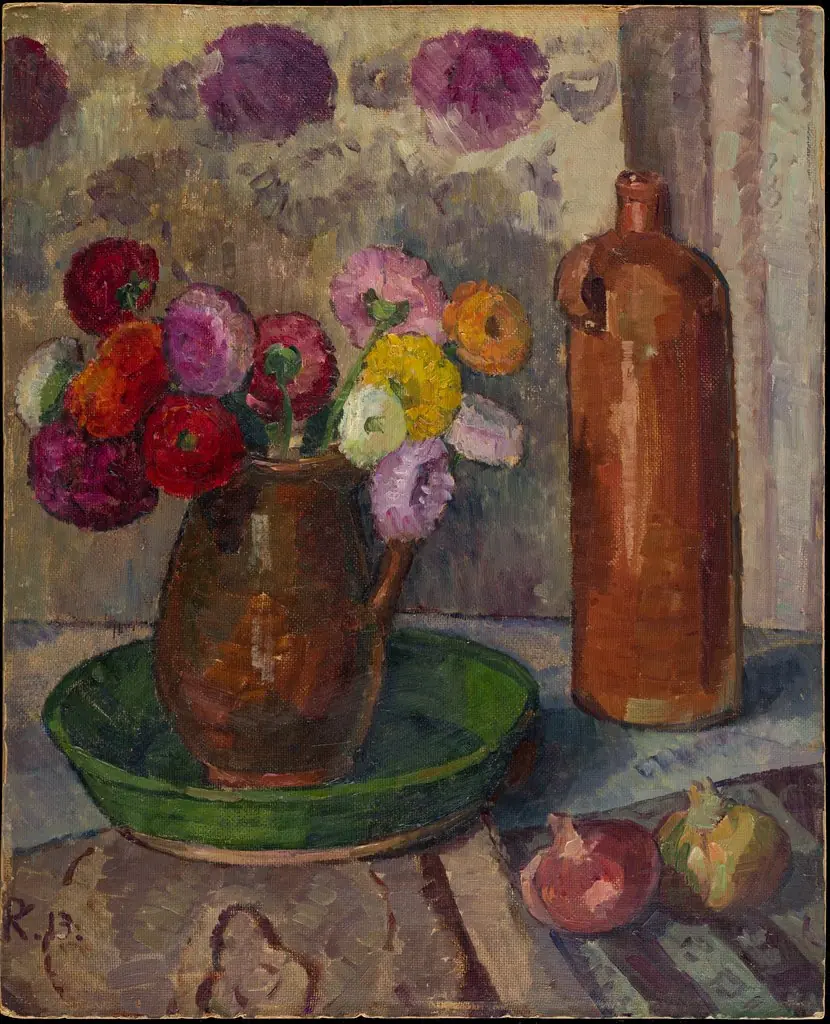
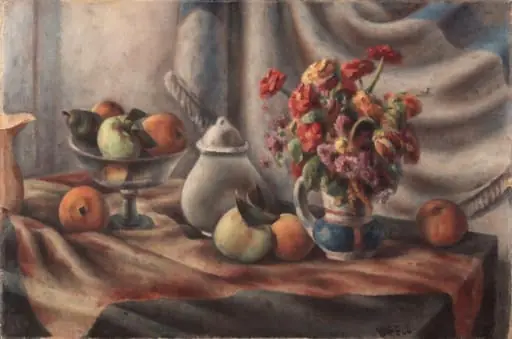
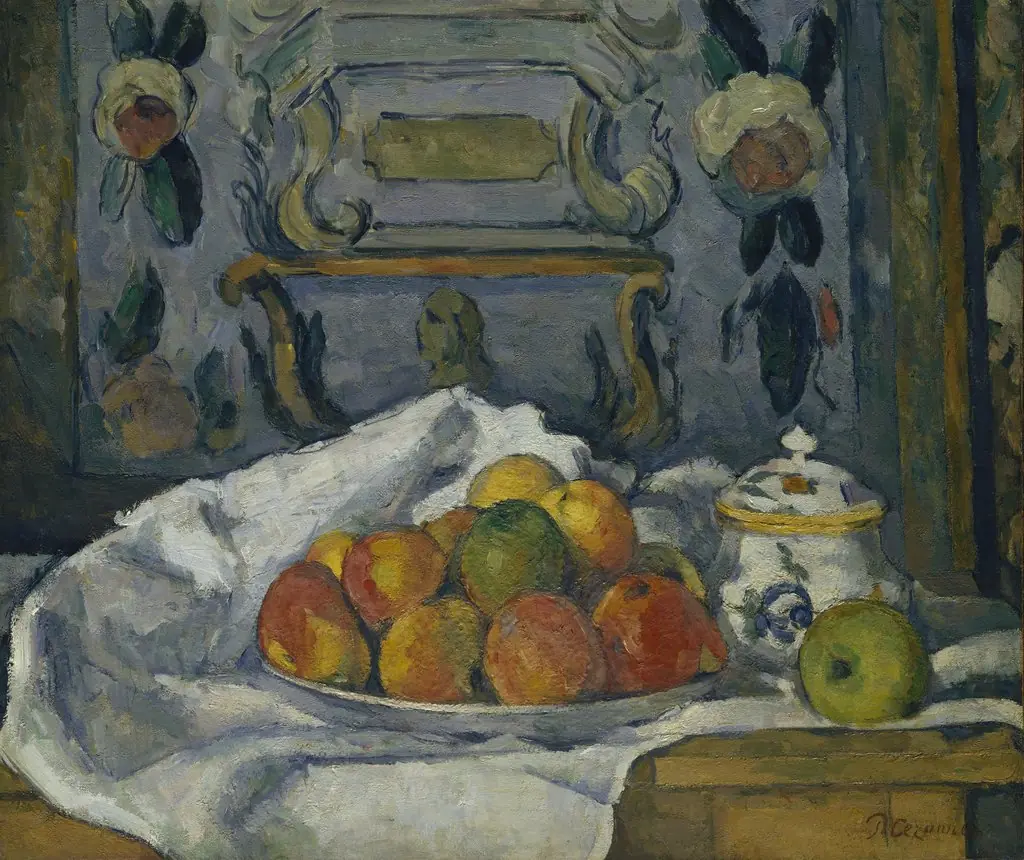
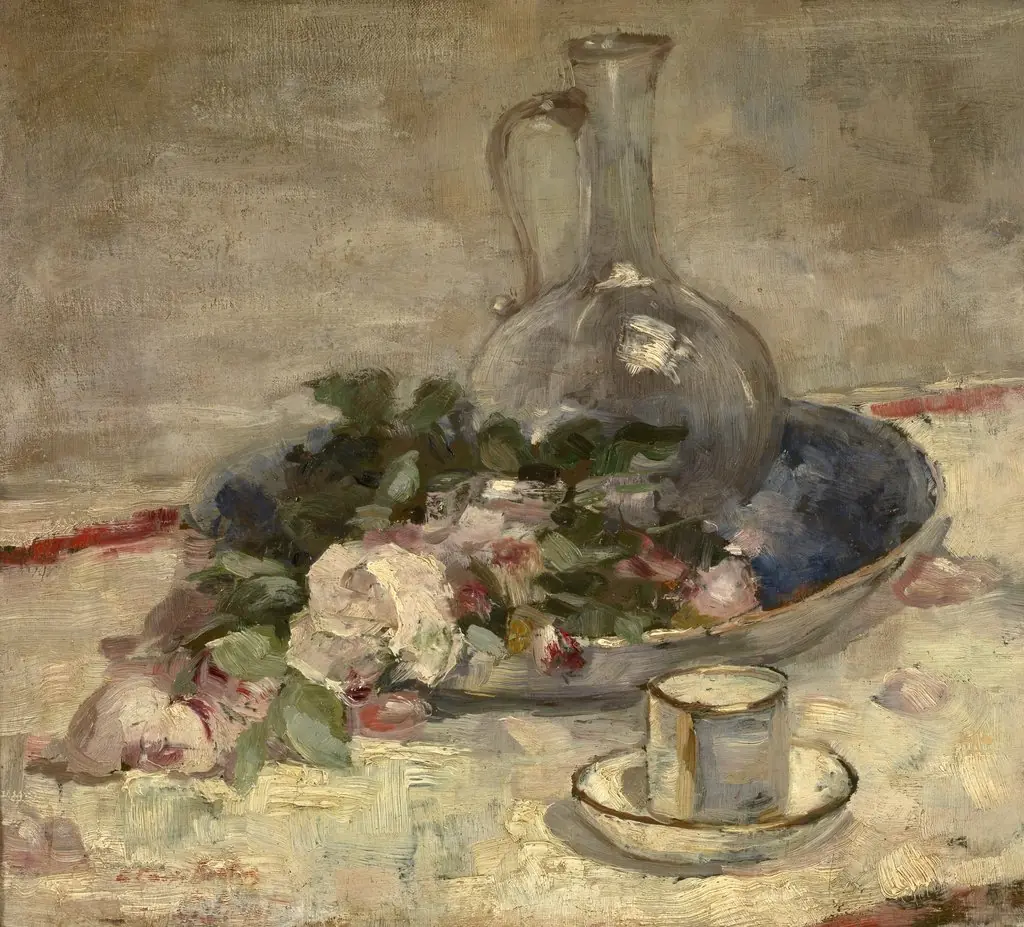
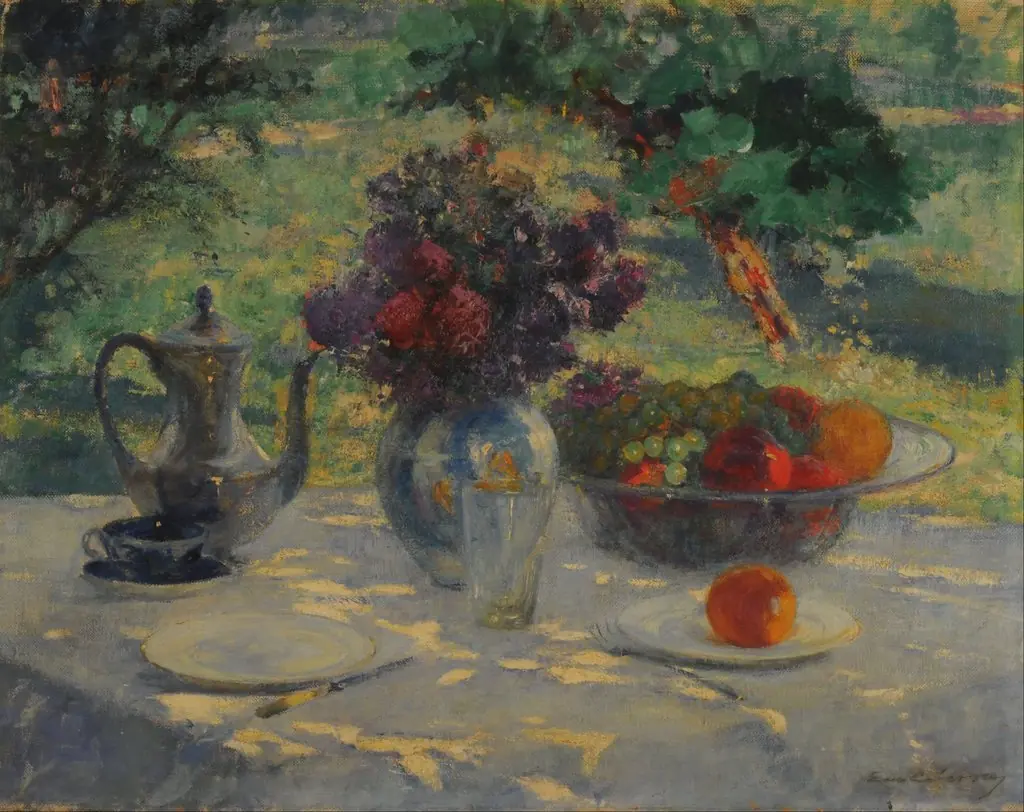
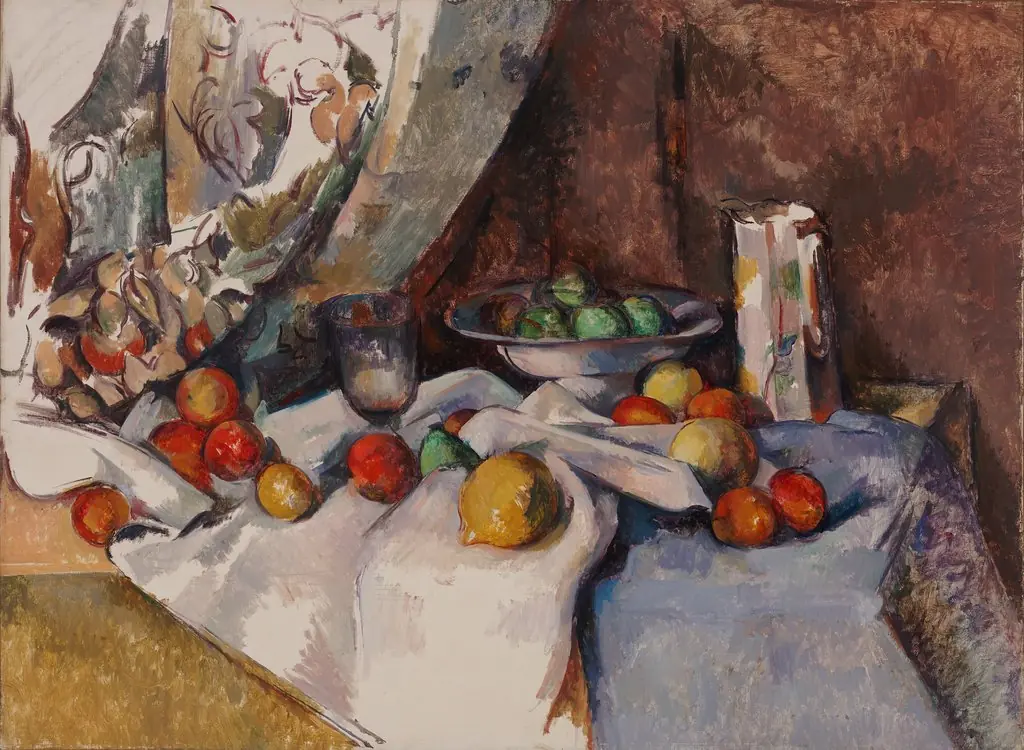
Pierre-Auguste Renoir's Still Life with Flowers and Prickly Pears, executed in 1893, is a vibrant oil painting that exemplifies the artist's mature approach to the genre. The composition centers on a table draped in a red-striped cloth, upon which rests a white pitcher, a dense bouquet of bright flowers, and a cluster of round fruits identified as prickly pears and melons in varying shades of green and orange. Behind these objects, a dark, vertically striped curtain provides a contrasting backdrop that enhances the luminosity of the foreground elements.
Renoir employs thick, visible brushstrokes that impart a rich texture to the surface, a technique characteristic of his later Impressionist style where the physical application of paint contributes significantly to the work's tactile quality. Created during a period when Renoir frequently returned to still life subjects to explore color relationships and light without the constraints of portraiture, this work demonstrates his enduring interest in the sensory pleasures of domestic objects. The painting reflects the artist's ability to infuse ordinary arrangements with a sense of abundance and warmth, marking it as a significant example of his late-career exploration of form and color.
Own this work as a print
Artist & collection
Artist
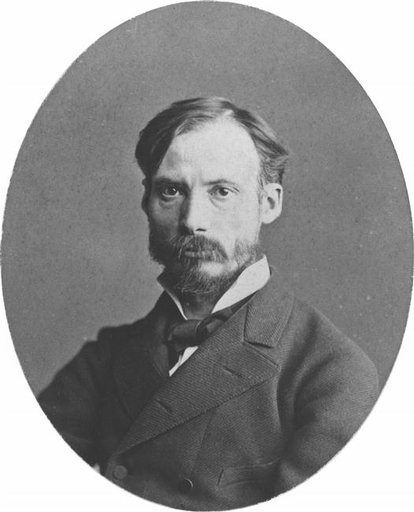
Pierre-Auguste Renoir was a French artist who was a leading painter in the development of the Impressionist style.