Artwork
The Banquet of Ahasuerus
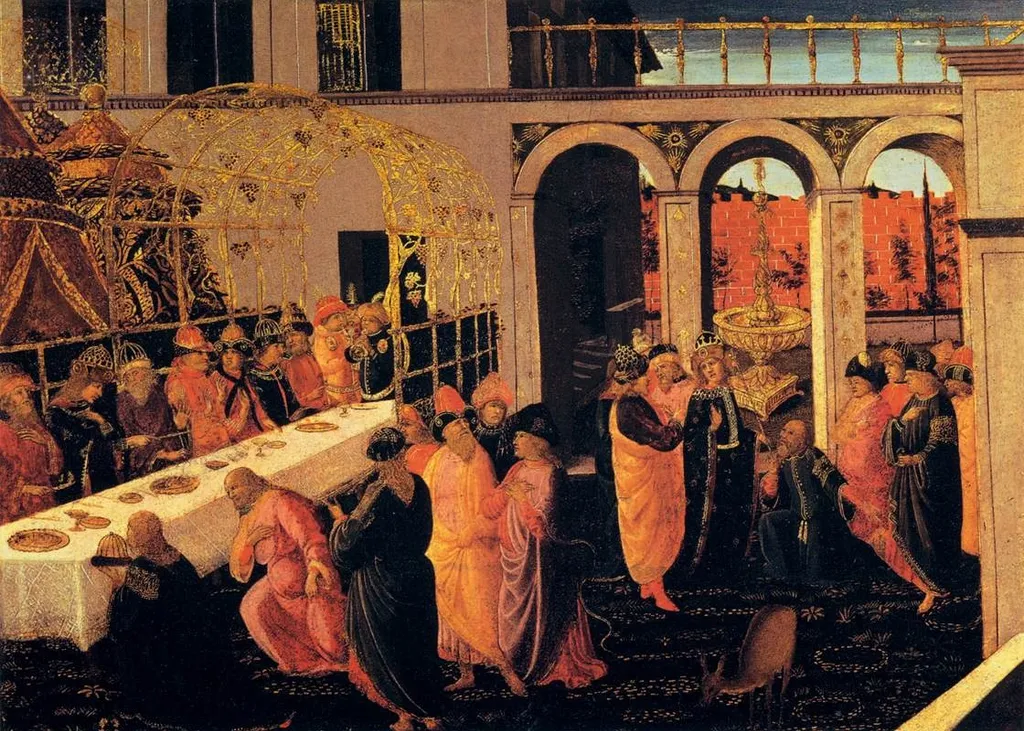
The Banquet of Ahasuerus is a tempera painting by the Early Renaissance artist Jacopo da Sellaio. It is held in the collection of the Uffizi Gallery.
About this work
The Banquet of Ahasuerus is a painting by Jacopo da Sellaio. It was created in 1490.
The painting is part of a group of five tempera on panel paintings. These paintings depict scenes from a story and were likely used to decorate a piece of furniture.
To learn more about the artist's style and influences, look up the artist Jacopo da Sellaio.
Subject & Meaning
The decorative richness of the architecture and ornament was also intended to gratify the patrons commissioning the marriage chest.
The painting depicts the Banquet of Ahasuerus, an episode drawn from the Book of Esther in which the Persian king repudiates Queen Vashti and selects the Jewish exile Esther as his new wife. The scene is rendered within an elaborate architectural setting that includes a pergola, fountain, garden, building, and pine tree, with a baldachin sheltering the royal table and a deer visible in the surrounding landscape.
As part of the Esther and Ahasuerus Coffer, the panel belongs to a set of cassoni produced for a wedding, where the narrative carried explicit moral instruction. The story of Vashti served as a cautionary model of a disobedient wife, while Esther embodied conjugal fidelity, making the imagery a pointed admonition to the bride. The decorative richness of the architecture and ornament was also intended to gratify the patrons commissioning the marriage chest.
Technique & Style
The Banquet of Ahasuerus is executed in tempera on panel, a medium characteristic of late fifteenth-century Florentine cassone and coffer production. It forms part of a set of three panels, each measuring approximately 45 by 60–63 cm, painted by Jacopo del Sellaio around 1490. The work belongs to a specialized Florentine workshop tradition that combined carpentry, painting, stucco, and sculpture in the making of marriage coffers.
Stylistically, the panel reflects the influence of Domenico Ghirlandaio, evident in the richly detailed architectural backgrounds rendered in perspective. The narrative handling is lively, and the decoration is carefully elaborated to satisfy the patrons. The scene's inclusion of pergolas, fountains, gardens, and a baldachin underscores the painter's attention to elaborate settings drawn from contemporary Florentine taste.
History & Provenance
The Banquet of Ahasuerus was painted by Jacopo da Sellaio around 1490 in tempera on panel. It was created as part of the Esther and Ahasuerus Coffer, a group of five panels produced by Sellaio's studio, which specialized in such decorated coffers and cassoni. The work was likely commissioned for a wedding, given its allusions to the theme of fidelity and the cautionary example of Queen Vashti's disobedience.
The painting is now held in the collection of the Uffizi Gallery in Florence. It is one of three panels from the coffer in the Uffizi, with two other panels located in the Louvre and the Museum of Fine Arts, Budapest.
The Banquet of Ahasuerus, a tempera-on-panel painting by Jacopo da Sellaio dated to 1490, is held in the Uffizi Gallery in Florence. It forms part of the Esther and Ahasuerus Coffer, a group of five related panels originally produced as a wedding chest, alongside scenes depicting the Death of Queen Vashti and the Triumph of Mordecai. While the Uffizi houses three of these panels, the remaining two are located in the Louvre and the Museum of Fine Arts in Budapest.
The Uffizi holdings are cataloged under the specific inventory of the Forziere di Ester e Assuero, with official records available through the regional museum portal.
Context
The Banquet of Ahasuerus belongs to a set of three panels dated c.1490 by Jacopo del Sellaio, produced as part of a Florentine cassone commissioned for a wedding. The series illustrates scenes from the Book of Esther and was likely intended to convey moral lessons on marital fidelity, with the disobedient Queen Vashti serving as a cautionary exemplar.
Scholarship situates the work within Sellaio’s specialized production of painted coffers, which combined carpentry, painting, stucco, and sculpture. The panels’ rich architectural settings reflect the influence of Domenico Ghirlandaio, while their narrative vividness and decorative detail align with the studio’s output and contemporary cassoni traditions. The set’s inclusion of three episodes, Ahasuerus’s banquet, the death of Vashti, and the triumph of Mordecai, demonstrates the artist’s engagement with biblical themes rendered through Florentine decorative conventions.
Overview
The Banquet of Ahasuerus is a tempera on panel work executed around 1490 by Jacopo del Sellaio. It forms one of five panels that together illustrate a narrative sequence, likely intended as decorative panels for a cassone or similar piece of furniture.
Artist & collection
Artist
Jacopo del Sellaio (1441/42–1493) was an Italian painter of the early Renaissance, active in his native Florence.

- The Head of Saint John the Baptist Brought before Herod
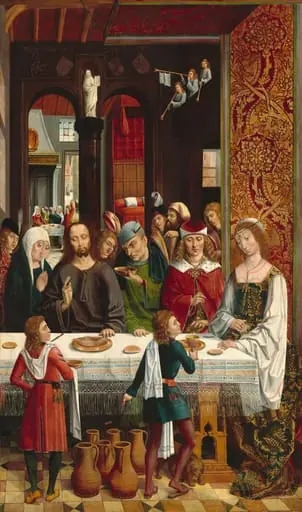 The Marriage at Cana
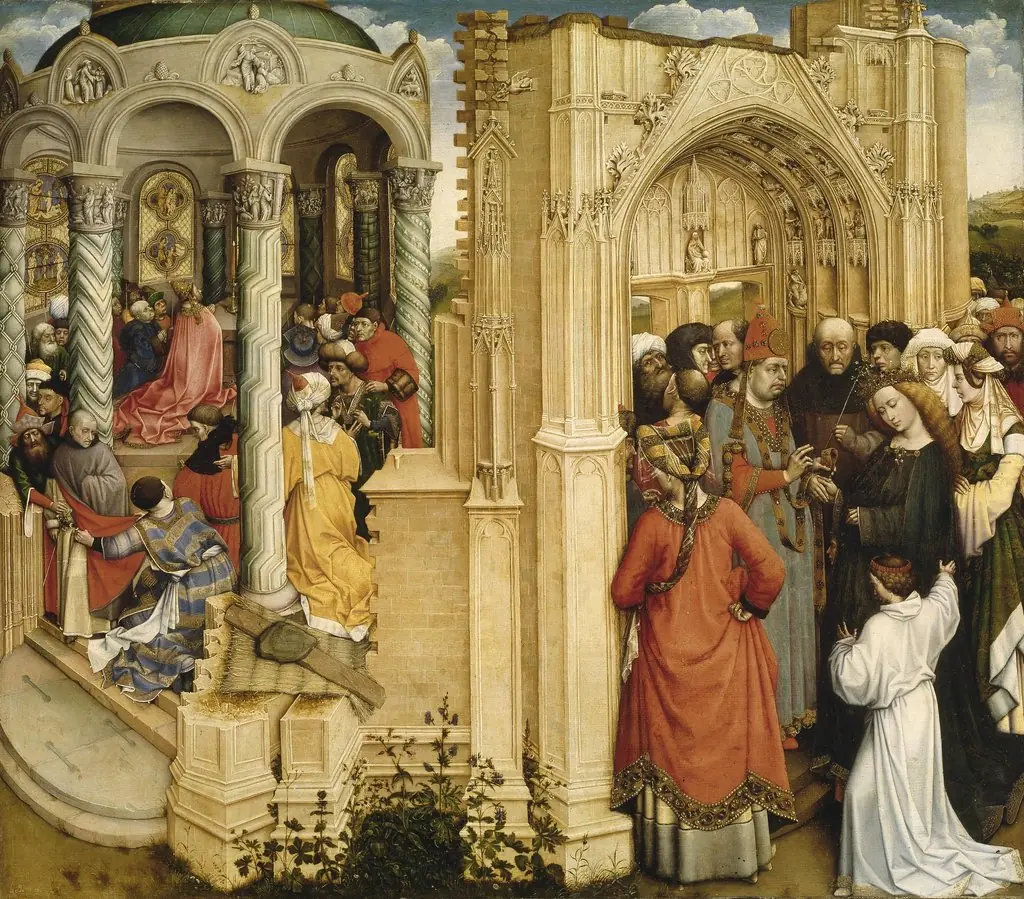 The miracle of the flowering rod (left); the marriage of Mary and Joseph (right)
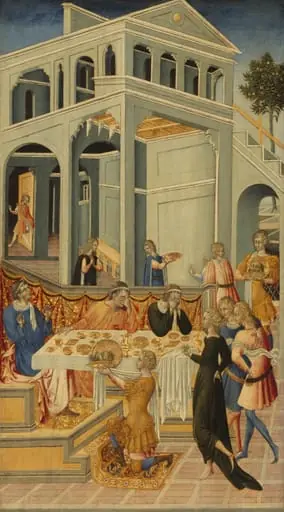 The Head of Saint John the Baptist Brought before Herod
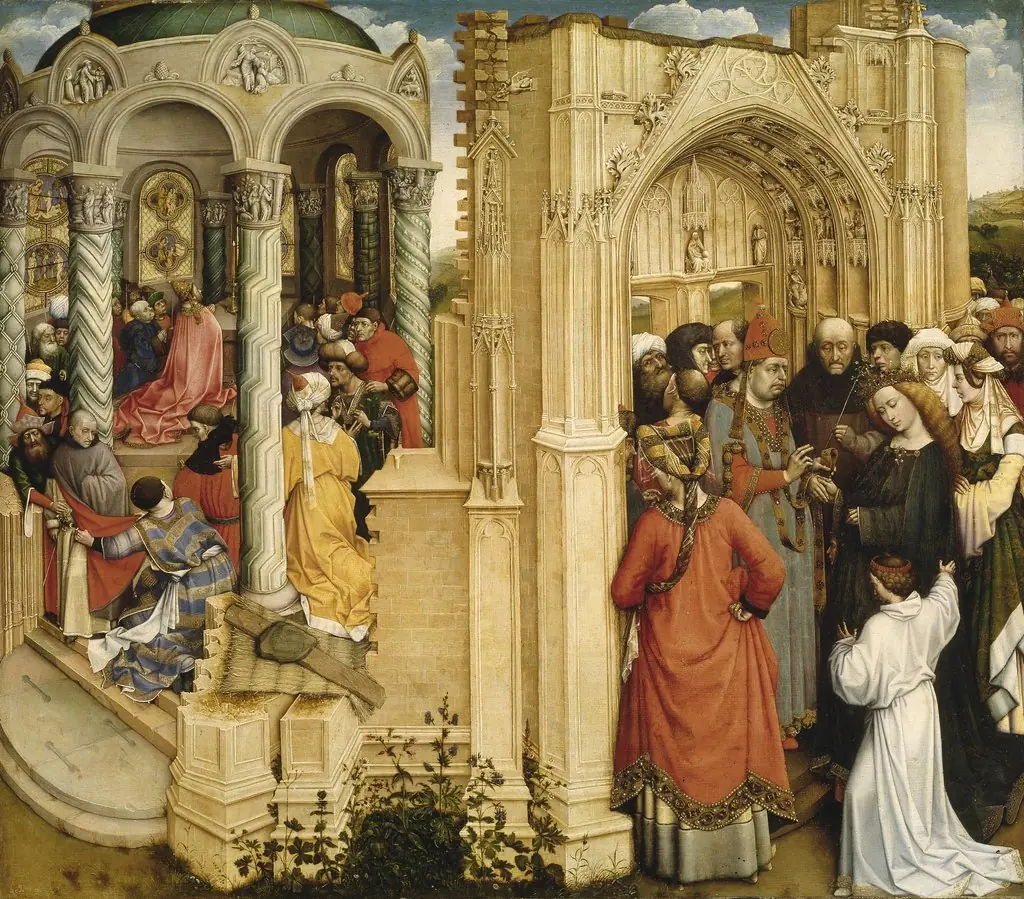 Marriage of the Virgin
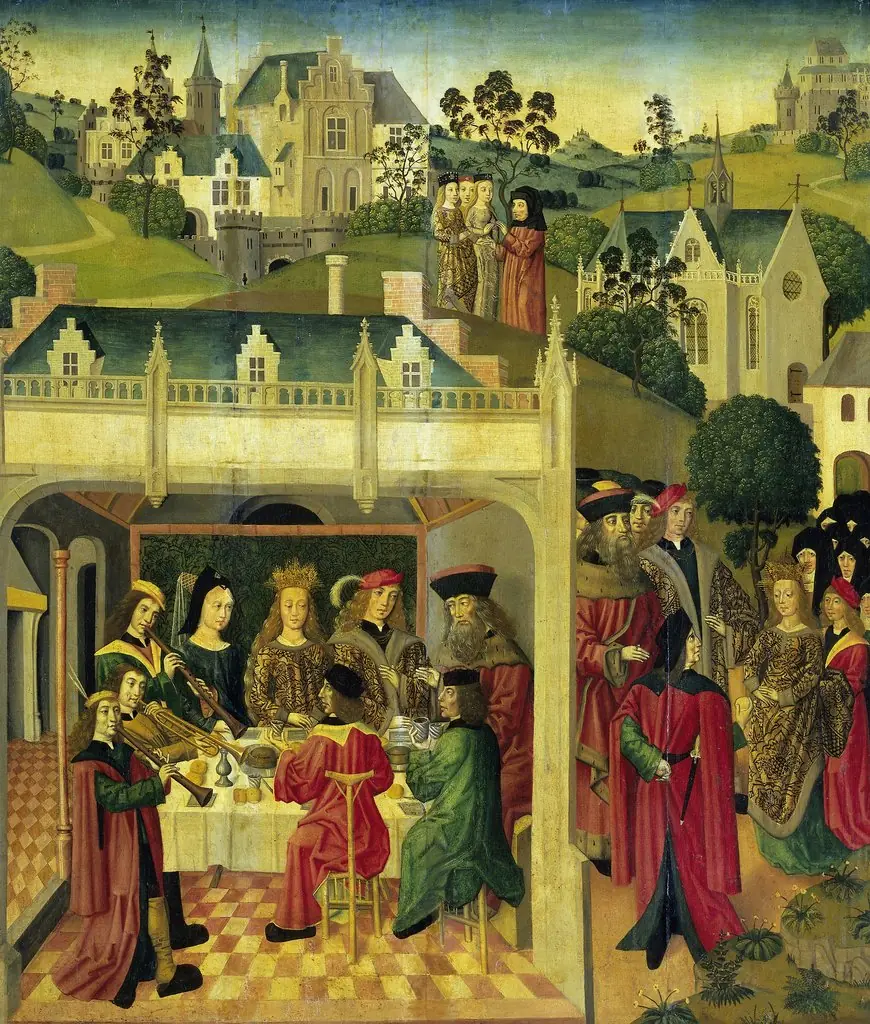 Inner left wing of an altarpiece with the wedding feast of St Elizabeth and Louis of Thuringia in the Wartburg
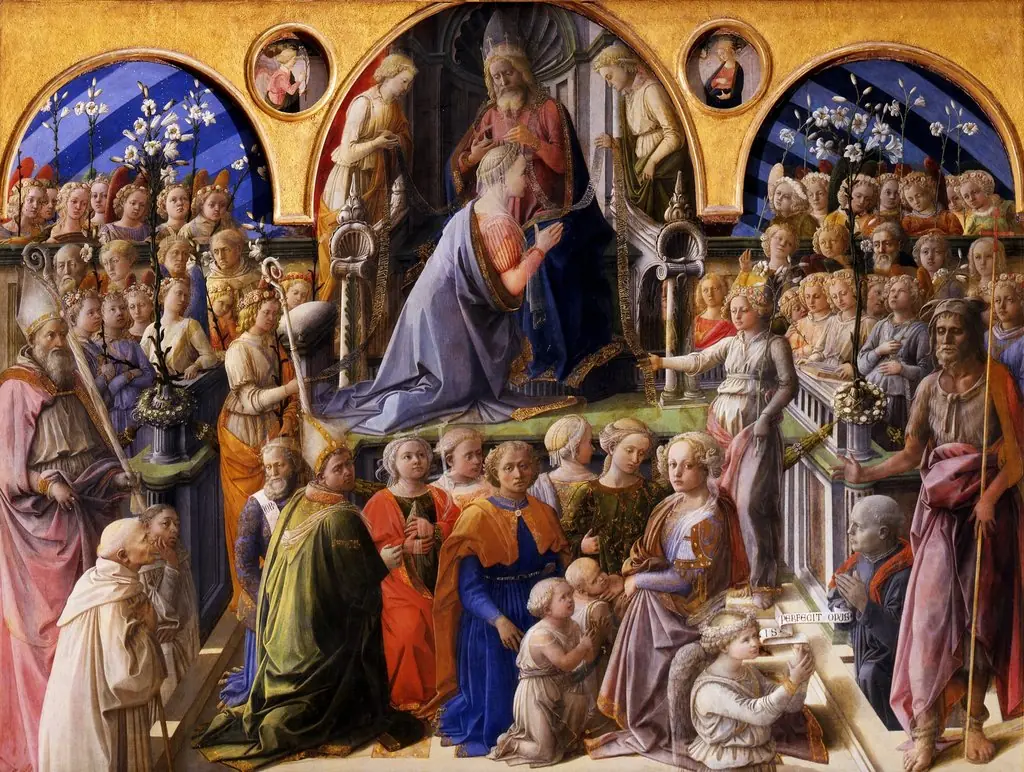 Coronation of the Virgin
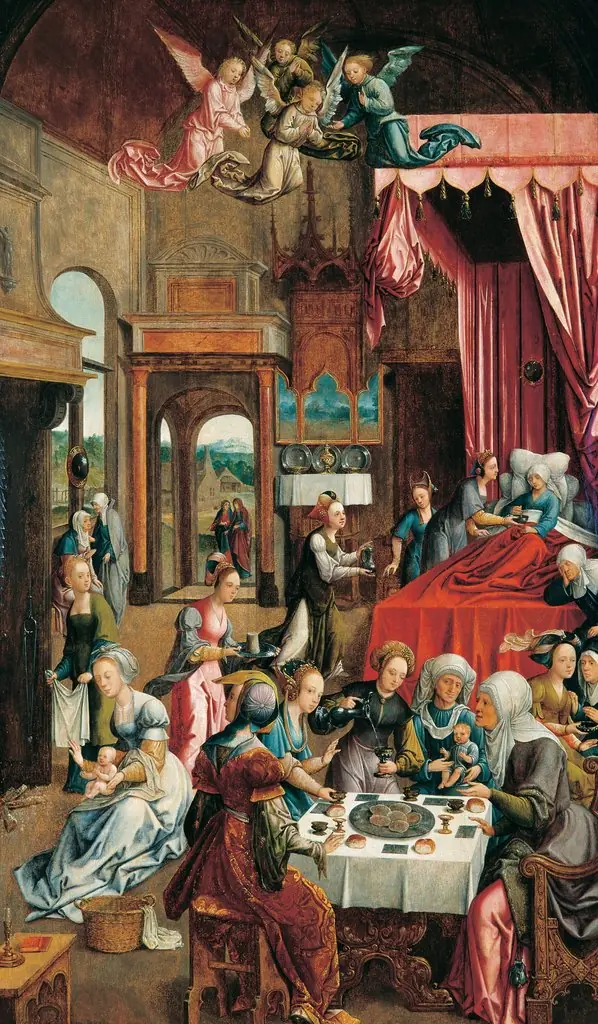 Nativity of the Virgin
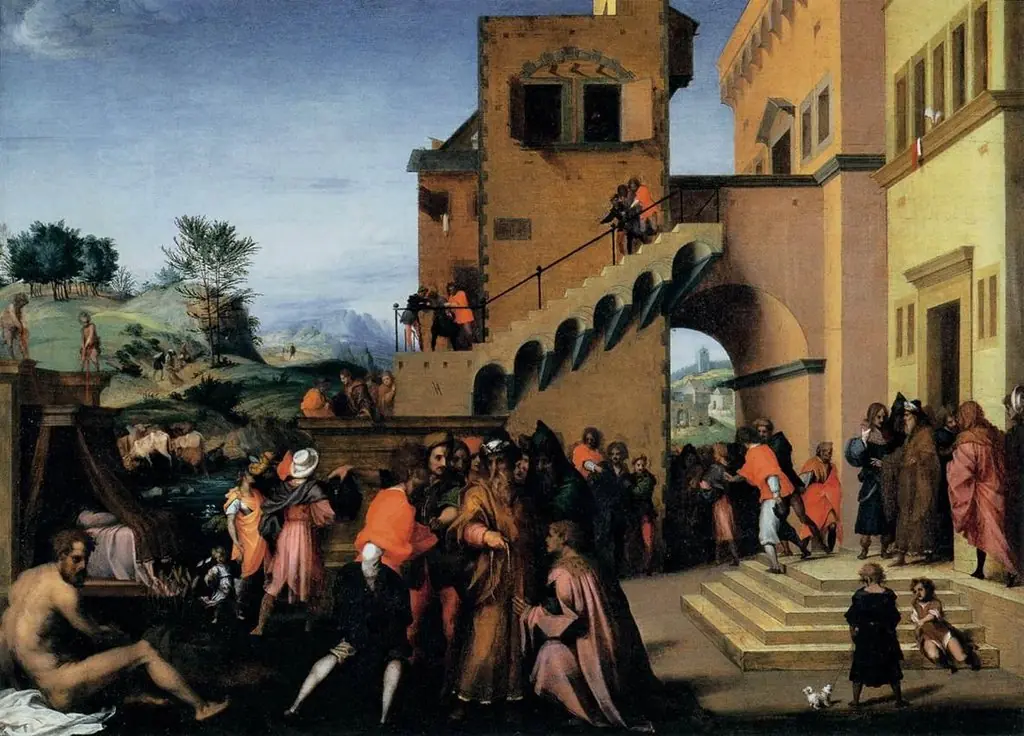 Joseph interpreting Pharaoh's dresm
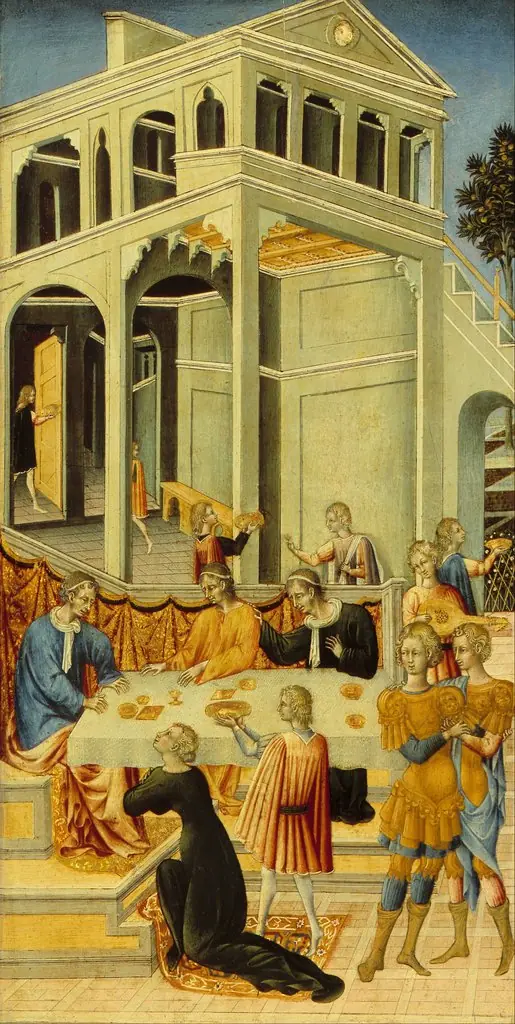 Salome Asking Herod for the Head of Saint John the Baptist
 Charity of St. Oswald
 Last Supper