Artwork
Tarquinius Priscus Entering Rome
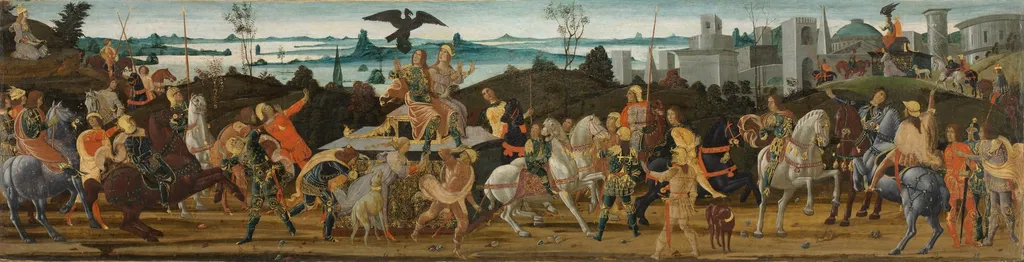
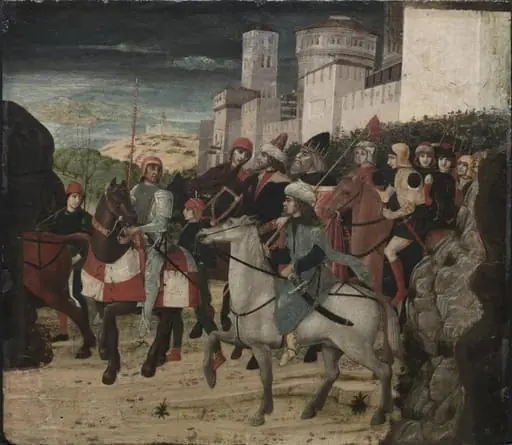
Tarquinius Priscus Entering Rome is an unspecified painting by the Early Renaissance artist Jacopo da Sellaio. It dates from 1470 and is held in the collection of the Cleveland Museum of Art.
About this work
History & Provenance
The painting Tarquinius Priscus Entering Rome is dated to circa 1470 and attributed to the Florentine artist Jacopo da Sellaio.
The painting Tarquinius Priscus Entering Rome is dated to circa 1470 and attributed to the Florentine artist Jacopo da Sellaio. According to the sources, the work is presently held by the Cleveland Museum of Art, where it bears the accession number 1942.646, indicating its acquisition by the museum in 1942. No earlier ownership, commission, or detailed provenance information is provided in the available sources.
Tarquinius Priscus Entering Rome by Jacopo da Sellaio, dated 1470, is held in the collection of the Cleveland Museum of Art. Its accession number is 1942.646, as recorded in the Wikidata record for the painting. The work measures 41.0 cm in height and 165.4 cm in width. No exhibition history is documented in the available sources.
Legacy
The painting Tarquinius Priscus Entering Rome by Jacopo da Sellaio was created in 1470 and is part of the Cleveland Museum of Art's collection, where it remains on view. As an early example of Renaissance narrative painting, it has influenced later interpretations of the legendary Roman king's entrance into the city, cited in art historical literature for its compositional clarity and use of color. The work continues to be referenced in studies of 15th-century Florentine art and the transmission of classical subjects in early modern painting.
Overview
Jacopo del Sellaio, a Florentine painter active in the late 15th century, completed the work titled Tarquinius Priscus Entering Rome in 1470. The oil on panel is part of the early Renaissance repertoire and is presently housed in the Cleveland Museum of Art. It portrays the legendary fifth king of Rome as he arrives in the city, surrounded by a bustling crowd.
Subject & Meaning
The composition centers on the regal figure of Tarquinius Priscus, identified by his presence among a procession of armored men, mounted riders, and onlookers. A seated woman on a throne‑like chair, crowned and dressed in an elaborate gown, occupies the focal point, suggesting a ceremonial reception or a symbolic representation of civic authority within the mythic narrative.
Technique & Style
Sellaio’s handling reflects the transitional language of the early Renaissance, combining linear clarity with a rich palette. The figures are rendered with defined contours, while the decorative throne and patterned textiles display an attention to surface detail reminiscent of his contemporaries Botticelli, Filippino Lippi, and Ghirlandaio. Atmospheric depth is suggested through a backdrop of architecture, foliage, and water, punctuated by a soaring bird.
Context
The work reflects the Renaissance fascination with classical antiquity and the legendary foundations of Rome. By depicting a foundational monarch, Sellaio engages with contemporary humanist interests, presenting an idealized vision of civic virtue and the continuity between ancient Rome and 15th‑century Florence.
Artist & collection
Artist
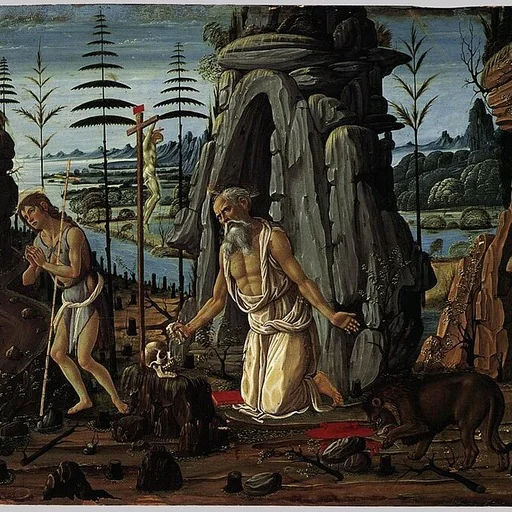
Jacopo del Sellaio (1441/42–1493) was an Italian painter of the early Renaissance, active in his native Florence.

 Procession of the Magi
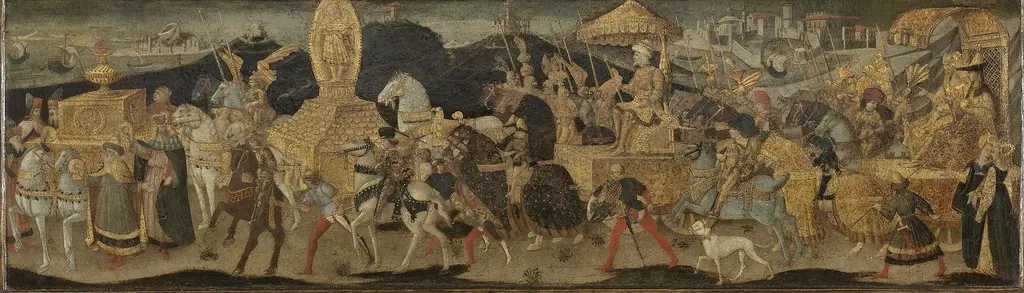 Darius Marching to the Battle of Issus
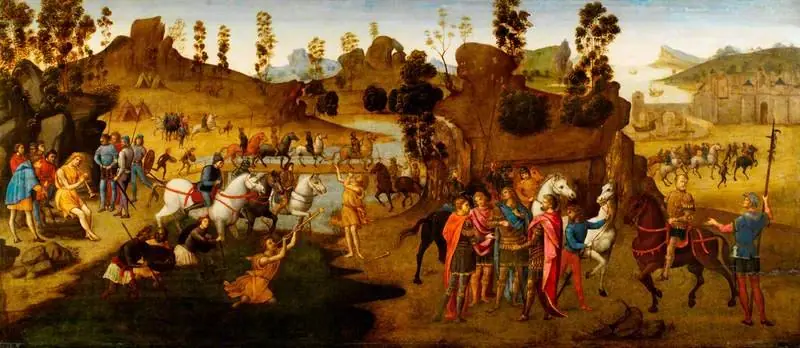 Julius Caesar and the Crossing of the Rubicon (scene from the story of Alexander the Great)
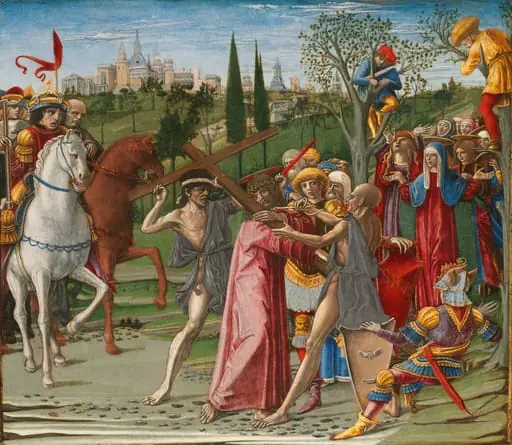 Christ Carrying the Cross
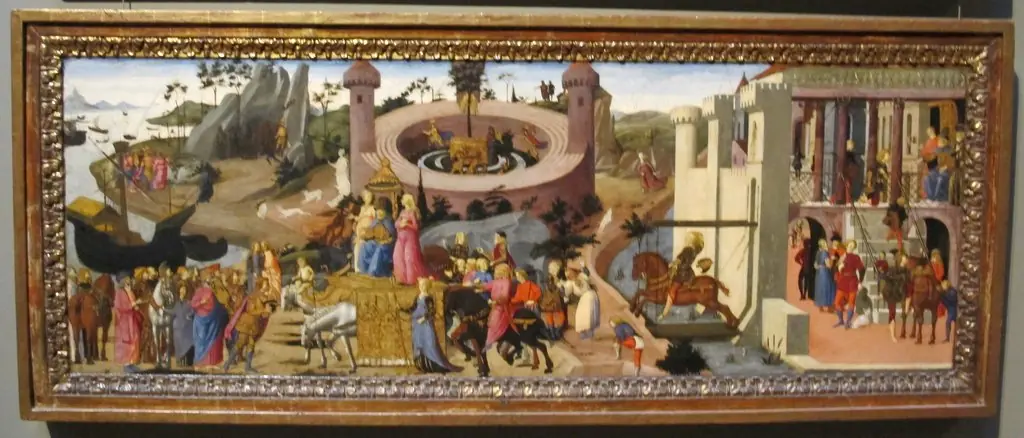 scene con storie degli argonauti
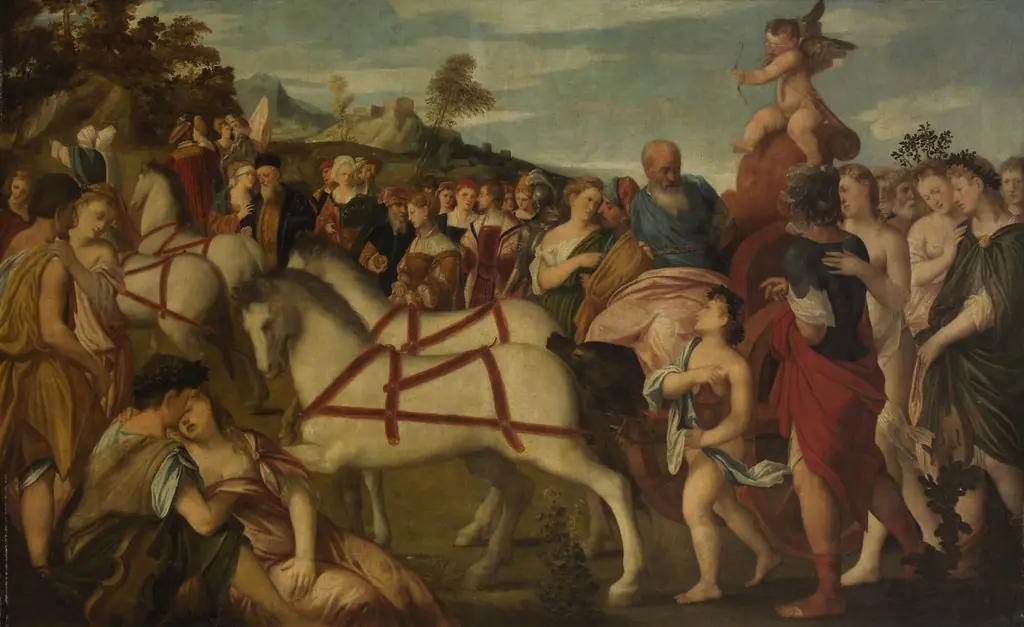 Triumph der Liebe
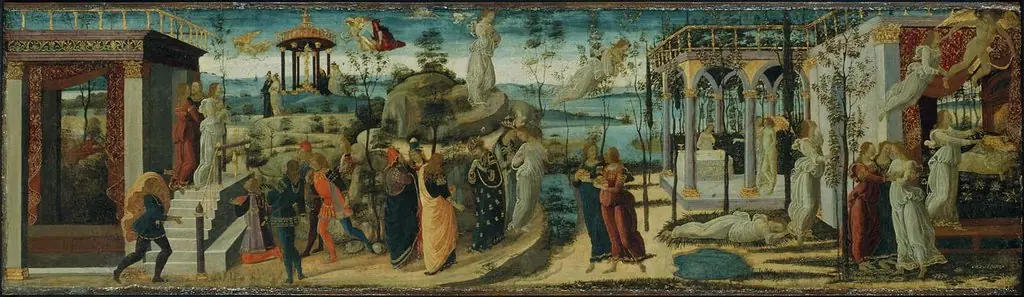 Story of Psyche
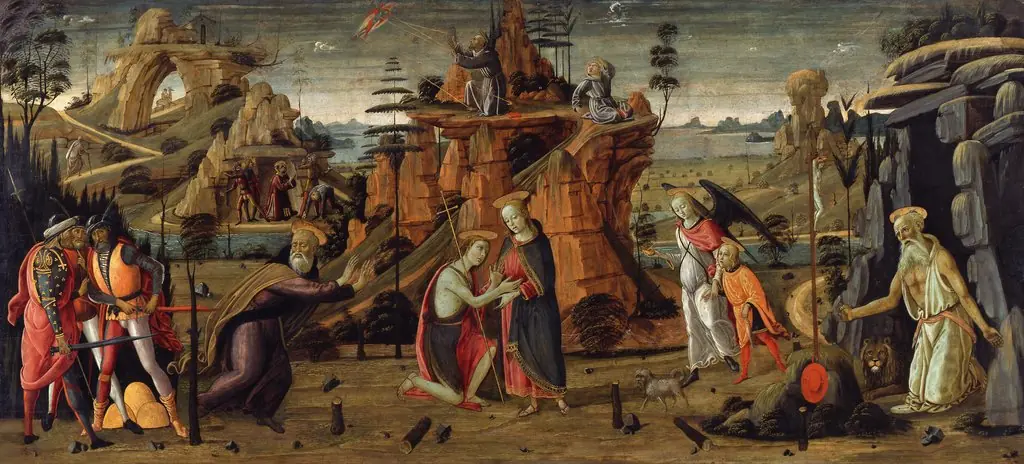 Landscape with biblical scenes and scenes from the legends of saints
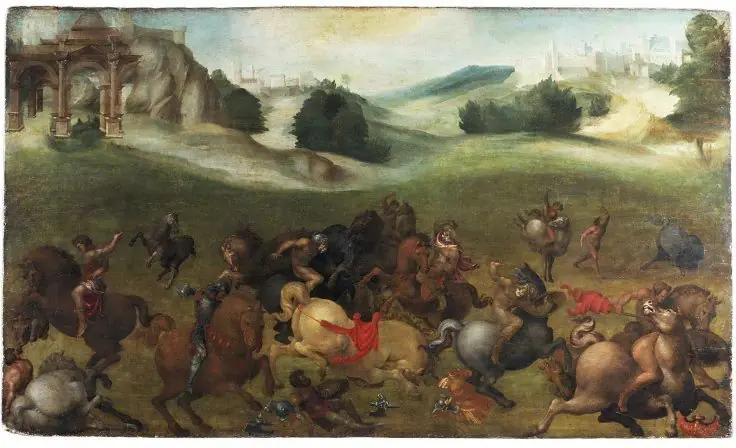 the conversion of St Paul
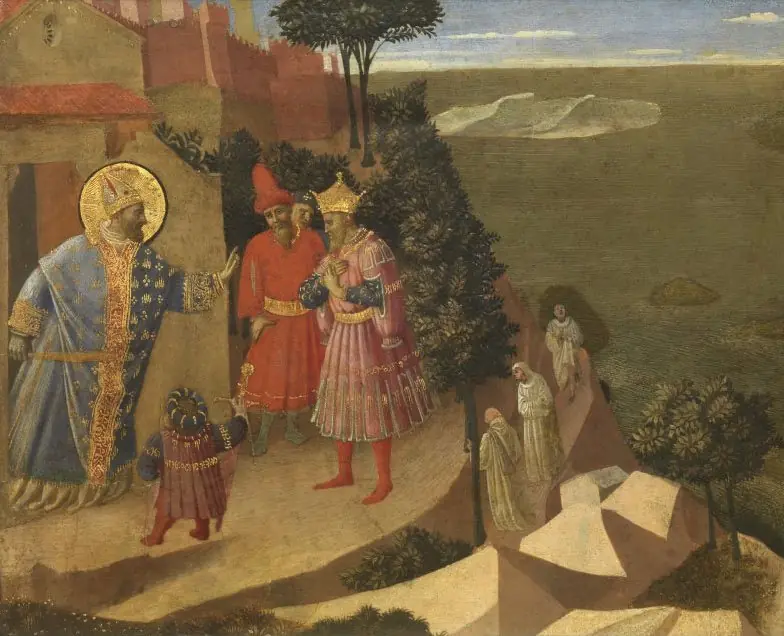 Saint Romuald Forbidding Entry to the Monastery to Emperor Otton III
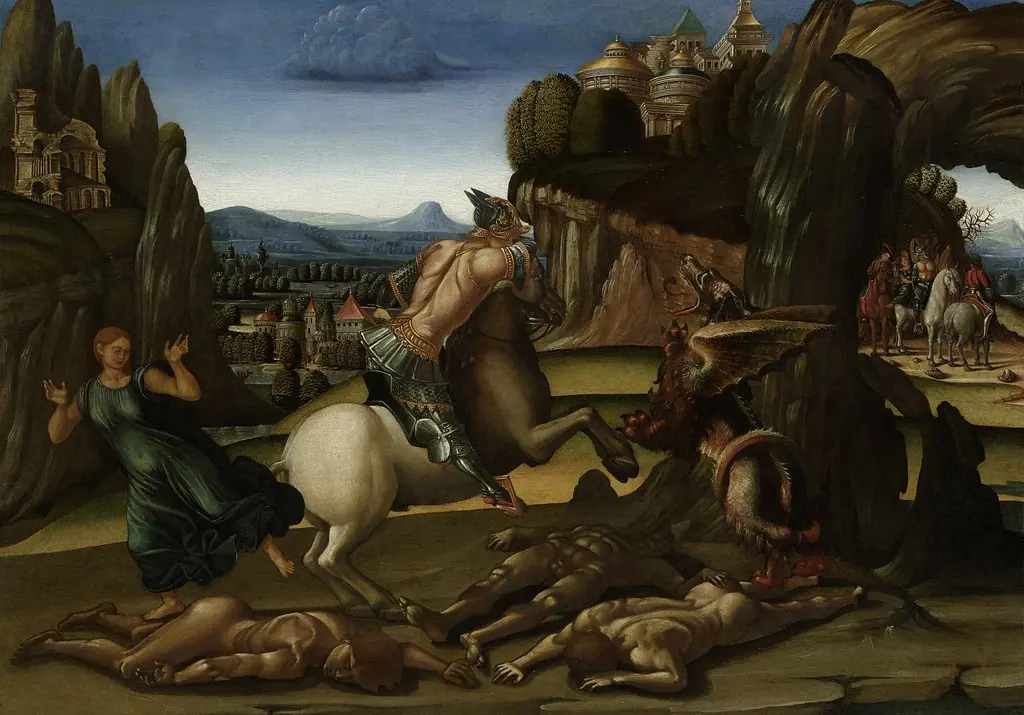 Saint George and the Dragon
- Tarquinius Priscus Entering Rome