Artwork
Saint John the Baptist
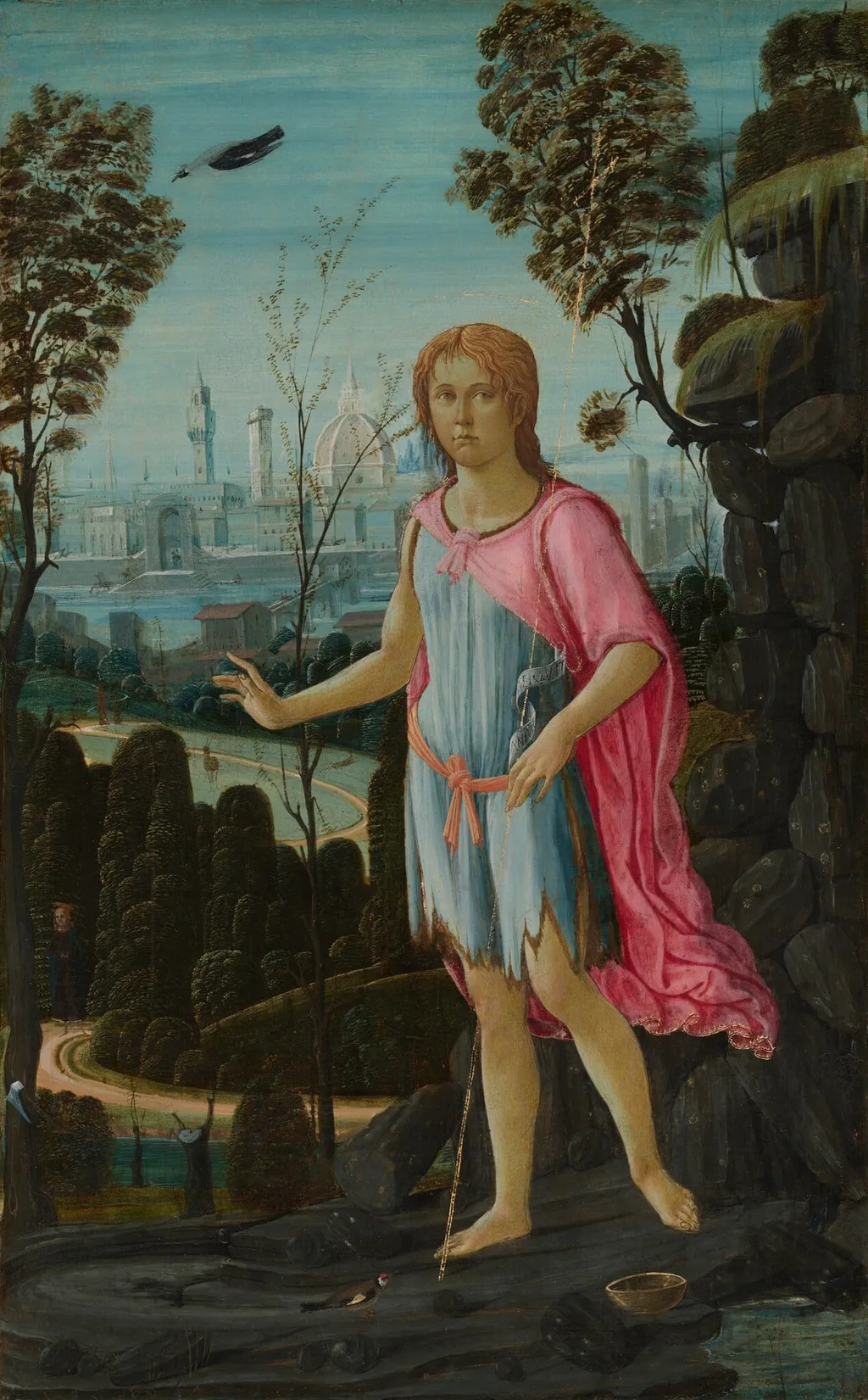
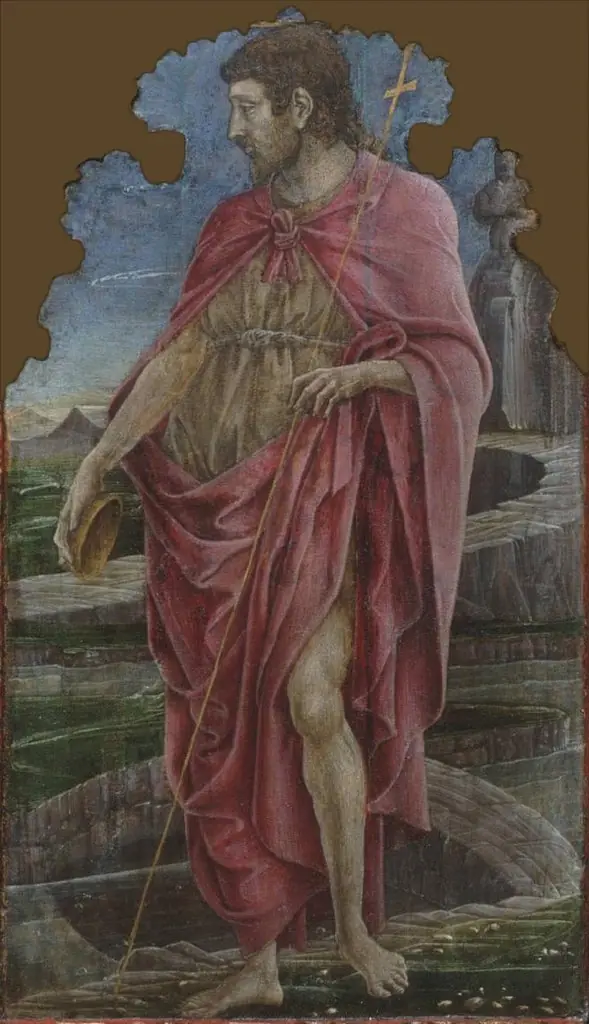
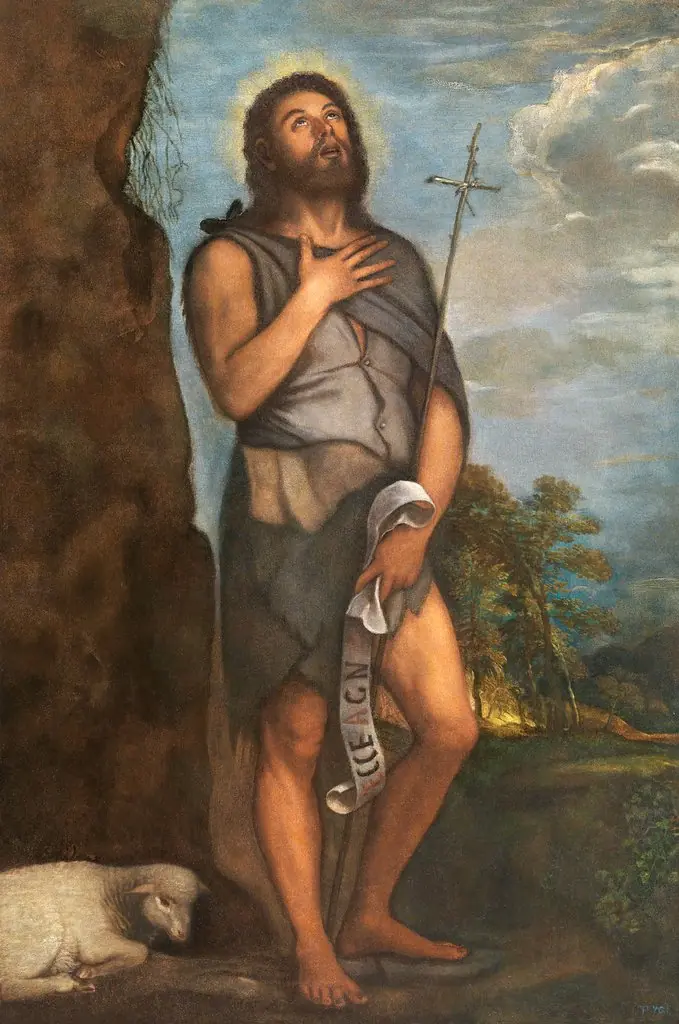
Saint John the Baptist is an oil painting by the Early Renaissance artist Jacopo da Sellaio. It dates from 1480 and is held in the collection of the National Gallery of Art.
- Inscription
- Inscribed:on the banderole around the saint's reed cross: [ECCE] ANIVS DEI QVI T[OLLIT PECCATUM MUNDI]
About this work
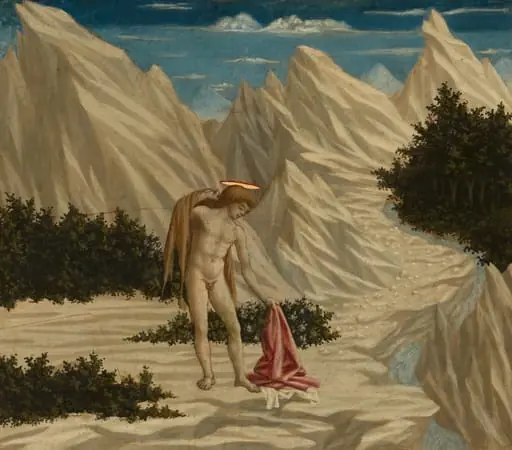
John the Baptist appears as a young man in simple clothes, holding a staff against a plain background. Painted around 1480, the work draws attention with the way light falls across his face and dress.
Subject & Meaning
This religious artwork portrays the figure as a youth, consistent with historical descriptions noting his depiction as a boy of twelve or fourteen years.
The painting depicts John the Baptist as the main subject, specifically representing him in the wilderness. This religious artwork portrays the figure as a youth, consistent with historical descriptions noting his depiction as a boy of twelve or fourteen years. The iconography places the saint within a landscape setting that includes a view of Florence in the background, grounding the biblical figure in a recognizable Tuscan context.
As a work of religious art, the piece emphasizes the spiritual significance of the Baptist's ascetic life outside the city, a traditional theme in Christian iconography. The composition focuses entirely on the solitary figure, reinforcing the symbolic meaning of his role as a prophet preparing the way through isolation and contemplation in nature.
Technique & Style
Jacopo del Sellaio's Saint John the Baptist, executed circa 1480, is an oil painting on a poplar panel support. The work measures 52 cm in height and 32.8 cm in width. Depicting the young John the Baptist in a wilderness setting with Florence visible in the background, the composition reflects the artist's handling of religious portraiture within a landscape context.
The medium consists of oil paint applied to the wooden panel, a standard technique for Florentine painters of the late fifteenth century. While the provenance records indicate the work was once misattributed to Sandro Botticelli in 19th-century sale catalogs, its current stylistic classification aligns with Sellaio's production. The painting remains in the collection of the National Gallery of Art, having entered the museum through the Samuel H. Kress Foundation gift in 1939.
History & Provenance
Jacopo del Sellaio created Saint John the Baptist in 1480 using oil on a poplar panel. By 1852, the painting was owned by Marquis Pietro Francesco Rinuccini in Florence. It was offered at the Rinuccini sale on May 1, 1852, cataloged as a work by Botticelli, though it may have been bought in. Marianna Rinuccini inherited the painting and brought it to Milan upon her 1855 marriage to Marquis Giorgio Trivulzio.
That year, Otto Mündler described the artwork in the Trivulzio collection as a youthful Baptist in a landscape with Florence in the background. The Trivulzio family retained the painting until at least 1931. It subsequently entered the possession of Count Alessandro Contini Bonacossi in Florence, who sold it to the Samuel H. Kress Foundation in New York in October 1937. The Kress Foundation gifted the work to the National Gallery of Art in 1939.
Jacopo del Sellaio's Saint John the Baptist is held by the National Gallery of Art in Washington, D.C., as part of the Samuel H. Kress Collection. The painting was gifted to the museum by the Samuel H. Kress Foundation in 1939, shortly after the foundation acquired it from Florentine art dealer Count Alessandro Contini Bonacossi in October 1937. Prior to entering the museum, the work was featured in a notable 1852 sale; it was auctioned from the collection of Marquis Pietro Francesco Rinuccini at the Palazzo Rinuccini Fondacci di Santo Spirito in Florence on May 1, 1852, where it appeared as lot 128.
Additionally, the painting was documented on view within the Trivulzio family collection in Milan, where it was observed and recorded by Otto Mündler in 1856 and cited by Raimond van Marle in 1931.
Overview
Jacopo del Sellaio's Saint John the Baptist, painted around 1480, is an oil on poplar panel work. This religious painting focuses on the figure of John the Baptist, presented as a youthful individual. It exemplifies artistic developments occurring in the late 15th century, particularly in its approach to rendering the human form and light.
Own this work as a print
Artist & collection
Artist
Jacopo del Sellaio (1441/42–1493) was an Italian painter of the early Renaissance, active in his native Florence.

 Saint John the Baptist
 Saint John the Baptist
 Tobias and the Angel
 Procris' Prayer to Diana
 Saint John the Baptist in a Landscape
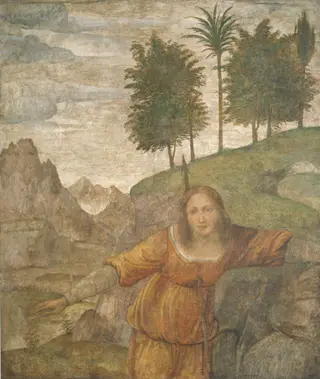 Procris Pierced by Cephalus' Javelin
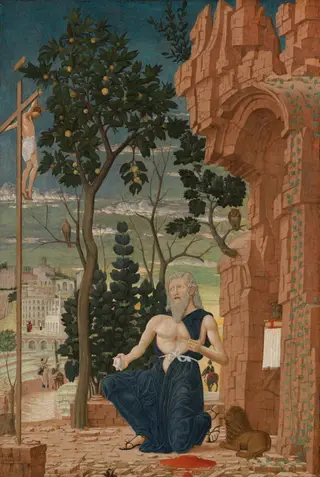 Saint Jerome in the Wilderness
 Ariadne on Naxos
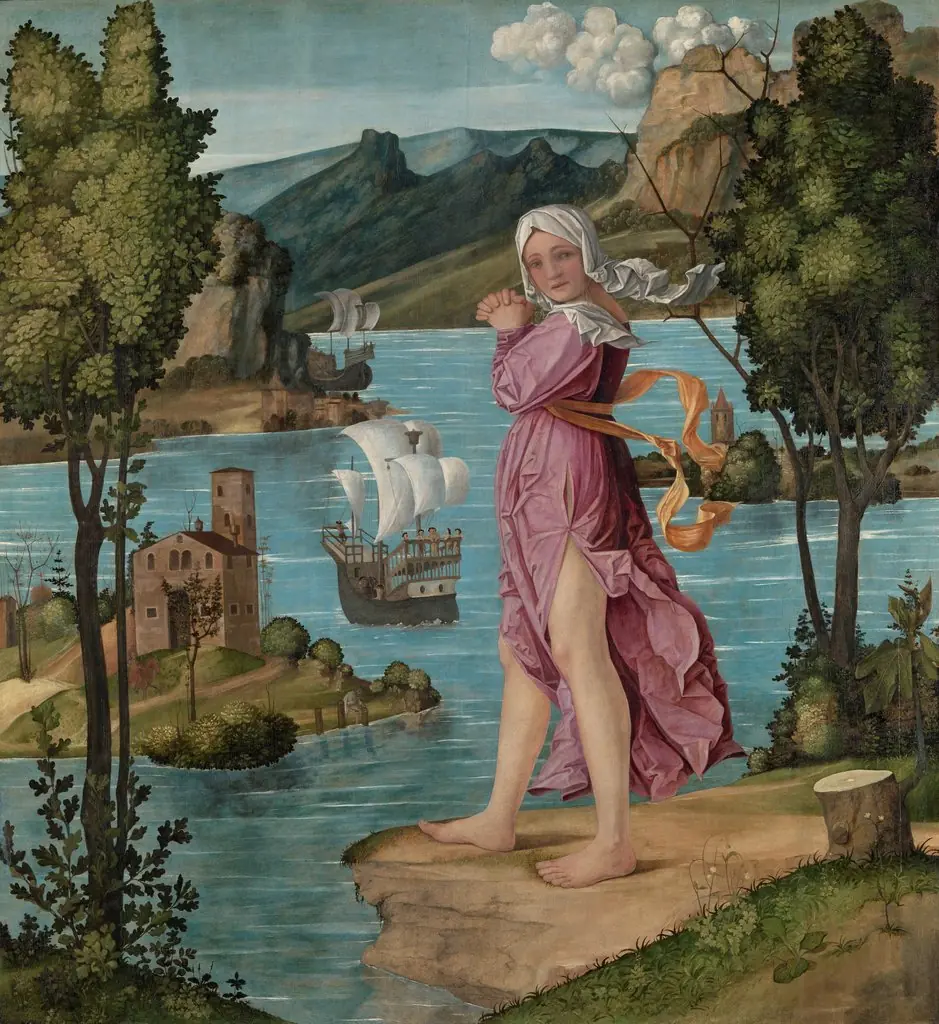 Ariadne on Naxos
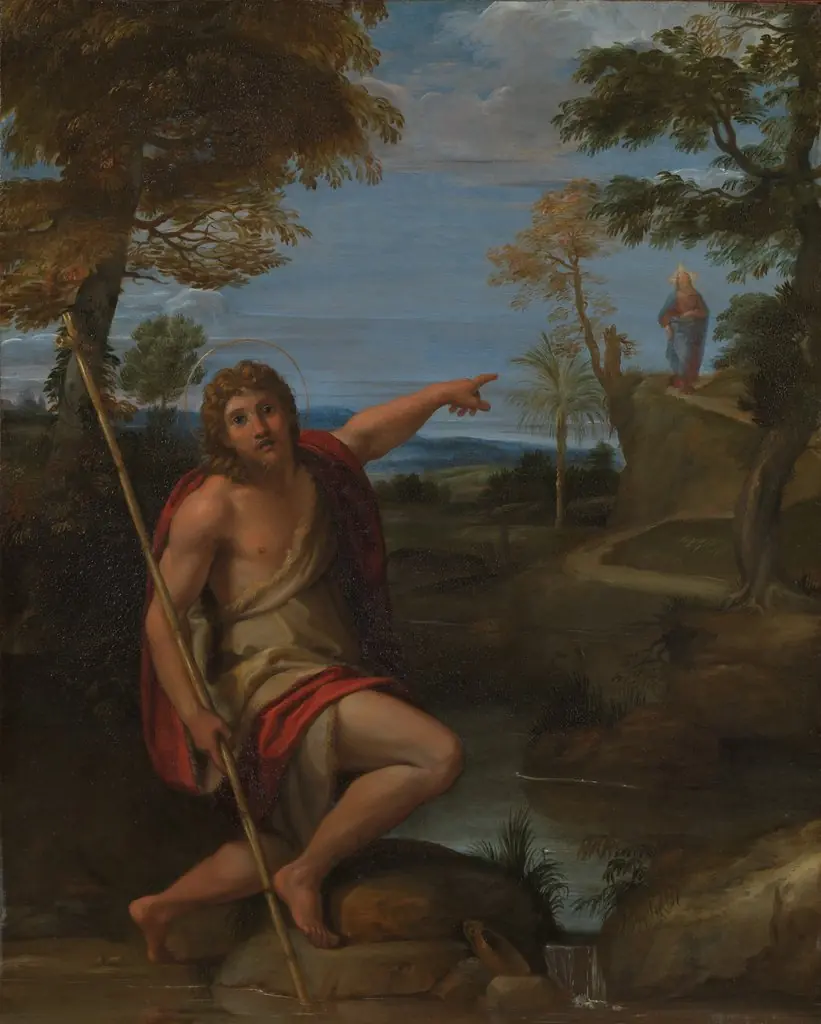 Saint John the Baptist Bearing Witness
 Saint John in the Desert
- Saint John the Baptist