Artwork
The Marriage at Cana
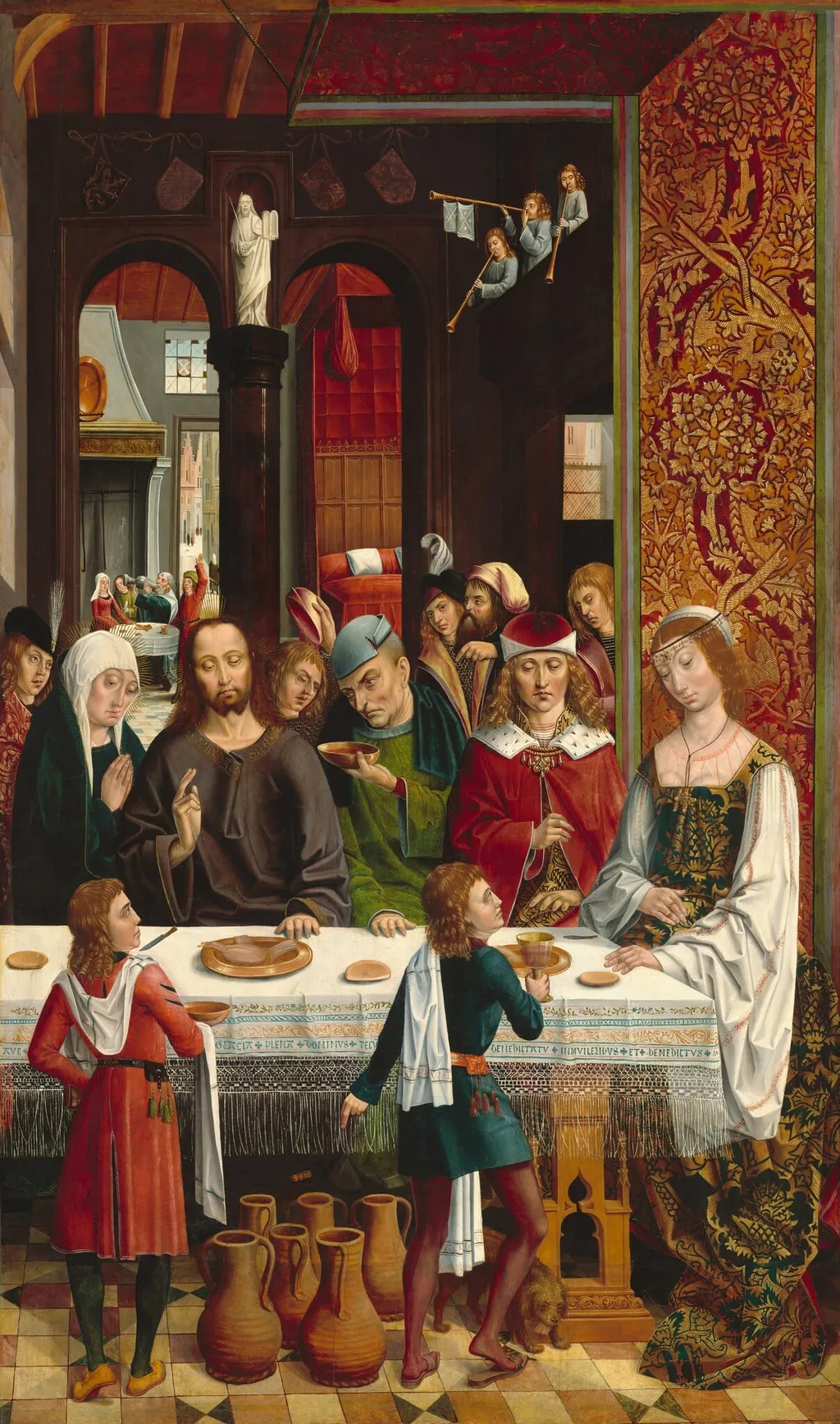
The Marriage at Cana is an oil painting by the Northern Renaissance artist Master of the Catholic Kings. It dates from 1496 and is held in the collection of the National Gallery of Art.
- Inscription
- Inscribed:on border of tablecloth: AVE*GRATIA*PLENA*DOMINUS*TECU BENEDICTATU*INMUILERIBUS (Hail full of grace, the Lord is with thee: blessed art thou among women) (Luke 1:28); on border of Christ's tunic: QUID MIHI ET TIBI EST MULLER (What have I to do with thee, woman?) (John 2:4); on towel over shoulders of attendant on right: SA*RN*VMT / AEN*D*VI; on border of Mary's mantle (in relief, deciphered with infrared reflectography): OVOSONRVM
About this work
Subject & Meaning
The painting depicts the Marriage at Cana, the New Testament miracle in which Christ transforms water into wine at a wedding feast (John 2:1–11).
The painting depicts the Marriage at Cana, the New Testament miracle in which Christ transforms water into wine at a wedding feast (John 2:1–11). Classified as religious art, the work visualizes this foundational episode of Christ's public ministry, a subject frequently chosen for devotional commissions in late medieval Spain. The iconography centers on the wedding banquet, with the miracle of the wine serving as the principal symbolic focus, representing divine power, the inauguration of Christ's miracles, and, in Catholic devotional contexts, the sacramental significance of wine as a prefiguration of the Eucharist.
As part of an altarpiece likely produced for a church or convent, the scene would have carried didactic and liturgical meaning for monastic or lay viewers, reinforcing themes of divine grace and the sanctity of marriage.
Technique & Style
The Marriage at Cana is executed in oil on panel, measuring 137 × 93 cm. Painted in 1495 by the anonymous Master of the Catholic Kings, the work exemplifies the stylistic qualities characteristic of Spanish painting in northern Castile during the reign of the Catholic Kings. The panel support and oil medium reflect the technical practices of late fifteenth-century Spanish religious painting. The composition belongs to the religious genre, depicting the biblical miracle of the Marriage at Cana.
History & Provenance
The Marriage at Cana was painted in 1495 by the Master of the Catholic Kings, likely on commission for a convent or church in Valladolid, Spain. This attribution is based on the probable patronage of the Catholic Kings and the painting's stylistic qualities characteristic of northern Castilian work from their reign; however, the Valladolid commission theory remains plausible but unconfirmed. Before 1919, the panel belonged to José María de Palacio, Conde de las Almenas, in Madrid, where it is documented hanging in his residence.
On 28 March 1919, it was sold to Frank Partridge and Sons, Ltd., in London. By 1933, the painting had entered the collection of Dr. Preston Pope Satterwhite in New York, possibly through French & Co. The Samuel H. Kress Foundation purchased the work in 1941 and subsequently gifted it to the National Gallery of Art in 1952.
The painting is currently held in the collection of the National Gallery of Art in Washington, D.C., specifically within the Samuel H. Kress Collection. Its modern provenance traces back to José María de Palacio, Conde de las Almenas, in Madrid prior to 1919. The work was sold to Frank Partridge and Sons in London on March 28, 1919, and subsequently entered the collection of Dr. Preston Pope Satterwhite in New York by 1933.
The Samuel H. Kress Foundation acquired the panel in 1941 and donated it to the National Gallery of Art in 1952. While early theories suggest the altarpiece was originally commissioned for a religious institution in Valladolid, Spain, this origin remains unconfirmed. The provided sources do not list specific public exhibition history beyond its display in the Conde's residence, documented in a 1922 publication.
Context
The Marriage at Cana is a late 15th‑century Spanish panel painting attributed to the Master of the Catholic Kings and dated to around 1495, originally intended for an unidentified religious house, possibly in Valladolid, and later recorded in the collection of the Conde de las Almenas before being acquired by the Kress Foundation and donated to the National Gallery of Art. Scholarship views it as part of a small altarpiece noted for naturalistic detail and devotional emphasis, traits that reflect the courtly patronage of the Catholic Monarchs and the stylistic characteristics of Castilian religious painting of the period. Its depiction of the Wedding at Cana functions as a devotional image within the broader tradition of religious art, illustrating the work’s role in early modern visual instruction.
Overview
The Marriage at Cana, an oil painting on panel, was created around 1496 by the artist known as the Master of the Catholic Kings. This religious work illustrates the biblical narrative of Christ's first miracle, where water is transformed into wine during a wedding celebration. The composition captures a pivotal moment of divine intervention within a festive, human gathering.
Own this work as a print
Artist & collection


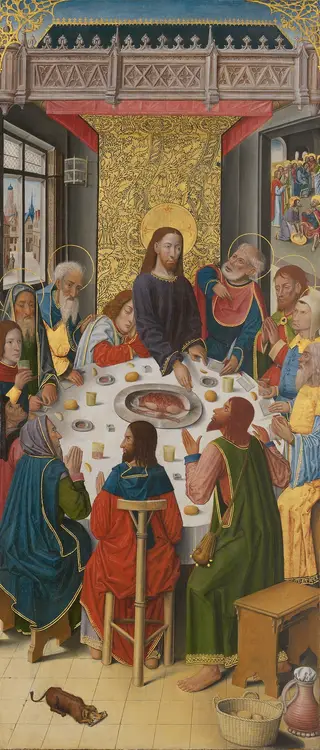 Panels from the High Altar of the Charterhouse of Saint-Honoré, Thuison-les-Abbeville: The Last Supper
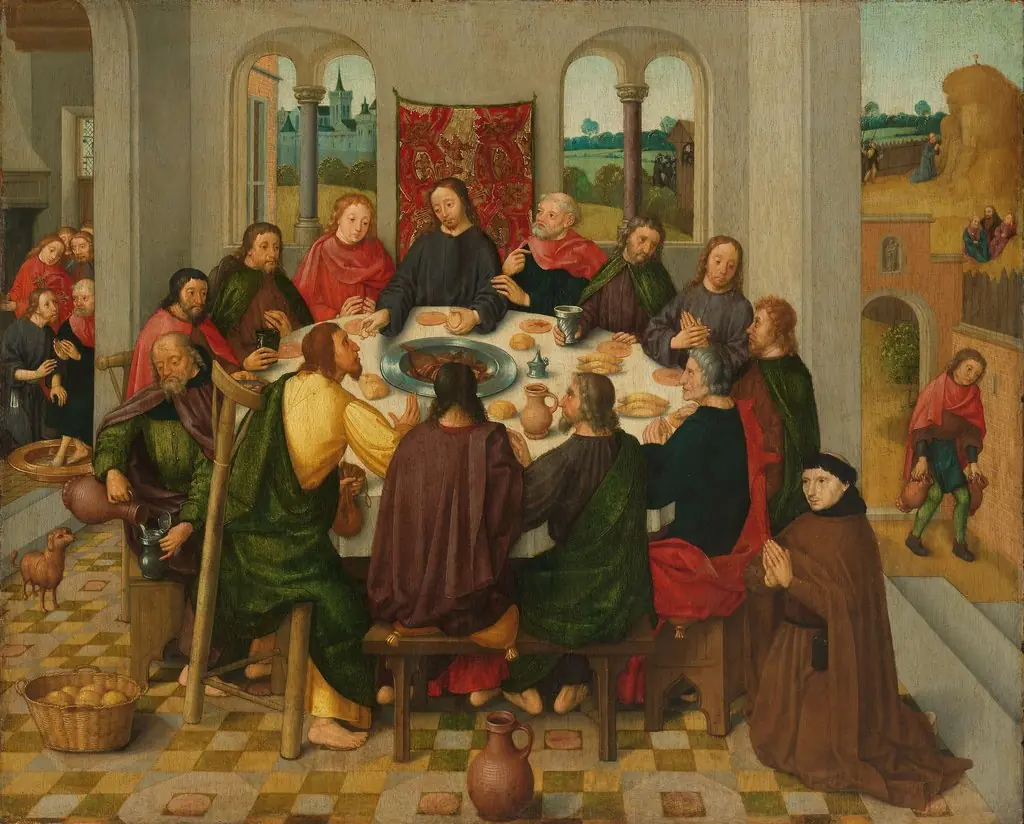 The last supper
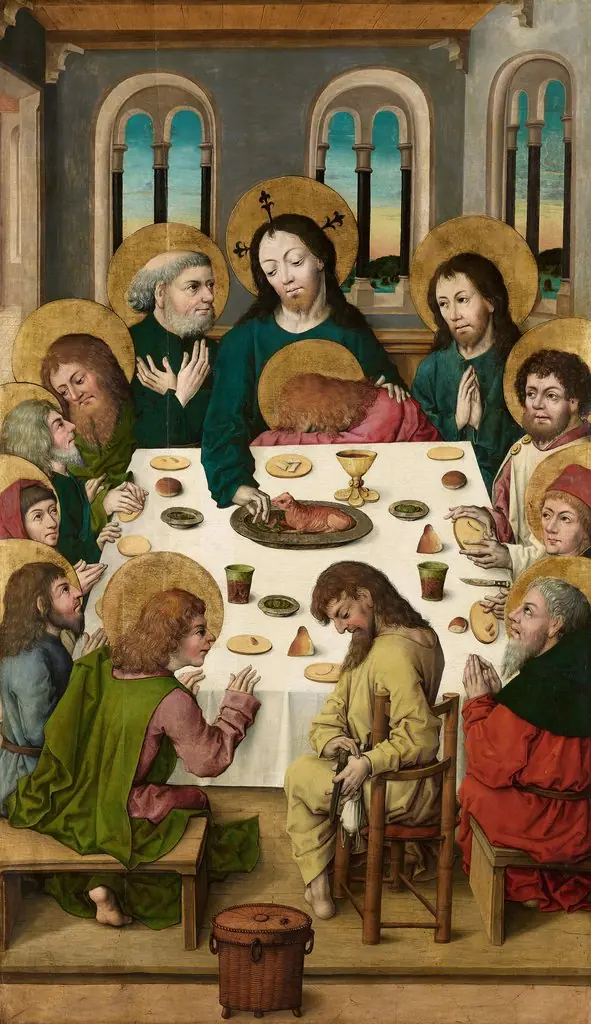 The Last Supper
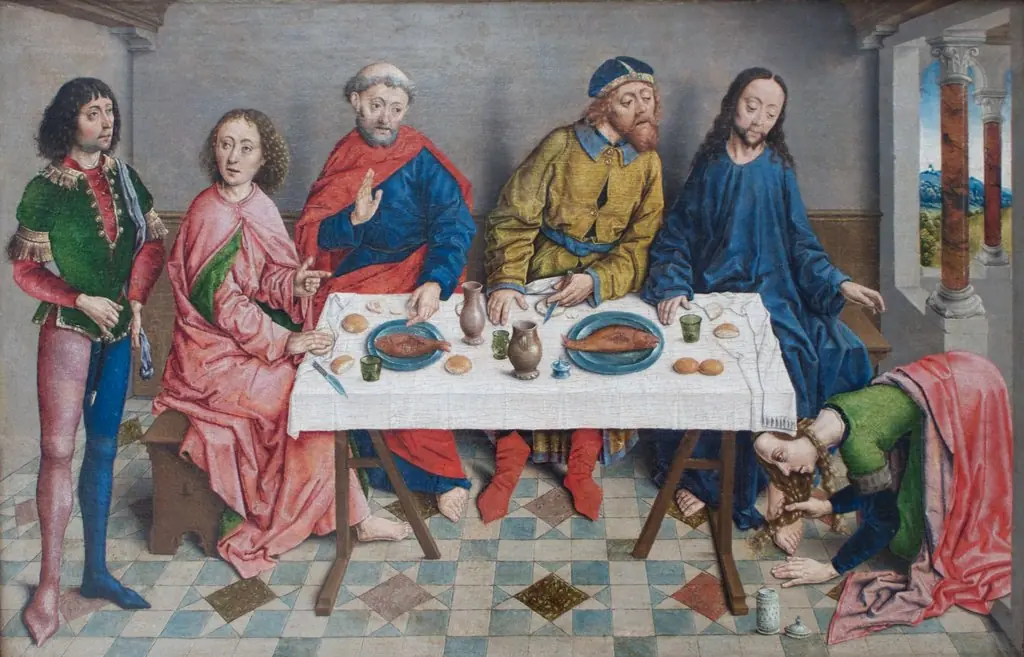 Jesus at Simon's by Aelbrecht Bouts
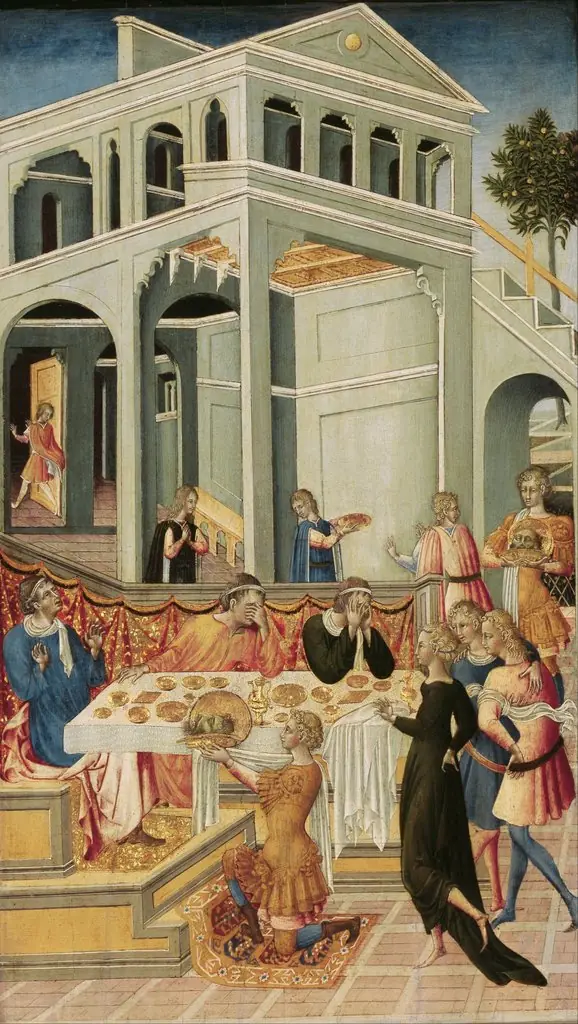 The Head of Saint John the Baptist Brought before Herod
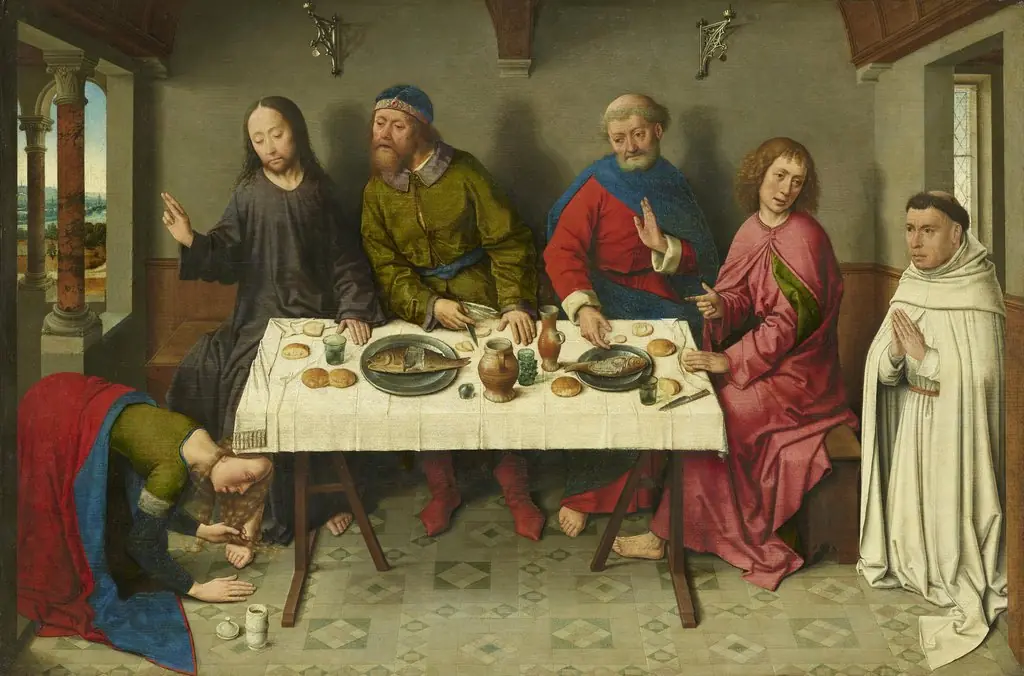 Christ in the house of the Pharisee Simon
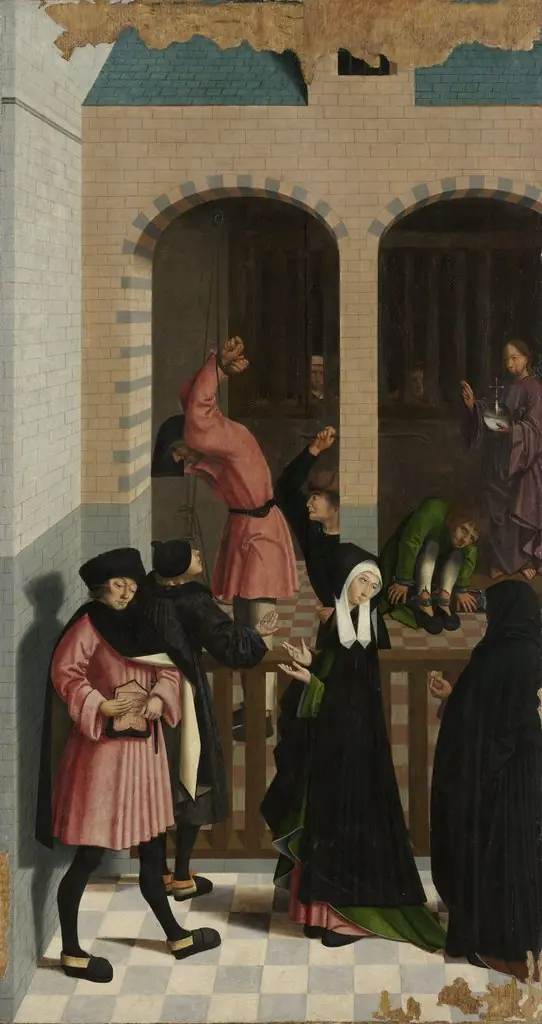 The Seven Works of Mercy
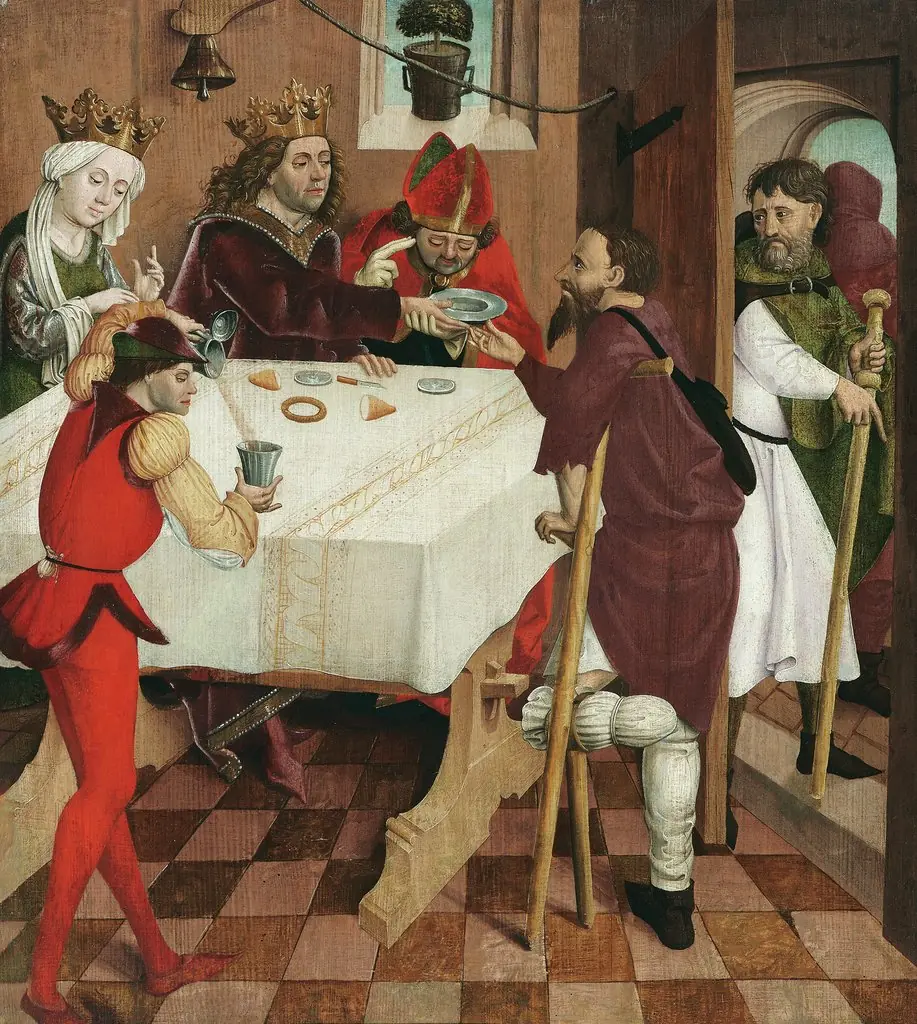 Charity of St. Oswald
 Nativity of the Virgin