Artwork
Abraham and Three Angels
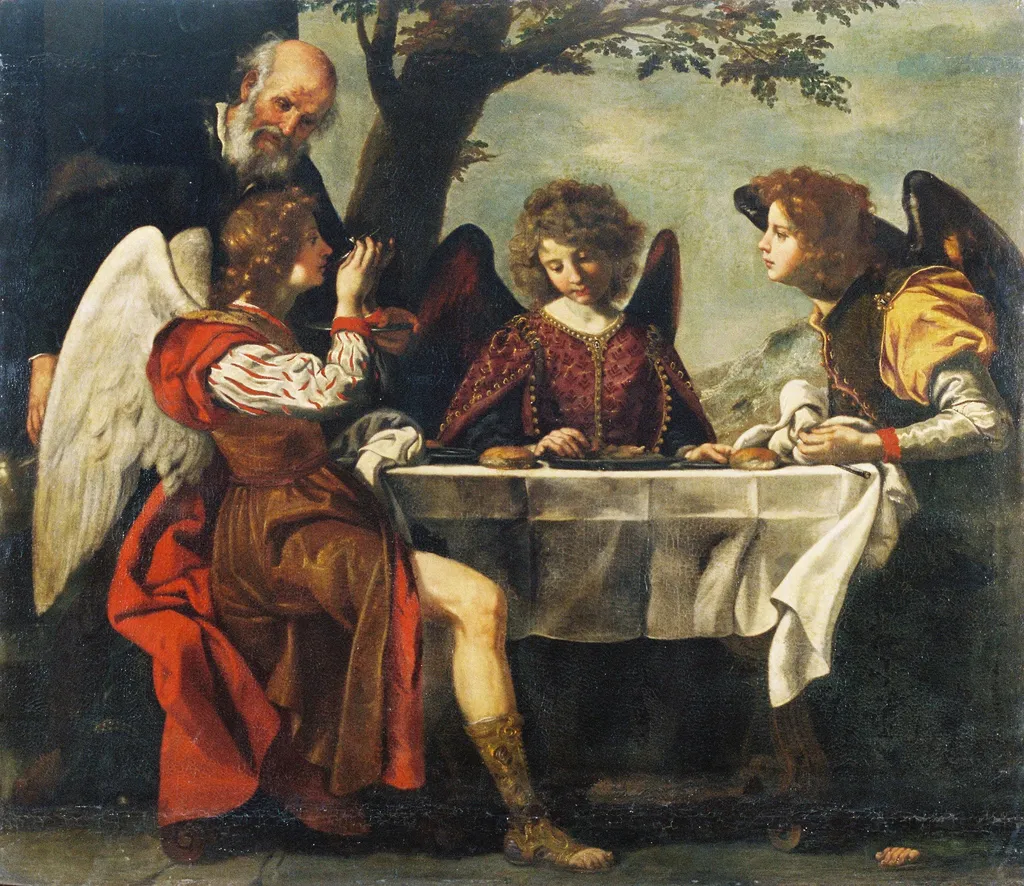
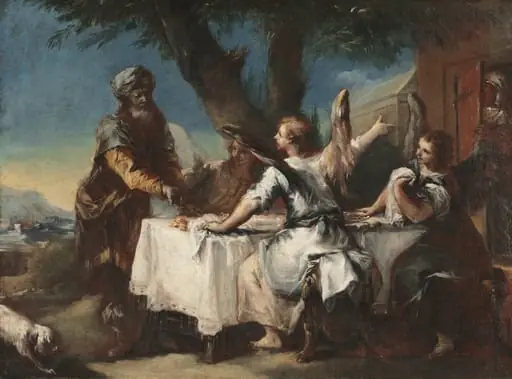
Abraham and Three Angels is an oil painting by the High Baroque Italian artist Jacopo Vignali. It is held in the collection of the Hermitage Museum.
About this work
Overview
The painting exemplifies the intimate, dramatically lit religious compositions that characterized Florentine Baroque painting during Vignali's lifetime.
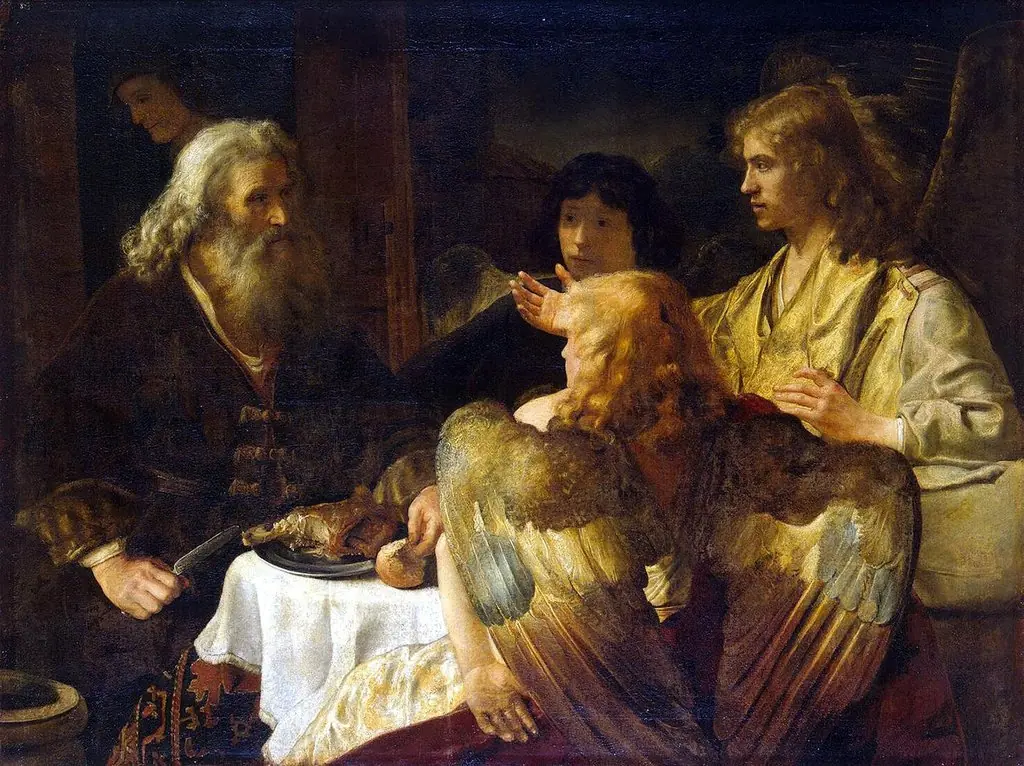
Abraham and Three Angels is a large religious painting by the Italian Baroque artist Jacopo Vignali, executed in oil on canvas. The work measures 180 by 210 centimeters and depicts the biblical episode of the Lord appearing to Abraham by the oaks of Mamre, an Old Testament subject that held particular resonance in Counter-Reformation Italy. The painting is held in the collection of the Hermitage Museum in Saint Petersburg, where it is accessible through the museum's digital collection. While one source dates the work to 1700, the Wikimedia Commons metadata and Alamy captioning both place it in the first half of the seventeenth century, making it a product of Vignali's mature period rather than a later work. The painting exemplifies the intimate, dramatically lit religious compositions that characterized Florentine Baroque painting during Vignali's lifetime.
Subject & Meaning
The painting illustrates the biblical narrative from Genesis 18, in which three angels visit Abraham by the oaks of Mamre to announce that his wife Sarah will bear a son. Vignali presents four figures gathered closely around a draped table in an outdoor setting: the elderly, bearded Abraham stands slightly behind a seated angel, while two other angels occupy positions to the right. All three celestial beings display large feathered wings and are distinguished by their richly colored garments, deep reds, golds, and yellow-greens dominating the palette. The iconography includes significant details that carry symbolic weight: a round loaf of bread rests on the table, alluding to the meal Abraham prepared and prefiguring Eucharistic themes, while a knife placed near the rightmost figure may evoke the later sacrifice of Isaac and the broader theme of divine testing. The angel in red and gold raises a hand toward the face in a gesture that suggests revelation or communication of the divine message. The setting beneath a large tree with scattered green leaves against a pale sky grounds the miraculous encounter in a natural world suffused with spiritual significance.
Technique & Style
Vignali employed oil on canvas for this composition, working at a substantial scale of 180 by 210 centimeters that would have commanded presence in a religious or domestic interior. The handling reveals characteristic Baroque concerns: strong chiaroscuro with light falling from the upper left onto faces, hands, and fabric, creating dramatic contrasts that model the forms and direct the viewer's attention. The brushwork varies across the surface, smooth in the flesh tones to achieve lifelike skin textures, and more textured in the drapery and foliage to suggest material weight and natural variety. The palette is restrained but rich, built on deep reds, golds, browns, and muted greens that unify the grouping while distinguishing individual figures. The composition is notably horizontal and intimate, with the four figures tightly clustered around the central table, a white cloth with geometric patterning providing a unifying focal point. The background to the left achieves darkness and indistinction, perhaps suggesting shadow or a cave-like recession, while the pale cloudy sky above opens the scene to atmospheric depth.
History & Provenance
The painting's creation history presents some dating uncertainty. The Hermitage Museum's digital collection, as cited by Wikimedia Commons, indicates a date in the first half of the seventeenth century, approximately 1650, which aligns with Vignali's mature activity in Florence before his death in 1664. This dating is supported by Alamy's captioning. An alternative date of 1700 appears in some metadata, though this would place the work after Vignali's death and is likely erroneous. The painting was produced in Italy, consistent with Vignali's Florentine base. Its subsequent provenance before entering the Hermitage collection remains undocumented in the available sources. The work is now held by the Hermitage Museum, where it is catalogued in the digital collection with the identifier referencing the museum's online portal. The painting's public domain status, confirmed by Wikimedia Commons, indicates it has been in the museum's collection long enough to have passed out of copyright restriction.
Context
Jacopo Vignali was born in Pratovecchio in 1592 and died in Florence in 1664, placing his career entirely within the seventeenth century and making him a participant in the development of Florentine Baroque painting. The choice of an Old Testament subject, the Visitation of the Angels to Abraham, reflects the continued demand for biblical narratives in Counter-Reformation Italy, where such subjects served both devotional and didactic purposes. The intimate scale of the grouping and the dramatic lighting place Vignali's work in dialogue with the Carracci reform of painting and its Florentine reception, though Vignali has received less sustained scholarly attention than contemporaries such as Cristofano Allori or Carlo Dolci. The painting's presence in the Hermitage collection testifies to the extensive acquisition of Italian Baroque paintings by Russian collectors and the imperial museum in the eighteenth and nineteenth centuries. Critical reception of Vignali's work has been limited by his somewhat peripheral status in art historical narratives dominated by Roman and Bolognese achievements, though recent digital cataloguing has increased accessibility to his oeuvre.
Legacy
The cultural afterlife of Abraham and Three Angels has been shaped primarily by its digitization and dissemination through online platforms. The painting's entry into the Wikimedia Commons ecosystem in April 2020, uploaded from the Hermitage Museum's digital collection, has made it accessible for scholarly and public engagement beyond the physical museum context. Its public domain status facilitates reproduction and study, though the Alamy image service notes access restrictions on certain uses, reflecting ongoing tensions between open access and commercial image licensing. The work has not, on the basis of available sources, been the subject of major monographic exhibitions or sustained critical fortune independent of Vignali's broader reputation. Its significance lies rather in its representative value: as a documented example of mid-seventeenth-century Florentine religious painting, it contributes to understanding of regional variations within Italian Baroque art and the persistence of intimate, devout compositions alongside the more monumental achievements of contemporaries in Rome. The painting's current location in the Hermitage ensures its preservation within one of the world's major encyclopedic collections, where it participates in the broader narrative of European art history as experienced by millions of visitors, physical and virtual.
Own this work as a print
Artist & collection