Artwork
Abraham and the Three Angels
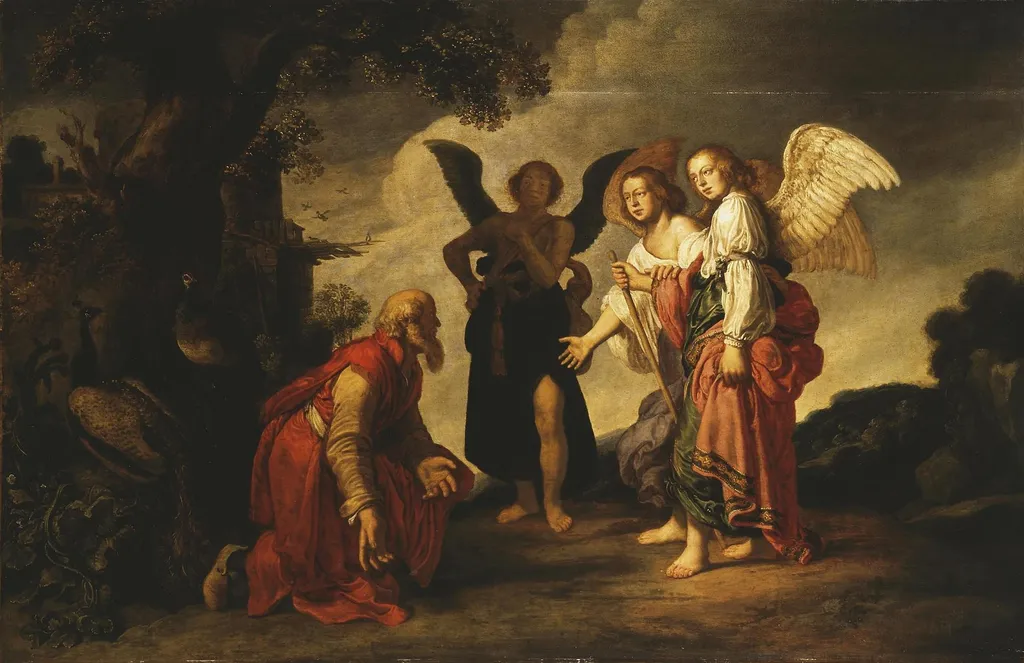
Abraham and the Three Angels is an oil painting by the Early Baroque Italian artist Pieter Lastman. It dates from 1623 and is held in the collection of the Hermitage Museum.
About this work
Subject & Meaning
The work serves as a visual representation of this sacred encounter, emphasizing the interaction between the human figure and the celestial visitors.
Pieter Lastman's 1623 painting depicts the biblical narrative of the Lord appearing to Abraham by the oaks of Mamre. The scene illustrates the moment Abraham encounters three angels, a subject classified within the genre of religious art. This iconography captures the specific episode where divine messengers visit the patriarch, a foundational story in Judeo-Christian tradition.
The work serves as a visual representation of this sacred encounter, emphasizing the interaction between the human figure and the celestial visitors.
Technique & Style
Executed in 1623, this religious painting by Pieter Lastman utilizes oil paint applied to a wooden panel support. The work measures 72 cm in height and 101 cm in width. Created in the Netherlands, the piece depicts the biblical narrative of the Lord appearing to Abraham by the oaks of Mamre, featuring the patriarch alongside three angels.
The composition adheres to the conventions of Dutch religious art from the early seventeenth century, rendered through the artist's characteristic handling of oil media on panel.
History & Provenance
Pieter Lastman created the oil-on-panel painting Abraham and the Three Angels in 1623. The work depicts the biblical narrative of the Lord appearing to Abraham by the oaks of Mamre. It is currently held by the Hermitage Museum as part of the Pyotr Semyonov-Tyan-Shansky collection. The piece measures 72 cm in height and 101 cm in width.
Abraham and the Three Angels is held in the Hermitage Museum, where it is catalogued under the inventory number associated with the Pyotr Semyonov-Tyan-Shansky collection. The painting was created in 1623 in the Netherlands and has been part of the museum's display since its acquisition, appearing in exhibitions focused on Dutch Golden Age religious works.
Context
Pieter Lastman's 1623 religious painting Abraham and the Three Angels, now housed in the Hermitage Museum, illustrates the biblical moment of divine revelation to Abraham under the oaks of Mamre. The work, executed in oil on panel, reflects the religious art traditions of the Netherlands during the early 17th century and is part of the Hermitage Museum's collection formed by Pyotr Semyonov-Tyan-Shansky. Scholarship situates the painting within Lastman's broader oeuvre as a key example of Dutch biblical narrative painting, emphasizing its compositional influence on later artists despite limited contemporary critical attention.
Overview
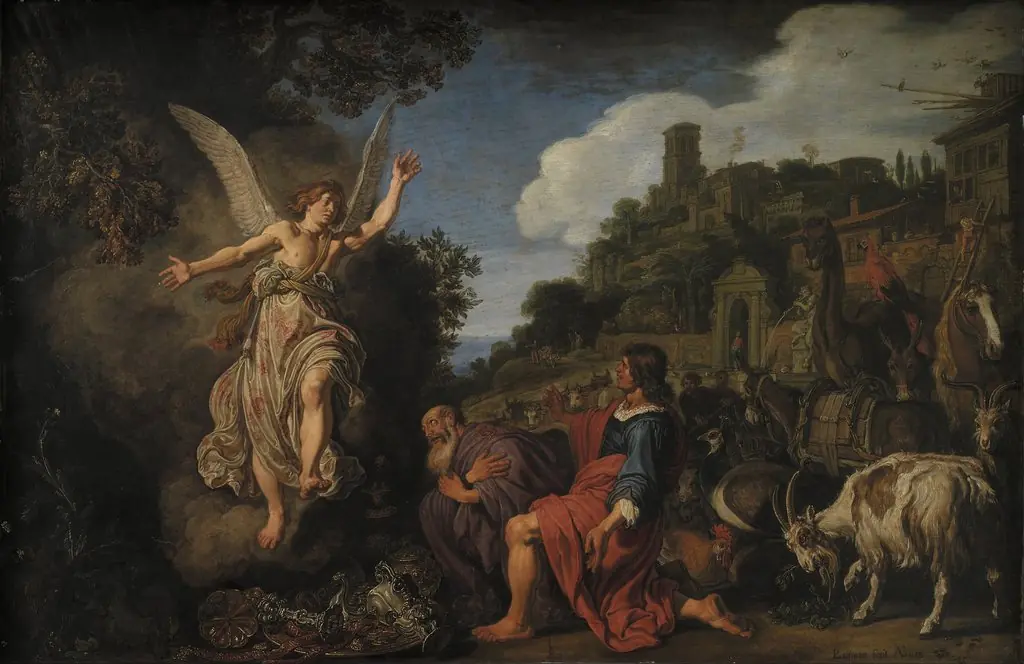
Pieter Lastman painted Abraham and the Three Angels in 1623, employing oil on canvas to render a biblical encounter near the oaks of Mamre. The composition centers on a kneeling Abraham in red robes, extending his hand toward a book, while three angelic figures, two winged and one clothed only in a simple wrap, stand nearby. A dark, cloud‑filled sky and a rugged terrain frame the scene, emphasizing its solemn atmosphere.
Own this work as a print
Artist & collection
Artist
Pieter Lastman (1583–1633) was a Dutch painter. Lastman is considered important because of his work as a painter of history pieces and because his pupils included Rembrandt and Jan Lievens. In his paintings Lastman paid…