Artwork
Seaside (July: Specimen of a Portrait)
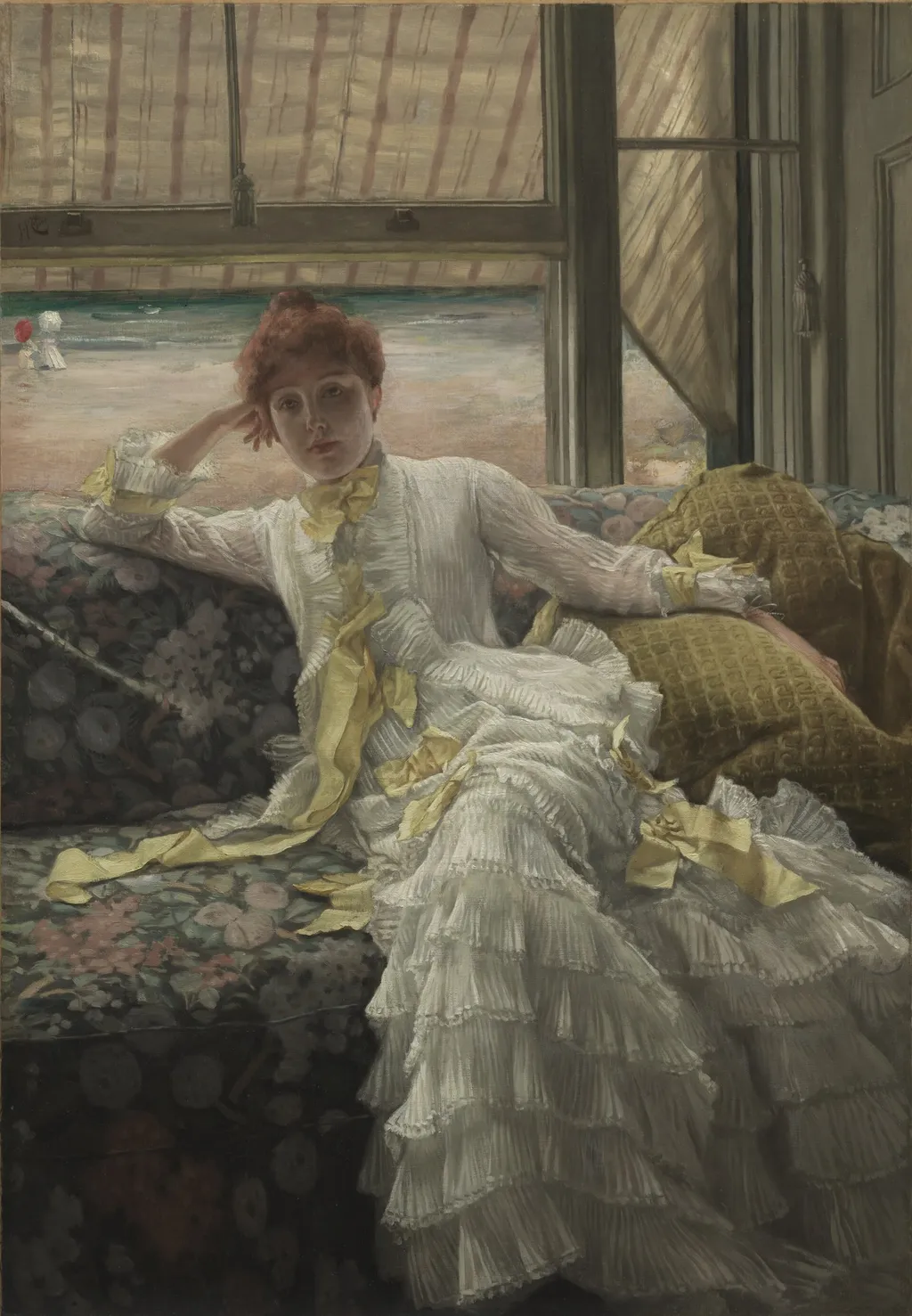
Seaside (July: Specimen of a Portrait) is an oil painting by the Impressionist artist James Tissot. It dates from 1890 and is held in the collection of the Cleveland Museum of Art.
About this work
Technique & Style
Its support consists of a canvas substrate, a common choice for portraiture that allows layered application of pigment and fine detail.
Seaside (July: Specimen of a Portrait) is an oil painting on canvas, produced in 1890. The work belongs to the portrait genre and was created using oil paint, a medium typical of Tissot's academic technique. Its support consists of a canvas substrate, a common choice for portraiture that allows layered application of pigment and fine detail.
The painting entered the collection of the Cleveland Museum of Art. The composition reflects Tissot's precise brushwork and attention to texture, characteristic of his realist approach to portraiture.
History & Provenance
The painting Seaside (July: Specimen of a Portrait) was created by James Tissot in 1890.
It entered the collection of the Cleveland Museum of Art in 1980 as accession number 1980.288. The work's medium is oil on canvas, and it measures 87.5 cm in height by 61.0 cm in width.
Overview
James Tissot completed Seaside (July: Specimen of a Portrait) in 1890, an oil on canvas painting. This work features a seated woman, elegantly dressed, against a coastal backdrop, reflecting the artist's engagement with contemporary social life. The piece is part of the collection at The Cleveland Museum of Art.
Subject & Meaning
The painting depicts a woman seated on a floral-patterned couch, her gaze directed outward toward the viewer. Dressed in a white gown with yellow accents, her right arm rests casually on the couch's back, while a window behind her reveals a serene seascape. This portrayal aligns with Tissot's consistent interest in capturing the refined leisure activities and fashionable attire characteristic of Belle Époque society.
Context
Created during the Belle Époque, Seaside exemplifies James Tissot's connection to the broader Impressionist movement while maintaining his distinctive focus. The work situates itself within a period of significant social and cultural change, reflecting the era's emphasis on leisure and the evolving role of fashion. Tissot consistently documented the refined lifestyles and social interactions of his contemporary high society.
Own this work as a print
Artist & collection
Artist
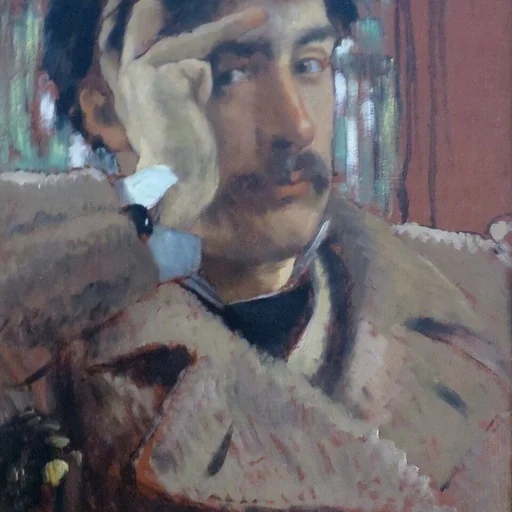
Jacques Joseph Tissot (French:; 15 October 1836 – 8 August 1902), better known as James Tissot (UK: TISS-oh, US: tee-SOH), was a French painter, illustrator, and caricaturist.

 Desperate
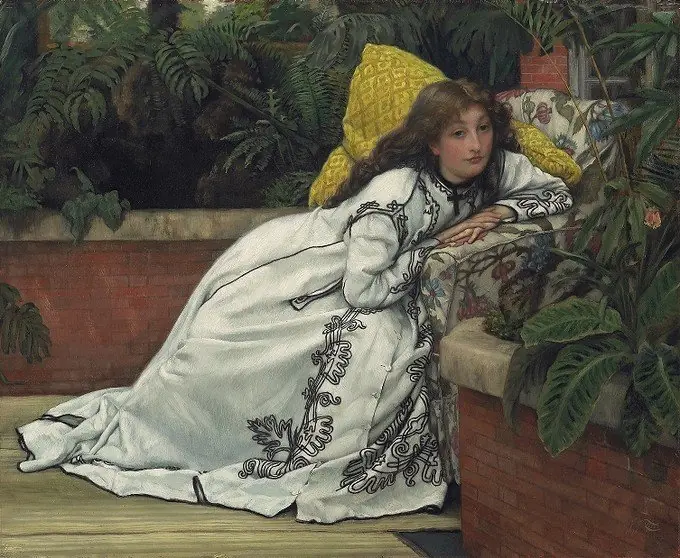 La convalescente
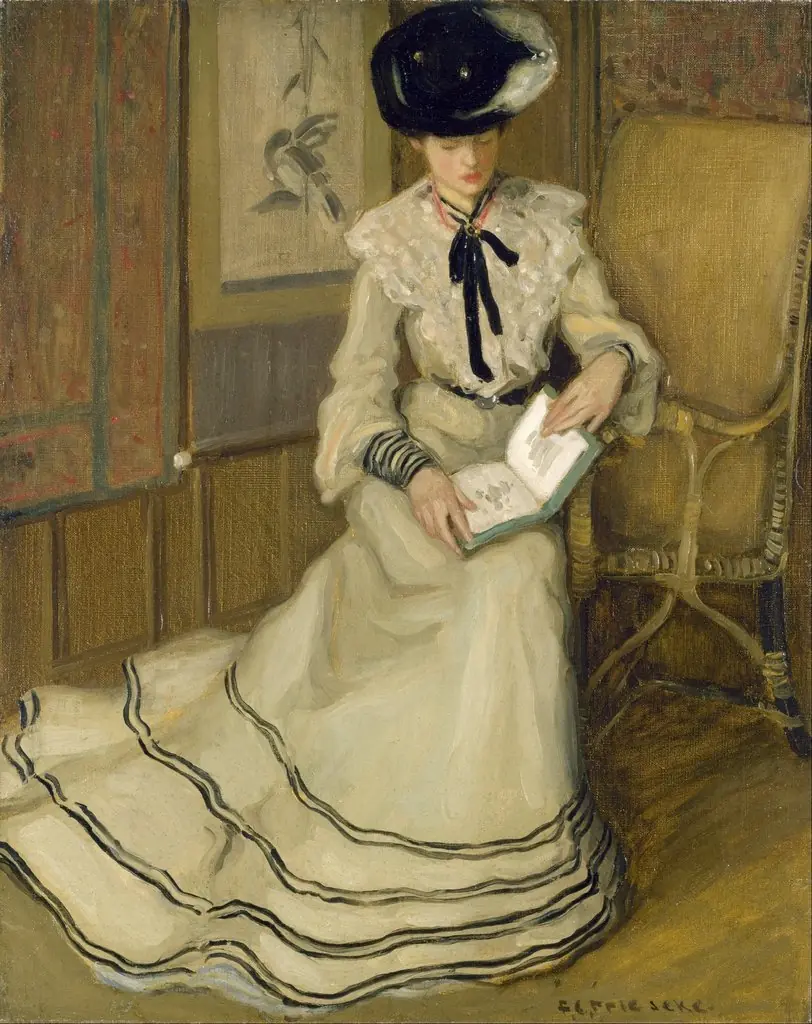 Girl Reading
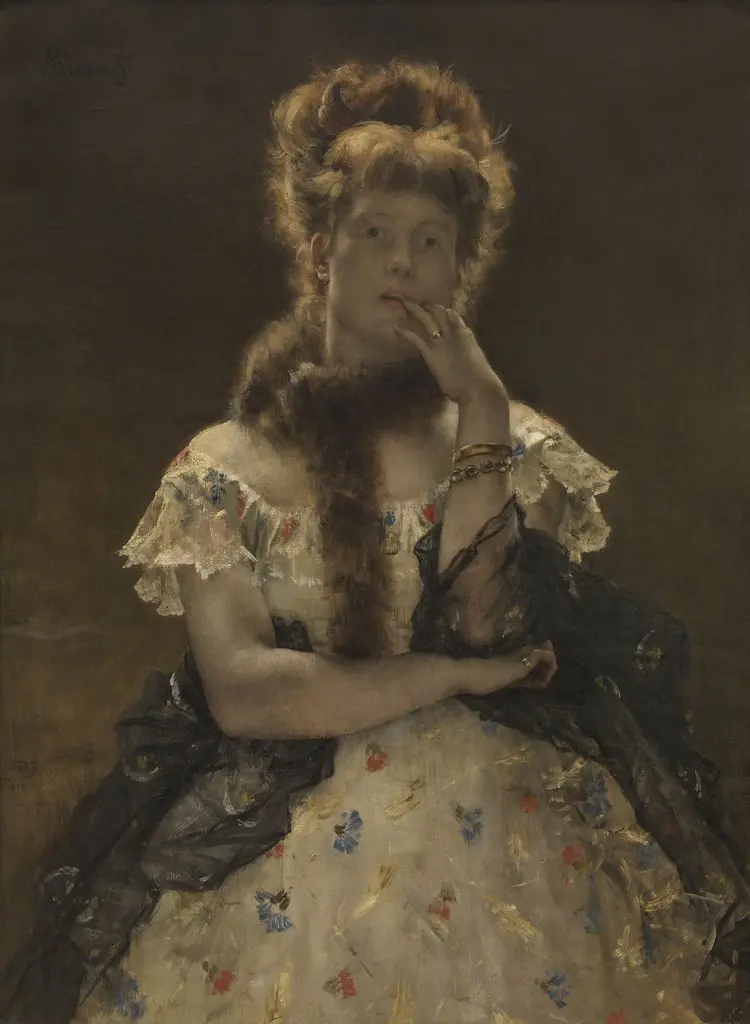 The Parisian Sphinx
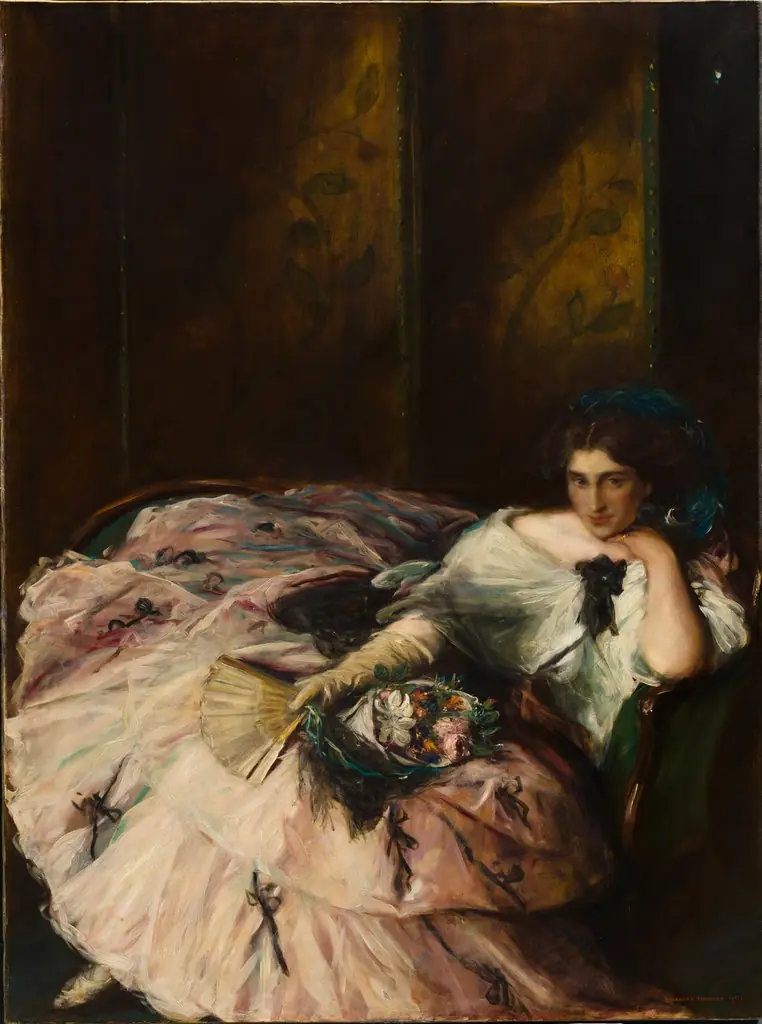 Souvenir of an "International Ball" (Portrait of Miss Kathleen Bruce)
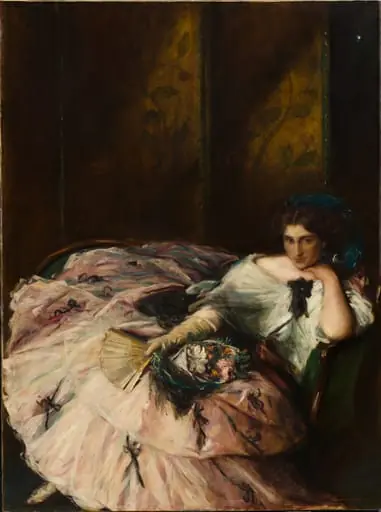 Souvenir of an "International Ball" (Portrait of Miss Kathleen Bruce)
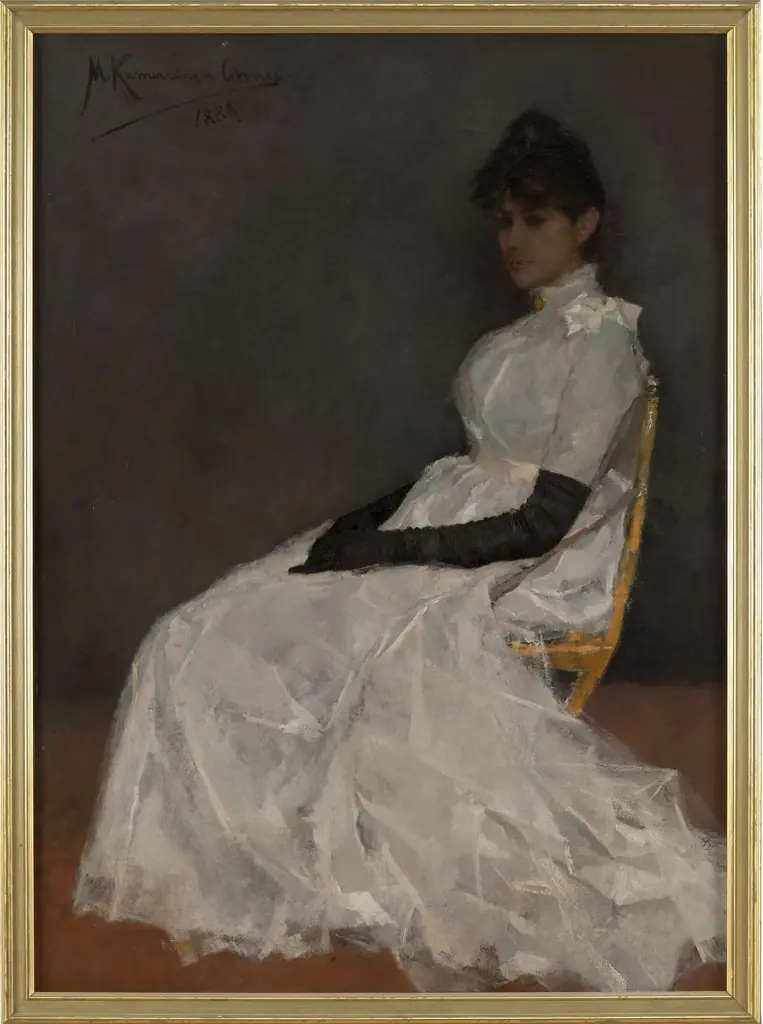 Portrait of Jenny Kamerlingh Onnes
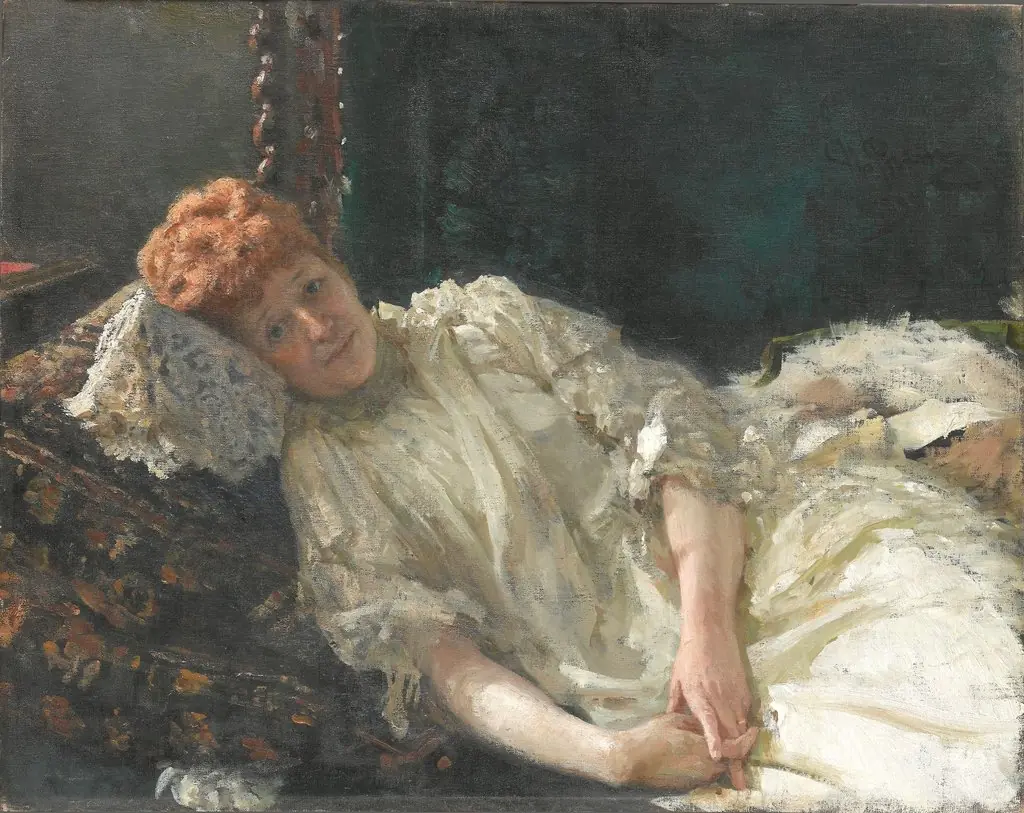 Portrait of pianist and comtesse Louise de Mercy-Argenteau
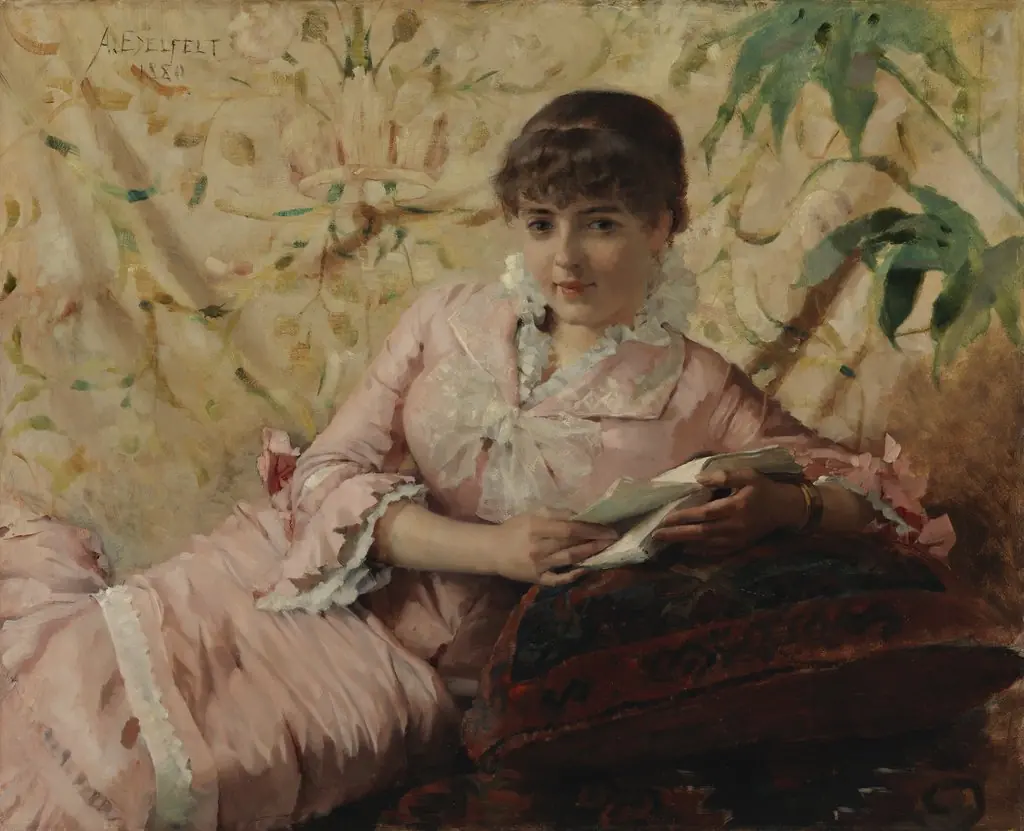 Reading Parisienne
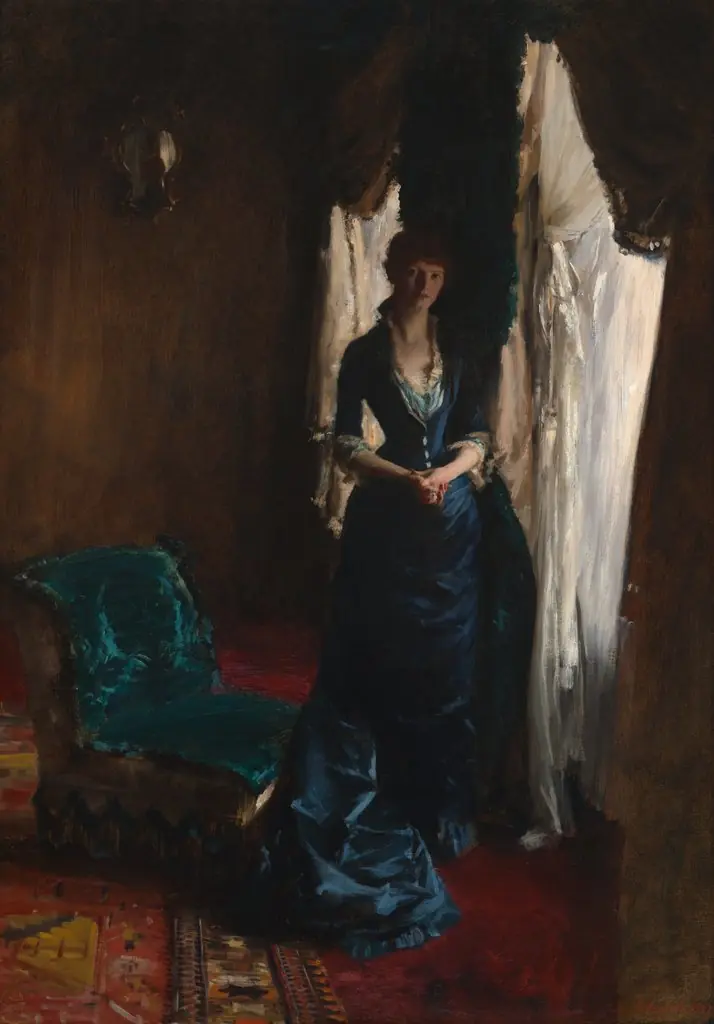 Madame Paul Escudier (Louise Lefevre)
- Seaside (July: Specimen of a Portrait)