Artwork
The Burg in Bruges
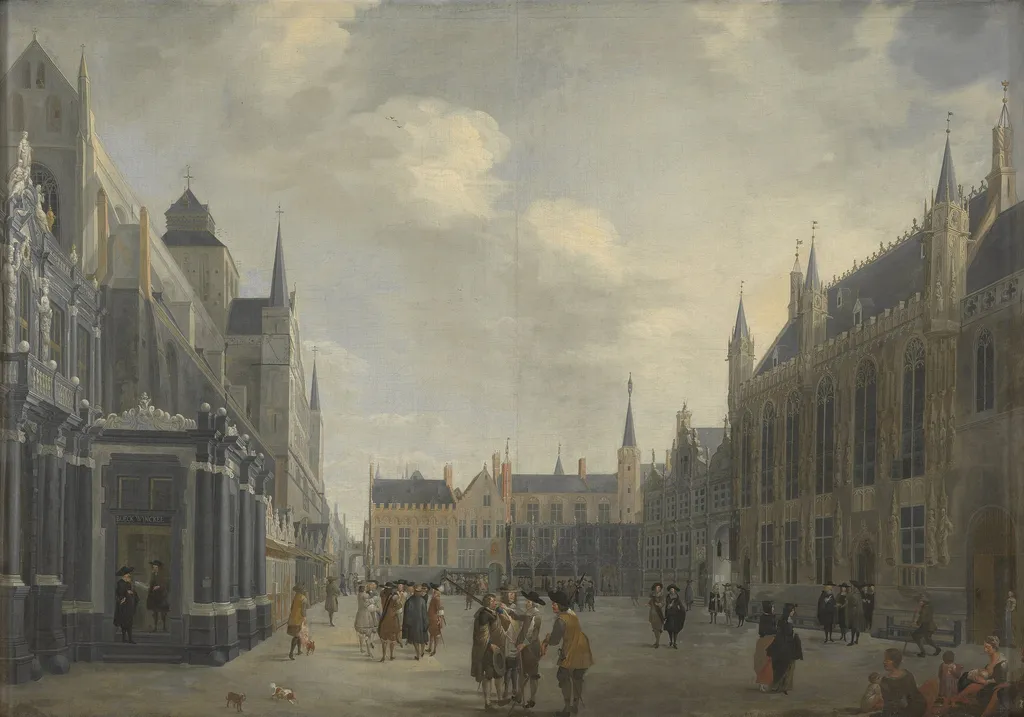
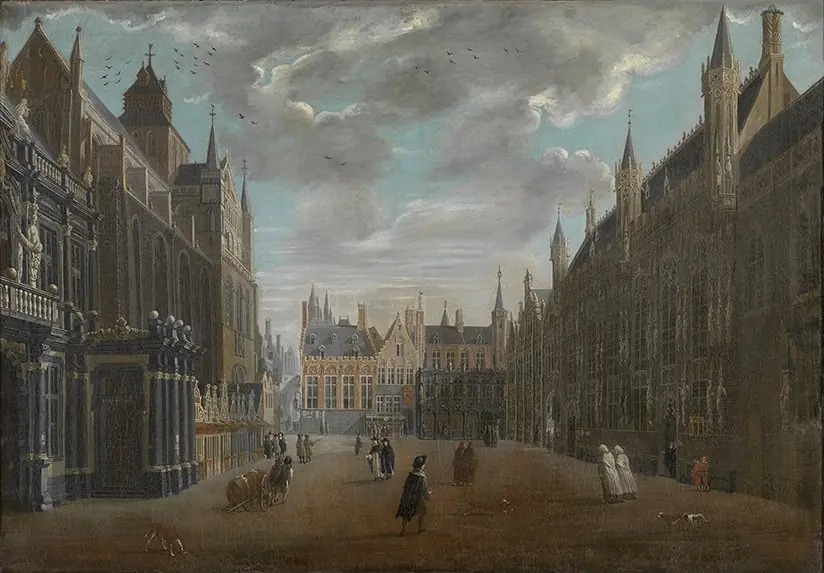
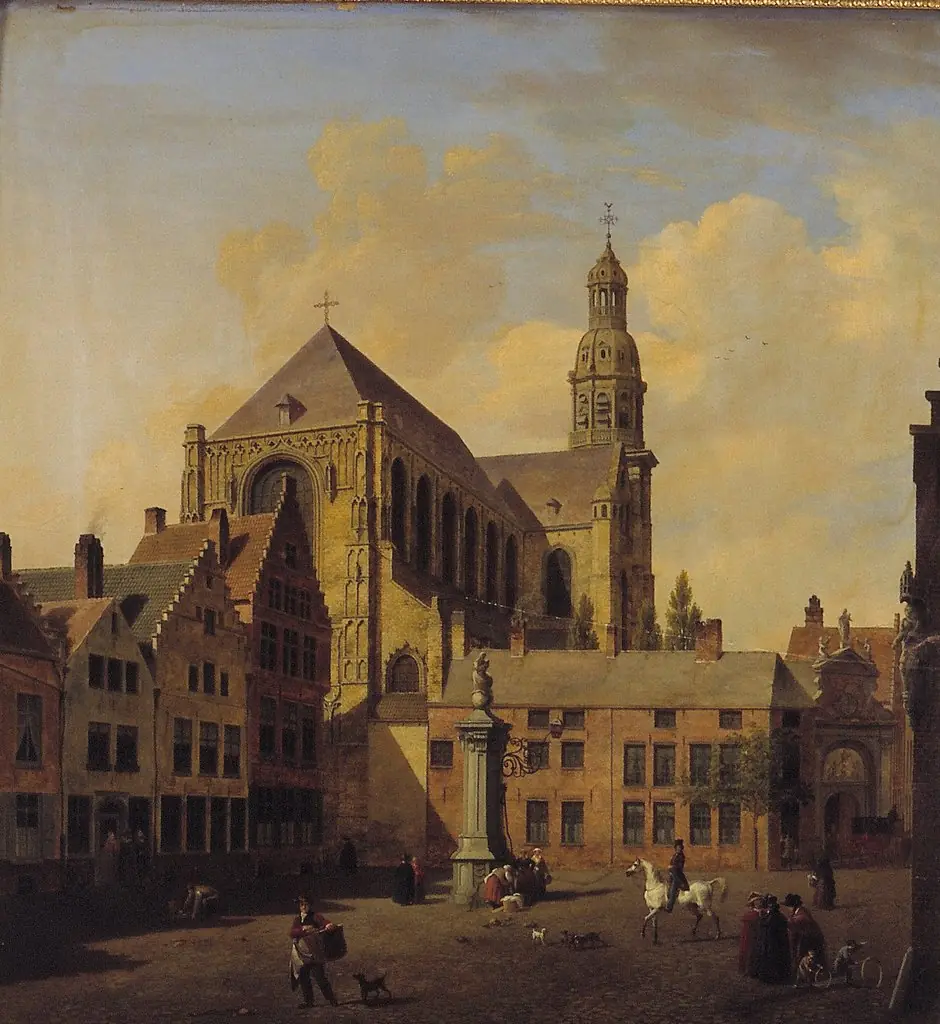
The Burg in Bruges is an oil painting by the Dutch Golden Age artist Jan Baptist van Meunincxhove. It dates from 1672 and is held in the collection of the Vlaamse Kunstcollectie.
About this work
Subject & Meaning
The painting depicts a detailed cityscape of the Burg square in Bruges, centered on the architectural ensemble of the city's historic heart.
The painting depicts a detailed cityscape of the Burg square in Bruges, centered on the architectural ensemble of the city's historic heart. The composition includes the Bruges City Hall, the Old Civil Registry, the Museum van het Heilig Bloed, and the Provostry of St. Donatian alongside St. Donatian's Cathedral. Beyond the monumental structures, the scene captures the daily life of the 17th-century urban environment through the inclusion of figures such as men, women, and children, as well as a dog.
The work also features atmospheric elements like clouds, grounding the architectural grandeur in a specific moment of time. This depiction serves as a comprehensive visual record of the square's layout and the coexistence of civic and religious institutions within the Liberty of Bruges.
Technique & Style
The Burg in Bruges is an oil painting executed on canvas in 1672, depicting the Burg square in Bruges with its town hall, provostry, and surrounding buildings. The work measures 215.5 cm in width and 151 cm in height and is part of the Groeningemuseum's collection in Bruges. Its formal qualities include a detailed cityscape composition that captures civic architecture and everyday figures such as a man, woman, child, and dog, reflecting the stylistic traits of 17th‑century Flemish urban painting.
History & Provenance
The painting was created in 1672 by Jan Baptist van Meunincxhove, as indicated by the signed date on the work.
By the early 21st century, the painting entered the collection of the Groeningemuseum in Bruges, where it is currently held as part of the Flemish Art Collection.
The Burg in Bruges is held in the Groeningemuseum and is part of the Vlaamse Kunstcollectie.
It was accessioned under the museum's collection as a painting created in 1672 by Jan Baptist van Meunincxhove.
The work has been exhibited in museum displays focusing on Flemish cityscapes and 17th‑century Dutch‑Flemish painting.
Its dimensions are 151 cm in height and 215.5 cm in width.
Exhibition history includes presentations within the Groeningemuseum's permanent collection galleries and thematic shows on Bruges city views.
Context
The Burg in Bruges, painted by Jan Baptist van Meunincxhove in 1672, exemplifies 17th-century Flemish cityscape genre through its meticulous depiction of Bruges' central landmarks including the Burg square, Bruges City Hall, and St. Donatian's Cathedral. The work, housed in the Groeningemuseum as part of the Vlaamse Kunstcollectie, reflects contemporary scholarly interest in urban topography during the Dutch Republic's artistic influence on the Southern Netherlands. Its detailed rendering of civic architecture and daily life continues to inform studies of Baroque spatial representation in Flemish painting.
The painting's significance lies in its dual role as both a historical record of Bruges' urban fabric and a testament to van Meunincxhove's specialization in architectural subjects, situating it within broader discussions of 17th-century Flemish art's engagement with civic identity and material culture.
Overview
Jan Baptist van Meunincxhove’s 1672 oil painting captures the bustling Burg square in Bruges, foregrounding the city’s historic municipal building and surrounding architecture. The canvas presents a lively urban scene under a light, cloud‑dotted sky, with figures in period dress moving among the ornate facades. The work is part of the Groeningemuseum’s collection and exemplifies the detailed cityscapes typical of the 17th‑century Low Countries.
Own this work as a print
Artist & collection
Artist
Jan Baptist van Meunincxhove (c. 1620/25 – 1703/04) was a Flemish painter of cityscapes, architectural paintings, marine views and group portraits who was active in Bruges. Without being original, he maintained a high…