Artwork
Pastoral scene with a flute player
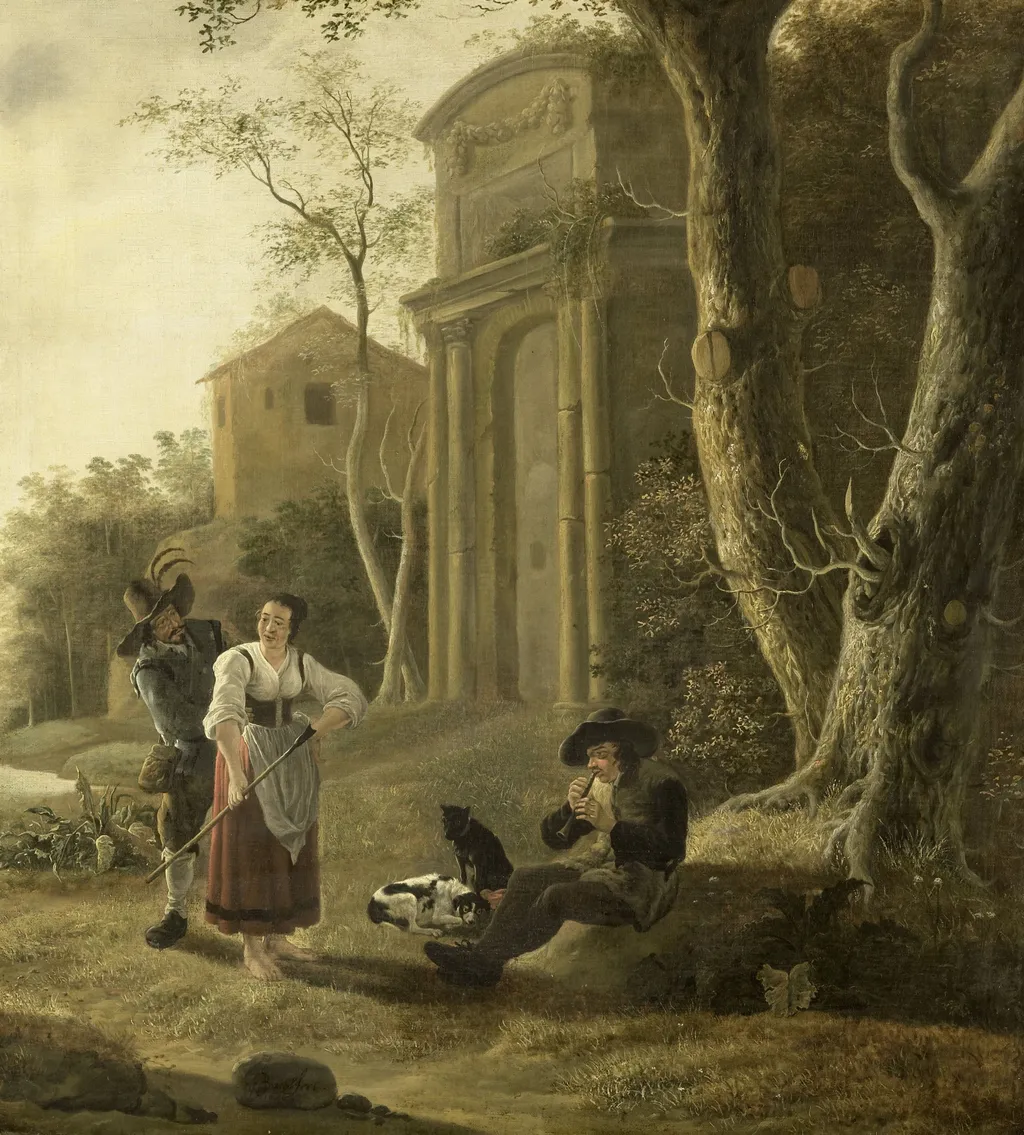
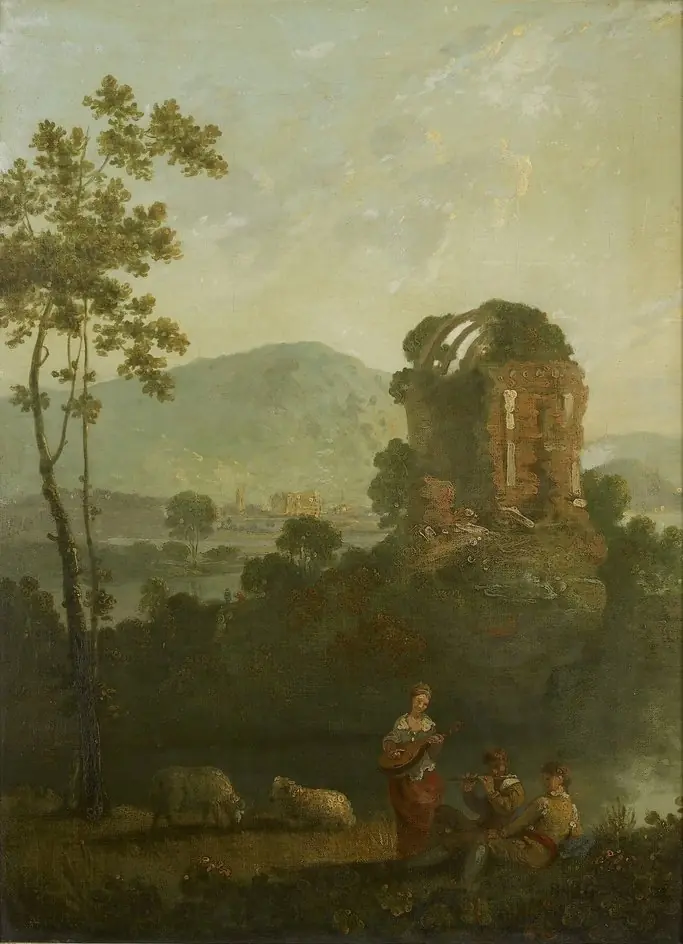
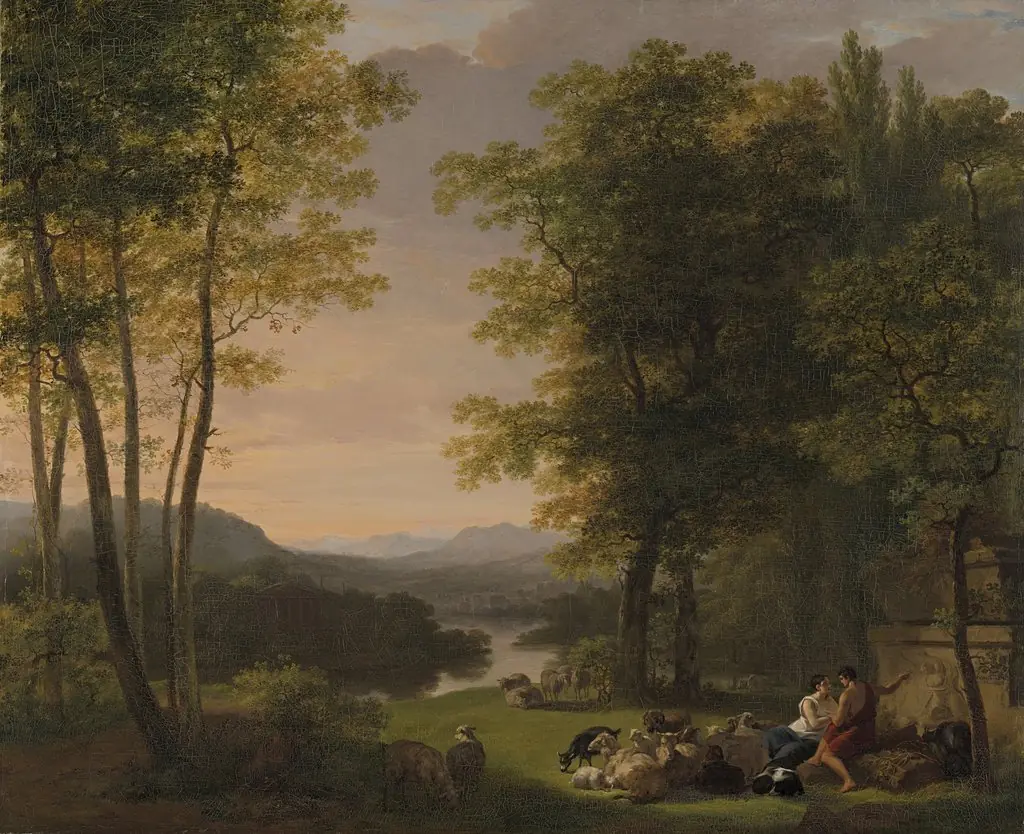
Pastoral scene with a flute player is an oil painting by the Flemish Baroque painting artist Jan Baptist Wolfaerts. It dates from 1646 and is held in the collection of the Rijksmuseum.
About this work
Technique & Style
Pastoral scene with a flute player is executed in oil paint on canvas, a standard support for mid-seventeenth-century Flemish cabinet pictures.
Pastoral scene with a flute player is executed in oil paint on canvas, a standard support for mid-seventeenth-century Flemish cabinet pictures. The work measures 75 cm in height by 67.5 cm in width, a relatively modest, near-square format suited to intimate landscape subjects. Painted in 1646, it belongs to the tradition of small-scale pastoral scenes featuring wooded settings, with a tree among the depicted elements.
No further details regarding handling, brushwork, condition, or stylistic characterization are documented in the available sources.
History & Provenance
The painting is held by the Rijksmuseum in Amsterdam, where it is accessioned as inventory number SK-A-1234. It was previously owned by Abraham Bredius, a noted Dutch art collector and scholar. The work has been included in exhibitions at the Rijksmuseum, most recently in the 2015 exhibition "Dutch Masters of the Golden Age," and was featured in the 2020 traveling exhibition "Golden Age Landscapes" which toured European cultural institutions.
Context
The work exemplifies Wolfaerts' contribution to 17th-century Dutch landscape painting through its idyllic composition and technical execution. As part of the Rijksmuseum's collection since its acquisition by Abraham Bredius, the painting reflects the era's focus on naturalistic rural scenes rendered in oil on canvas. Its dimensions of 75 cm by 67.5 cm align with typical formats of the period, showcasing Wolfaerts' mastery of atmospheric perspective and detailed foliage rendering within the pastoral genre.
Scholarly analysis emphasizes its significance within Wolfaerts' oeuvre as a bridge between earlier Dutch realism and later Dutch Golden Age landscape traditions, particularly through its depiction of classicalizing tree forms and harmonious spatial arrangements. The attribution to Wolfaerts remains firmly established through stylistic and documentary evidence within the museum's provenance records.
Legacy
The painting has been cited as an early example of the pastoral genre in Dutch Golden Age art, influencing later interpretations of rural leisure in European painting. Its composition of a solitary figure with a flute in a wooded landscape was referenced in 19th-century discussions of tonal harmony in nature scenes. The work was part of the collection of Abraham Bredius, a noted Dutch art historian and collector, who contributed to the revival of interest in 17th-century Dutch masters during the early 20th century.
The painting is held by the Rijksmuseum and has been included in exhibitions exploring pastoral themes in European art, including the 1980 exhibition "Dutch Landscape and the Pastoral Imagination" at the Rijksmuseum.
Overview
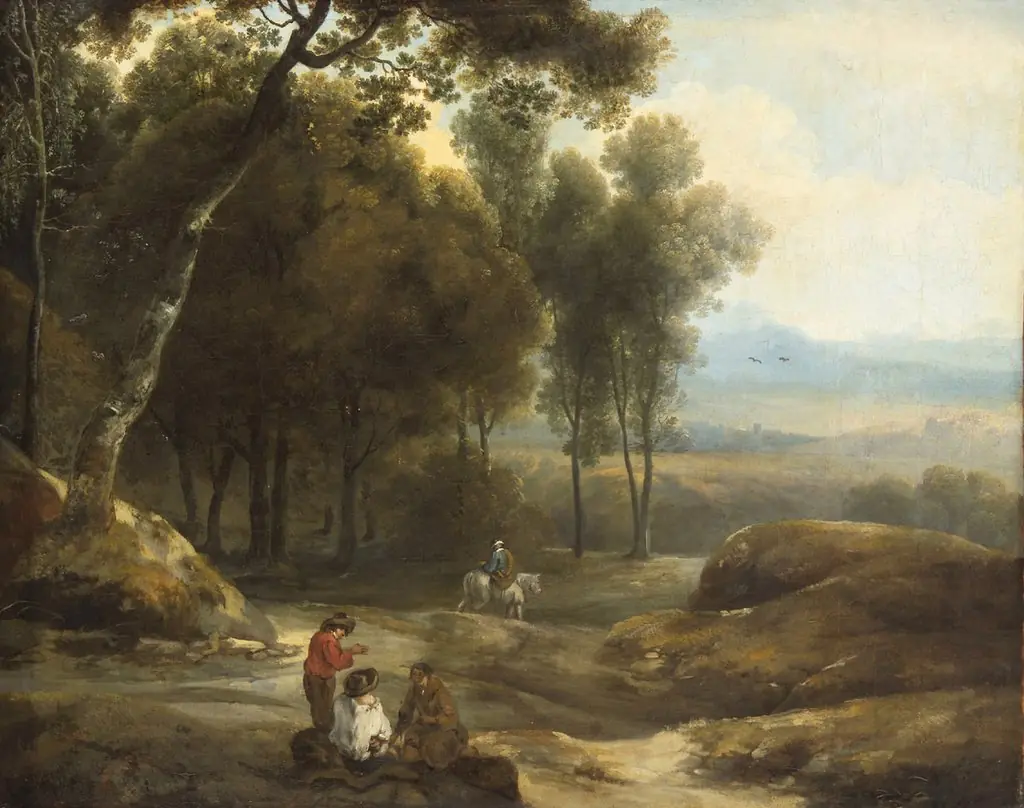
Pastoral scene with a flute player is a 1646 oil painting by Jan Baptist Wolfaerts, a Flemish Baroque artist. The work captures a serene rural moment, featuring three figures in a wooded setting, characterized by detailed natural elements and soft chiaroscuro lighting.
Subject & Meaning
The painting depicts a tranquil scene with three individuals engaged in distinct activities: a woman standing with a stick, a man lifting a deer, and a flute-playing man accompanied by a dog. A crumbling temple and rocky cliff provide a backdrop, evoking a sense of pastoral tranquility.
Own this work as a print
Artist & collection
Artist
Jan Baptist Wolfaerts (Antwerp, baptized on 15 November 1625 – Antwerp (?), between 1671 and 1687) was a Flemish painter known for his pastoral landscape with shepherds and cattle and Italianate landscapes.