Artwork
Aeneas and the Sibyl in the Underworld
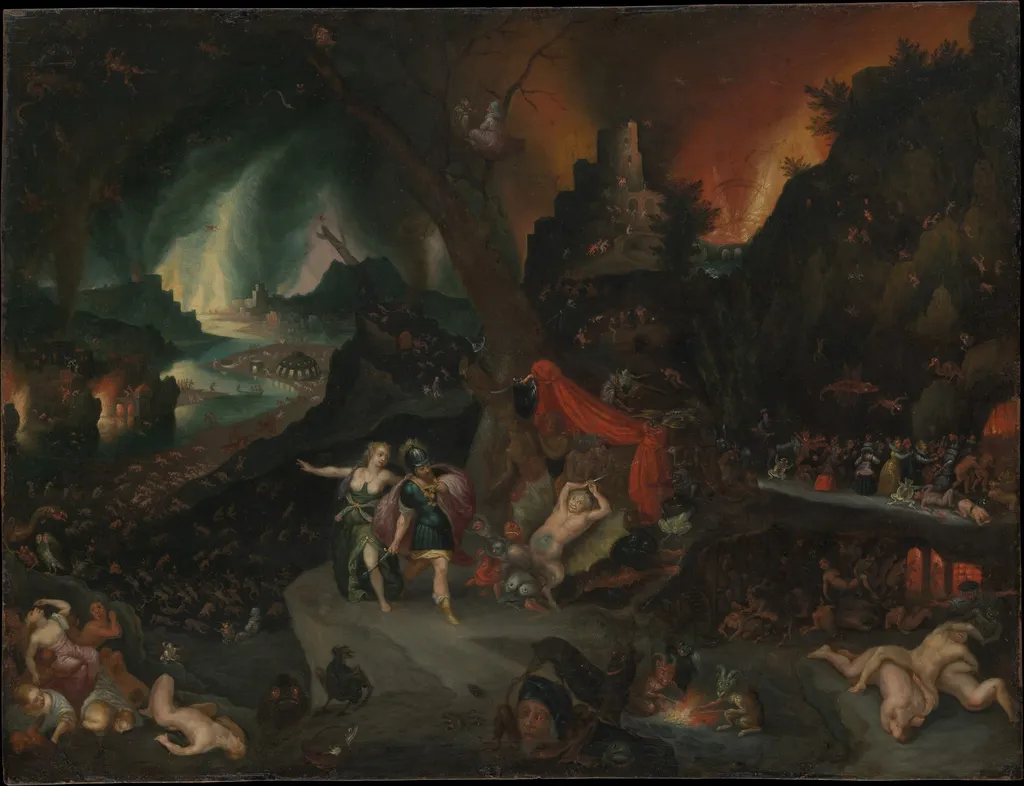
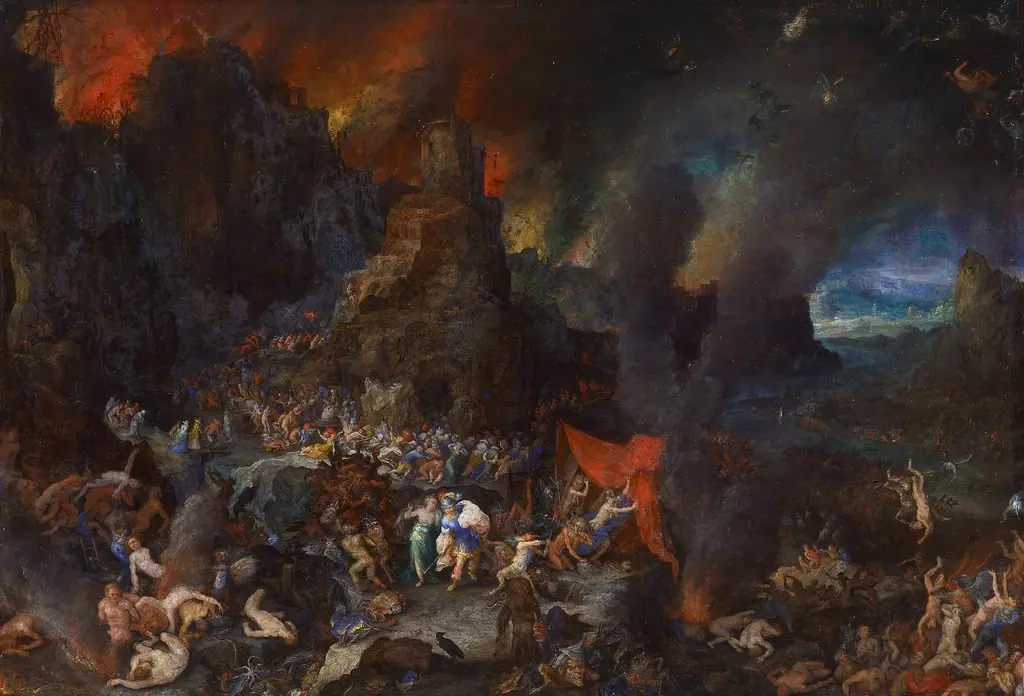
Aeneas and the Sibyl in the Underworld is an oil painting by the Flemish Baroque painting artist Jan Brueghel the Younger. It dates from 1630 and is held in the collection of the Metropolitan Museum of Art.
About this work
Subject & Meaning
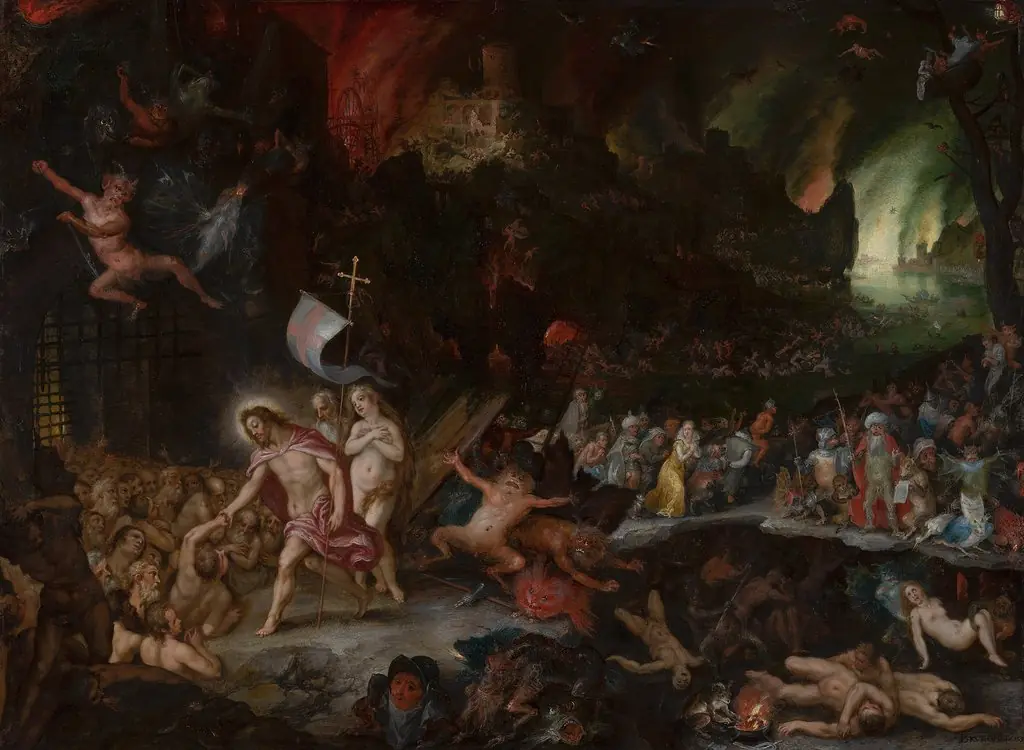
The painting depicts the mythological descent of Aeneas into the Underworld, guided by the Cumaean Sibyl, a temple priestess.
The painting depicts the mythological descent of Aeneas into the Underworld, guided by the Cumaean Sibyl, a temple priestess. This scene is drawn directly from Book VI of Virgil's Aeneid. Visually, the work features the protagonist Aeneas and the Sibyl within an infernal landscape that is heavily influenced by the necrogeographic tradition of Hieronymus Bosch, a lineage transmitted through a similar painting by Jan Brueghel the Elder created around 1600.
The artwork represents the classical narrative of a hero navigating Hades, blending Virgilian literary tradition with the distinctive, fantastical landscape style associated with Boschian hellscapes.
Technique & Style
Jan Brueghel the Younger executed Aeneas and the Sibyl in the Underworld around 1630 using oil paint applied to a copper support. This choice of metal panel, characteristic of the artist's workshop practices, provides a smooth, rigid surface that facilitates the fine detail and luminous color saturation typical of Flemish mythological painting. The work measures 26.7 by 35.9 centimetres, a compact format that allows for intricate rendering of the underworld landscape.
The composition closely mirrors a circa 1600 version by the artist's father, Jan Brueghel the Elder, which itself drew upon the necrogeographic traditions of Hieronymus Bosch.
History & Provenance
Created by Jan Brueghel the Younger around 1630, this oil painting on copper depicts a mythological scene from Virgil's Aeneid, executed approximately thirty years after a similar composition by the artist's father, Jan Brueghel the Elder (circa 1600). The painting entered the permanent collection of the Metropolitan Museum of Art in New York City in 1991, where it is held among the museum's mythological paintings.
Context
Jan Brueghel the Younger's Aeneas and the Sibyl in the Underworld belongs to a Flemish tradition of underworld imagery linking multiple generations. The composition closely follows the circa 1600 treatment of the same subject by his father, Jan Brueghel the Elder, now held at the Kunsthistorisches Museum in Vienna, demonstrating the Younger's engagement with his father's pictorial legacy. The Elder, in turn, drew upon the infernal landscapes of Hieronymus Bosch, situating the Brueghel workshop within a broader Netherlandish lineage of fantastical necrogeography.
The work also engages with classical literary tradition, illustrating Aeneid Book 6, in which the Cumaean Sibyl guides Aeneas through Hades. Painted on copper in the 1630s, the small-scale mythological panel entered the Metropolitan Museum of Art's collection in 1991.
Overview
Jan Brueghel the Younger's painting, Aeneas and the Sibyl in the Underworld, dates from the 1630s. Executed on a small copper panel, this work depicts a dramatic episode from classical literature. It portrays the hero Aeneas as he navigates the realm of the dead, accompanied by his prophetic guide.
The choice of copper as a support contributes to the painting's distinctive visual qualities, enhancing the vibrancy and smoothness of its detailed surface.
Own this work as a print
Artist & collection
Artist
Jan Brueghel (also Bruegel or Breughel) the Younger ( BROY-gəl, US also BROO-gəl; Dutch:; 13 September 1601 – 1 September 1678) was a Flemish Baroque painter.