Artwork
The Children of the Planet Mercury
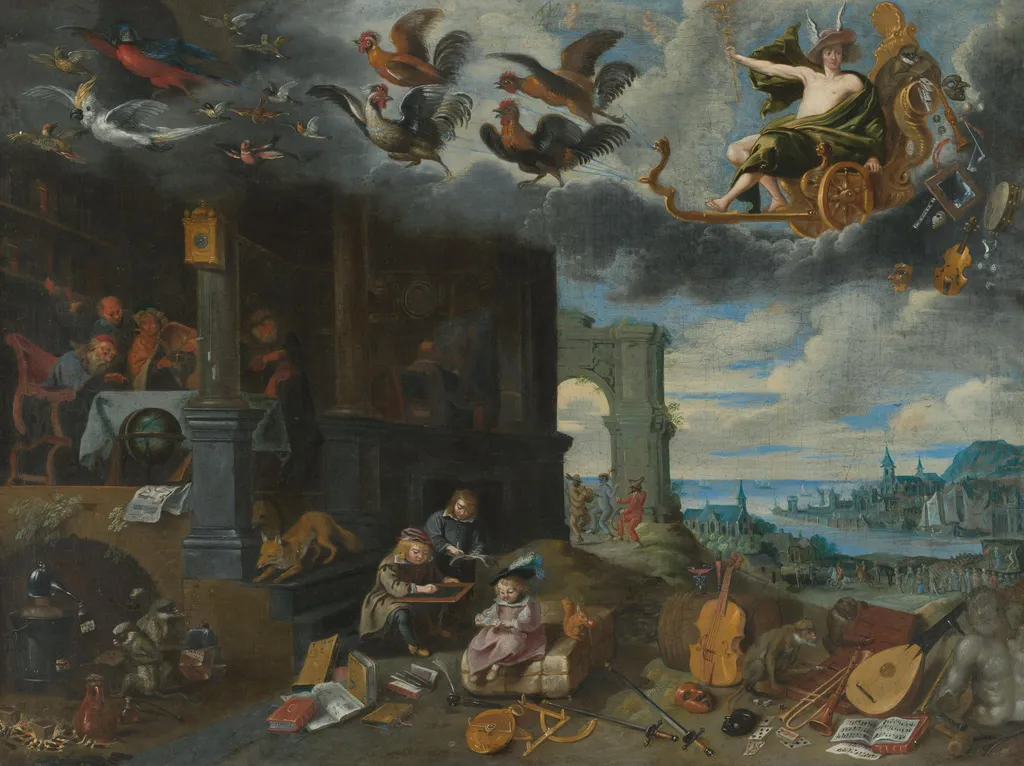
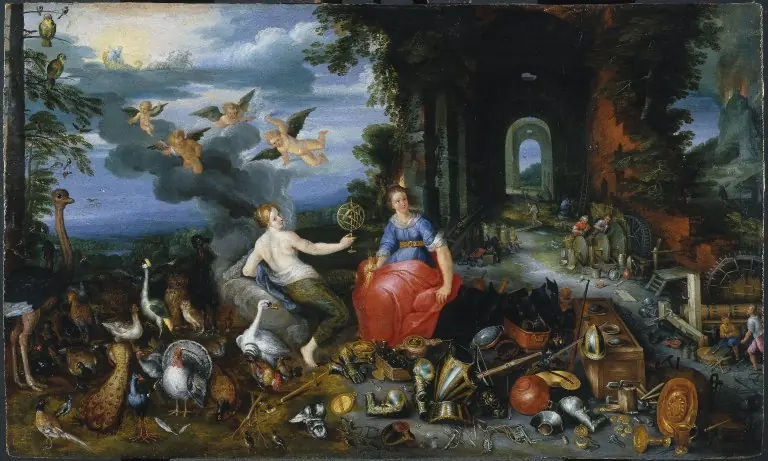
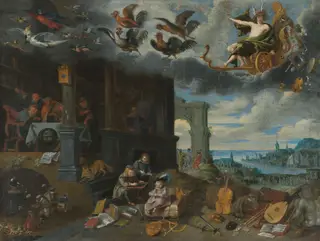
The Children of the Planet Mercury is an unspecified painting by the Baroque artist Jan Brueghel the Younger. It dates from 1645 and is held in the collection of the Rijksmuseum. The canvas presents a bustling coastal scene where commerce and learning are intertwined.
About this work
Subject & Meaning
The painting The Children of the Planet Mercury depicts allegorical children associated with the planet Mercury, rendered in the Baroque landscape tradition.
The painting The Children of the Planet Mercury depicts allegorical children associated with the planet Mercury, rendered in the Baroque landscape tradition. Its subject draws on classical and mythological associations of Mercury as a swift, youthful deity, with the children symbolizing celestial beings or personifications of planetary virtues. The work reflects Jan Brueghel the Younger's engagement with mythological themes within his broader landscape and allegorical repertoire, continuing the genre his father pioneered while adapting it with a more painterly, less structured approach.
The painting's meaning is tied to its function as a visual representation of planetary personification, a common motif in 17th-century scientific and artistic discourse linking celestial bodies to moral or metaphysical concepts. It exemplifies the Younger Brueghel's role in evolving landscape painting through the integration of allegorical narratives within naturalistic settings.
The iconography aligns with Baroque traditions of depicting planetary deities through youthful figures, though specific symbolic attributes of Mercury (such as caduceus or winged sandals) are not documented in the sources for this work. The composition reflects the artist's signature style of blending meticulous detail with atmospheric depth, characteristic of his mature landscape phase after 1630. The subject's representation draws on inherited workshop practices and the broader cultural context of Habsburg Netherlands, where celestial themes were linked to religious and philosophical ideas of cosmic order.
The work's meaning is contextualized within the artist's life and career, particularly his transition from his father's workshop to independent production after 1625. The painting's subject matter reflects the Younger Brueghel's continued use of mythological allegory, adapted to contemporary tastes while retaining the structural inheritance of his father's workshop. Its creation during a period of personal upheaval, following his father's death and his rise as head of the family studio, informs its thematic focus on youth and celestial order, though the precise symbolic interpretation remains tied to the broader Baroque tradition of planetary personification rather than a singular narrative.
Context
Created circa 1645, The Children of the Planet Mercury is a landscape by Jan Brueghel the Younger, a Flemish Baroque painter who operated a major workshop in Antwerp. As the son of Jan Brueghel the Elder and grandson of Pieter Bruegel the Elder, he initially produced works closely mimicking his father's precise style, leading to frequent historical attribution challenges. Over time, particularly from the 1630s onward, Brueghel the Younger developed a broader, more painterly manner that distinguished his later output from the meticulous detail of his predecessors.
His career was defined by extensive collaborations with leading contemporaries such as Rubens, Hendrick van Balen, and Joos de Momper, as well as commissions for the French and Austrian courts. While his early works are often difficult to distinguish from his father's, his later landscapes exhibit a looser technique and a color palette that sometimes recalls his grandfather, solidifying his role as a key interpreter of the Bruegel family tradition within the 17th-century Baroque movement.
Overview
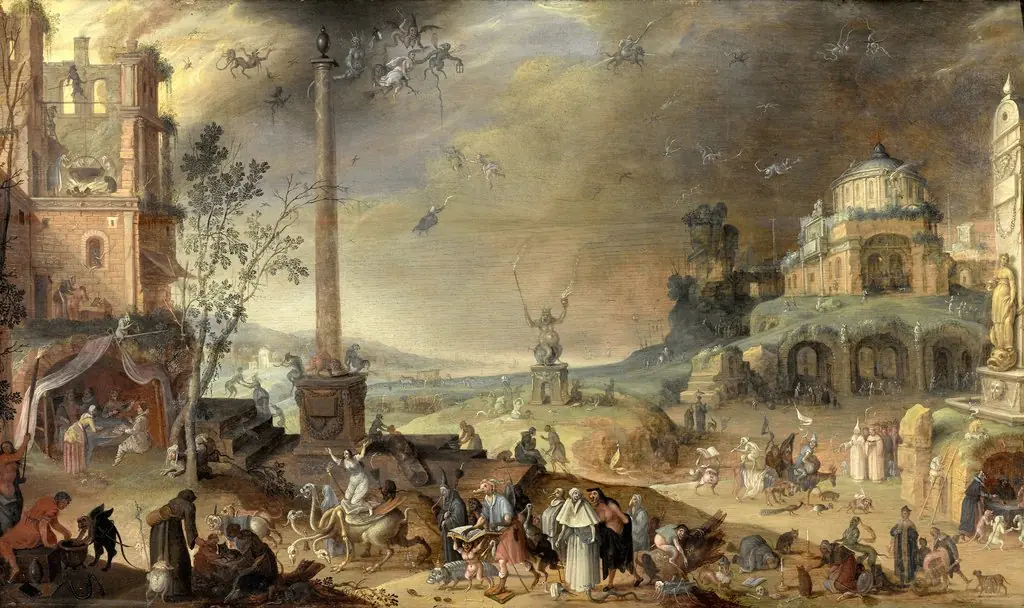
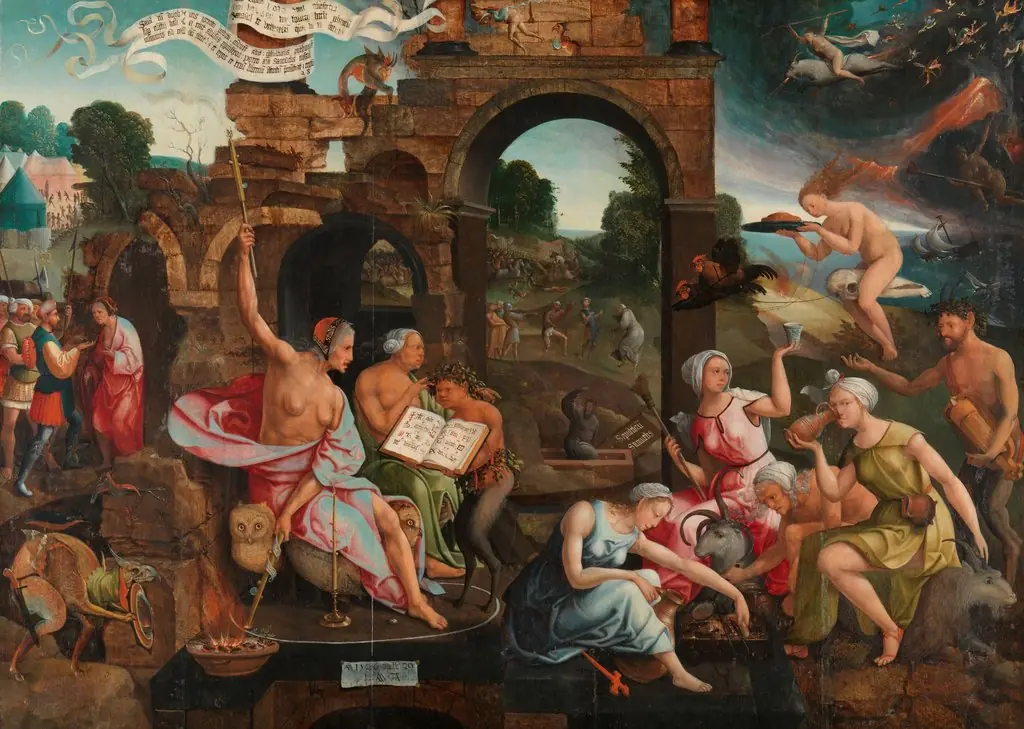
The canvas presents a bustling coastal scene where commerce and learning are intertwined. A ruined structure overlooks a town, while a procession of Mercury’s triumphal car drawn by four roosters sweeps across the sky. Below, a diverse group of figures, children, scholars, animals, and performers, populate the landscape, each engaged in activities that reference trade, science, and entertainment.
Technique & Style
The work employs a densely layered composition characteristic of late Baroque allegory, with vivid detail rendered in a crowded, almost narrative tableau. Figures are delineated with precise brushwork, while the varied textures of stone, fabric, and animal fur create visual contrast. The use of bright, varied colours and dynamic diagonal lines guides the eye through the multiple scenes.
History & Provenance
Created to commemorate the virtues of trade and scientific advancement, the painting reflects contemporary civic pride. Its provenance traces back to a municipal collection where it was displayed in a public hall, serving both decorative and didactic purposes. Documentation indicates it remained in the city’s archives through the 18th century before entering a regional museum’s holdings.
Own this work as a print
Artist & collection
Artist
Jan Brueghel (also Bruegel or Breughel) the Younger ( BROY-gəl, US also BROO-gəl; Dutch:; 13 September 1601 – 1 September 1678) was a Flemish Baroque painter.