Artwork
Mary (1505–1558), Queen of Hungary
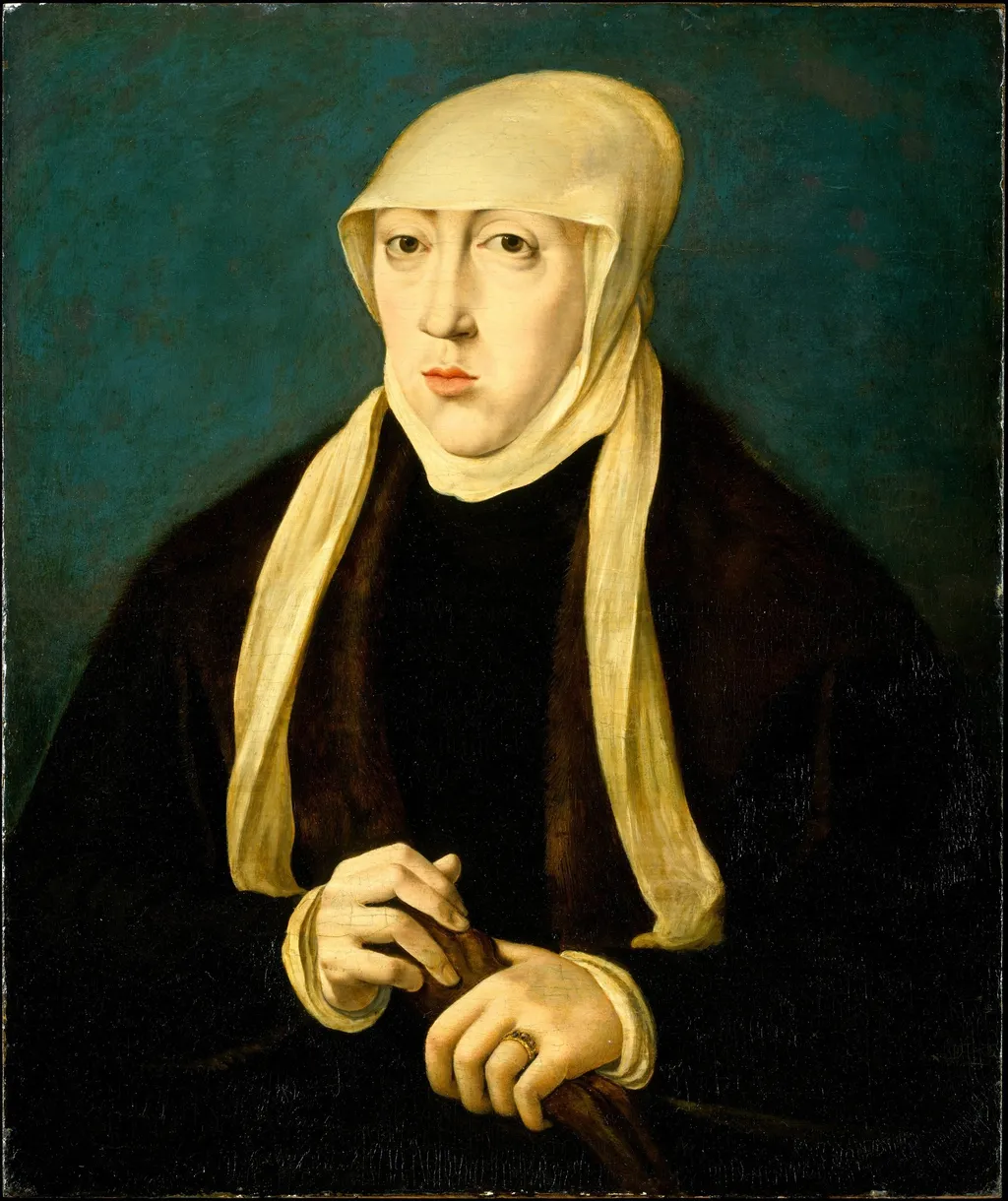
Mary (1505–1558), Queen of Hungary is an oil painting by the Northern Renaissance artist Jan Cornelisz Vermeyen. It is held in the collection of the Metropolitan Museum of Art. This painting on wood by Dutch artist Jan Cornelisz.
About this work
Technique & Style
The work, attributed to a copy after Jan Cornelisz Vermeyen and dated to around 1600, presents the sitter in a formal portrait genre.
This portrait of Mary of Hungary is executed in oil paint on a wood support, a medium characteristic of the Northern Renaissance. The work, attributed to a copy after Jan Cornelisz Vermeyen and dated to around 1600, presents the sitter in a formal portrait genre. The panel measures 54.6 cm in height and 45.7 cm in width.
Stylistically, the handling adheres to the conventions of early Netherlandish painting. The composition focuses on the depiction of the queen, maintaining the dignified presentation typical of royal portraiture from the sixteenth century, even though the extant object was produced around 1600.
History & Provenance
The portrait of Mary of Hungary, attributed to a copyist working after Jan Cornelisz Vermeyen, was produced around 1600 in oil on wood, more than four decades after the sitter's death in 1558. The work was once held by the House of Orange-Nassau and the House of Hohenzollern, and is recorded as belonging to Emperor Wilhelm II. It subsequently passed through the hands of Hugo Moser, Walter Andreas Hofer, and the Paul Drey Gallery before being acquired by Belle Linsky and Jack Linsky.
The painting entered the Metropolitan Museum of Art as part of the Jack and Belle Linsky Collection, bequeathed by Belle Linsky in 1982. During its documented history, the work was included in several exhibitions, including an exhibition of paintings from the collection of Emperor Wilhelm II, a loan exhibition of early Dutch paintings, and Five Centuries of Dutch Art.
Legacy
The portrait of Mary of Hungary, attributed to a copy after Jan Cornelisz Vermeyen, has been displayed in major exhibitions on Northern Renaissance painting and Dutch art, underscoring its scholarly attention. Its inclusion in the collections of the House of Orange-Nassau and House of Hohenzollern, and repeated loans to exhibitions, reflects a sustained reputation in Dutch art history. The work's provenance through notable dealers and collectors further signals its recognized importance within the legacy of Northern Renaissance portraiture.
Overview
This painting on wood by Dutch artist Jan Cornelisz. Vermeyen depicts Mary, Queen of Hungary (1505–1558). Vermeyen, active in the early to mid-16th century, was a noted portraitist for the Habsburg Netherlands' governors, including Mary.
The work exemplifies Northern Renaissance portraiture through its formal presentation of the queen, reflecting the artistic conventions of the period. It is currently housed in The Metropolitan Museum of Art.
Subject & Meaning
The portrait presents Mary, Queen of Hungary, with a calm yet serious demeanor, her lips hinting at a slight smile. She is depicted formally, wearing a dark brown, fur-lined cloak, a white cap, and a simple white collar, with her hands clasped before her. This dignified portrayal aligns with the conventions of royal portraiture during the Northern Renaissance, emphasizing her status and composure as a prominent figure in the Habsburg court.
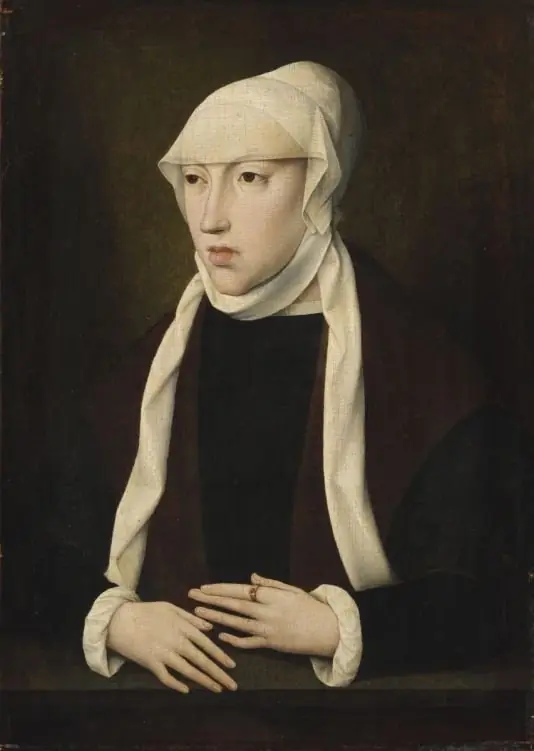
Own this work as a print
Artist & collection
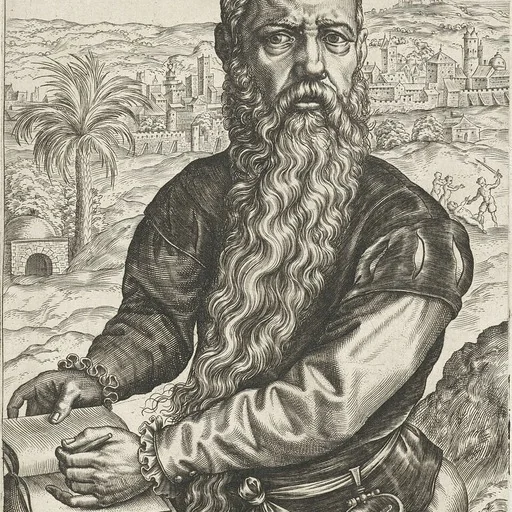
Artist
Jan Cornelisz. Vermeyen, also known as Juan del Mayo (c. 1503 – 1559) was a Dutch painter, printmaker and tapestry designer. He is known for his portraits, history scenes and genre subjects. He worked in Mechelen and…

 Isabella Jagiellon
 Portrait of Sabina of Bavaria
 Portrait of Elżbieta Sieniawska née Gostomska (1573–1624)
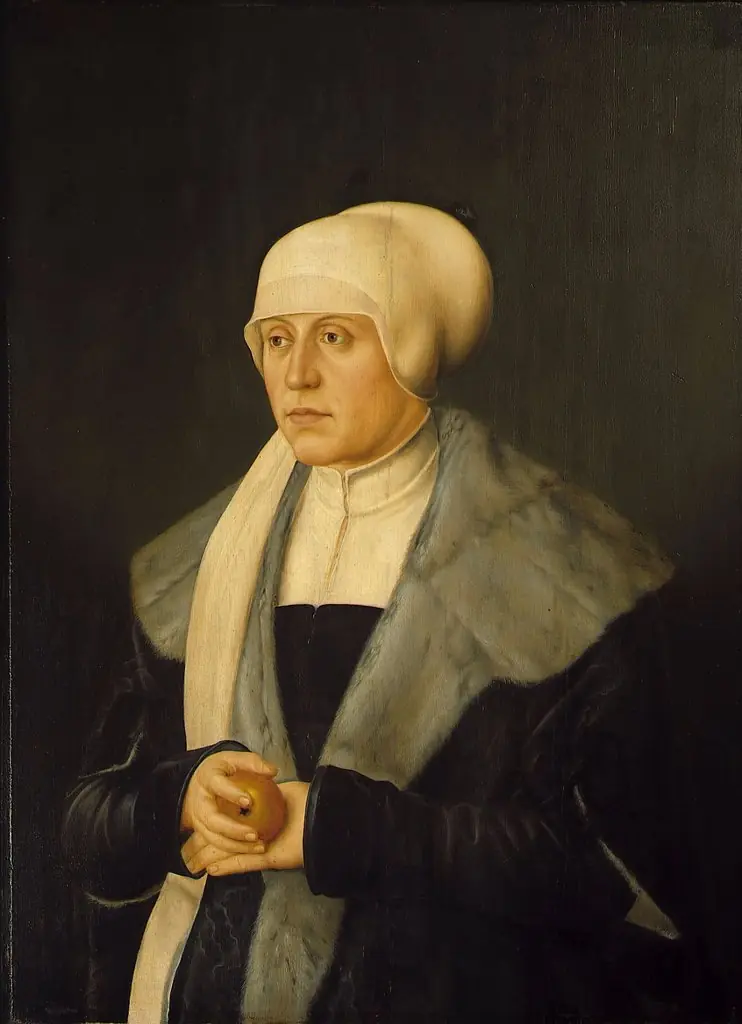 Kunigunde of Austria, wife of Duke Albrecht IV of Bavaria
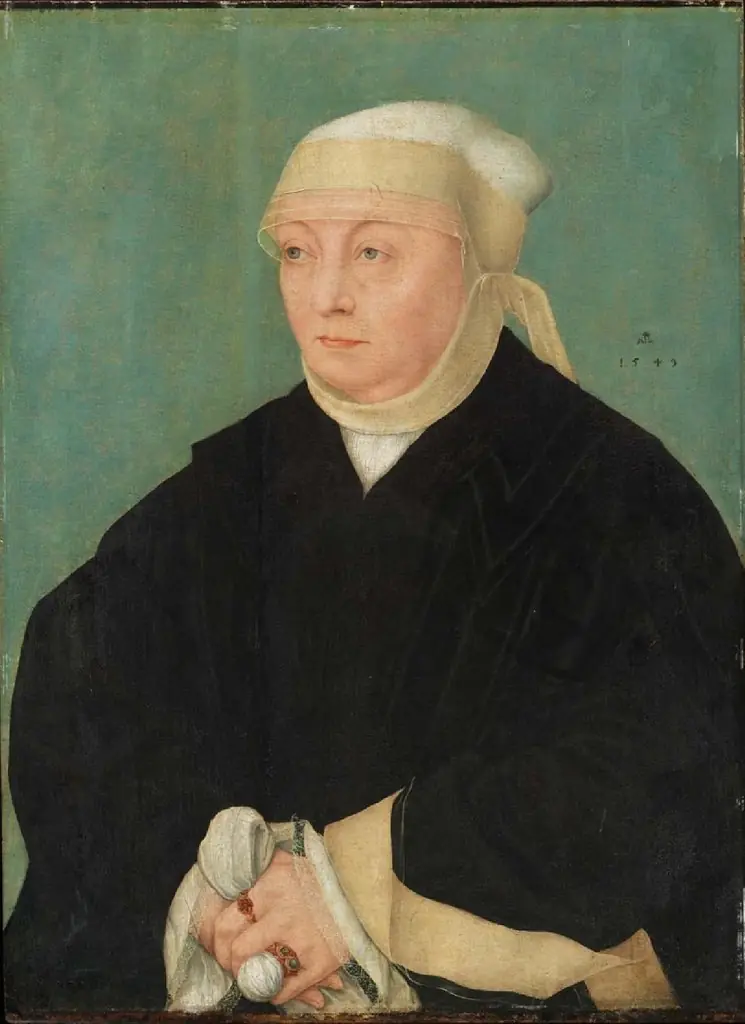 Portrait of a Woman
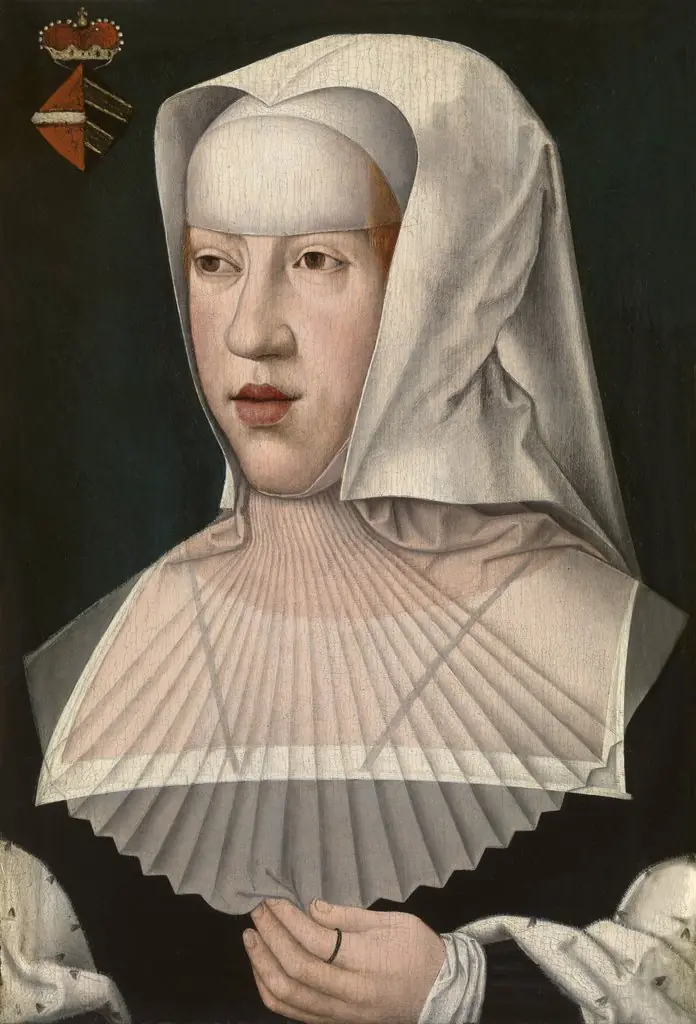 Margareta of Austria
 Portrait of Magdalena van Werdenborgh (1464-1538)
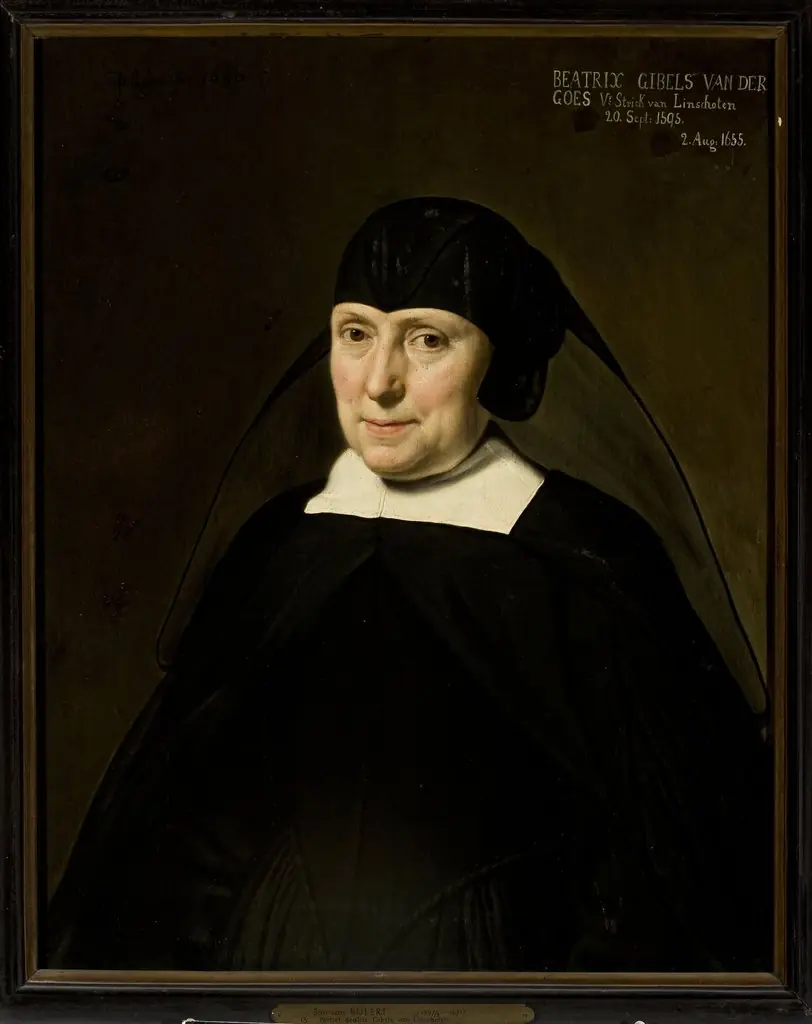 Portrait of Beatrix Gibels van Linschoten
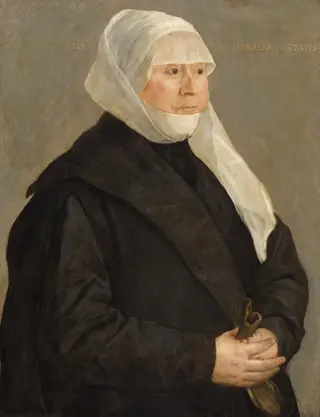 Regina von Stetten (1499-1562), Gemahlin des Peter Honold
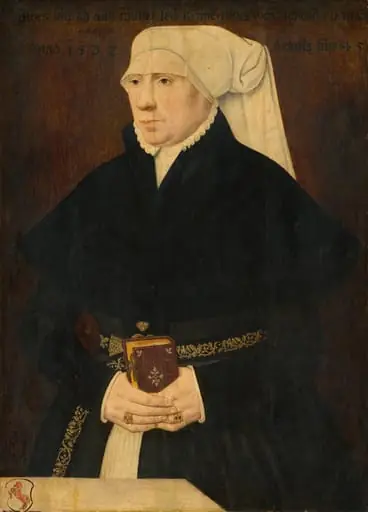 Portrait of a Lady