Artwork
Portrait of Magdalena van Werdenborgh (1464-1538)
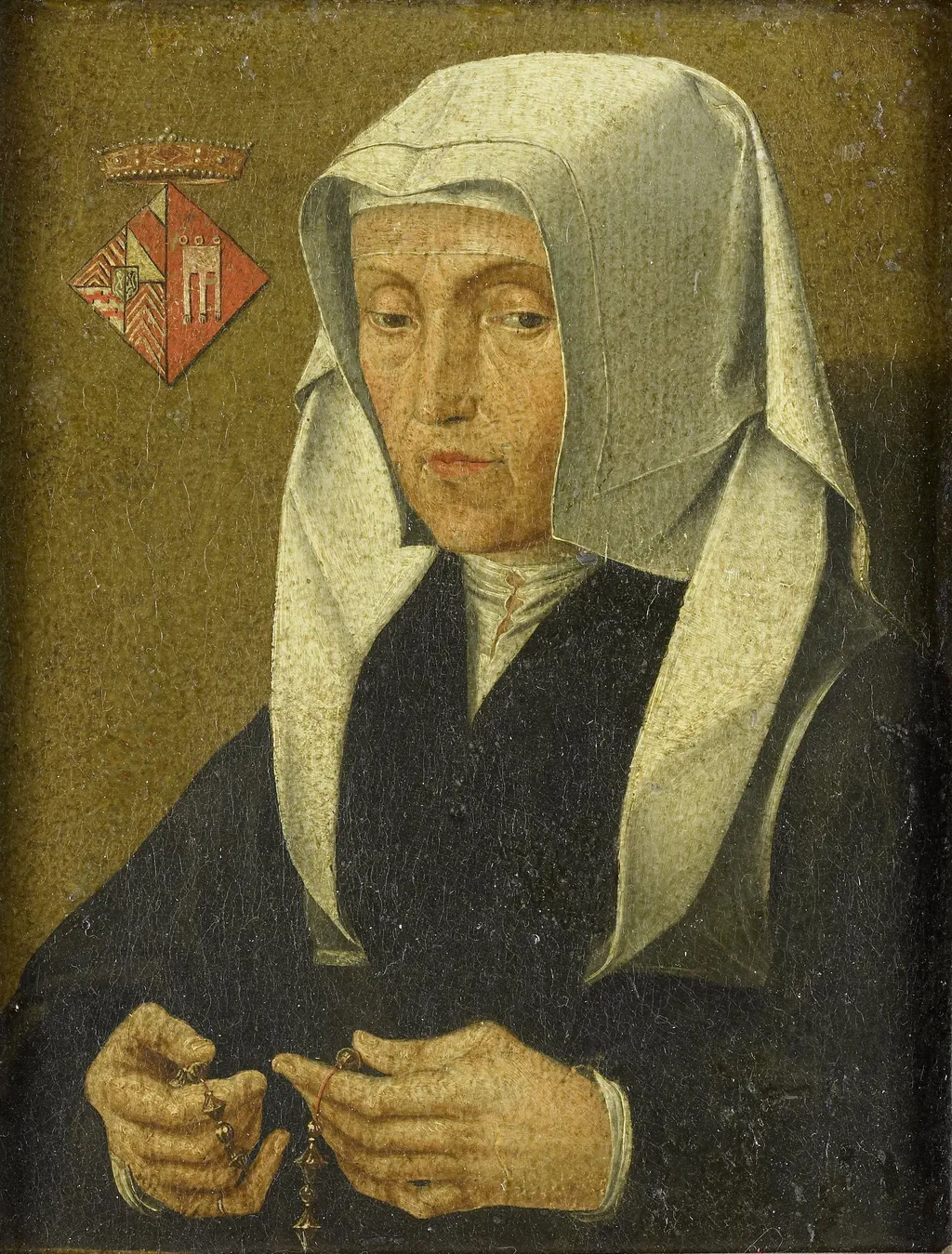
Portrait of Magdalena van Werdenborgh (1464-1538) is an oil painting by the Northern Renaissance artist Unknown. It dates from 1510 and is held in the collection of the Rijksmuseum.
About this work
History & Provenance
No specific inventory or accession number is provided in the available records, nor is there documented exhibition history for this work in the sources.
The Portrait of Magdalena van Werdenborgh is an anonymous oil painting on panel created in 1510 within the Northern Low Countries. The work depicts the subject, who lived from 1464 to 1538, and is classified as a portrait genre piece. Historical records indicate that the painting was previously owned by Victor de Stuers before entering the collection of the Rijksmuseum. The artwork measures 18 cm in height and 14 cm in width.
The Portrait of Magdalena van Werdenborgh is held in the collection of the Rijksmuseum in the Netherlands. The artwork, an anonymous oil painting on panel created in 1510, was previously owned by Victor de Stuers before entering the museum's holdings. The museum records the piece with a height of 18 cm and a width of 14 cm.
No specific inventory or accession number is provided in the available records, nor is there documented exhibition history for this work in the sources.
Legacy
The portrait became part of the Rijksmuseum collection, where it is catalogued as an anonymous work from the early 16th century. Its attribution to a named sitter was later established through archival research, linking the sitter to the influential van Werdenborgh family. The painting continues to be referenced in studies of Northern Low Countries portraiture, informing both scholarly discourse and public exhibitions.
Overview
This portrait depicts Magdalena van Werdenborgh (1464-1538), a woman of solemn expression, clad in a dark dress and white head covering, with her hands folded around a small, unidentified object.
Subject & Meaning
The subject's attire and demeanor suggest a person of modesty and possibly religious or marital significance, given the traditional clothing. The red shield behind her head, adorned with a crown and symbols, implies noble lineage or familial affiliation.
Technique & Style
The painting employs chiaroscuro, a strong contrast between light and dark, to create a three-dimensional effect. Soft, focused light illuminates the subject's face and hands, set against a dark, nondescript background, drawing the viewer's attention to her.
Context
Given the subject's attire and the artistic technique, the portrait is likely from the Northern European Renaissance, possibly Flemish, reflecting the period's emphasis on individual portraiture and symbolic detail.
Artist & collection









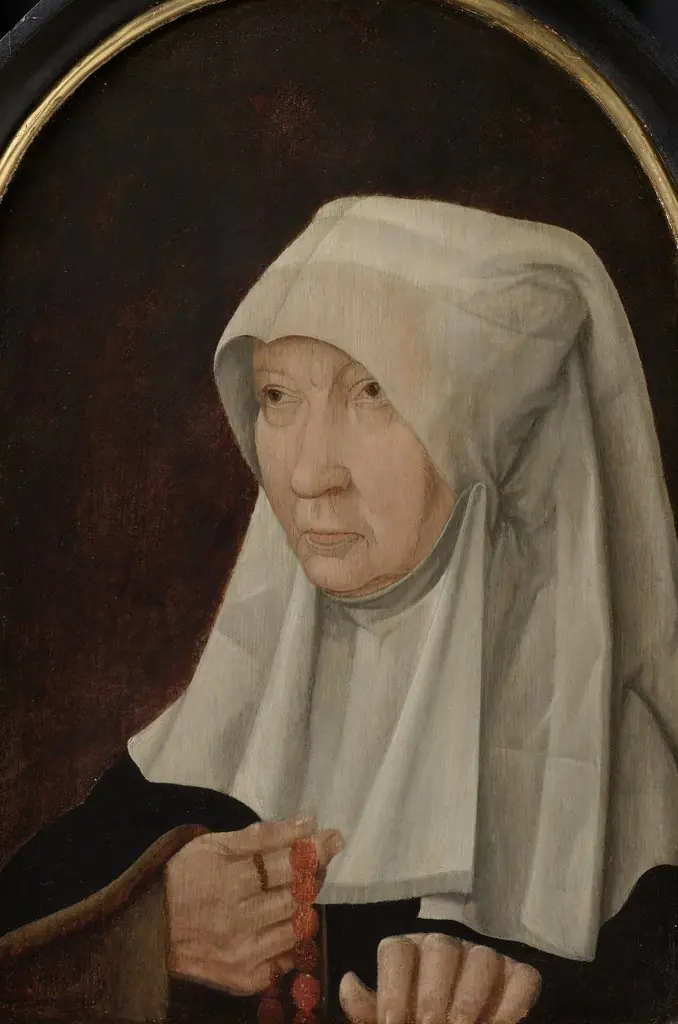 Portrait of Jacomina Claesdr van Ruyven (?-1509)
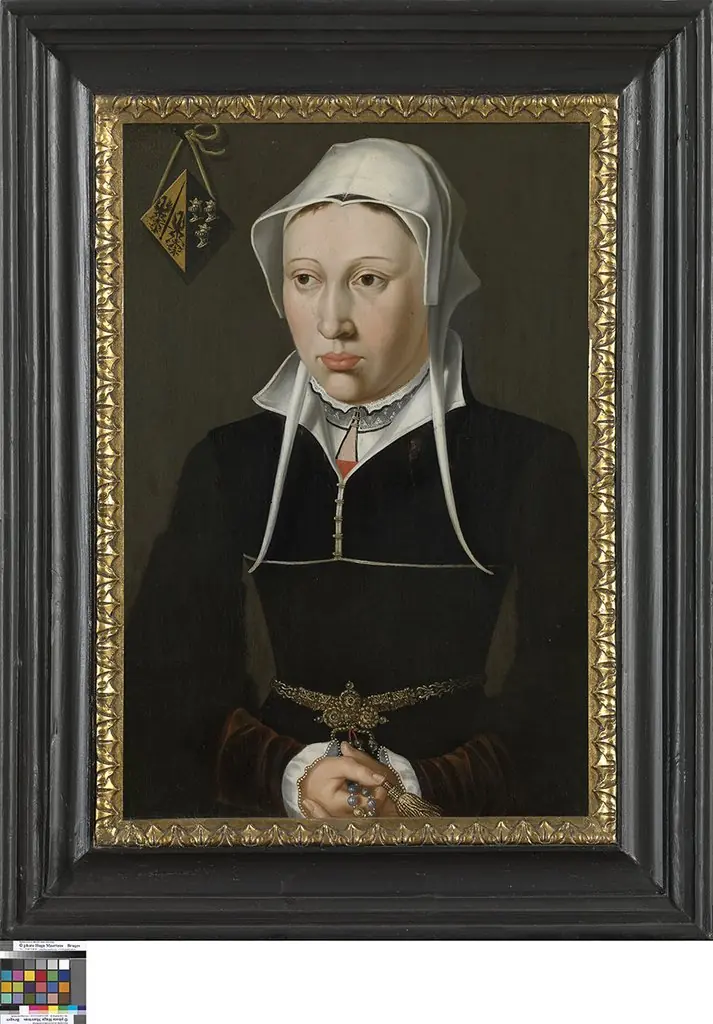 Portrait of the wife of Jan de Fevere
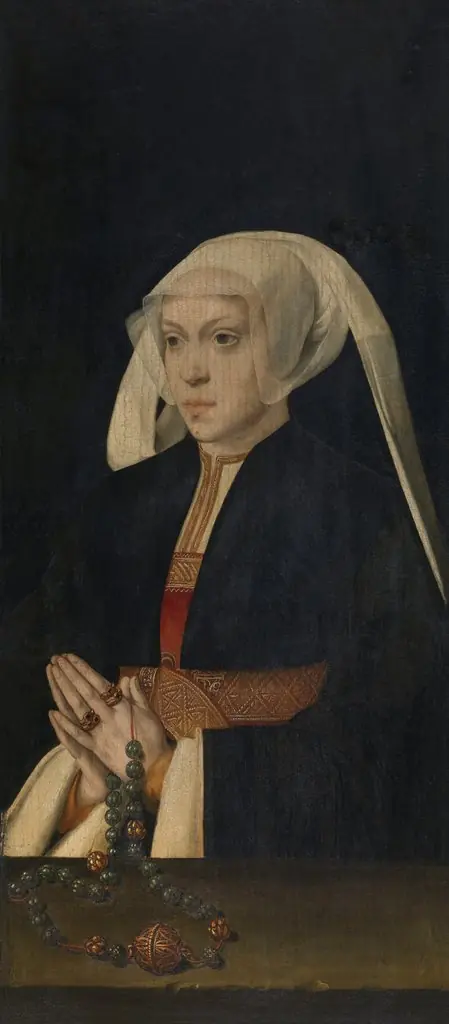 Portrait of a Woman
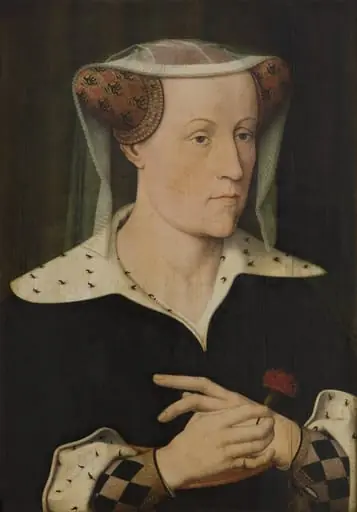 Jacoba of Bavaria, Countess of Holland and Zeeland
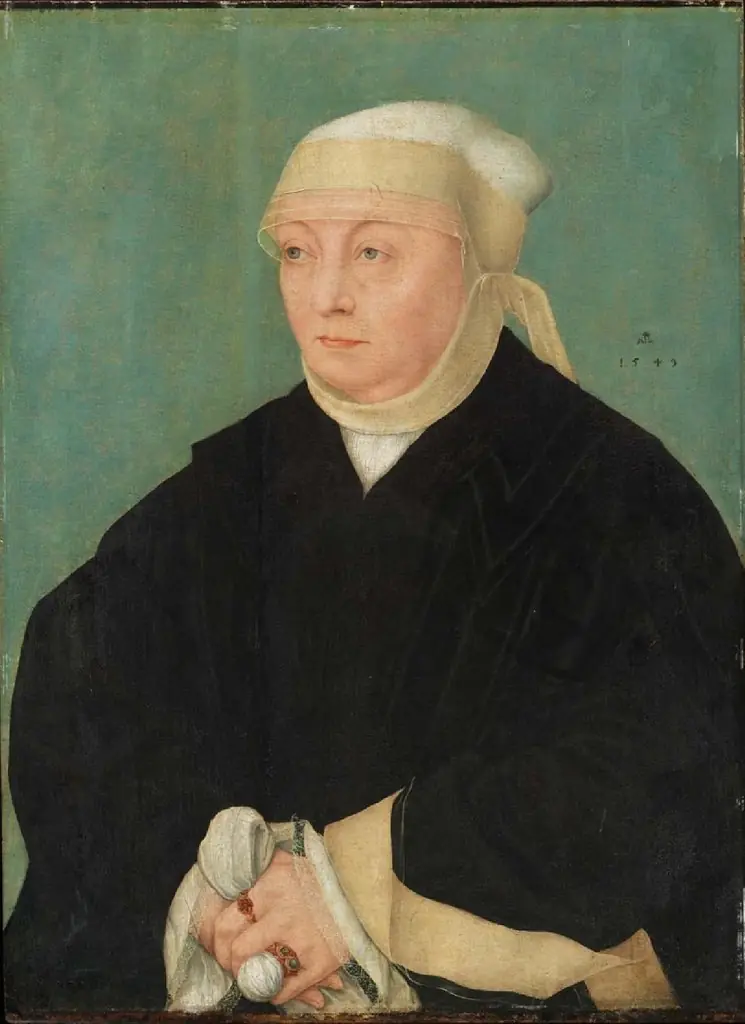 Portrait of a Woman
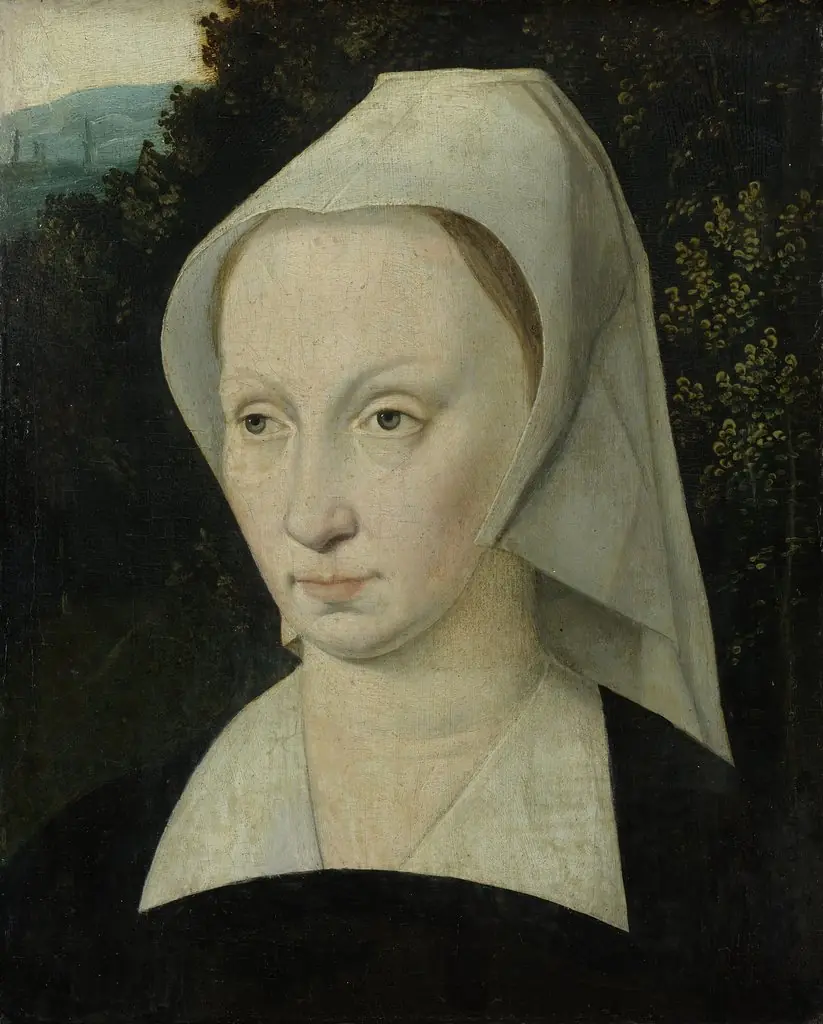 Portrait of a woman
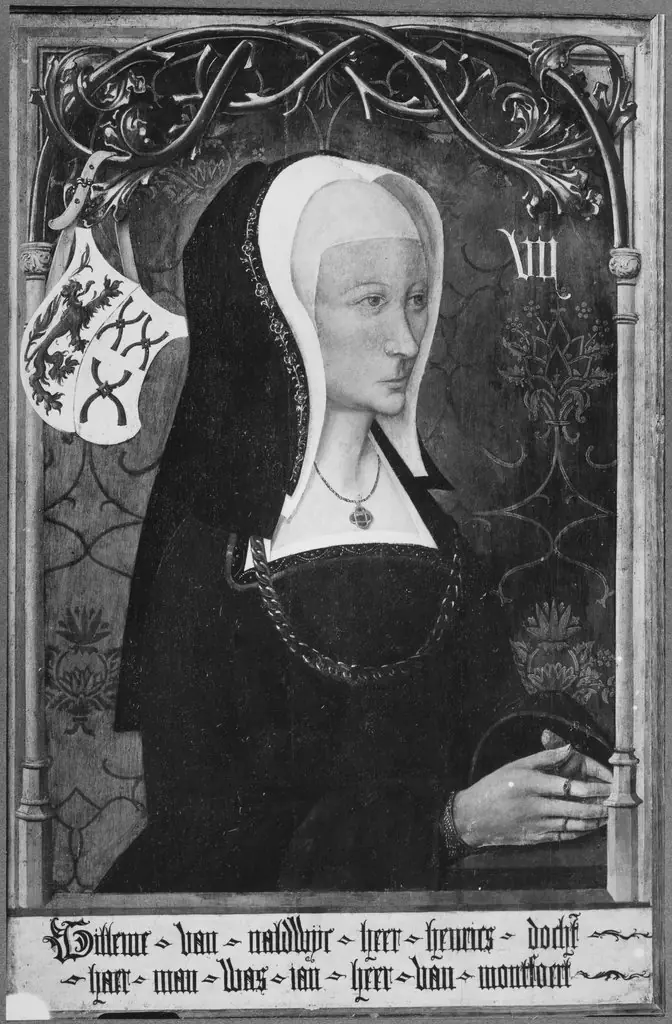 Wilhelmina van Naaldwijk
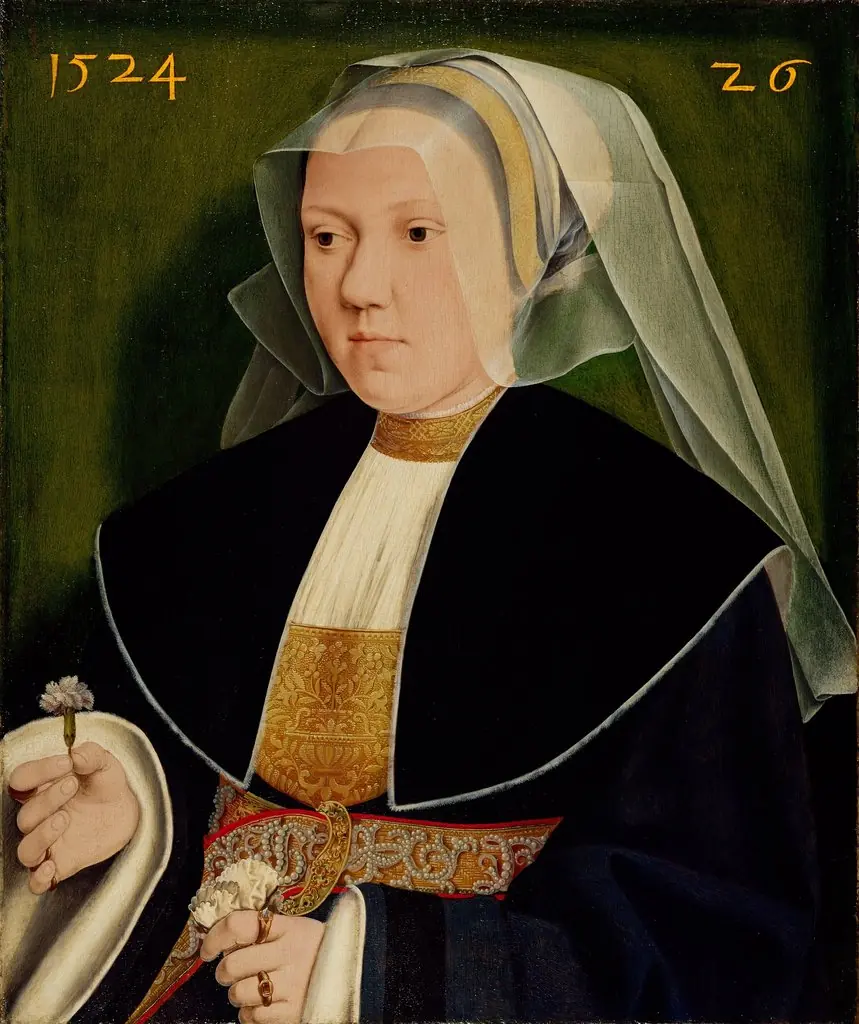 Portrait of Margaretha von Mochau, wife of Gerhard von Westerburg
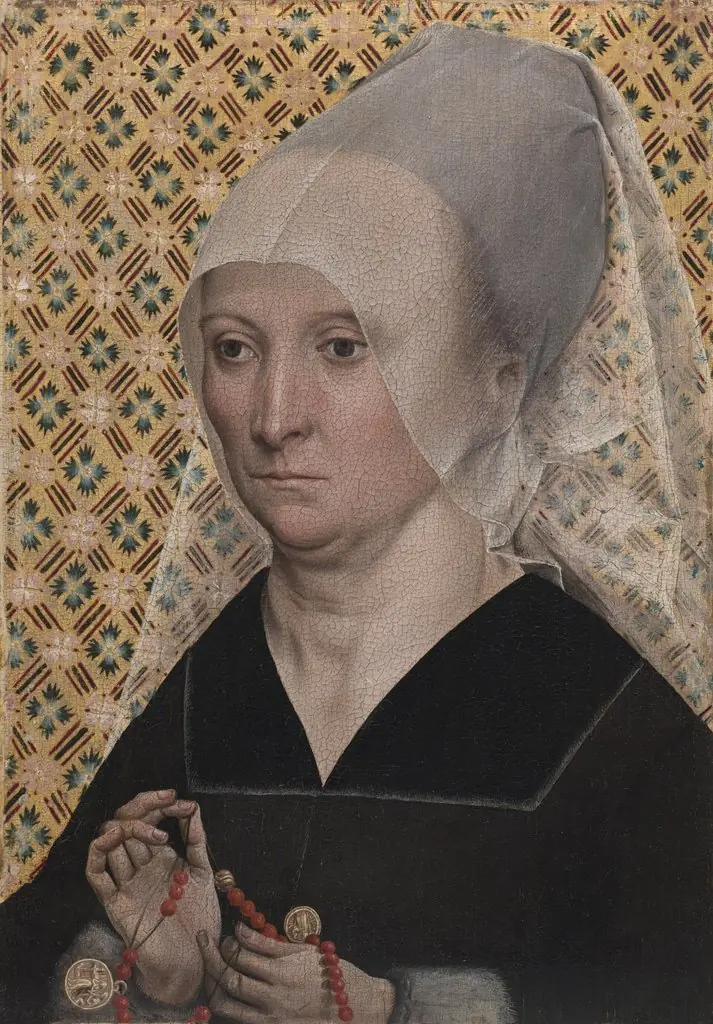 Portrait of a Woman