Artwork
Still Life
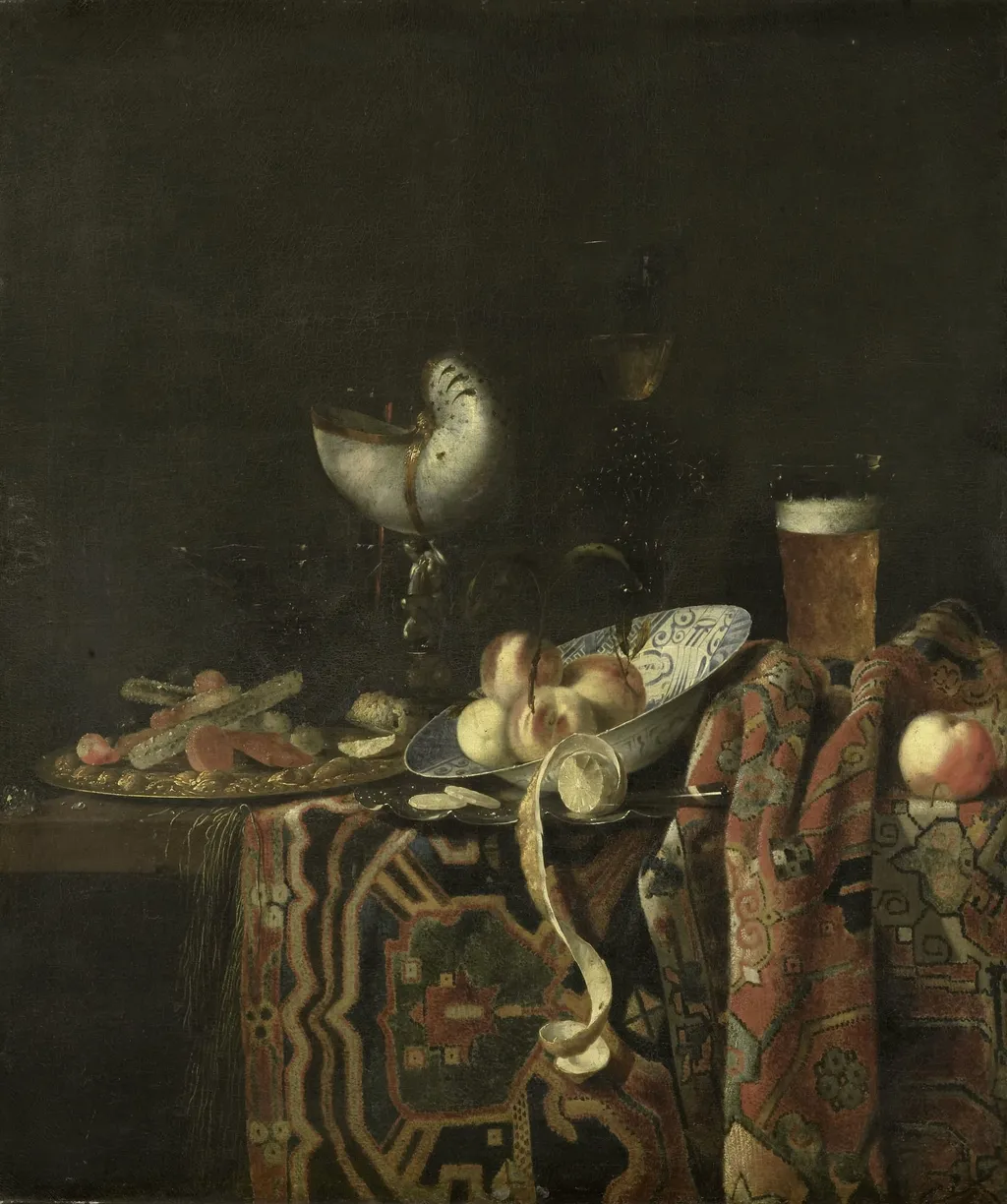
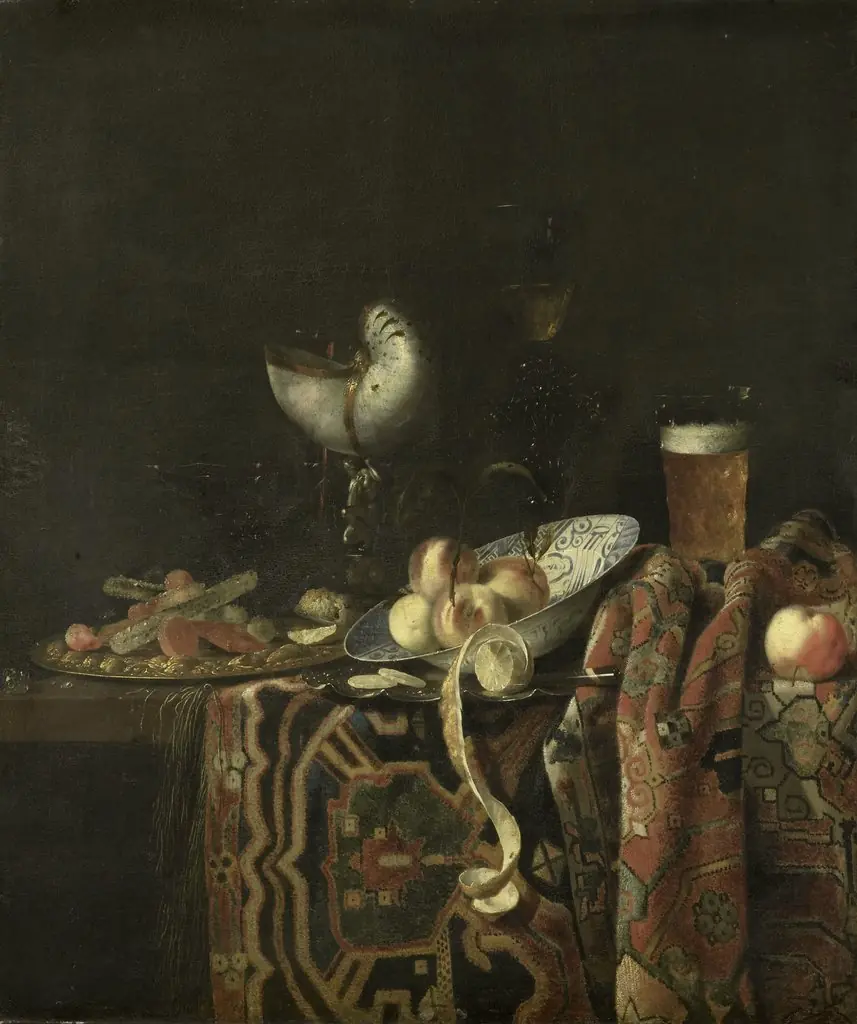
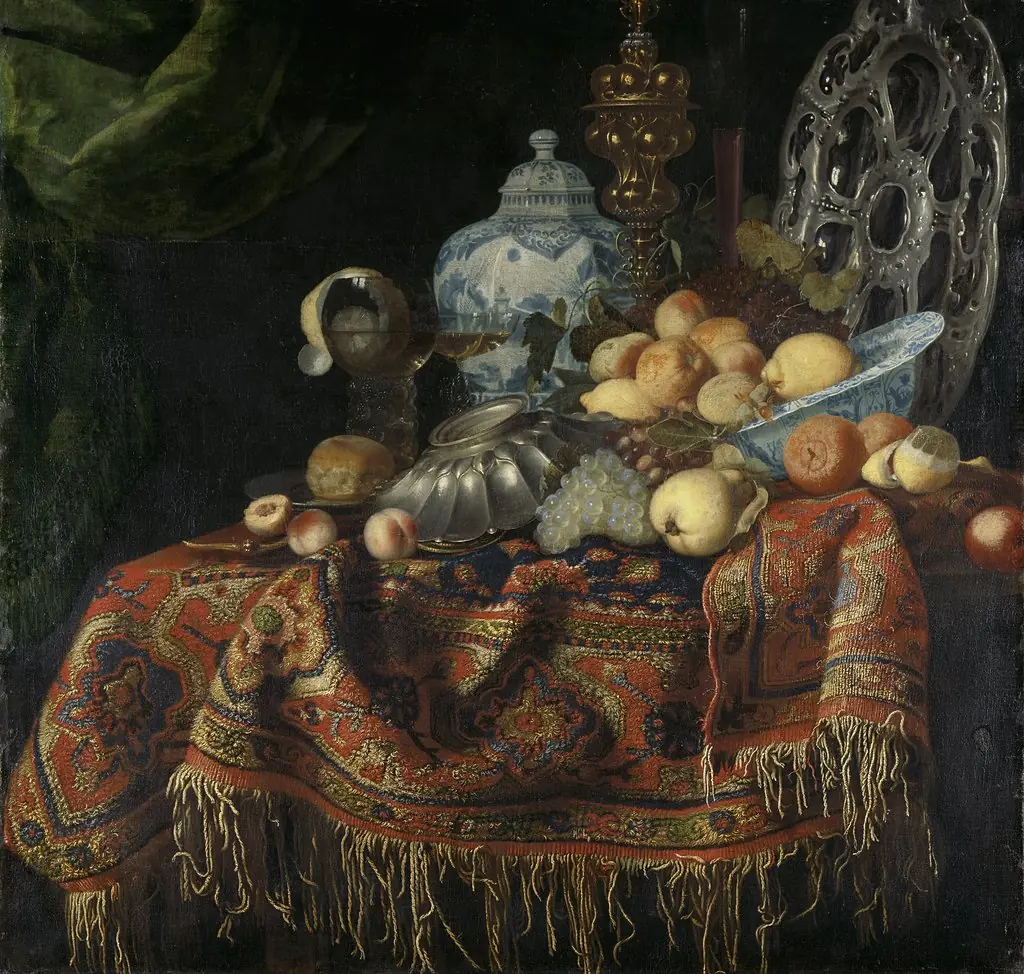
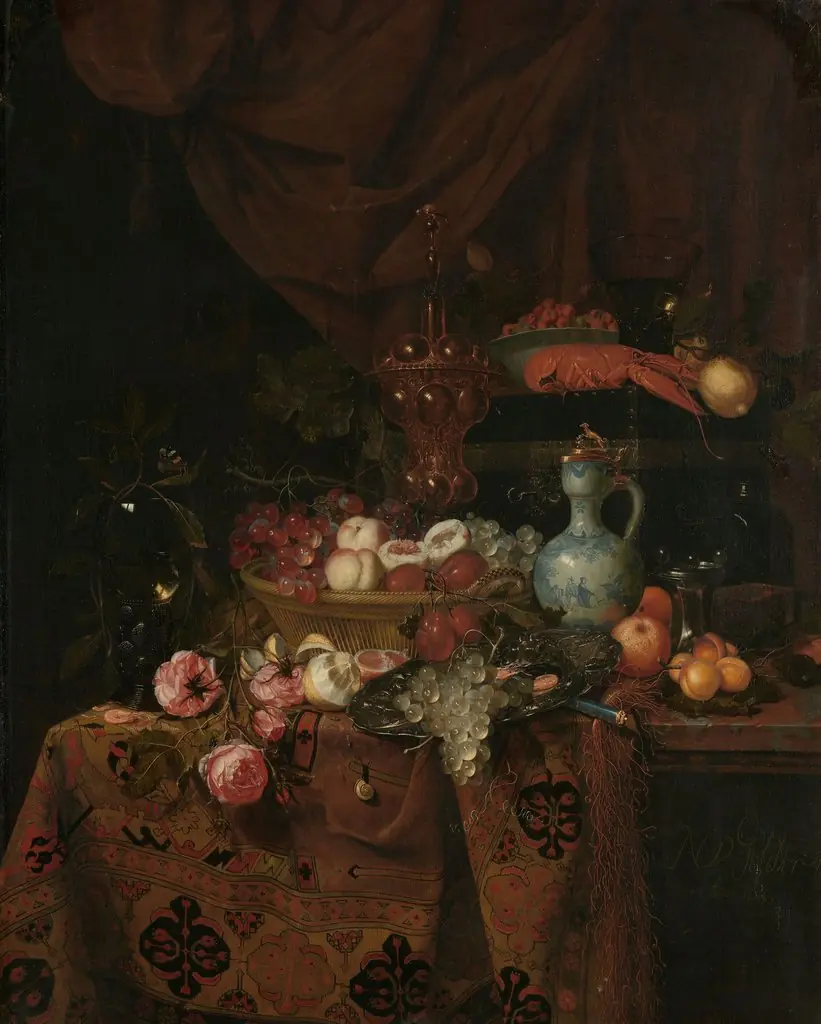
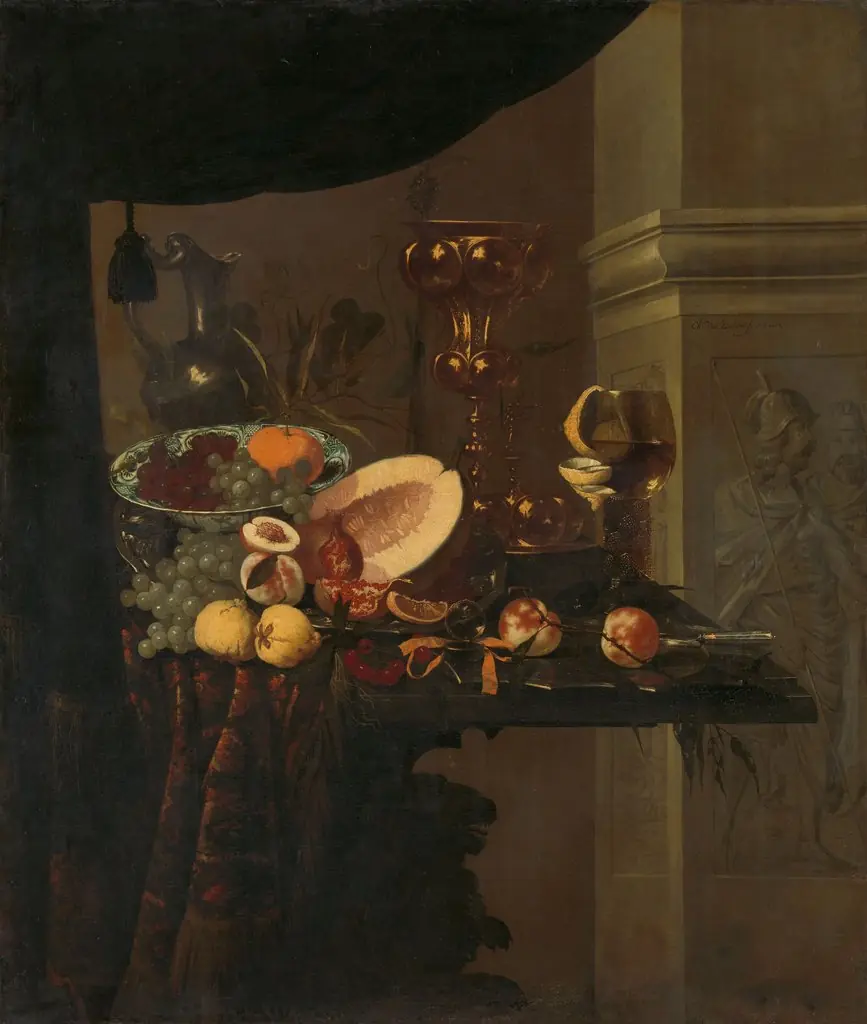
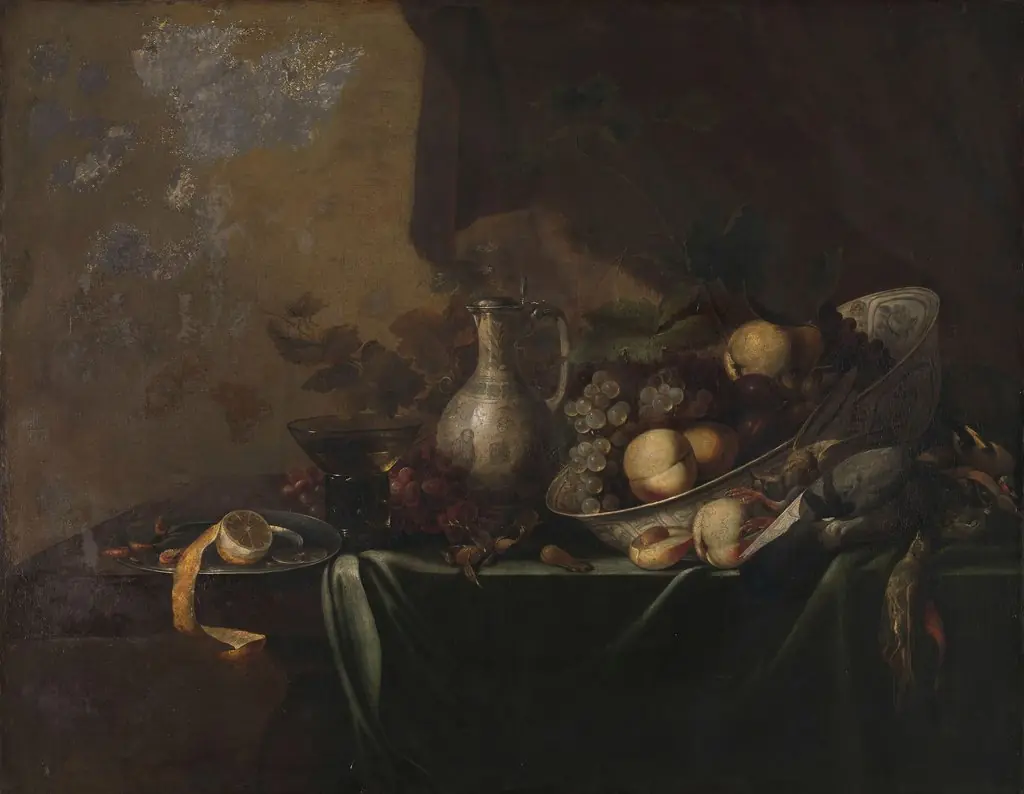
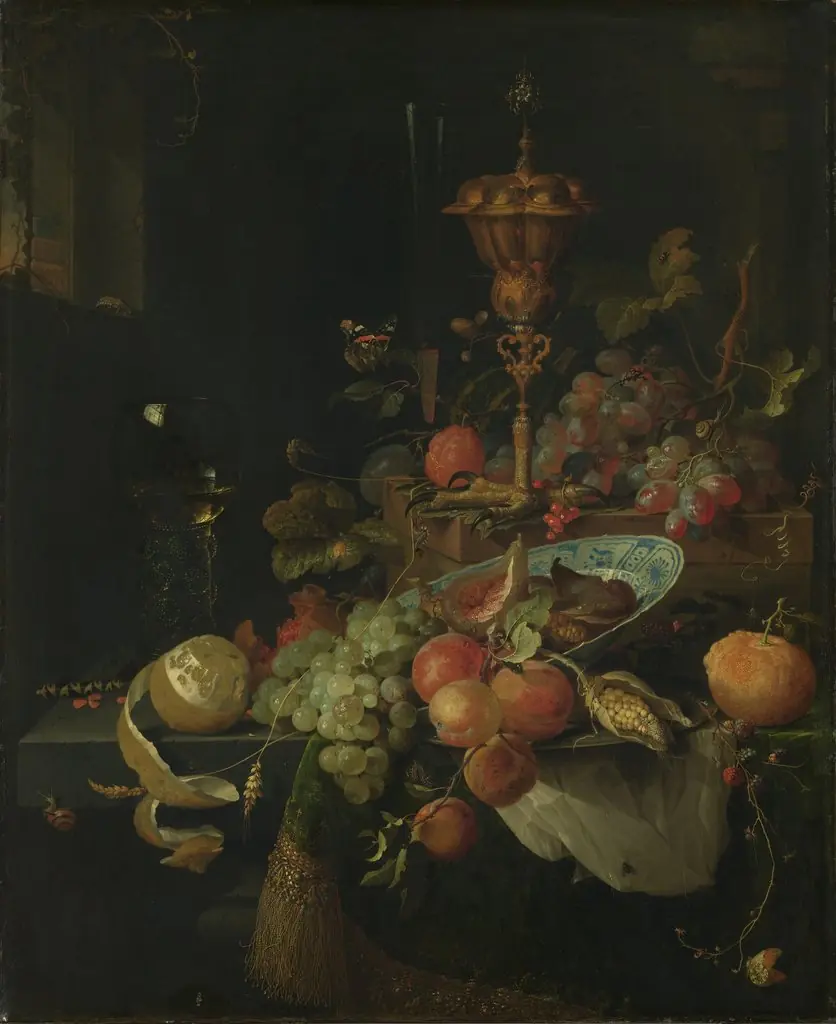
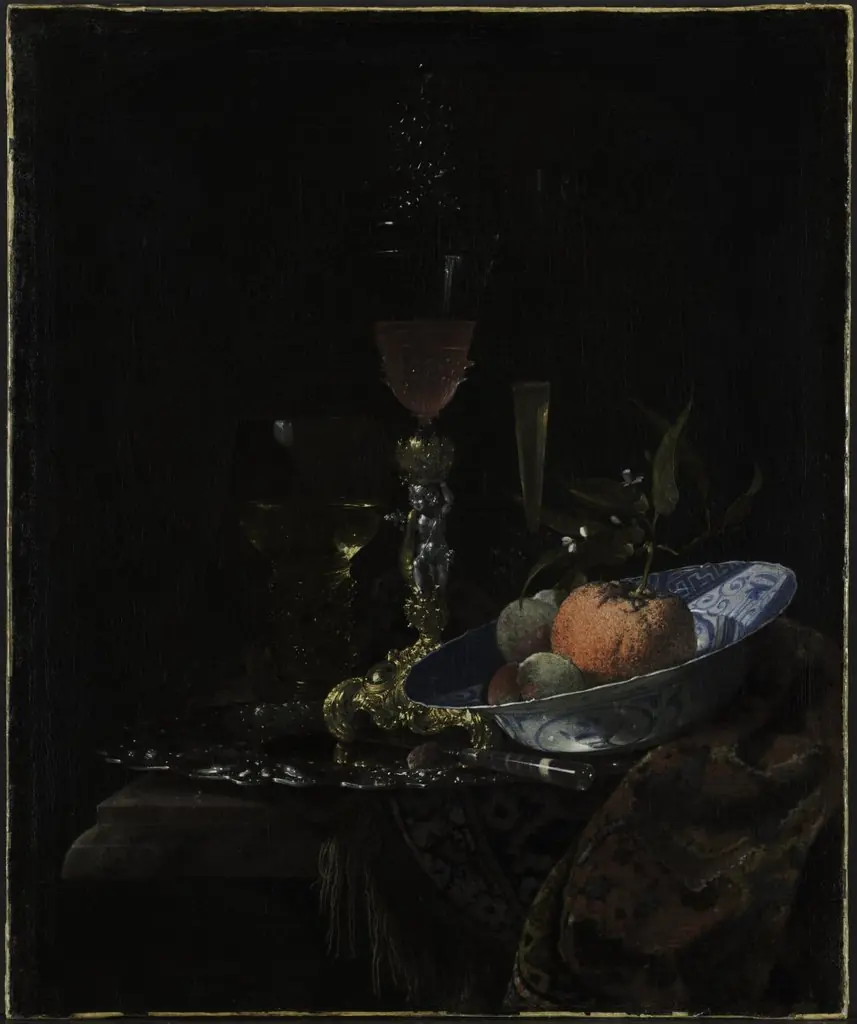
Still Life is an unspecified painting by the Dutch Golden Age artist Georg Hainz. It dates from 1683 and is held in the collection of the Rijksmuseum. The painting presents a domestic tableau set upon a table draped with a richly patterned Persian rug.
About this work
History & Provenance
The original work remains part of the Kunsthalle’s collection, reflecting its historical significance and provenance through donation rather than acquisition.
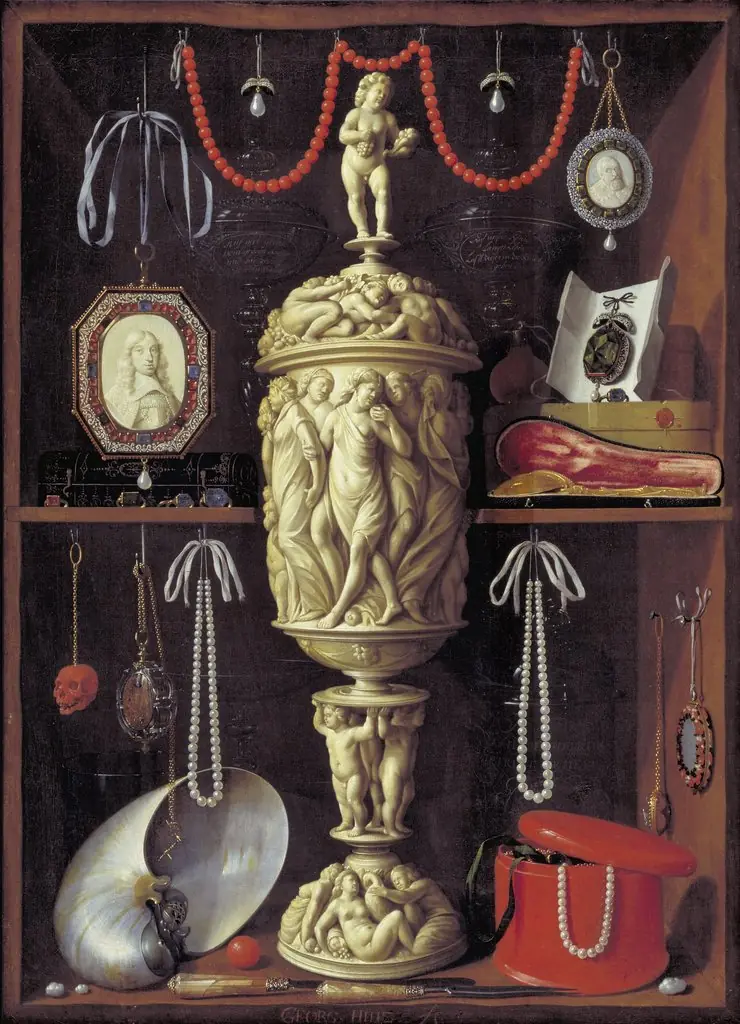
Georg Hainz (1630-1700) was a German Baroque painter active in Hamburg, recognized as the first and most significant specialist in still life painting in the city. He developed a reputation for works featuring fruit, banquet, and flower still lifes, as well as trompe-l'oeil compositions, often influenced by Dutch traditions and possibly informed by travels to Amsterdam and Haarlem. One of his documented works, Kleinodienschrank (1666), depicts a cabinet of curiosities containing rare objects, including a portrait of Danish King Christian IV, and was later gifted to the Hamburg Kunsthalle by Pius Warburg. A variant of this painting, showing a regimental display with the same silver goblet from a different angle, is held in the Kunstgewerbemuseum Berlin. The original work remains part of the Kunsthalle’s collection, reflecting its historical significance and provenance through donation rather than acquisition.
Context
Georg Hainz is recognized as the first and most significant specialist in still life painting within Hamburg, marking a pivotal development in the city's Baroque art history. His work demonstrates a profound knowledge of Dutch traditions, leading scholars to posit that he likely traveled to artistic centers such as Amsterdam and Haarlem to study masters like Pieter Claesz and Floris van Schooten. This influence is evident in his "breakfast pieces," which utilize specific iconography, such as fish and pretzels, to convey complex religious meanings related to the Passion of Christ beyond their immediate visual representation.
Hainz's legacy extends through his role as an educator; he is documented as the teacher of Christian Berentz and possibly Franz Werner von Tamm. Furthermore, contemporary accounts by Arnold Houbraken credit him with mentoring Ernst Stuven, highlighting his importance in nurturing the next generation of German still life painters. His oeuvre, characterized by extreme precision in depicting precious objects and curiosity cabinets, firmly establishes his place within the broader European tradition of trompe-l'œil and banquet scenes.
Legacy
Georg Hainz is recognized as the first and most significant specialist in still-life painting in Hamburg, establishing a distinct regional legacy within German Baroque art. His work, characterized by a deep knowledge of Dutch traditions, is credited with influencing a generation of artists; he is documented as the teacher of Christian Berentz and Ernst Stuven, and possibly Franz Werner von Tamm. By taking the young Stuven into his home, Hainz provided direct mentorship that helped shape subsequent talent in the genre. His reputation rests on his precise treatment of precious objects and his ability to infuse symbolic meaning into breakfast scenes and cabinets of curiosities, such as the 1666 *Kleinodienschrank*. This specific work entered the collection of the Kunsthalle Hamburg in 1890 as a gift from Pius Warburg, securing its place in public heritage, while a variant version resides in the Kunstgewerbemuseum Berlin.
Own this work as a print
Artist & collection