Artwork
Portrait of Marie Jeanette de Lange
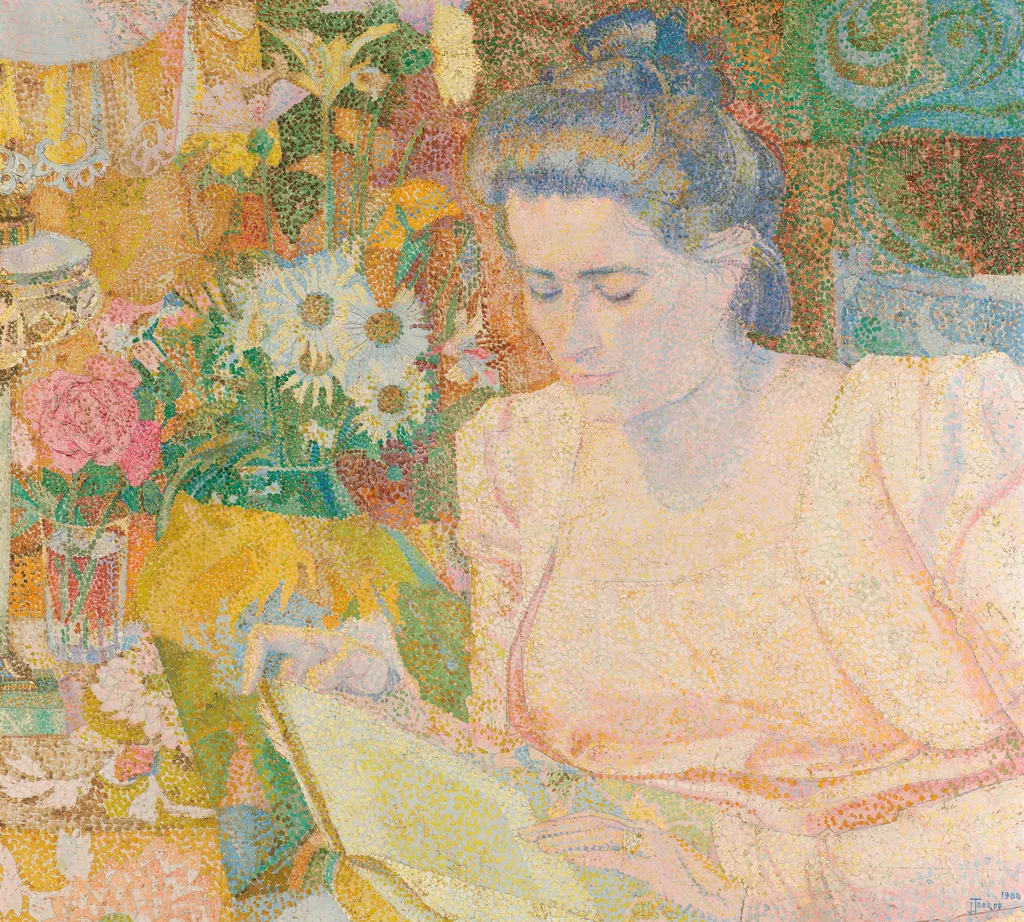
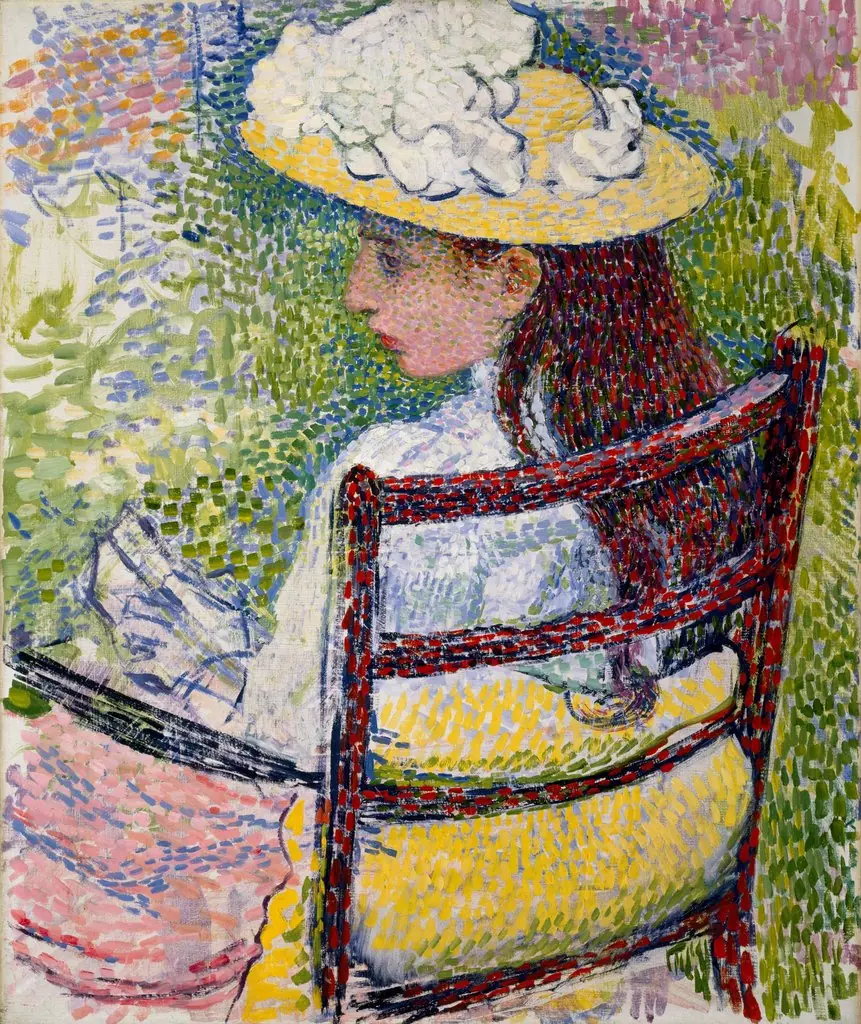
Portrait of Marie Jeanette de Lange is an oil painting by the Art Nouveau artist Jan Toorop. It dates from 1900 and is held in the collection of the Rijksmuseum.
About this work
Subject & Meaning
The composition includes specific iconographic elements such as a flower placed within a vase, which accompany the figure.
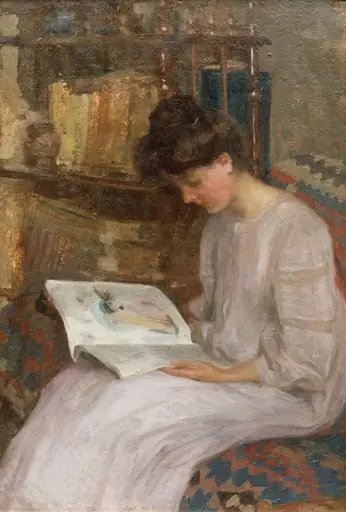
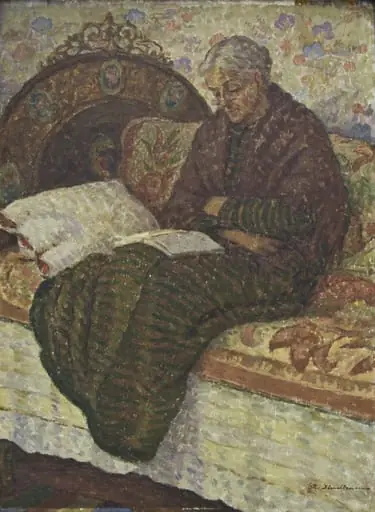
The painting depicts Marie Jeanette de Lange as its main subject, shown in a seated pose while reading a book. The composition includes specific iconographic elements such as a flower placed within a vase, which accompany the figure. These objects are presented alongside the act of reading, forming the visual narrative of the portrait. The work serves as a representation of the sitter engaged in this quiet, intellectual activity.
Technique & Style
The work is an oil painting executed on canvas, created in 1900 by Jan Toorop. Its support consists of canvas, and the paint medium is oil, consistent with the classification of the piece as a portrait. The composition portrays Marie Jeanette de Lange engaged in reading, surrounded by a book, flower and vase.
The dimensions measure 70.5 cm in height and 77.4 cm in width. It belongs to the Rijksmuseum collection.
History & Provenance
Jan Toorop painted Portrait of Marie Jeanette de Lange in 1900, employing oil on canvas to render a likeness of the sitter engaged with a book, flower and vase. The work, classified as a portrait, entered the collection of the Rijksmuseum, where it remains on display. Its dimensions measure 70.5 cm by 77.4 cm, and the painting is catalogued under the subject Marie Jeanette de Lange.
The artwork’s provenance traces its present ownership to the Rijksmuseum, which acquired it as part of its holdings of Dutch portraiture.
Overview
Jan Toorop's Portrait of Marie Jeanette de Lange, executed in 1900, is a significant example of the artist's transition from Symbolism toward a more decorative, linear style. The work depicts the sitter with her eyes closed, conveying a state of introspection or spiritual reverie. She wears a light-colored dress that contrasts with her dark hair, which is rendered with loose, flowing strands.
The composition is defined by a dramatic chiaroscuro effect, where the face is half-lit, isolating the subject from the surrounding environment. The background is a dynamic explosion of swirling colors, greens, yellows, and blues, applied with thick, energetic brushstrokes that evoke the movement of a storm or the dense foliage of a garden. This technique reflects Toorop's engagement with Post-Impressionist and Art Nouveau aesthetics, prioritizing emotional resonance and rhythmic pattern over strict realism.
Created at the turn of the century, the portrait captures the Dutch artist's unique synthesis of naturalism and symbolic abstraction, marking a pivotal moment in his career where he began to integrate the spiritual themes of his earlier Symbolist phase with the vibrant, organic forms that would characterize his later work.
Own this work as a print
Artist & collection

Artist
Johannes Theodorus "Jan" Toorop was a Dutch painter who worked in various styles, including Symbolism, Art Nouveau, and Pointillism. His early work was influenced by the Amsterdam Impressionism movement.