Artwork
De schelpenvisser
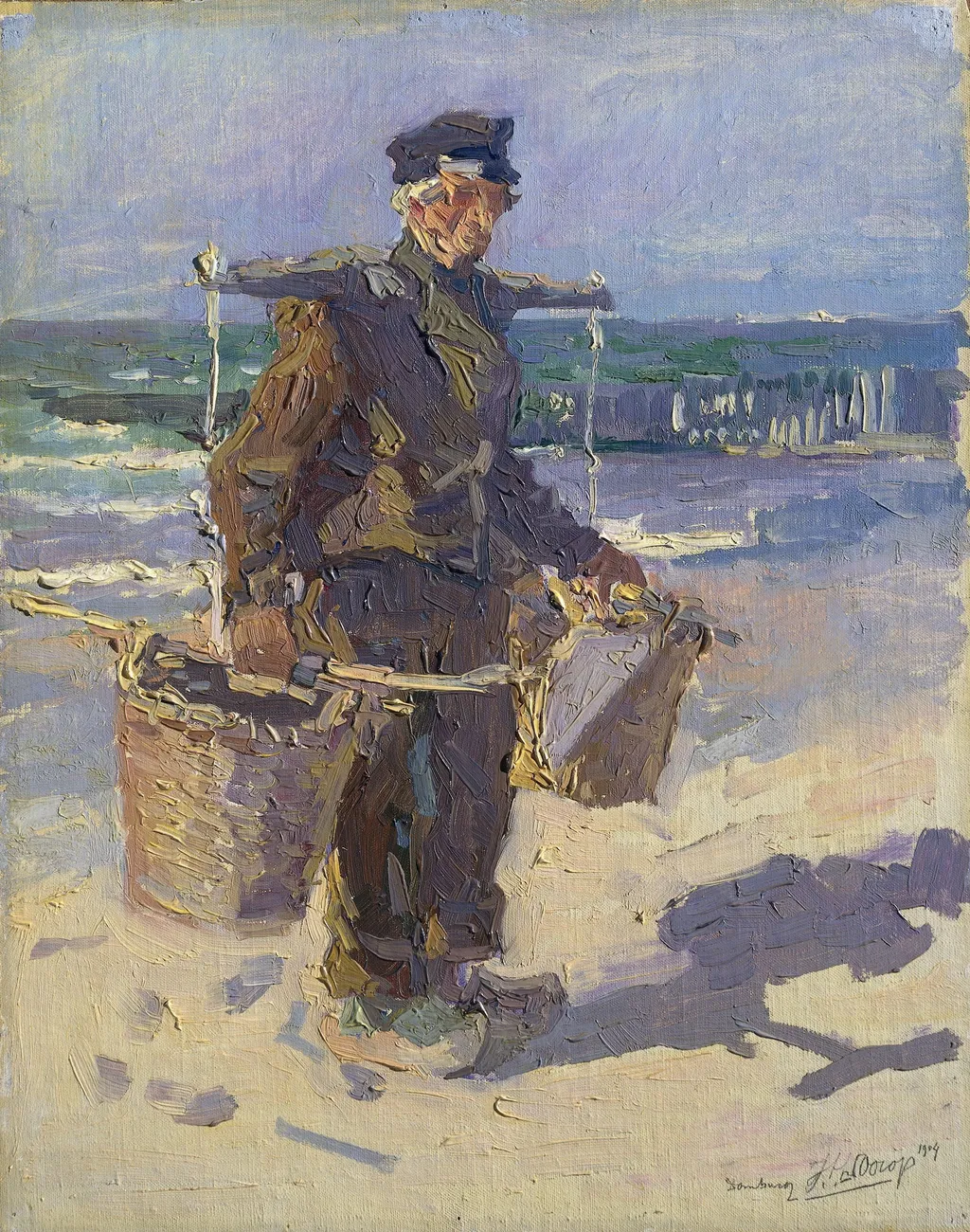
De schelpenvisser is an oil painting by the Amsterdam Impressionist artist Jan Toorop. It dates from 1904 and is held in the collection of the Rijksmuseum.
About this work
Technique & Style
Jan Toorop's De schelpenvisser, executed in 1904, is an oil painting on canvas. The work measures 40 cm in height and 32 cm in width. Classified within the Amsterdam Impressionism movement, the piece functions as a landscape painting. The artist applied oil paint directly to the canvas support to depict the coastal scene.
History & Provenance
Its inception date aligns with the artist’s later Impressionist period, reflecting his engagement with Amsterdam Impressionism.
The painting was created in 1904 by Jan Toorop as an oil on canvas landscape. It entered the collection of the Rijksmuseum in Amsterdam, where it remains on display. Its inception date aligns with the artist’s later Impressionist period, reflecting his engagement with Amsterdam Impressionism.
The work measures 40 cm in height and 32 cm in width, executed in oil paint on canvas. It is catalogued as part of the museum’s holdings of Amsterdam Impressionist works.
De schelpenvisser by Jan Toorop, painted in 1904, is held in the collection of the Rijksmuseum. The work is catalogued as part of that museum's holdings, with its location recorded as the Rijksmuseum. No specific inventory or accession number is documented in the available sources, and no exhibition history is recorded.
Context
De schelpenvisser is a 1904 oil painting by Jan Toorop, housed in the Rijksmuseum in Amsterdam. The work exemplifies Amsterdam Impressionism, a movement centered in the Dutch capital that Toorop helped shape through his exploration of light and atmosphere. As a landscape painting, it reflects Toorop's broader engagement with naturalistic subjects during his mature period, aligning with genre conventions discussed in scholarship on early 20th-century Dutch art.
The painting's material composition, oil on canvas, supports its classification within the landscape genre, as documented in institutional records.
Scholarly attention to De schelpenvisser often situates it within Toorop's transitional phase, where his Impressionist techniques began to merge with Symbolist themes, though the work itself remains anchored in observable natural detail rather than allegorical abstraction. Its presence in the Rijksmuseum collection underscores its significance as a representative piece of Amsterdam Impressionism, frequently referenced in studies of Dutch artistic identity circa 1900. The painting's dimensions (40 cm height, 32 cm width) and material specifics are consistently cited in curatorial documentation as part of its provenance.
Contextual analyses emphasize how Toorop's work, including De schelpenvisser, contributed to redefining landscape painting in the Netherlands during a period of artistic transition, bridging traditional approaches with modernist sensibilities. This positioning is regularly highlighted in academic discussions of the artist's legacy and the broader trajectory of Amsterdam Impressionism within European art history.
Overview
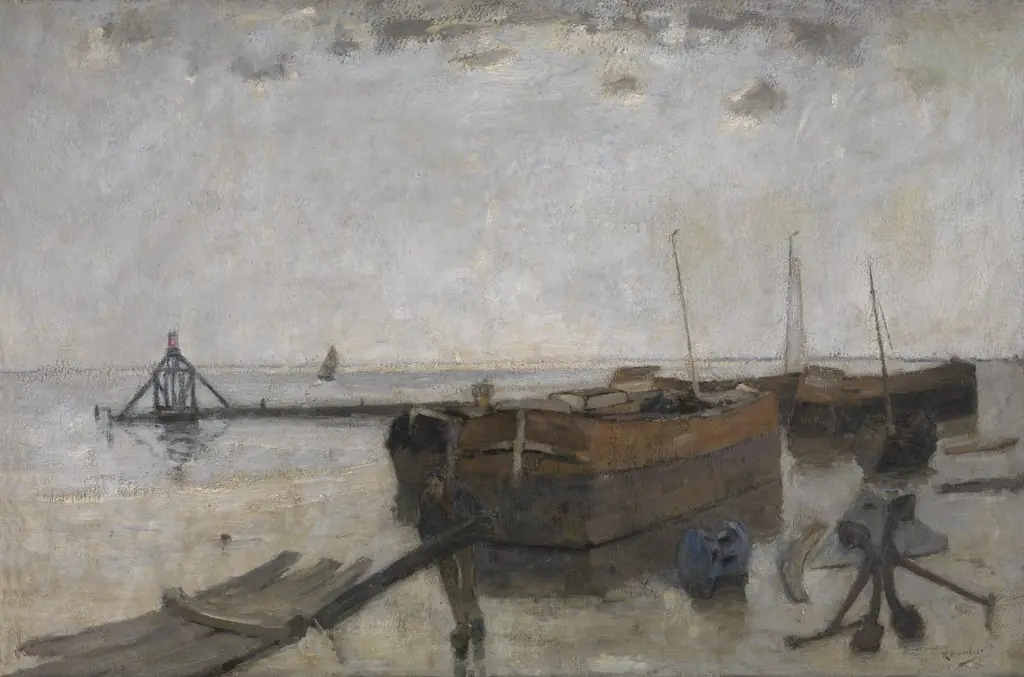
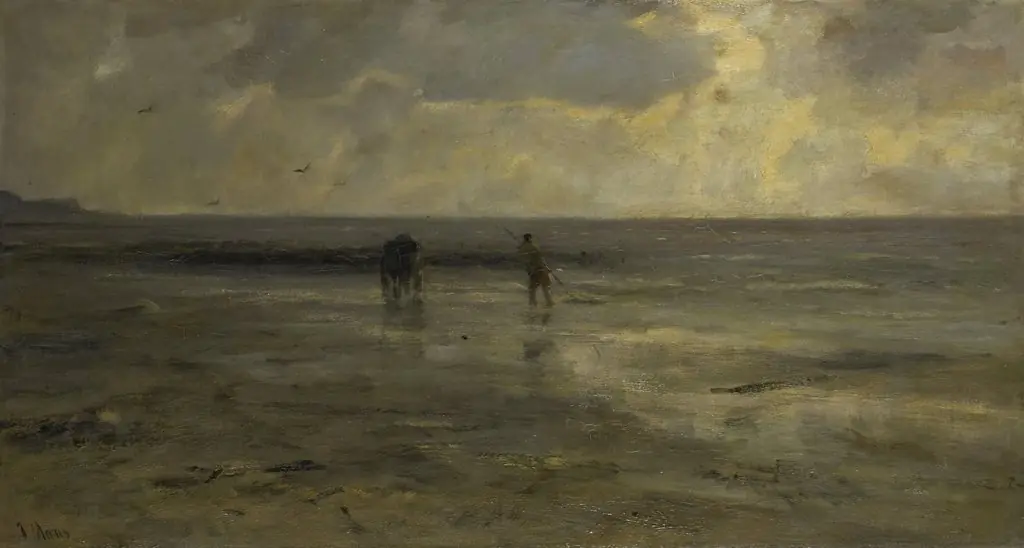
Jan Toorop’s 1904 oil painting entitled De schelpenvisser presents a coastal scene rendered in a landscape format. The work is part of the Rijksmuseum’s collection and exemplifies the artist’s late‑career interest in maritime subjects. Its composition centers on a solitary figure on a beach, set against a sky‑sea horizon that balances light and shadow.
Subject & Meaning
The central figure is a lone fisherman, standing on a sandy shore and holding a long pole, perhaps used for gathering shells or probing the surf. Dressed in dark, coarse garments, he gazes out over the water, suggesting contemplation of the sea’s vastness and the solitary nature of his labor.
Own this work as a print
Artist & collection

Artist
Johannes Theodorus "Jan" Toorop was a Dutch painter who worked in various styles, including Symbolism, Art Nouveau, and Pointillism. His early work was influenced by the Amsterdam Impressionism movement.