Artwork
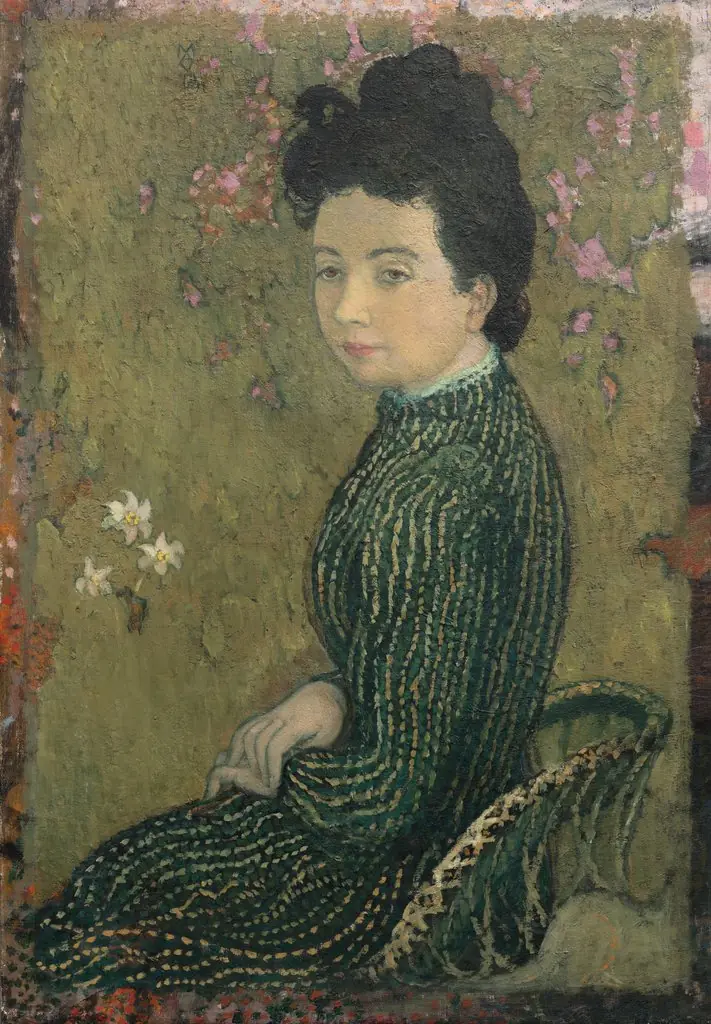
Woman in a Striped Dress
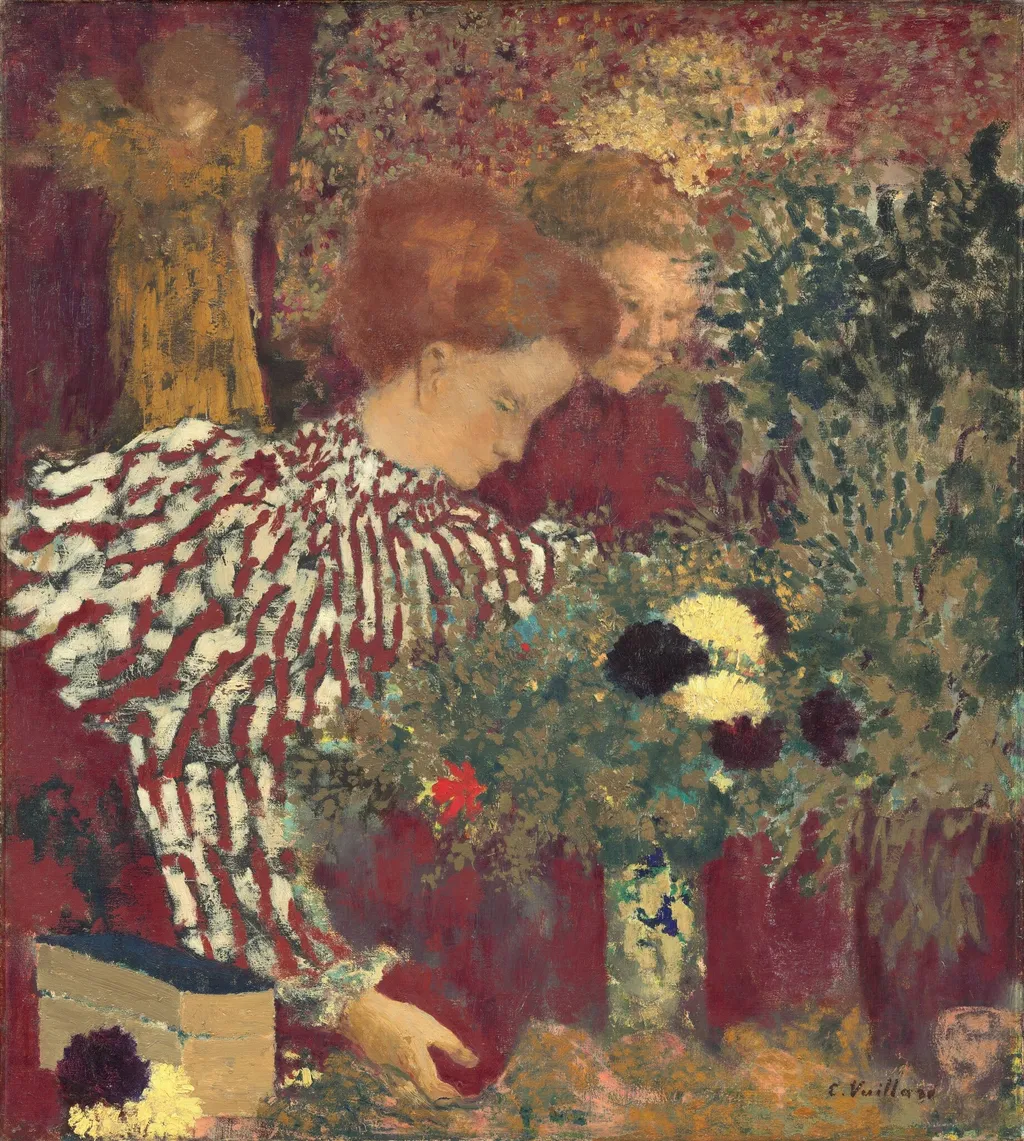
Woman in a Striped Dress is an oil painting by the Impressionist artist Édouard Vuillard. It dates from 1895 and is held in the collection of the National Gallery of Art.
- Inscription
- Inscribed:lower right: E. Vuillard
About this work
Subject & Meaning
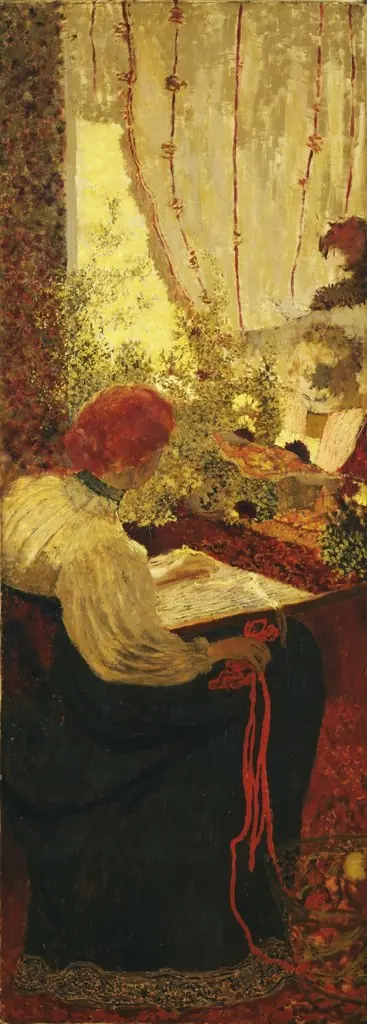
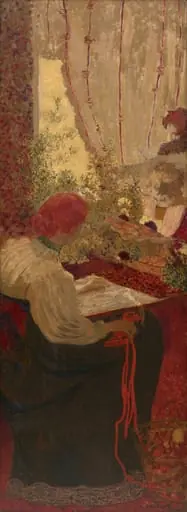
Woman in a Striped Dress portrays two women engaged in arranging flower vases in an interior setting.
Woman in a Striped Dress portrays two women engaged in arranging flower vases in an interior setting. The figure in the foreground, shown in left profile, wears a white and garnet‑striped blouse, while her companion, seen three‑quarters, is dressed in burgundy red with her hair gathered and a high collar. The scene is described as a genre painting that captures a moment of domestic leisure and contemporary fashion, reflecting the intimate, bourgeois milieu of its patrons, Thadée Natanson and his wife Misia, who commissioned the work in 1895.
Technique & Style
Executed in oil on canvas in 1895, the work is a vertical-format genre scene. Vuillard’s handling emphasizes flat, decorative pattern, with the striped blouse rendered in closely aligned vertical brushstrokes that flatten the figure against the similarly patterned interior background. The composition arranges two women in half-length view, one in profile to the left and the other turning three-quarters, their high-necked garments and gathered hair contributing to the period silhouette.
The palette coalesces around a mosaic of warm reds, deep greens, golden yellows, and ivory whites, with the stripes shifting between muted crimson and off-white. Folds of fabric and floral arrangements are described through modulated tonal shifts rather than linear modeling, reinforcing the stylistic alignment with the Nabis’ interest in surface rhythm and intimate domestic space.
History & Provenance
Woman in a Striped Dress was commissioned in 1895 by Thaddée Natanson and his wife Misia in Paris. The painting later passed through the Natanson sale at the Hôtel Drouot in Paris on 12 June 1908 (lot 55), where it was purchased by M. Escher. By 1964 it was in the hands of Georg Herbert Dietze in Frankfurt, who lent it to a 1964 exhibition there; in 1966 Dietze sold it through Wildenstein & Co. in London, New York, and Paris.
In October 1966 Wildenstein sold the work to Paul Mellon of Upperville, Virginia, who in 1983 gave it to the National Gallery of Art in Washington, D.C., where it has remained since.
The chain of custody from the 1966 Wildenstein transaction onward is documented in a letter dated 14 December 1998 held in the NGA curatorial files.
The painting is held by the National Gallery of Art in Washington, D.C., where it has been part of the collection since 1983. It entered the museum as a gift from Mr. Paul Mellon, who had acquired the work in October 1966 from the gallery Wildenstein & Co. Prior to Mellon's ownership, the piece was in the possession of Georg Herbert Dietze in Frankfurt by 1964.
The work was lent by Dietze for an exhibition in Frankfurt in 1964, as noted in curatorial records, though no further specific exhibition dates are provided in the available sources.
Overview
Édouard Vuillard, a French painter active in the late 19th century, created Woman in a Striped Dress in 1895. This oil on canvas work exemplifies his engagement with domestic subjects and his early association with Les Nabis, a post-impressionist group. The painting presents an intimate interior scene, characteristic of Vuillard's focus on everyday life and the subtle complexities of private spaces.
Context
As a member of Les Nabis from 1891 to 1900, Vuillard shared the group's interest in decorative arts and a departure from naturalistic representation. Their aesthetic, which emphasized symbolic meaning and the expressive power of color and line, shaped his early output. Woman in a Striped Dress demonstrates these principles through its bold color arrangements and the deliberate construction of spatial effects within a confined setting.
Legacy
While Woman in a Striped Dress showcases Vuillard's Nabis period, his artistic trajectory evolved. After the group dissolved around 1900, he gradually moved away from the highly stylized and decorative approach seen here. His later works often adopted a more descriptive and realistic style, though he continued to explore themes of interior life and portraiture throughout his career.
Own this work as a print
Artist & collection
Artist
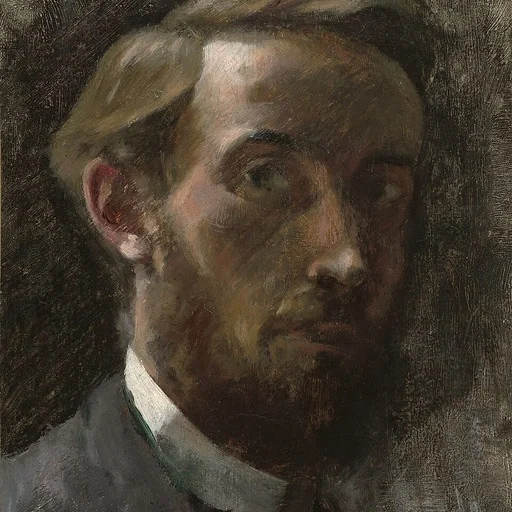
Jean-Édouard Vuillard (French:; 11 November 1868 – 21 June 1940) was a French painter, decorative artist, and printmaker.