Artwork
A Square with Four Cologne Churches
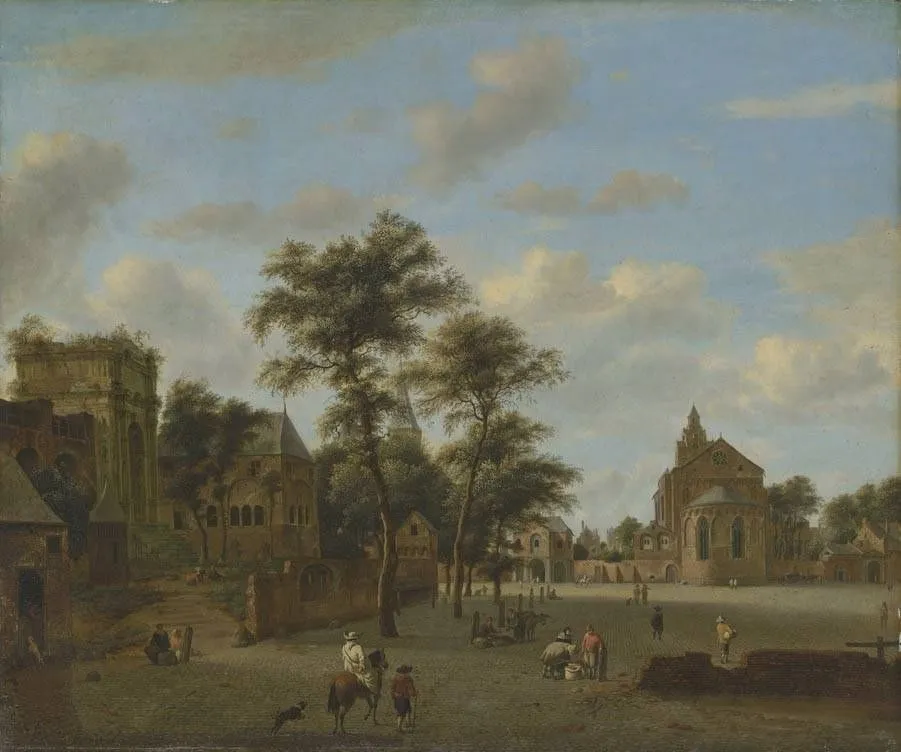
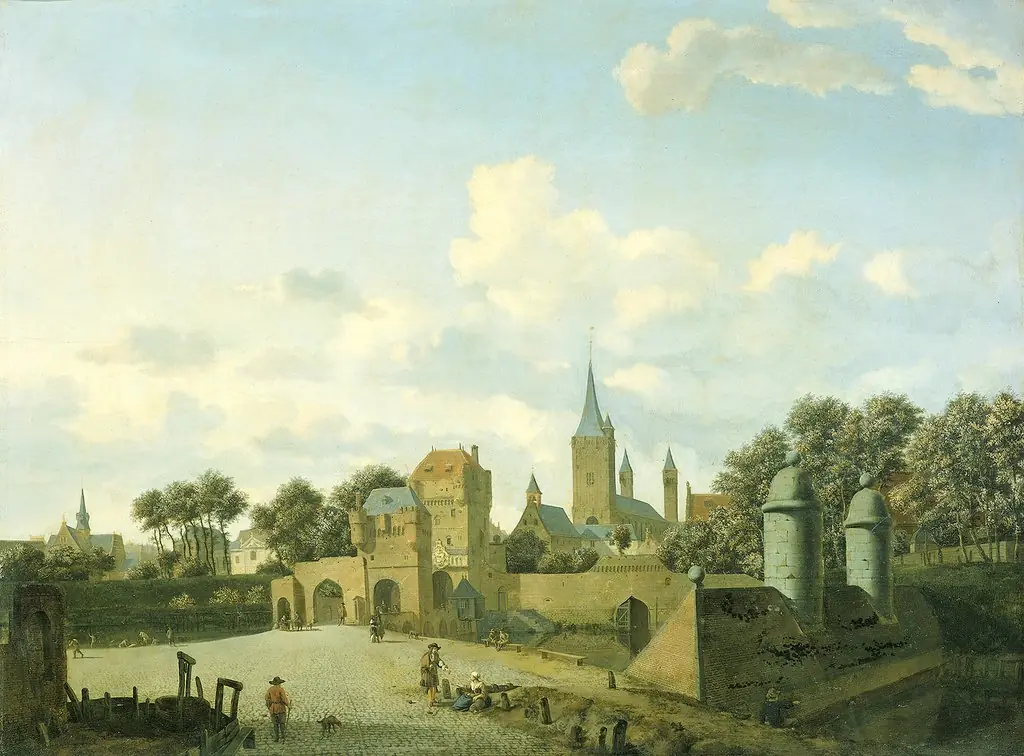
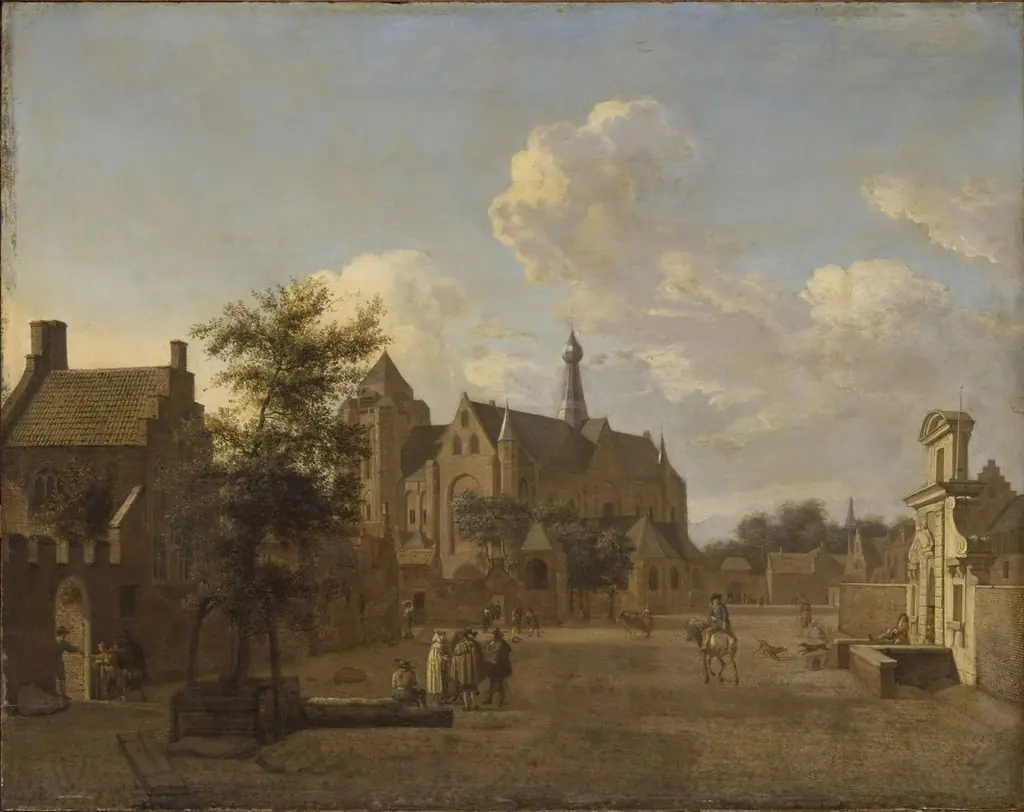
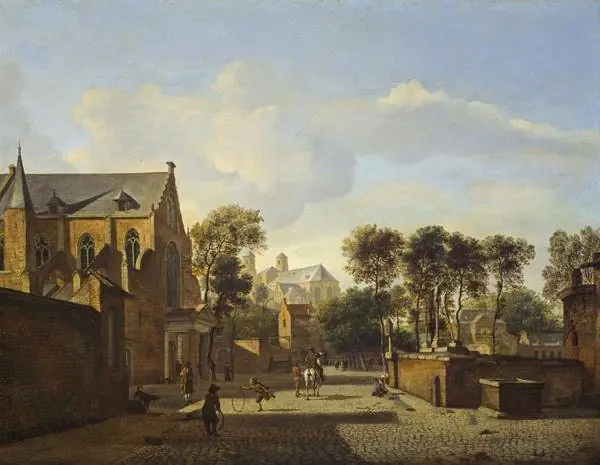
A Square with Four Cologne Churches is an oil painting by the Dutch Golden Age artist Jan van der Heyden. It dates from 1665 and is held in the collection of the Bavarian State Painting Collections. Created in 1665, this oil painting presents a bustling urban square framed by the silhouettes of four Cologne churches.
About this work
Subject & Meaning
The work focuses on the architectural presence of these religious structures within a public open space, characteristic of the artist's interest in city views.
A Square with Four Cologne Churches is a 1665 cityscape by Jan van der Heyden that depicts an urban square featuring four church buildings. The work focuses on the architectural presence of these religious structures within a public open space, characteristic of the artist's interest in city views. As a cityscape genre painting, it represents a specific moment in Cologne's urban landscape, emphasizing the relationship between the ecclesiastical buildings and the surrounding square.
Technique & Style
Executed in oil paint on wooden panel, the work depicts a square with four churches in Cologne rendered with precise linear perspective and meticulous detail. The composition balances architectural clarity with subtle atmospheric effects, characteristic of van der Heyden's cityscapes. The painting measures 49 cm in height and 58.6 cm in width, and is housed in the Alte Pinakothek in Munich.
History & Provenance
Jan van der Heyden painted A Square with Four Cologne Churches in 1665, using oil paint on a panel. The artwork measures 49 cm in height and 58.6 cm in width. No records of a specific commission or early ownership have been preserved in the available sources.
The painting eventually entered the collection of the Bavarian State Painting Collections, where it is currently housed at the Alte Pinakothek.
Legacy
The painting's composition of four distinct church façades within a unified square influenced subsequent urban vedute, particularly the way later artists rendered ecclesiastical architecture within spatial order. Its meticulous rendering of architectural detail informed the approach of 19th-century vedute painters who sought to document civic monuments with both accuracy and aesthetic cohesion. The work's presence in the Bavarian State Painting Collections has ensured continued scholarly attention to van der Heyden's impact on cityscape painting, though its reputation has fluctuated with changing aesthetic priorities.
Overview
Created in 1665, this oil painting presents a bustling urban square framed by the silhouettes of four Cologne churches. The composition balances a paved cobblestone ground, a central tree, and the movement of pedestrians, horses, and carriages, all rendered with meticulous attention to architectural detail and atmospheric sky.
Context
Jan van der Heyden, renowned for his meticulous town views, was also an inventor who, with his brother, advanced firefighting equipment. This dual expertise in precise observation and technical innovation informs the painting’s detailed perspective, situating it within a broader tradition of Dutch artists who combined scientific curiosity with visual art.
Artist & collection

Artist
Jan van der Heyden (5 March 1637, Gorinchem – 28 March 1712, Amsterdam) was a Dutch Baroque-era painter, glass painter, draughtsman and printmaker.