Artwork
An Architectural Fantasy
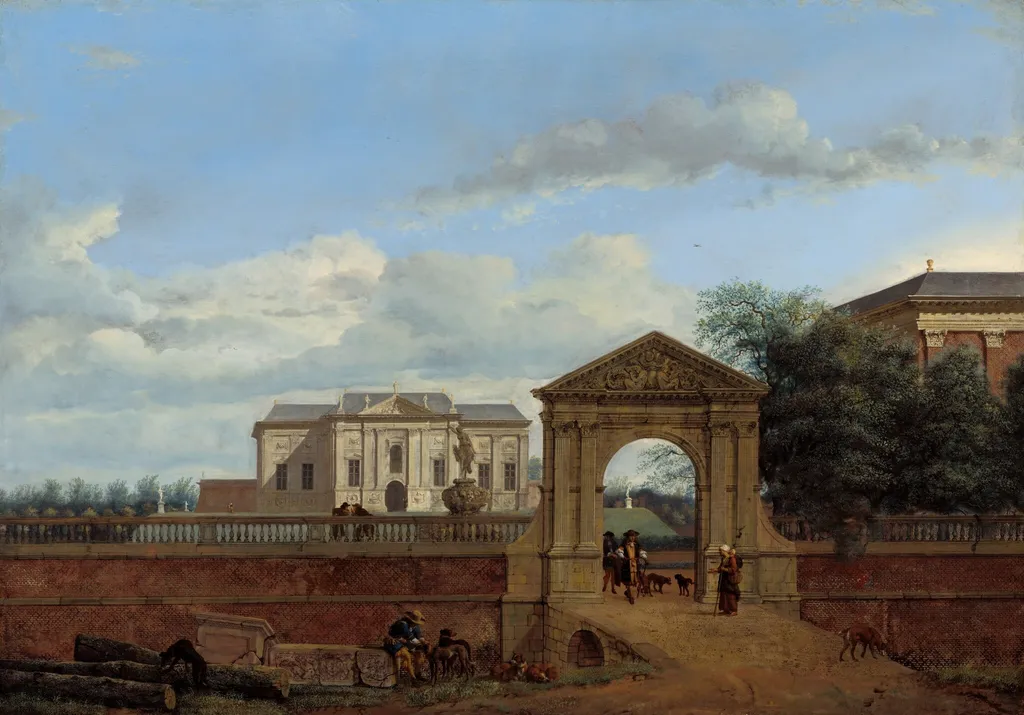
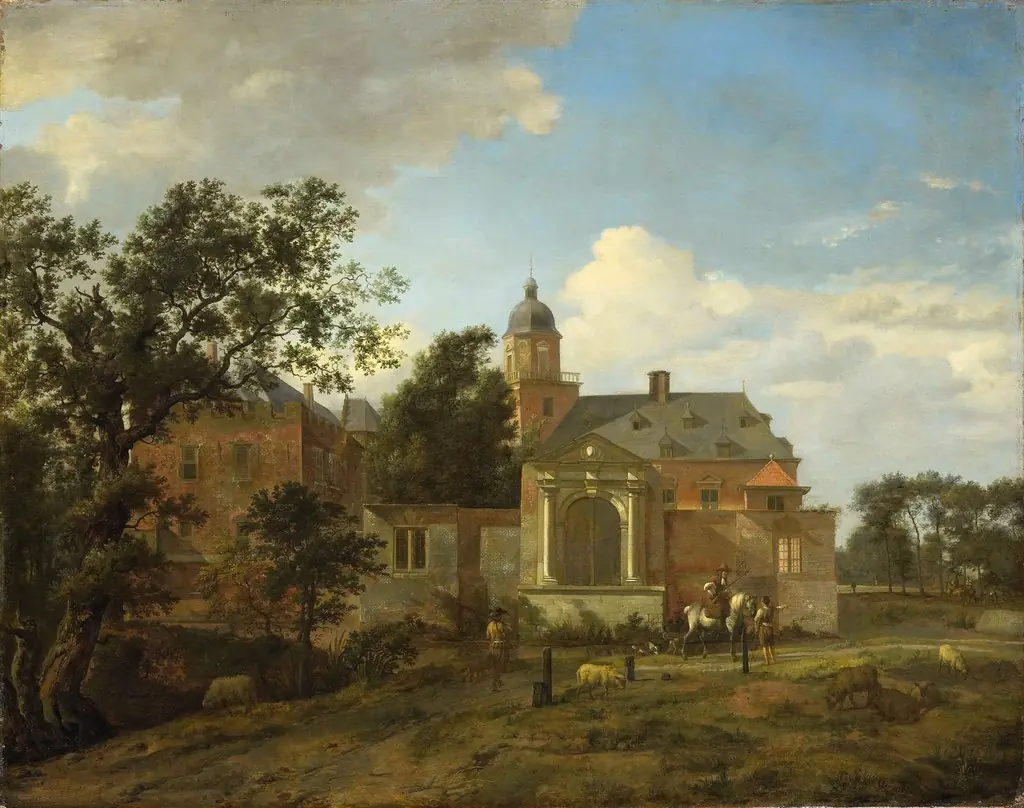
An Architectural Fantasy is an oil painting by the Baroque artist Jan van der Heyden. It dates from 1670 and is held in the collection of the National Gallery of Art.
About this work
Technique & Style
Classified as a landscape, the piece is characterized by its architectural fantasy genre, depicting imaginary structures within a natural setting.
Created in 1670, An Architectural Fantasy is an oil painting executed on an oak panel support. The work measures 49.7 cm in height and 70.7 cm in width. Classified as a landscape, the piece is characterized by its architectural fantasy genre, depicting imaginary structures within a natural setting.
The physical evidence on the reverse of the panel includes two wax seals, one of which bears a coat of arms featuring a stork holding an eel, a heraldic device identified as belonging to the Woltgraft family of Kampen. These seals serve as historical markers attached to the back of the wooden support.
History & Provenance
Dated to 1670, this oil painting on oak panel was originally owned by the Woltgraft family of Kampen, a connection confirmed by a wax seal bearing their coat of arms on the reverse. By 1816, the work belonged to the Catellan family in Freiburg im Breisgau before being sold in Paris that January. It was subsequently acquired for Charles-Ferdinand de Bourbon, duc de Berry, and passed by inheritance to his wife, the duchesse de Berry.
Following exhibitions and sales in London and Paris during the 1830s involving the Berry estate, the panel entered the collection of Charles Heusch in London by approximately 1838.
The artwork remained within the Heusch family until 1855, when Baron Lionel Nathan de Rothschild purchased the entire collection. It descended through the Rothschild line to Alfred, then Lionel, and finally Edmund Leopold de Rothschild. In 1968, Edmund sold the piece to Thos.
Agnew and Sons, who immediately resold it to the National Gallery of Art in Washington, D.C., on June 12 of that year.
Jan van der Heyden's An Architectural Fantasy is held in the collection of the National Gallery of Art in Washington, D.C., where it was acquired on June 12, 1968. The work was purchased from the London dealer Thos. Agnew and Sons, Ltd., following its long tenure within the Rothschild family collections in London and Exbury, Hampshire.
Prior to the Rothschild acquisition in 1855, the painting passed through the estates of the Heusch family and earlier owners including the Woltgraft and Catellan families. The National Gallery of Art's records list the work as part of its permanent holdings, tracing its provenance back to a 1670 creation date. While the painting appeared in the De Berry sale in Paris in 1837, no specific public exhibitions are detailed in the provided records beyond its inclusion in the 1834 De Berry exhibition in London.
Legacy
An Architectural Fantasy (1670) by Jan van der Heyden exemplifies the Dutch Golden Age fascination with imagined urban settings. The panel, recorded in the National Gallery of Art's collection since 1968, entered the museum through a sale by Thos. Agnew and Sons and had previously belonged to the Heusch family and the Rothschilds, with documented exhibitions in London in 1834.
Its provenance illustrates a trajectory from a 17th‑century private collection to prominent European aristocratic ownership, underscoring its recognized artistic merit. As a representative work of architectural fantasy, it continues to inform studies of van der Heyden’s technique and the genre’s development, reinforcing its reputation within art‑historical scholarship.
Overview
Jan van der Heyden's An Architectural Fantasy, painted around 1670, is an oil on oak panel depicting an imagined urban vista. This work exemplifies the artist's specialization in architectural subjects, for which he became a leading figure during the Dutch Golden Age. The composition centers on a grand stone archway, meticulously rendered, through which small figures pass, set against a detailed backdrop of buildings and a clear sky. It is currently housed at the National Gallery of Art in Washington.
Subject & Meaning
The painting presents a constructed, ideal cityscape rather than a specific real location, hence its title. A monumental stone archway dominates the foreground, featuring a triangular pediment adorned with carvings. Through this impressive structure, various figures, including a man seated beside a horse, navigate the scene.
Buildings flank the arch, extending into the background beneath a blue sky dotted with clouds, creating a sense of depth and an idealized urban environment.
Context
Jan van der Heyden emerged as a prominent painter of townscapes and architectural scenes during the Dutch Golden Age. Although initially trained in still life painting, he transitioned to specializing in urban views, quickly establishing himself as a master in this genre. Beyond his artistic endeavors, van der Heyden also applied his technical ingenuity to practical matters, notably collaborating with his brother on advancements in firefighting technology, reflecting a broader engagement with invention and engineering.
Own this work as a print
Artist & collection

Artist
Jan van der Heyden (5 March 1637, Gorinchem – 28 March 1712, Amsterdam) was a Dutch Baroque-era painter, glass painter, draughtsman and printmaker.

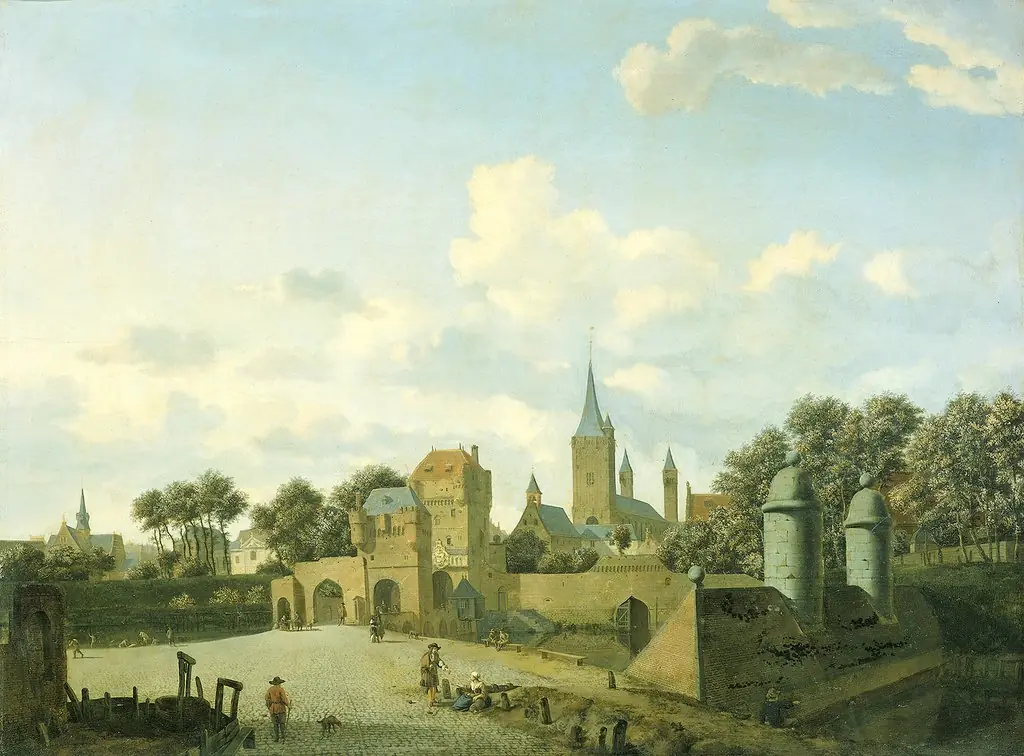
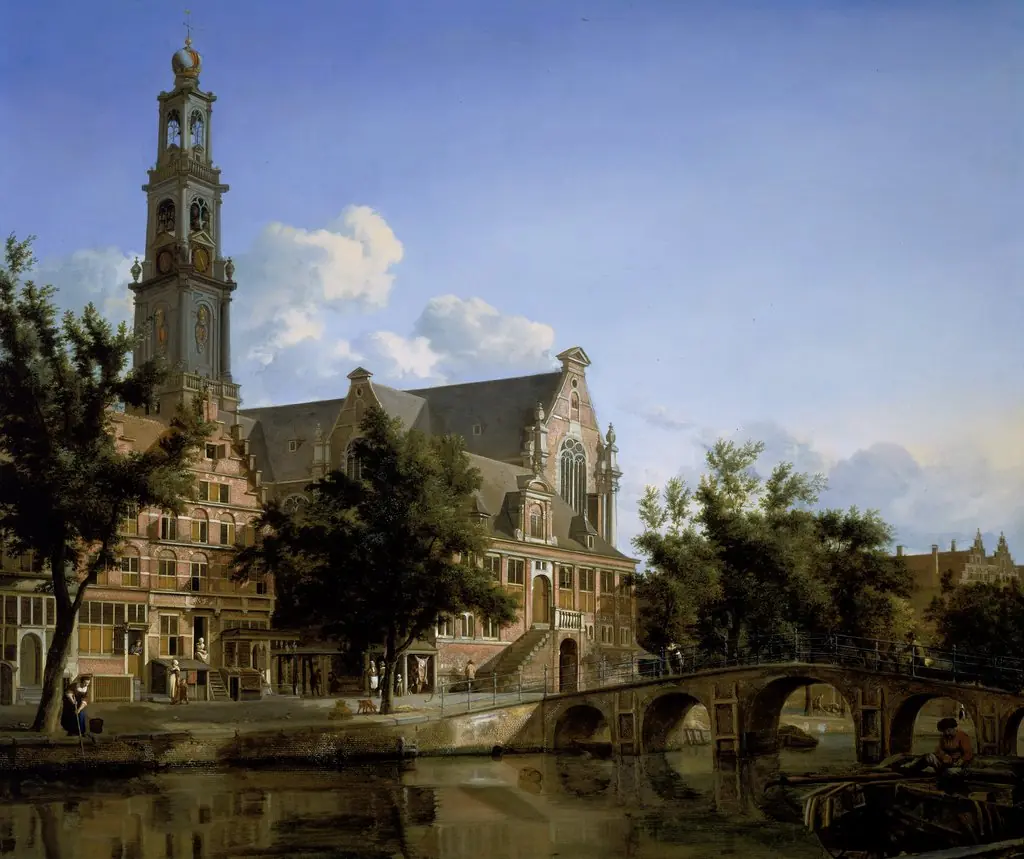
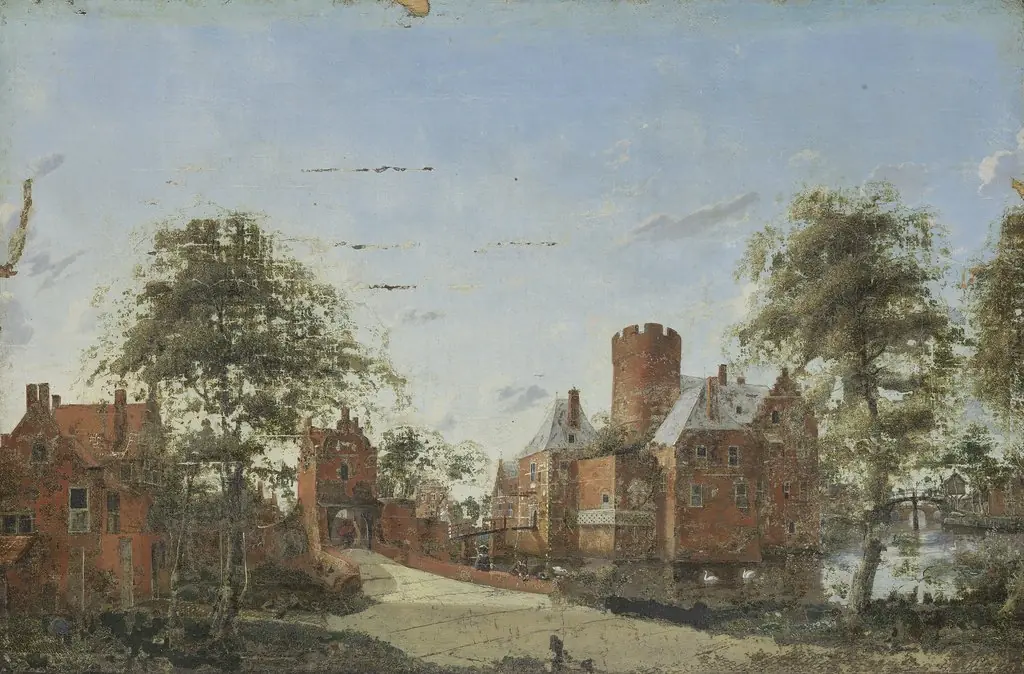
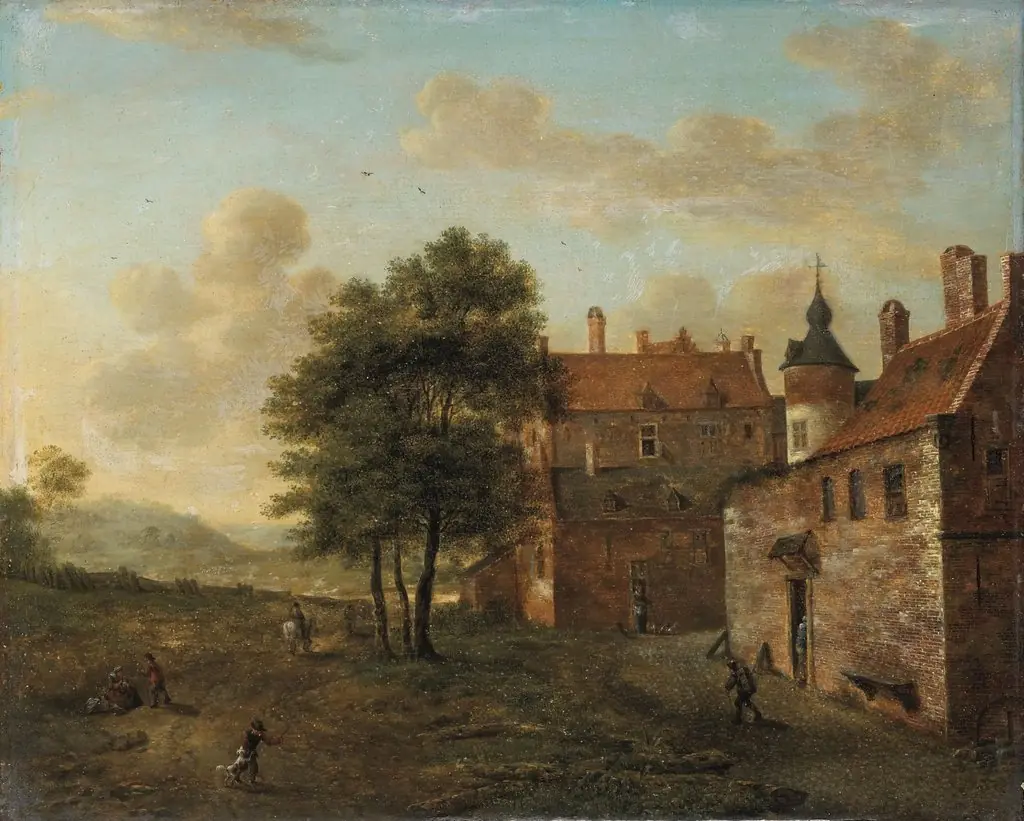
- St Antony Gates in Amsterdam
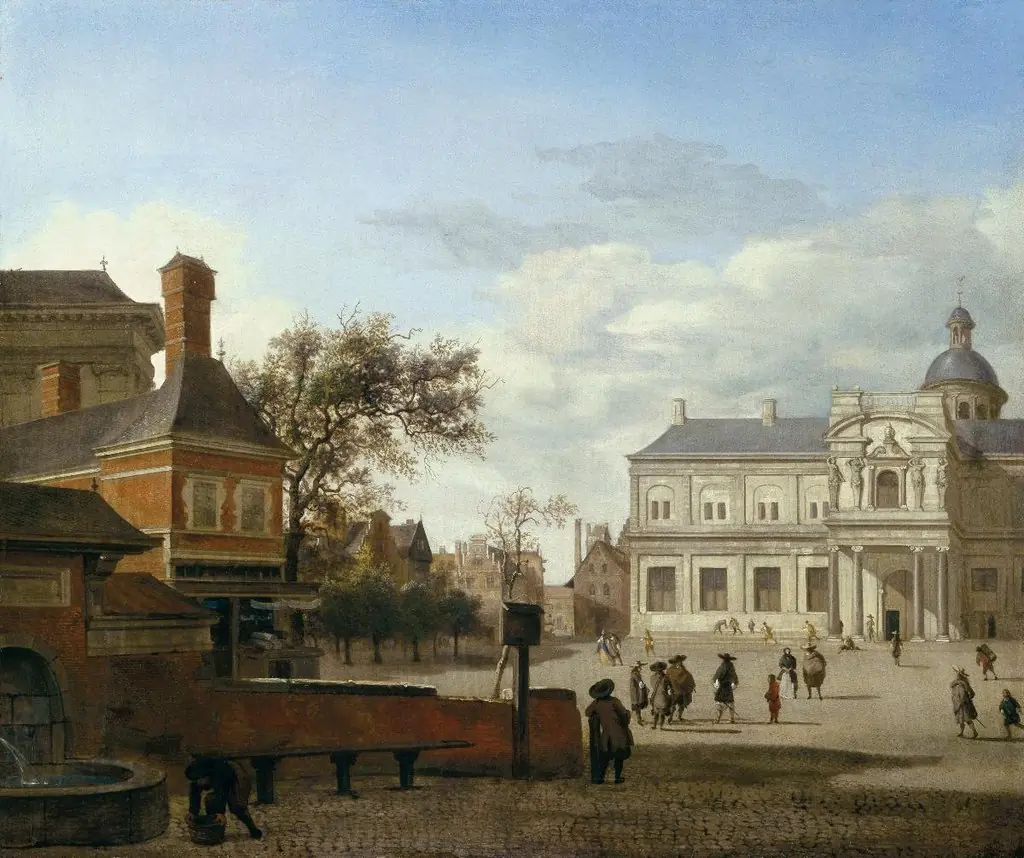 Barockes Palais an einem Platz
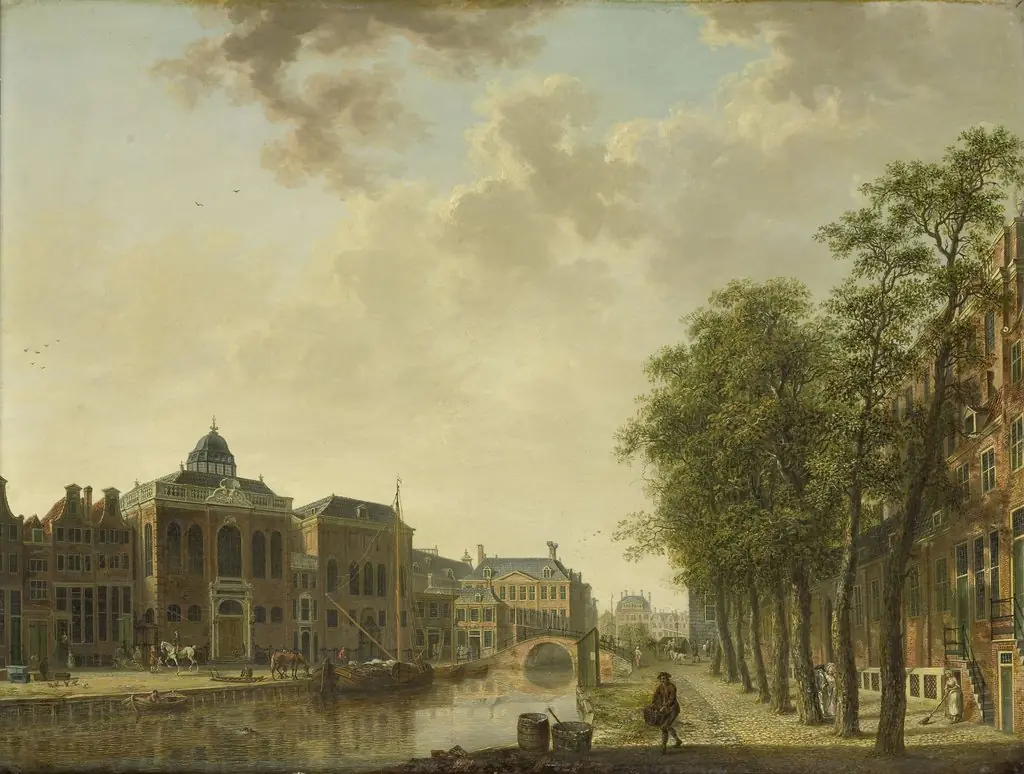 View of the Houtmarkt in Amsterdam
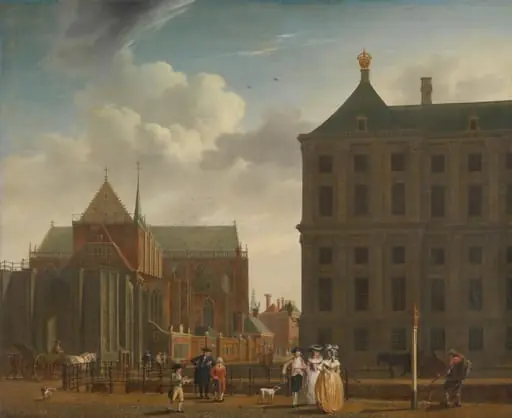 De Nieuwe Kerk en het stadhuis op de Dam in Amsterdam
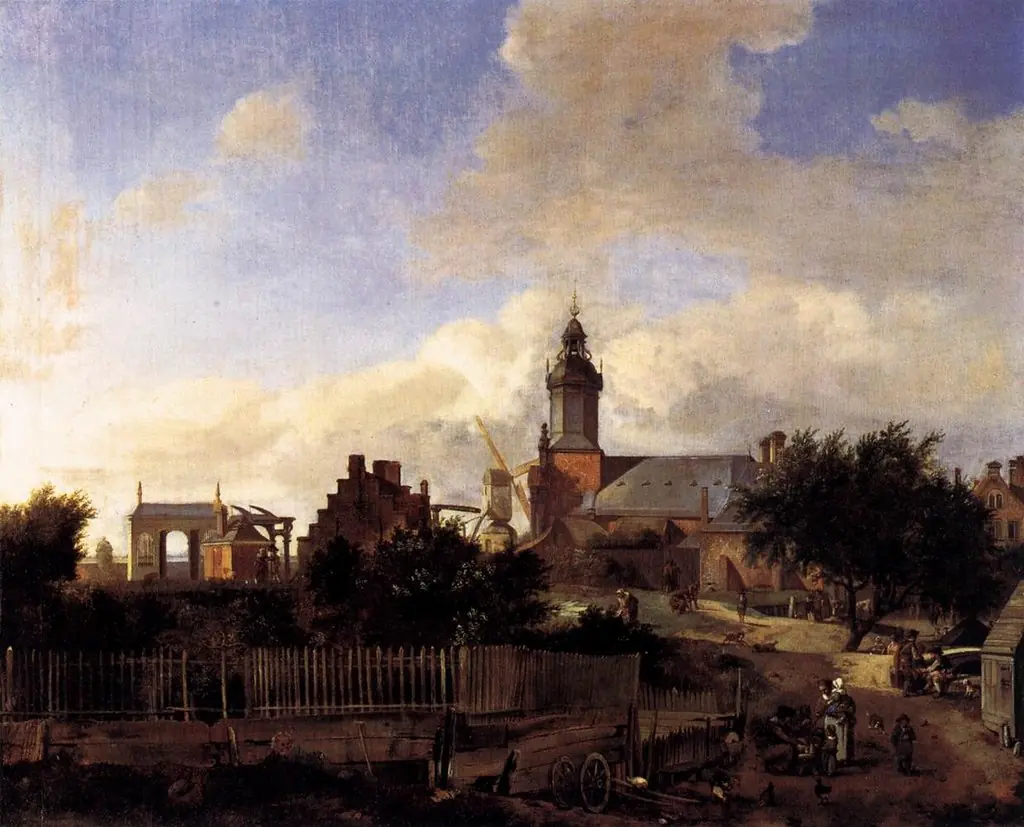 Street before the Haarlem Gate in Amsterdam
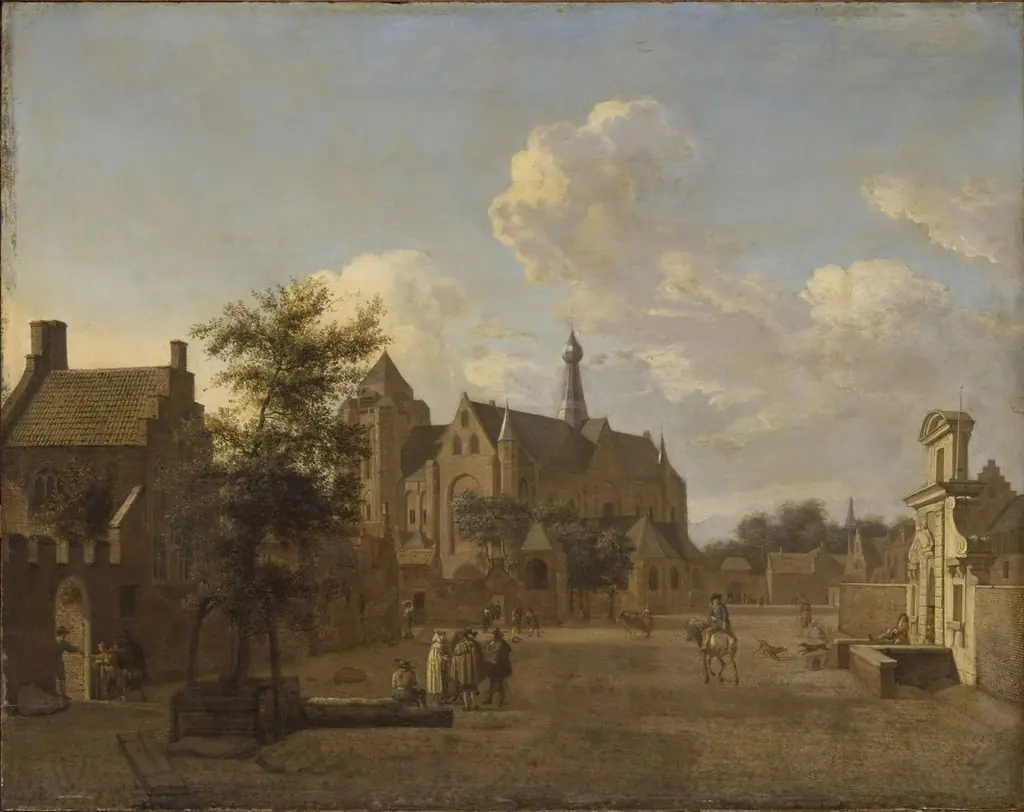 View of Veere, Zeeland
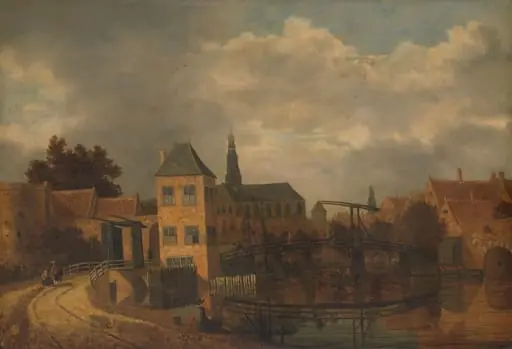 Untitled
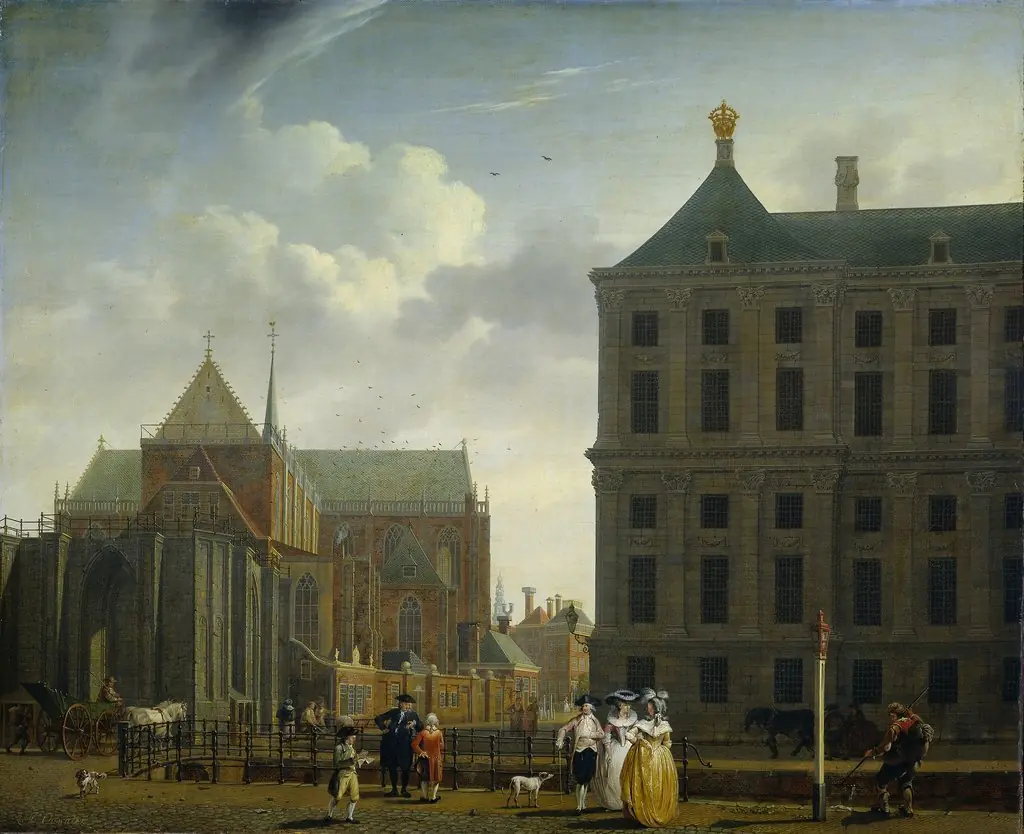 The Nieuwe Kerk and the Town Hall on the Dam in Amsterdam
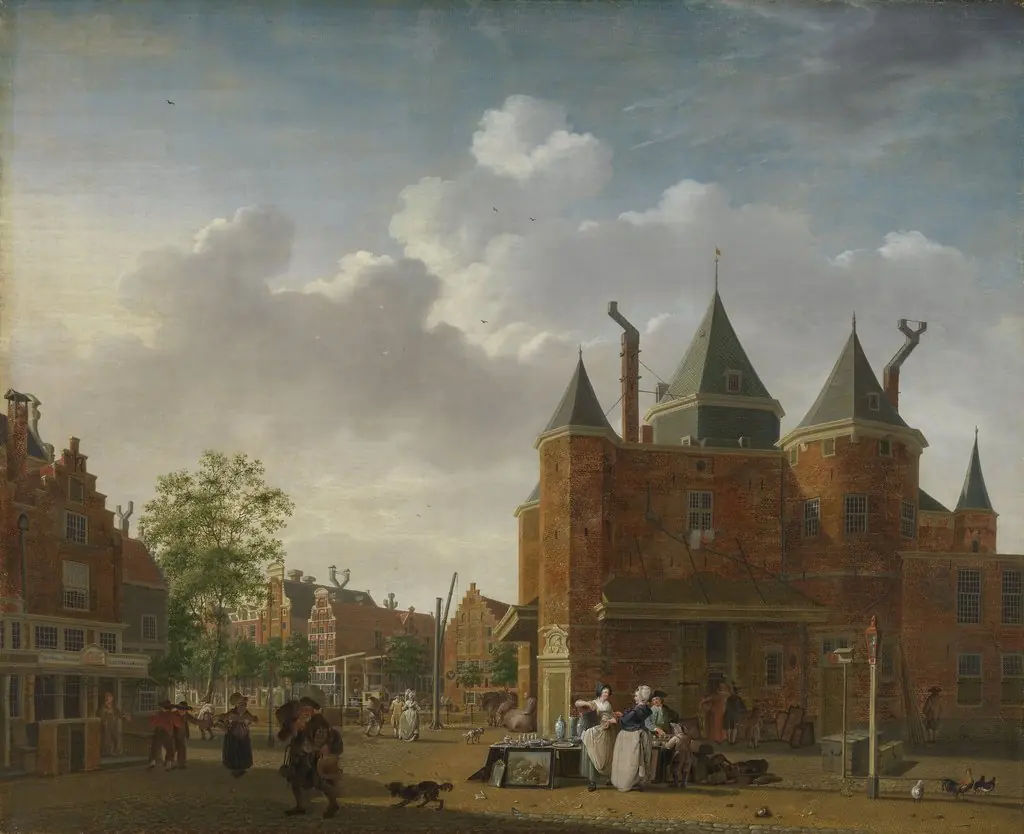 The Sint-Antoniuswaag in Amsterdam
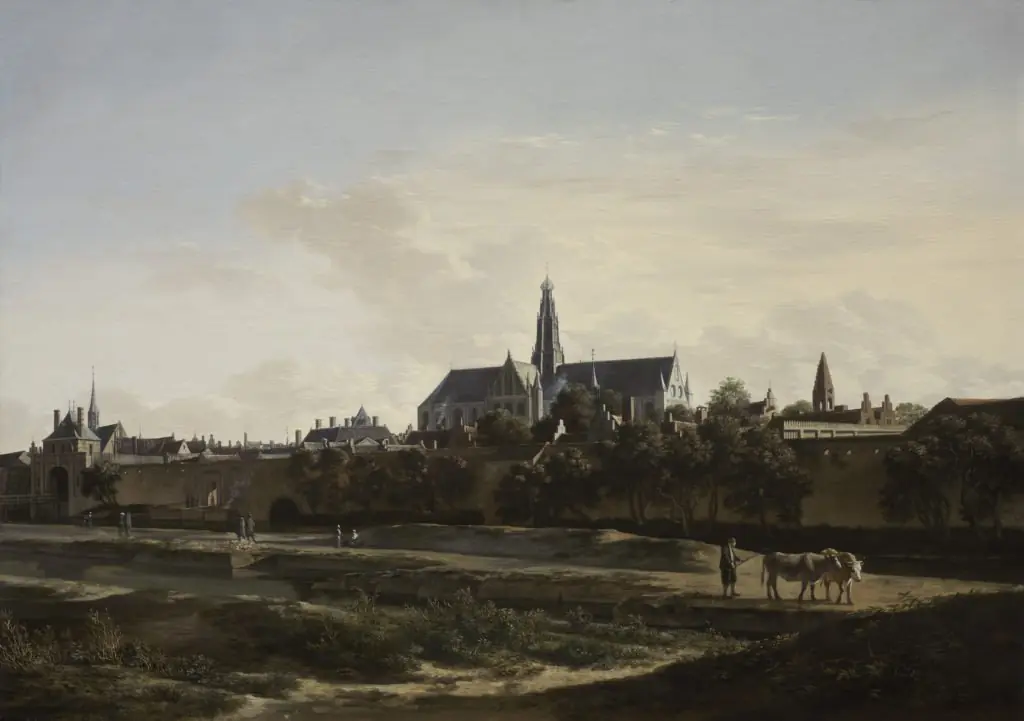 A View of Haarlem