Artwork
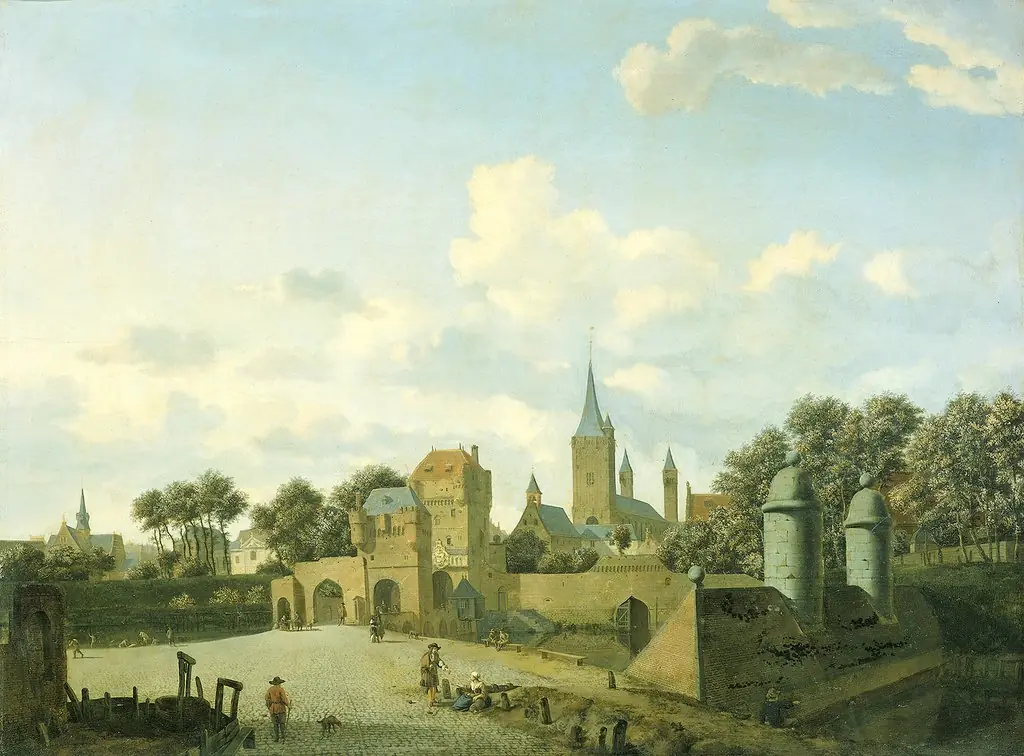
View of a Fortified City
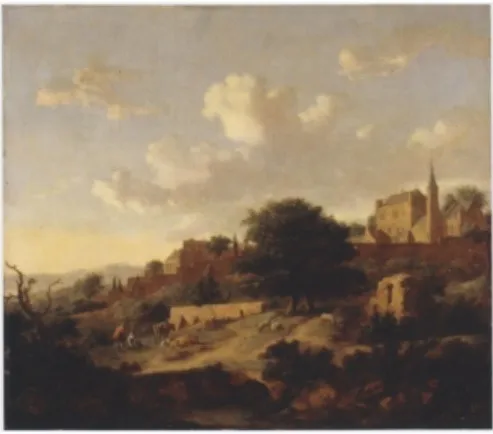
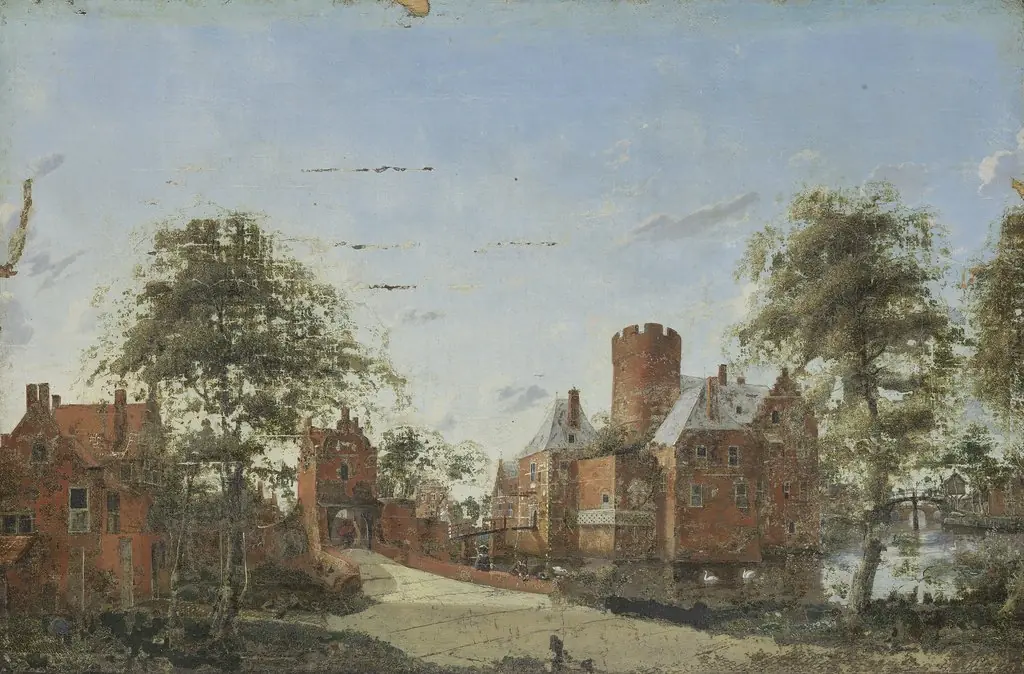
View of a Fortified City is an oil painting by the Dutch Golden Age artist Jan van der Heyden. It dates from 1670 and is held in the collection of the Rijksmuseum.
About this work
Subject & Meaning
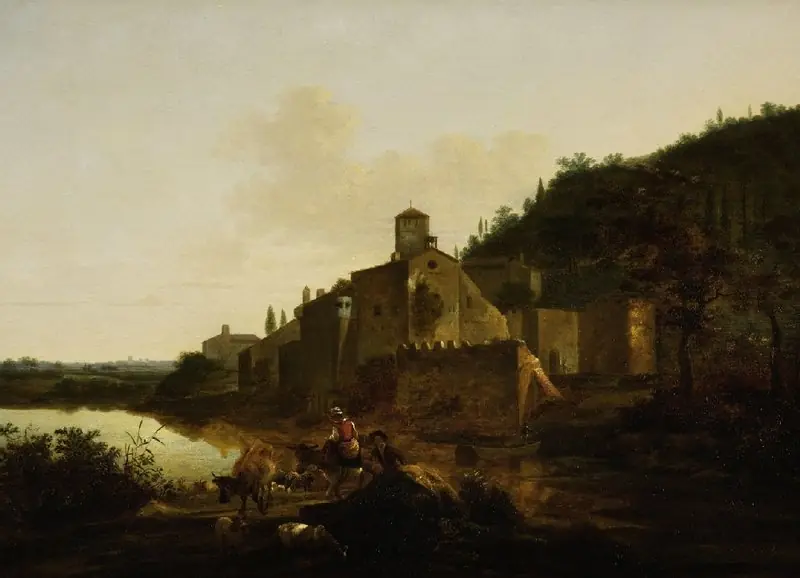
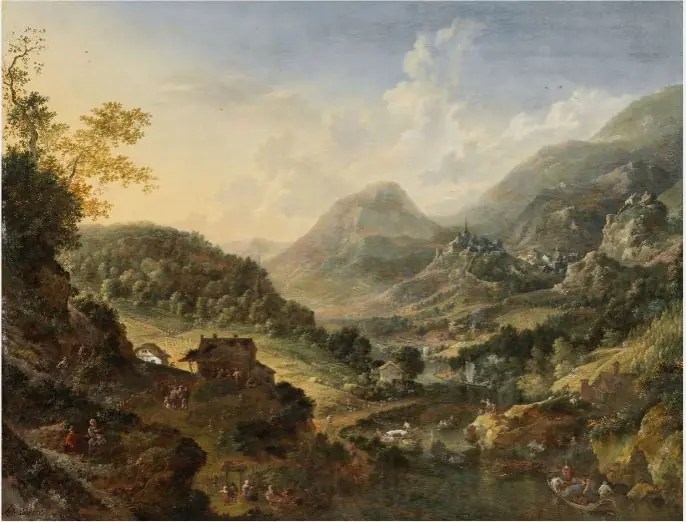
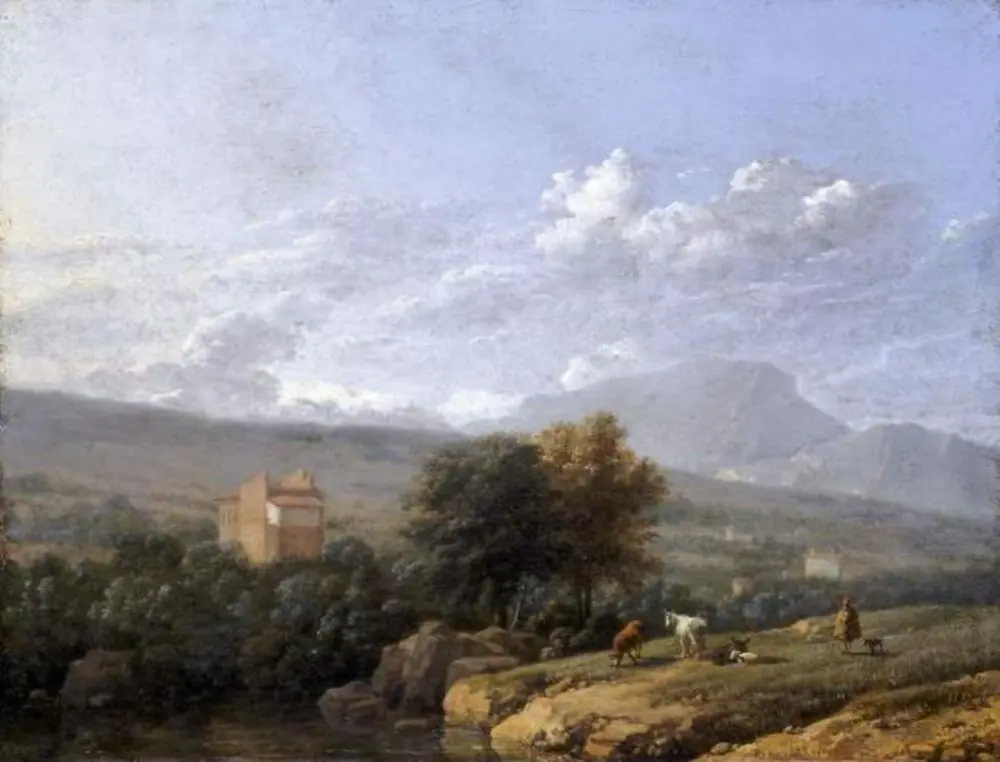
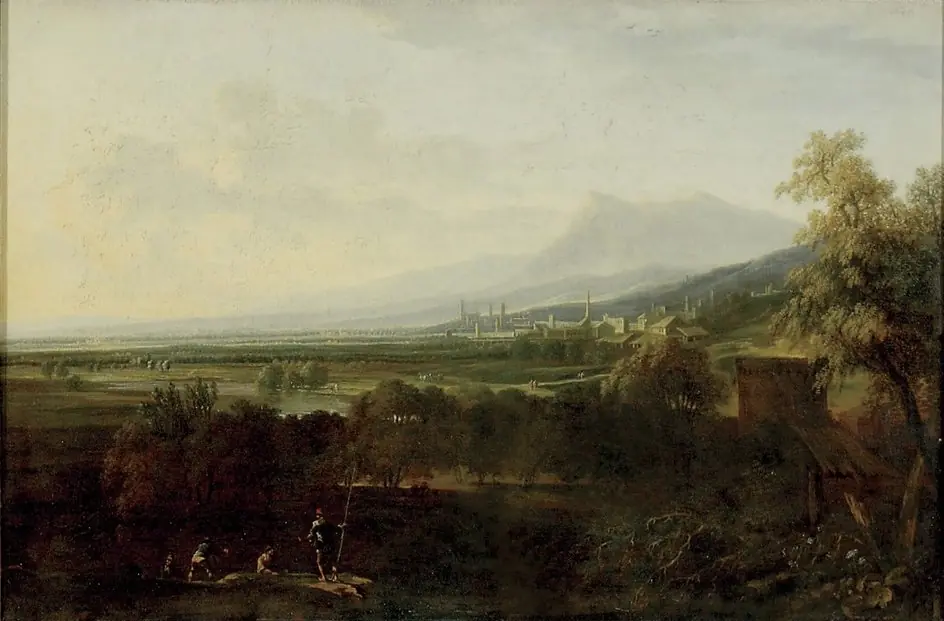
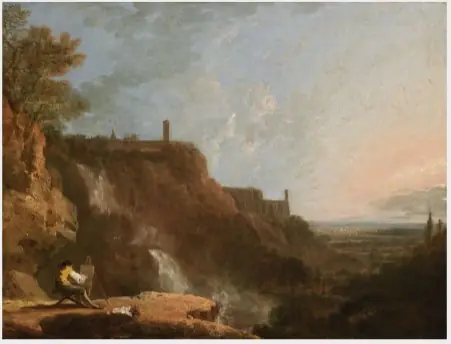
The painting shows a fortified city with a man standing near a house and a church, elements that underscore the urban and religious context of the scene.
The painting shows a fortified city with a man standing near a house and a church, elements that underscore the urban and religious context of the scene. These details contribute to the work's symbolic representation of civic order and spiritual presence within the fortified environment.
Executed in 1670 on copper using oil paint, the piece reflects the landscape genre while incorporating architectural motifs characteristic of van der Heyden's precise urban visions.
History & Provenance
Jan van der Heyden created the oil painting View of a Fortified City in 1670 on a copper support. The work's ownership history traces back to the art dealer Franz Kleinberger before entering the collection of Adriaan Leonard van Heteren. Van Heteren later bequeathed the piece as part of the Kabinet van Heteren Gevers donation to the Rijksmuseum.
The painting is currently held by the Museum Kunstpalast in Düsseldorf, where it is displayed in the Trippenhuis.
The creation date is firmly established as 1670, aligning with the artist's active period of landscape production on copper. The provenance chain documents the transition from private trade to public institutional ownership through the specific bequest of the van Heteren Gevers collection.
View of a Fortified City by Jan van der Heyden, painted in 1670, is held at the Museum Kunstpalast. The painting has passed through several collections, having been owned at various points by Franz Kleinberger, Adriaan Leonard van Heteren, and Adriaan Leonard van Heteren Gevers, before entering the Rijksmuseum. It is associated with the Kabinet van Heteren Gevers and has also been linked to the Trippenhuis as a location.
Overview
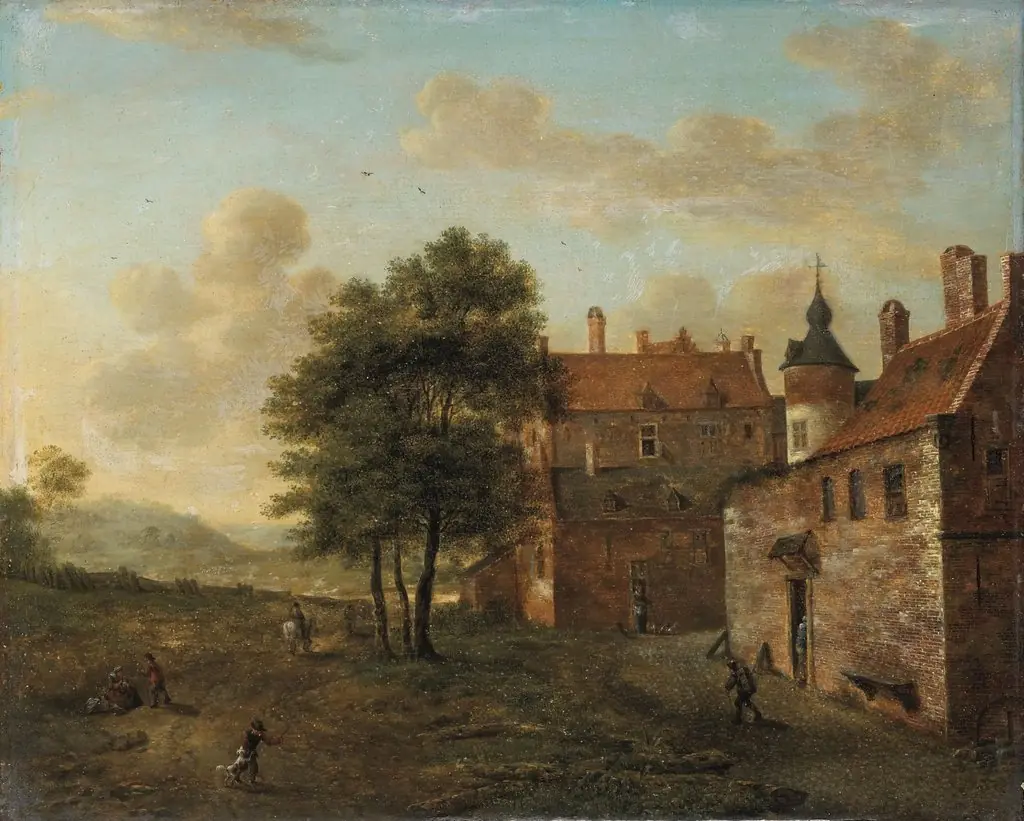
Jan van der Heyden’s 1670 work, executed on copper, presents a tranquil fortified settlement at dusk. A winding lane threads between modest dwellings and a stone wall, drawing the eye toward a solitary church steeple that rises above low hills. The composition is suffused with muted golds and browns, lending the scene a calm, atmospheric quality.
Technique & Style
Van der Heyden employs smooth, blended brushwork on the copper surface to model light and shadow, creating a subtle chiaroscuro that gives depth to the road, buildings, and foliage. The muted palette and delicate tonal transitions enhance the evening ambience, characteristic of his precise, architectural approach to townscapes.
Context
In the late 17th century, fortified towns were both practical defenses and symbols of civic pride. Van der Heyden’s meticulous rendering of architecture aligns with contemporary interests in urban planning and engineering, fields in which he also made contributions as an inventor, linking his artistic practice to broader technological developments of the era.
Artist & collection

Artist
Jan van der Heyden (5 March 1637, Gorinchem – 28 March 1712, Amsterdam) was a Dutch Baroque-era painter, glass painter, draughtsman and printmaker.