Artwork
Portret van Isaac de Bruijn (1872-1953)
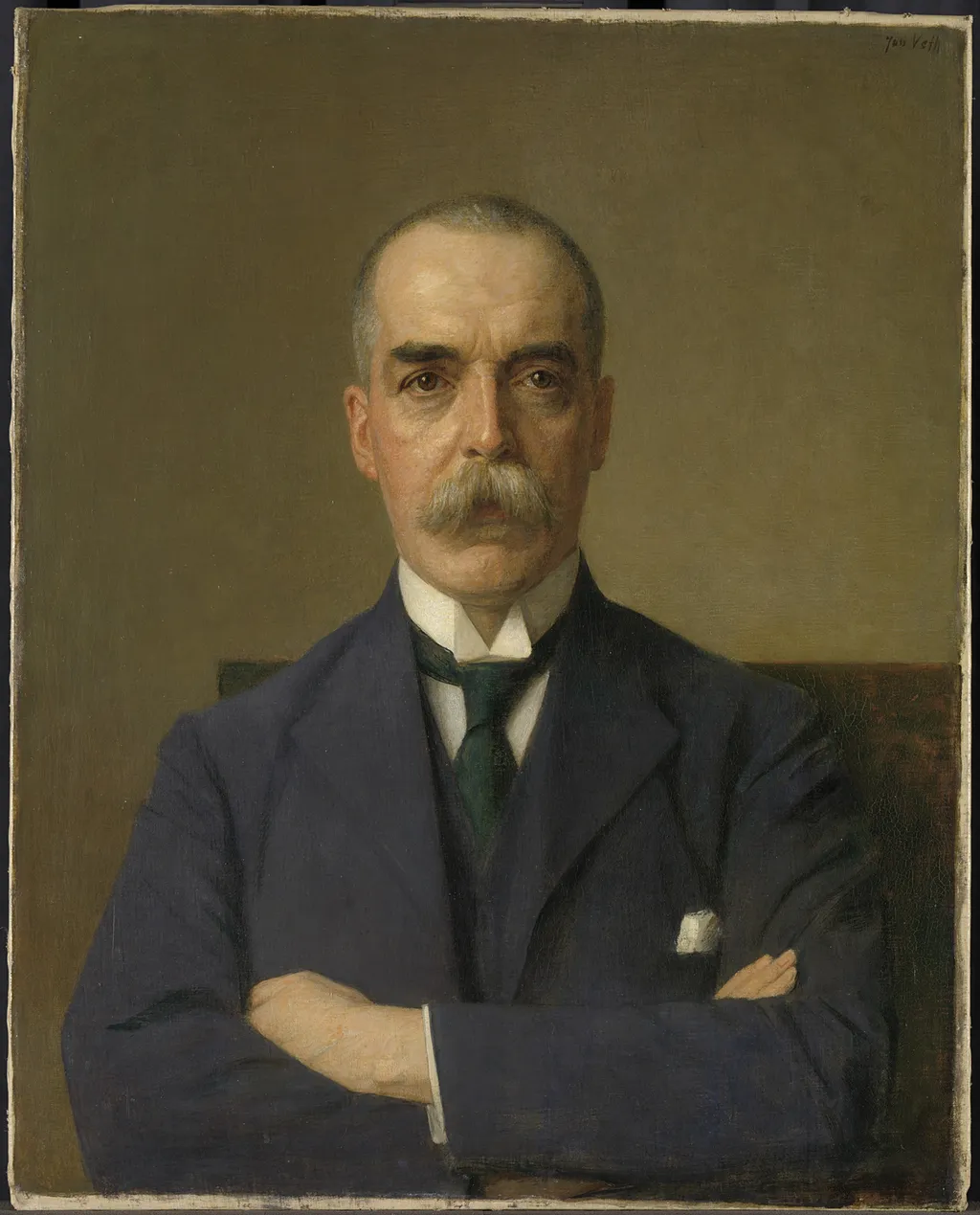
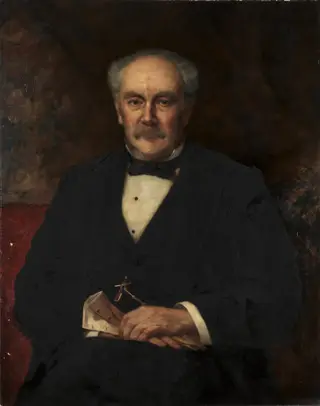
Portret van Isaac de Bruijn (1872-1953) is an oil painting by the Dutch Golden Age artist Jan Veth. It dates from 1922 and is held in the collection of the Rijksmuseum.
About this work
Subject & Meaning
The painting is a portrait of Isaac de Bruyn (1872–1953), the figure identified as its main subject and depicted person.
The painting is a portrait of Isaac de Bruyn (1872–1953), the figure identified as its main subject and depicted person. Produced in 1922 by Jan Veth, an artist associated with portrait work in the Netherlands, the work belongs to the genre of portraiture, framing de Bruyn as the sole focus of the composition. The title itself, "Portret van Isaac de Bruijn," signals that the canvas functions as a commemorative likeness rather than a narrative or allegorical scene, with no additional symbolic attributes documented in the sources.
Held in the Rijksmuseum collection, the portrait contributes to the broader visual record of de Bruyn, a Dutch figure whose life spanned the late nineteenth and early twentieth centuries. As a straightforward character study by Veth, the painting represents the sitter through direct painted likeness rather than through iconographic or emblematic devices.
Technique & Style
Jan Veth executed this portrait in oil paint on canvas, measuring 82 by 66 cm. The work is a straightforward portrait in format and scale, typical of early twentieth-century Dutch portraiture.
Stylistically, the painting belongs to Veth's mature period, when he was established as one of the Netherlands' leading portraitists. The directness of the oil medium on canvas support allowed for the nuanced characterization for which Veth was known. No further details of handling, brushwork, or specific stylistic approach are documented in the available sources.
History & Provenance
Jan Veth created the oil-on-canvas portrait of Isaac de Bruijn in 1922. The work depicts the Dutch figure Isaac de Bruijn (1872–1953) and measures 82 cm in height by 66 cm in width. It was produced in the Netherlands and is currently held in the collection of the Rijksmuseum.
The painting represents a specific commission or creation from the early 1920s, capturing the sitter during his lifetime.
Overview
Jan Veth’s oil portrait of Isaac de Bruijn, executed in 1922, belongs to the Dutch tradition of formal portraiture. The canvas presents a seated gentleman in a dark suit, his arms crossed, set against a warm, uniform brown backdrop. The work is part of the Rijksmuseum’s collection, illustrating Veth’s role as a leading portraitist of his era.
Context
Veth’s career spanned painting, poetry, and art criticism, positioning him at the intersection of visual and literary culture. This portrait aligns with his broader oeuvre, which often portrayed intellectuals and professionals, echoing the academic portrait conventions that persisted in the Netherlands after the Golden Age.
Own this work as a print
Artist & collection
Artist
Jan Pieter Veth (18 May 1864, Dordrecht – 1 July 1925, Amsterdam) was a Dutch painter, poet, art critic and university lecturer.

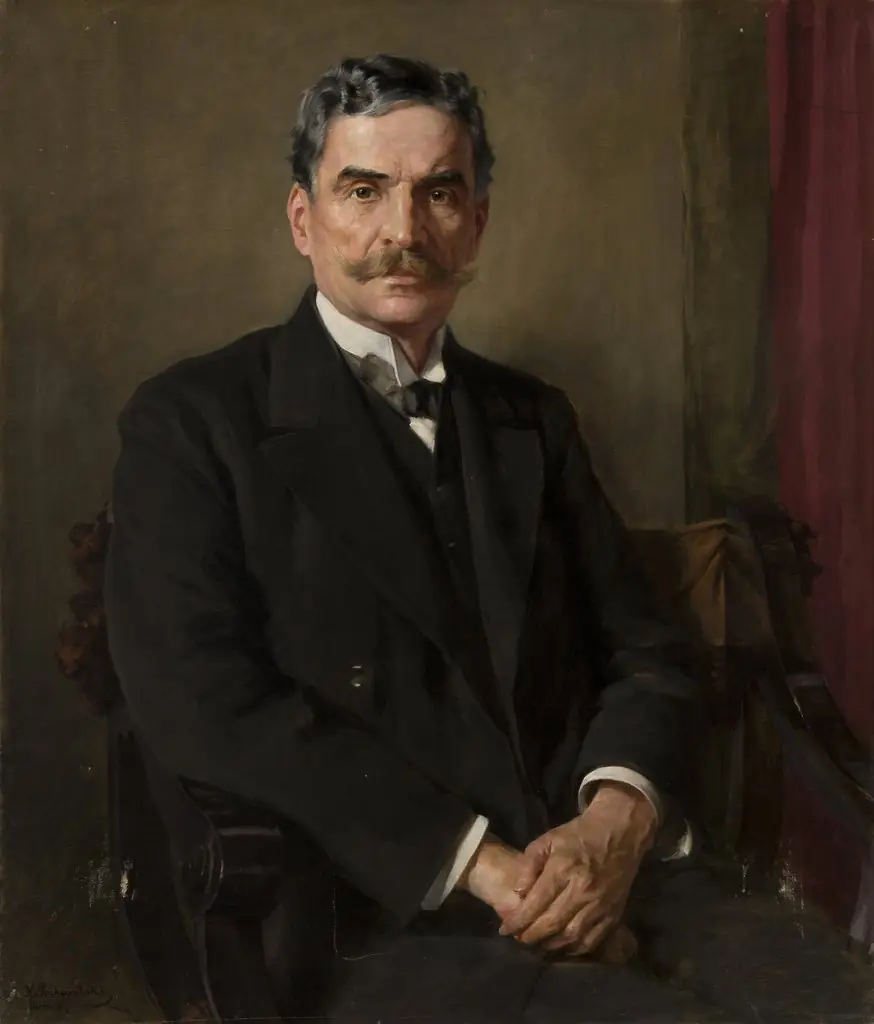 Portrait of Józef Pakies
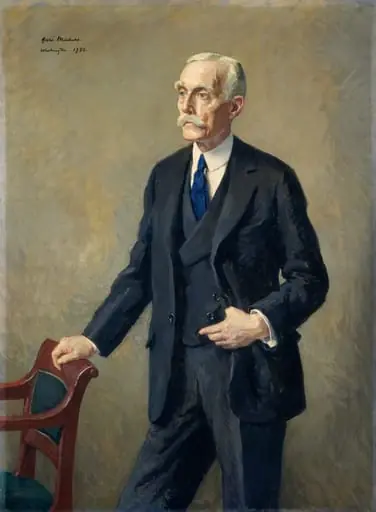 Andrew W. Mellon
 Portret
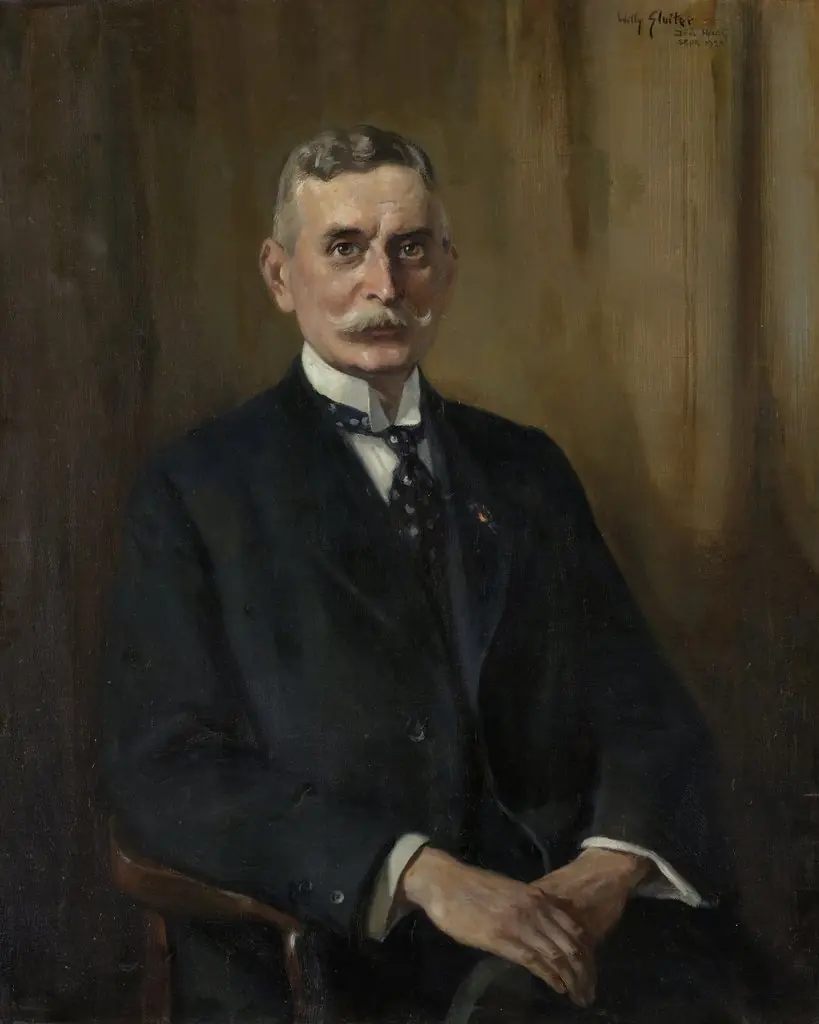 Jacob Christiaan Koningsberger (1867-1951). Chairman of the People's Council (1918-19)
 Jacob Christiaan Koningsberger (1867-1951). Chairman of the People's Council (1918-19)
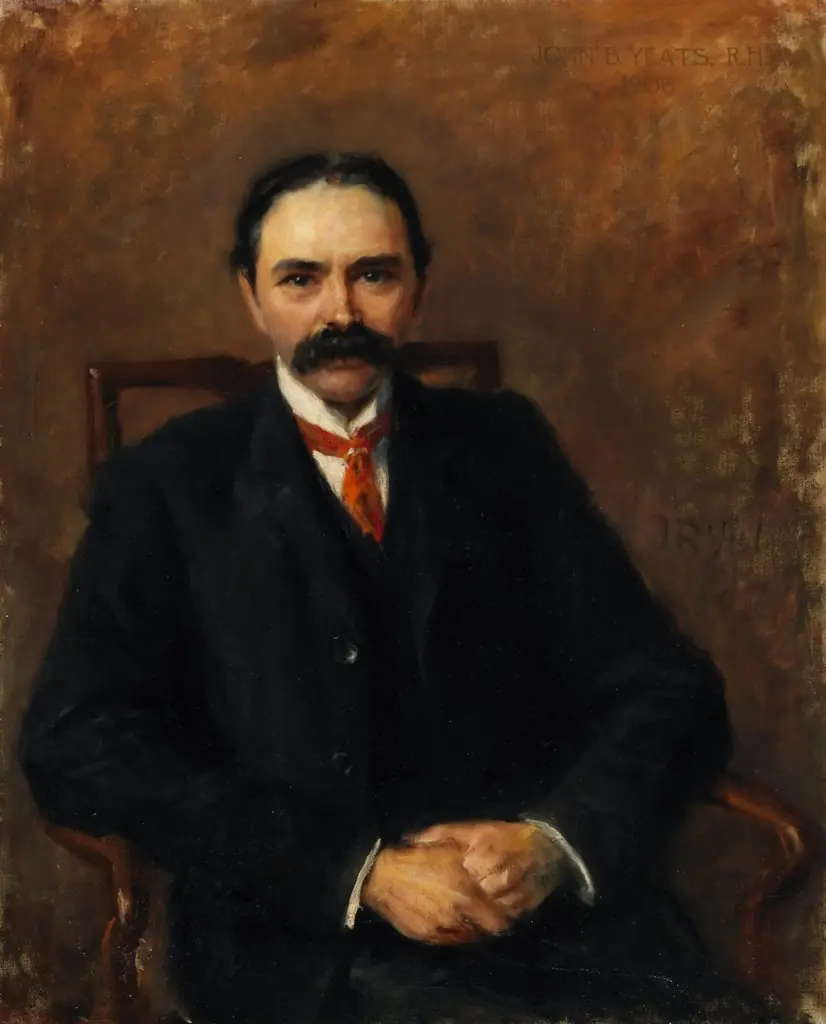 Portrait of Douglas Hyde, First President of Ireland (1860-1949), Poet and Scholar
 Professor Oliver Elton
 T. Gwynn Jones (1871–1949)
 Portrait of Sir Hugh Lane (1865-1915), Director of the National Gallery of Ireland 1914-1915
 Portrait of an old man
 Hinman B. Hurlbut
- Untitled