Artwork
Composition
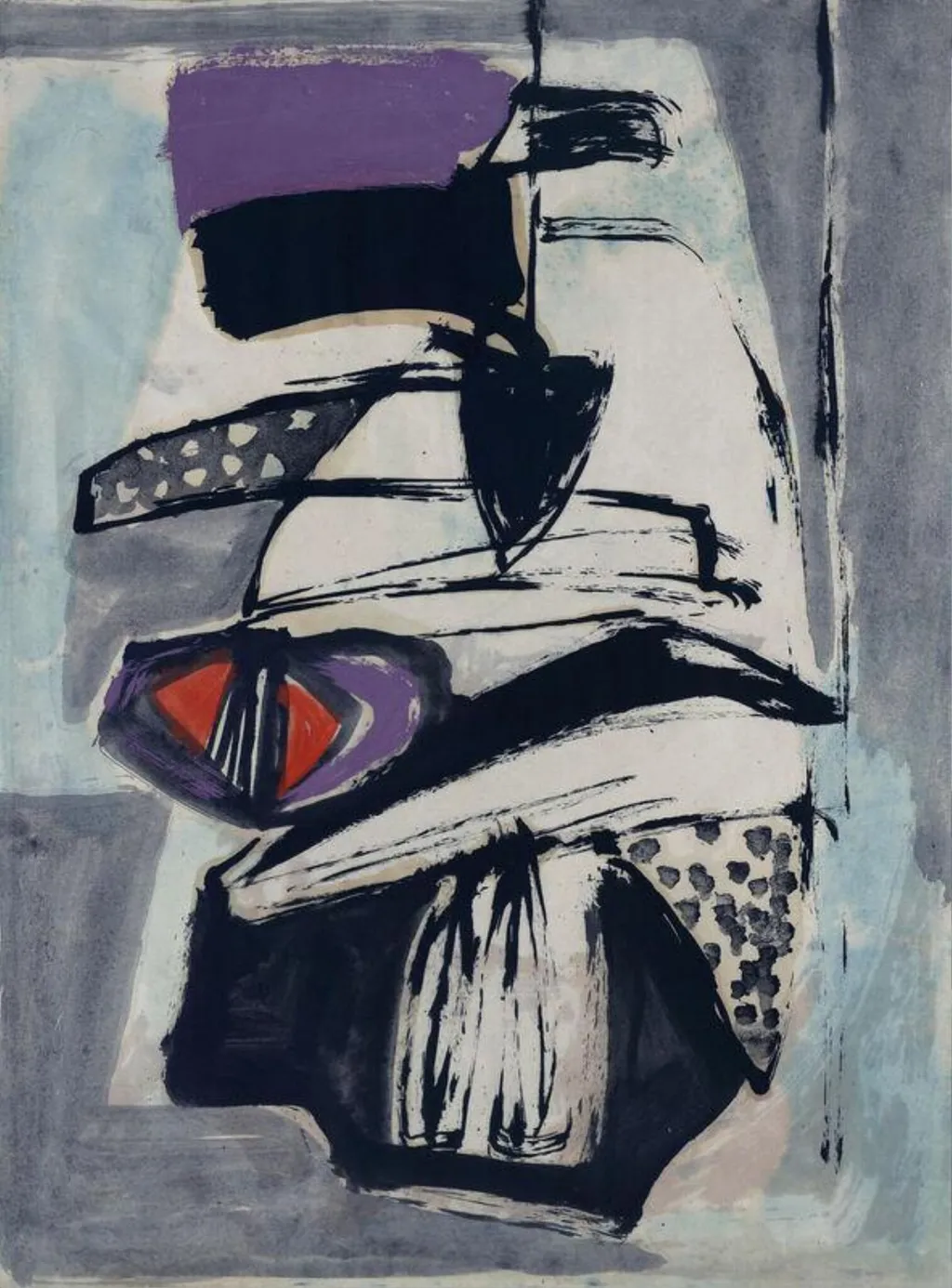
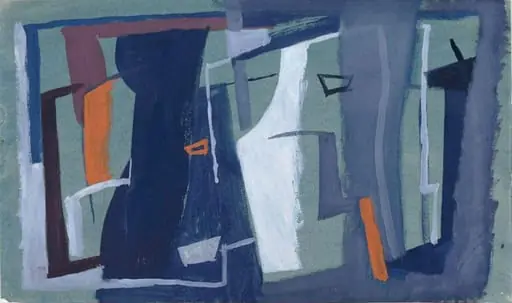
Composition is a watercolor work on paper by the Art Brut artist Jankel Adler. It is held in the collection of the Victoria and Albert Museum.
About this work
Overview
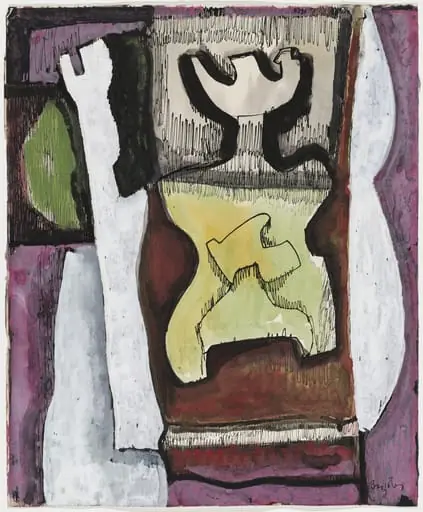
Created in 1950, this watercolour by Jankel Adler is an abstract work defined by its restrained palette and dynamic interplay of forms.
Created in 1950, this watercolour by Jankel Adler is an abstract work defined by its restrained palette and dynamic interplay of forms. Dominated by muted grays and cool tones, it introduces subtle accents of red, purple, and pale blue. The composition balances structured geometry with loose, flowing marks, suggesting movement within stillness. The medium’s transparency allows underlying layers to show through, enhancing its tactile complexity.
Subject & Meaning
The piece resists literal interpretation, instead evoking emotional resonance through formal contrast. Angular shapes suggest structural tension, while fluid washes imply dissolution or motion. The single red element acts as a focal point, not as symbolism but as a visual pulse, interrupting the quiet rhythm without disrupting it. The work reflects Adler’s interest in inner states, rendered through abstraction rather than narrative.
Technique & Style
Adler employed watercolour with deliberate spontaneity, layering translucent washes to build depth without opacity. Brushwork varies from sharp, controlled lines to soft, bleeding edges, creating a dialogue between intention and chance. Textural variation emerges through dry-brush effects and controlled pooling, revealing the paper’s surface. His approach merges European modernism with a sensitivity to materiality unique to water-based media.
History & Provenance
This work dates from Adler’s later years, following his emigration to the United States and his time in exile during World War II. It reflects a period of quiet reflection, distinct from his earlier, more overtly political pieces. While its exact provenance prior to institutional acquisition is not widely documented, it aligns with his postwar output, intimate, introspective, and formally refined.
Context
Created in the early Cold War era, the work exists alongside broader shifts in modern art toward abstraction and personal expression. Adler’s style, though aligned with European avant-garde traditions, diverges from dominant American movements like Abstract Expressionism by maintaining a restrained, almost meditative tone. His background as a Jewish artist fleeing persecution informs the work’s emotional gravity without explicit reference.
Legacy
Adler’s watercolours from this period are recognized for their quiet innovation within 20th-century modernism. Though less publicly prominent than his paintings or prints, this piece exemplifies his mastery of subtlety and material restraint. It contributes to a broader understanding of exile artists who transformed trauma into formal language, influencing later generations interested in abstraction as emotional architecture.
Own this work as a print
Artist & collection
Artist
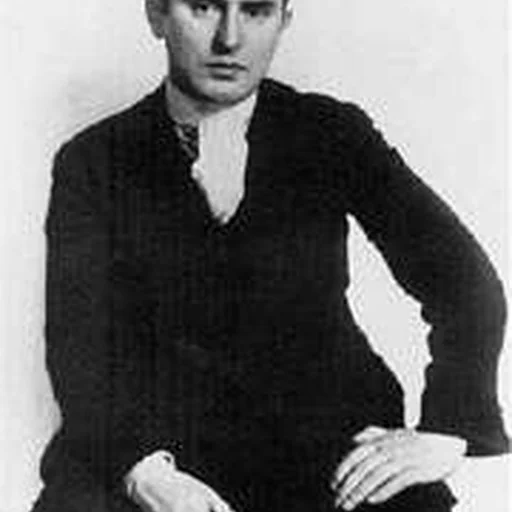
Jankel Adler was a Polish-Jewish avant-garde painter and printmaker active primarily in Germany, France and England.