Artwork
'Jar, Raqqa, Syria, 12th-13th century', 'Funderary Jar', China, 13th century', 'Bodhisattva Avalokiteshvara (Kannon)', Japan, late 12th century, 'Pear-shaped bottle', Korea, late 13th-early 14th century, 'Table with dragon decoration', China, probably 18th century, from the Charles Lang Freer Collection
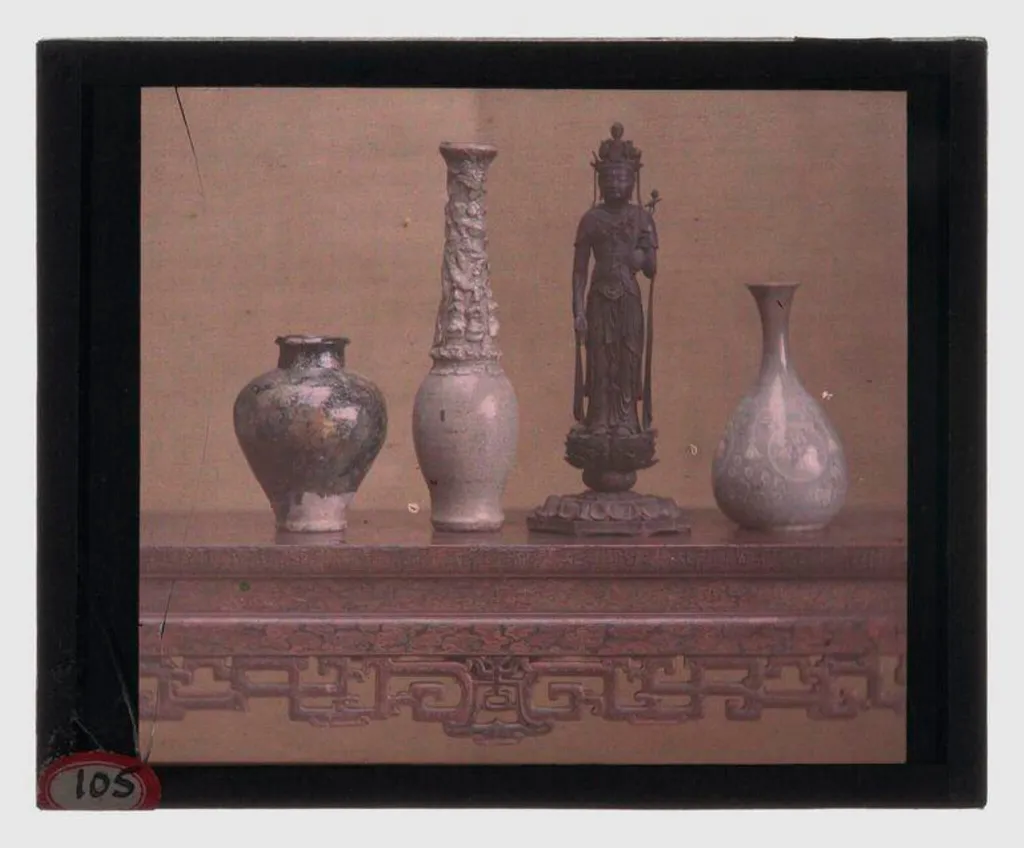
'Jar, Raqqa, Syria, 12th-13th century', 'Funderary Jar', China, 13th century', 'Bodhisattva Avalokiteshvara (Kannon)', Japan, late 12th century, 'Pear-shaped bottle', Korea, late 13th-early 14th century, 'Table with dragon decoration', China, probably 18th century, from the Charles Lang Freer Collection is a photographic photography by Alvin Langdon Coburn. It dates from 1909 and is held in the collection of the Victoria and Albert Museum. This photograph displays a curated selection of four Asian artifacts from the Charles Lang Freer Collection on a decorated shelf.
About this work
Overview
This photograph displays a curated selection of four Asian artifacts from the Charles Lang Freer Collection on a decorated shelf. The objects span multiple centuries and geographical origins, including Syria, China, Japan, and Korea.
Subject & Meaning
The subjects include a Buddhist figure, Bodhisattva Avalokiteshvara (Kannon), symbolizing compassion in Japanese Buddhism from the late 12th century, alongside functional and decorative items. The shelf's dragon decoration adds a motif commonly associated with Chinese cultural symbolism.
Technique & Style
The artifacts showcase diverse techniques: the textured, fluted vase (likely the Raqqa Jar or Funeral Jar) contrasts with the smooth, swirled pear-shaped Korean bottle. The wooden Bodhisattva statue exhibits intricate detailing, while the Chinese table features carved dragons.
History & Provenance
The collection includes a 12th-13th century Syrian Jar, a 13th century Chinese Funeral Jar, a late 12th century Japanese Bodhisattva, a late 13th-early 14th century Korean bottle, and a probably 18th century Chinese table. All are part of the Charles Lang Freer Collection.
Context
The arrangement on a shelf with dragon-decorated edging (likely the Chinese table) contextualizes the pieces within a broader East Asian aesthetic tradition, despite their varied origins and time periods.
Legacy
As part of the Charles Lang Freer Collection, these artifacts contribute to a significant repository of Asian art, facilitating study, appreciation, and cultural exchange, potentially on display or referenced through institutions like the suggested Victoria and Albert Museum.
Artist & collection
Artist
Alvin Langdon Coburn kept a tiny camera in every coat pocket, snapping odd angles of London’s streets while pretending to window-shop.

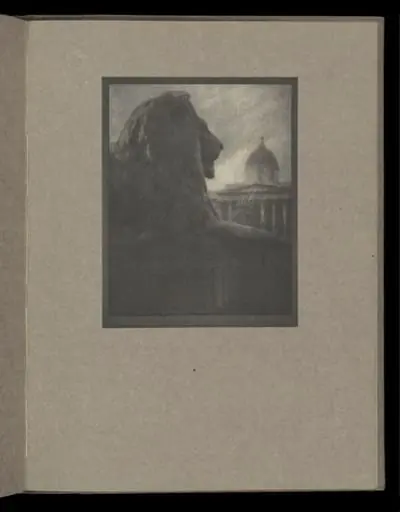 The British Lion
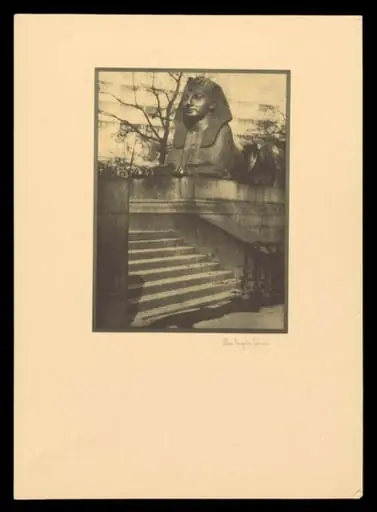 London: A Sphinx
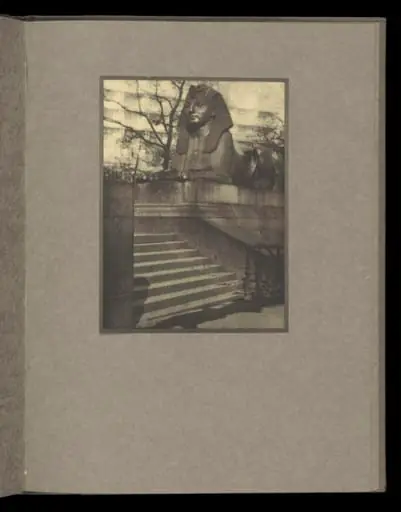 On the Embankment
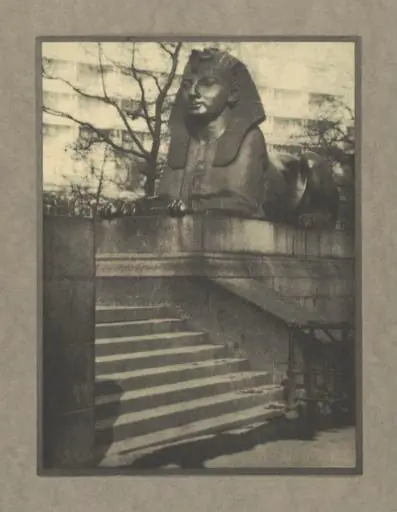 A Sphinx, The Embankment, London
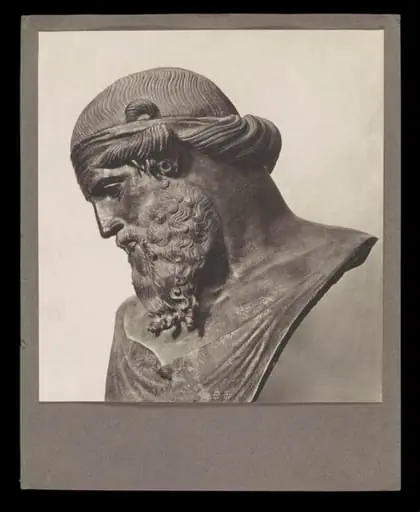 Bust of Dionysus, Platon
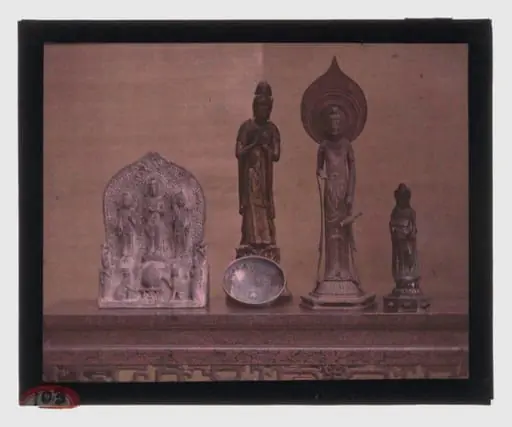
- 'Stele with Buddhist triad', China, 581-618 or later, 'Bodhisattva', Japan, 'Bowl', (origins unknown), 'Figure of Avalokiteshvara', Japanese, after statue in Horyuji Temple, early 20th century, 'Bodhisattva Avalokiteshvara (Kannon)', Japan, late 8th century, from the Charles Lang Freer Collection
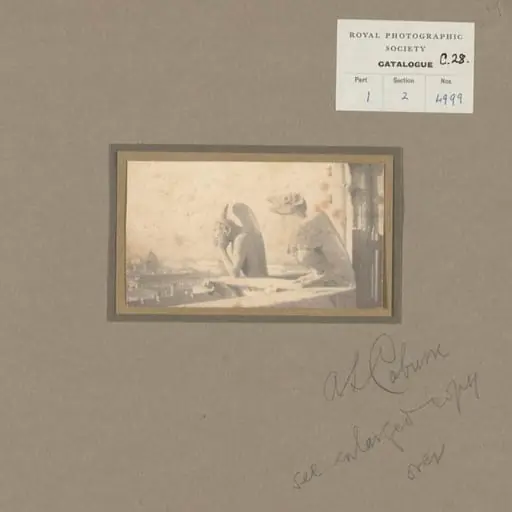 After Meryon - Le Stryge
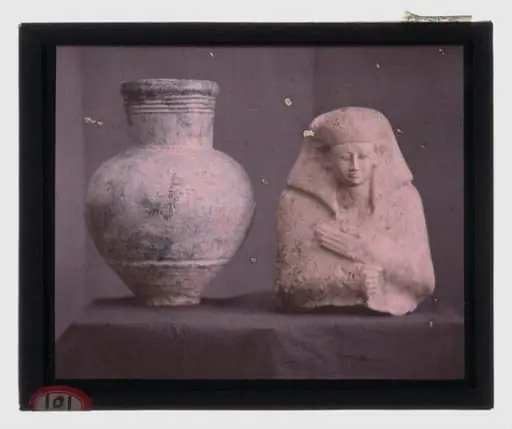 'Jar', Raqqa, Syria, 11th-12th century, 'Head and Bust (fragment) of a man', Egypt, ca. 1980-1630 BCE, face later recarved, from the Charles Lang Freer Collection
 Album of Seasonal Landscapes
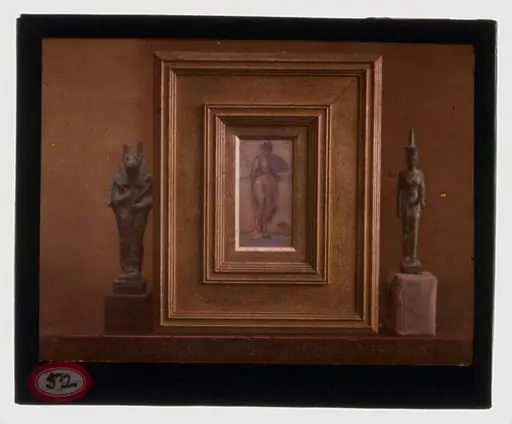 'Figure of Anubis', Egypt, 664-525 BCE, 'Resting', ca 1870-1873 by James McNeil Whistler and 'Figurine of the Goddess Neith', 664-525 BCE or later, from the Charles Lang Freer Collection
 Album of Seasonal Landscapes
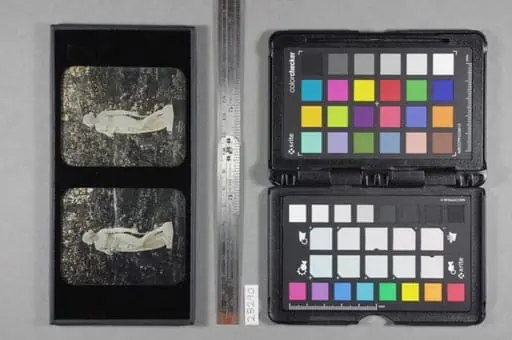 'Andromeda' by Lawrence Macdonald
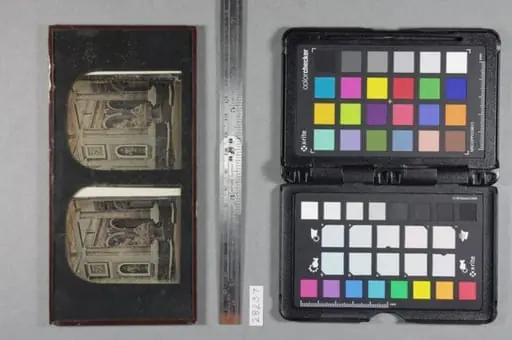 Italian Court at the Crystal Palace
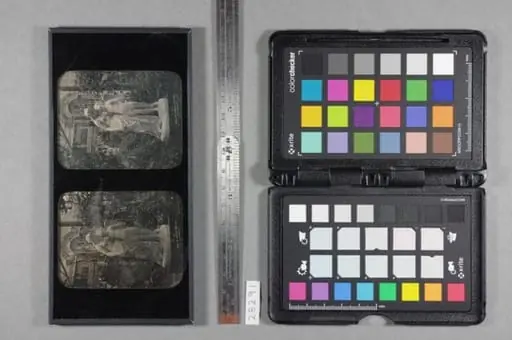 'The First Whisper of Love' by William Calder Marshall
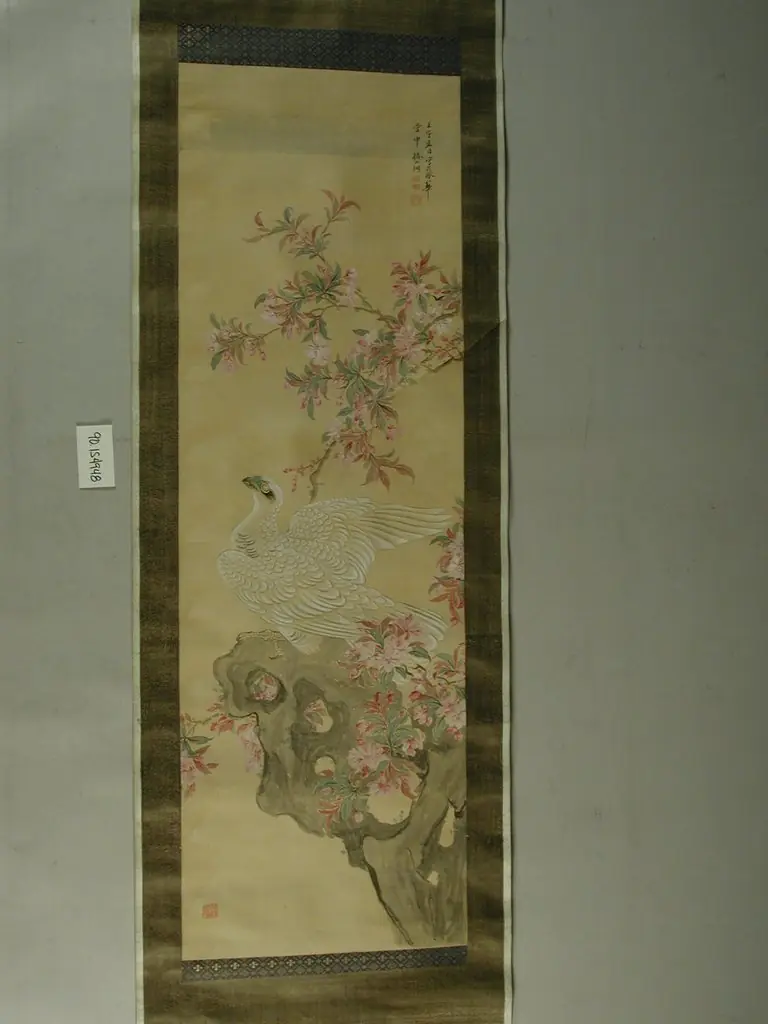 White Hawk
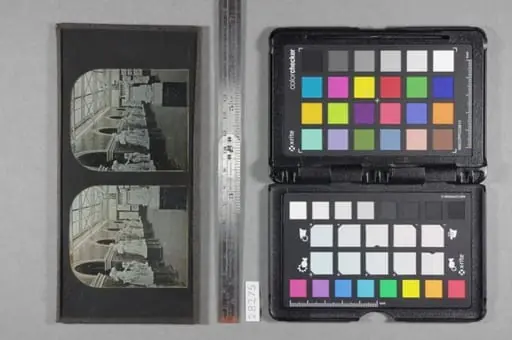 Sculptures on display at Crystal Palace
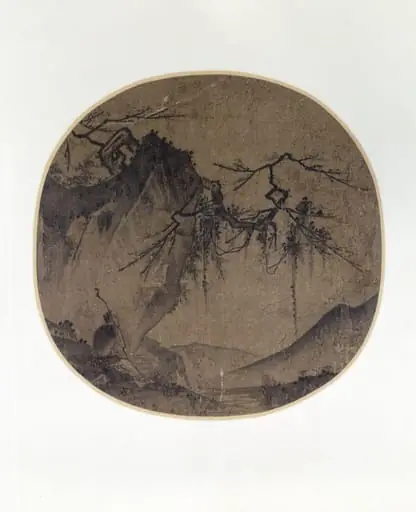 A Figure in Landscape
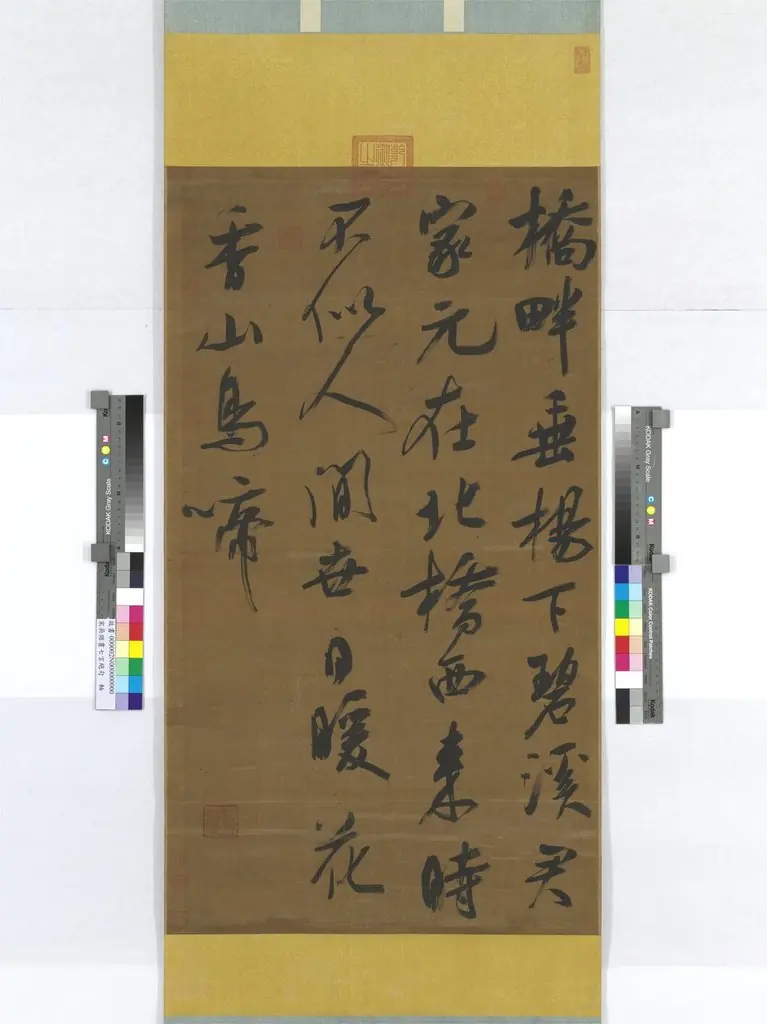 宋吳琚書七言絕句 軸