Artwork
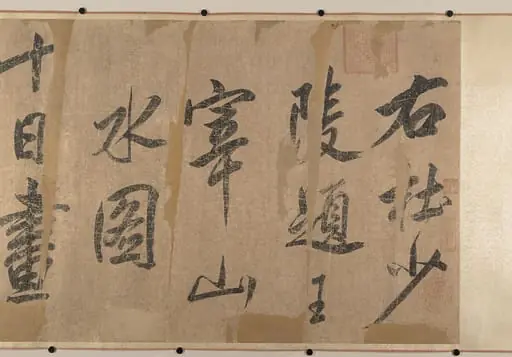
宋吳琚書七言絕句 軸
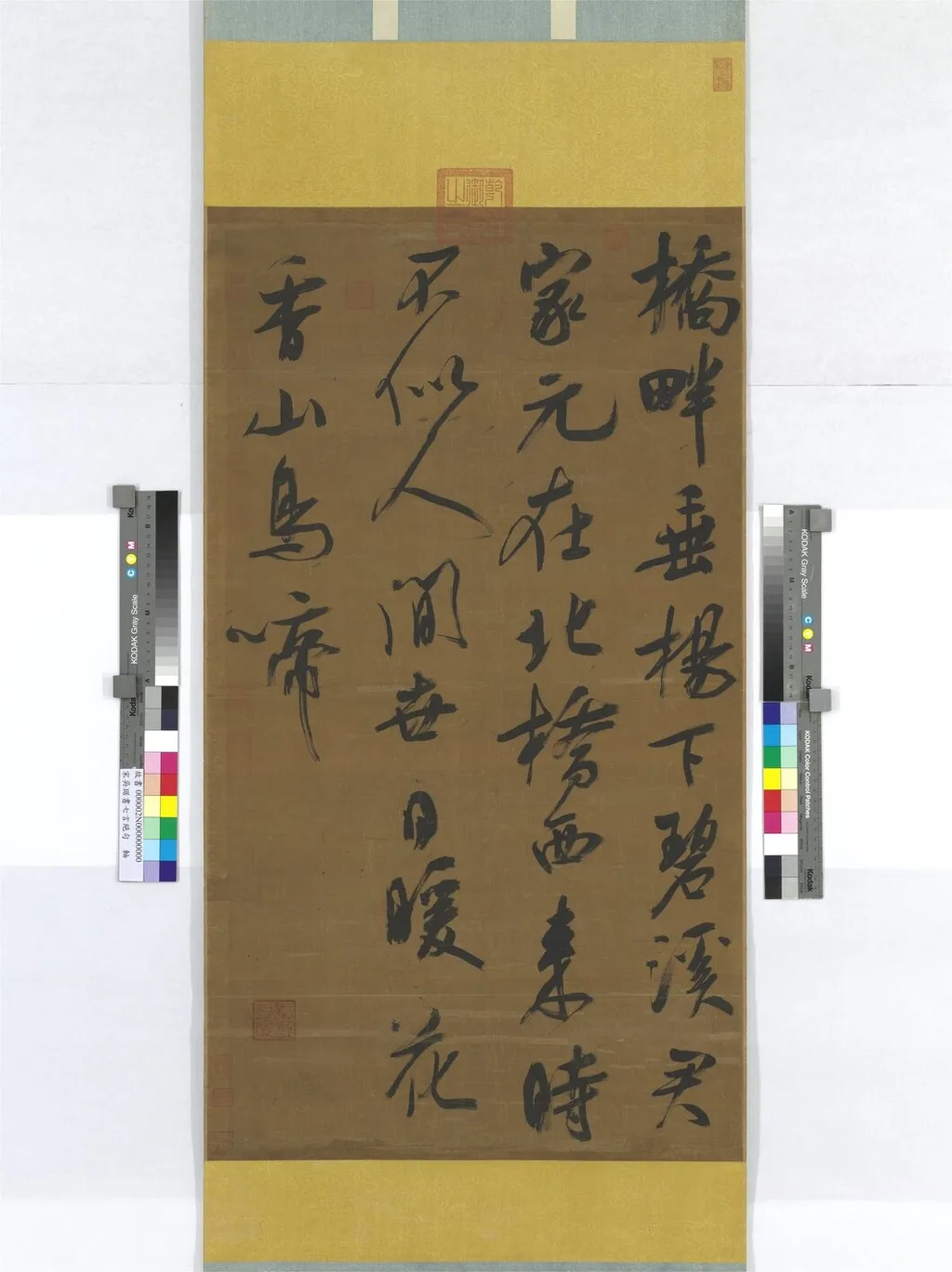
宋吳琚書七言絕句 軸 is an unspecified painting by the Song dynasty painting artist Wu Ju. It dates from 1202 and is held in the collection of the National Palace Museum.
About this work
Overview
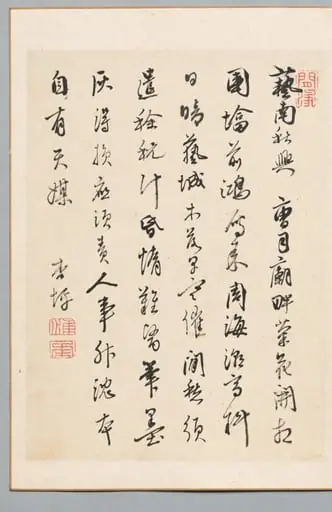
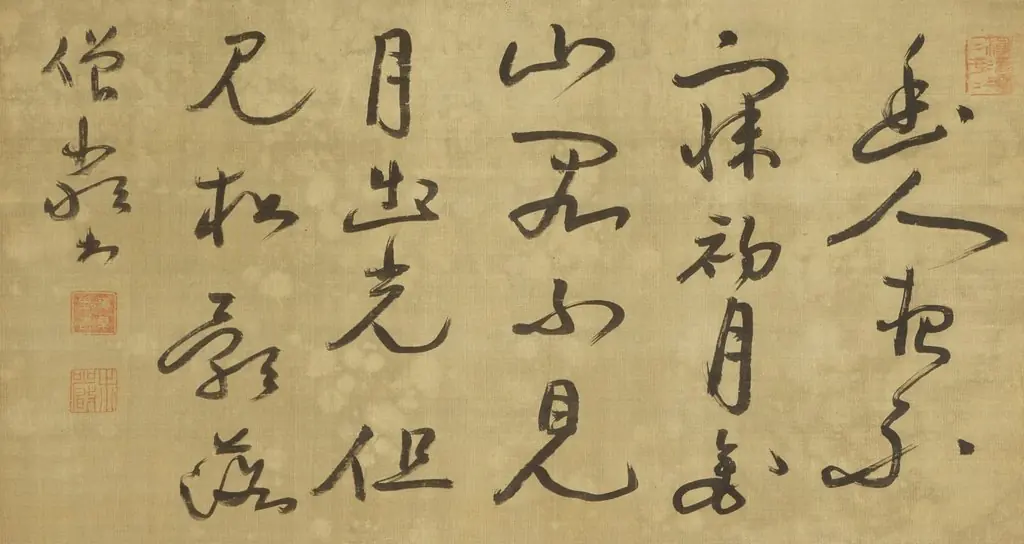
This vertical silk scroll, dated 1202, features calligraphy by Wu Ju, a Southern Song dynasty official and artist.
This vertical silk scroll, dated 1202, features calligraphy by Wu Ju, a Southern Song dynasty official and artist. The work is housed in the National Palace Museum and presents a single poem in seven-character lines. The composition is restrained, with ink characters arranged in vertical columns against a muted brown ground, framed by narrow yellow borders and a broader top border containing a pale blue band.
Subject & Meaning
The text is a seven-character quatrain, a traditional poetic form in Chinese literature. Though the specific poem is not identified in the record, its content likely reflects classical themes of nature, solitude, or reflection, common in literati verse. The calligraphy serves both as literary expression and aesthetic object, embodying the scholar-artist’s fusion of poetry and brushwork.
Technique & Style
Wu Ju employs a fluid, semi-cursive script with deliberate variations in stroke weight and character size. The ink flows with controlled spontaneity, creating rhythmic contrasts between dense and open forms. The brushwork reveals mastery of pacing and pressure, enhancing the poem’s cadence. The silk support, though subtle in texture, allows for nuanced ink absorption, reinforcing the work’s quiet elegance.
History & Provenance
The scroll has been in the collection of the National Palace Museum since at least the mid-20th century, following the transfer of imperial artifacts from Beijing to Taipei. Its survival through centuries suggests it was valued within court or scholarly circles. No earlier ownership marks or seals are documented, but its preservation indicates continuous recognition as a significant example of Southern Song calligraphy.
Context
Wu Ju worked during a period when literati culture emphasized personal expression through calligraphy. His style reflects the influence of earlier masters like Su Shi, yet retains a distinct sensitivity to spatial balance. In the Southern Song court, such scrolls were not merely decorative but served as intimate objects of contemplation, linking poetry, brush, and personal identity among educated elites.
Legacy
Wu Ju’s calligraphy is noted for its understated refinement within the Southern Song tradition. While less widely known than contemporaries like Zhu Xi, his works exemplify the era’s ideal of restrained elegance. This scroll remains a representative artifact of literati practice, illustrating how poetry and brushwork converged to express cultivated sensibility beyond mere technique.
Artist & collection
Artist