Artwork
A Hare and a Leg of Lamb
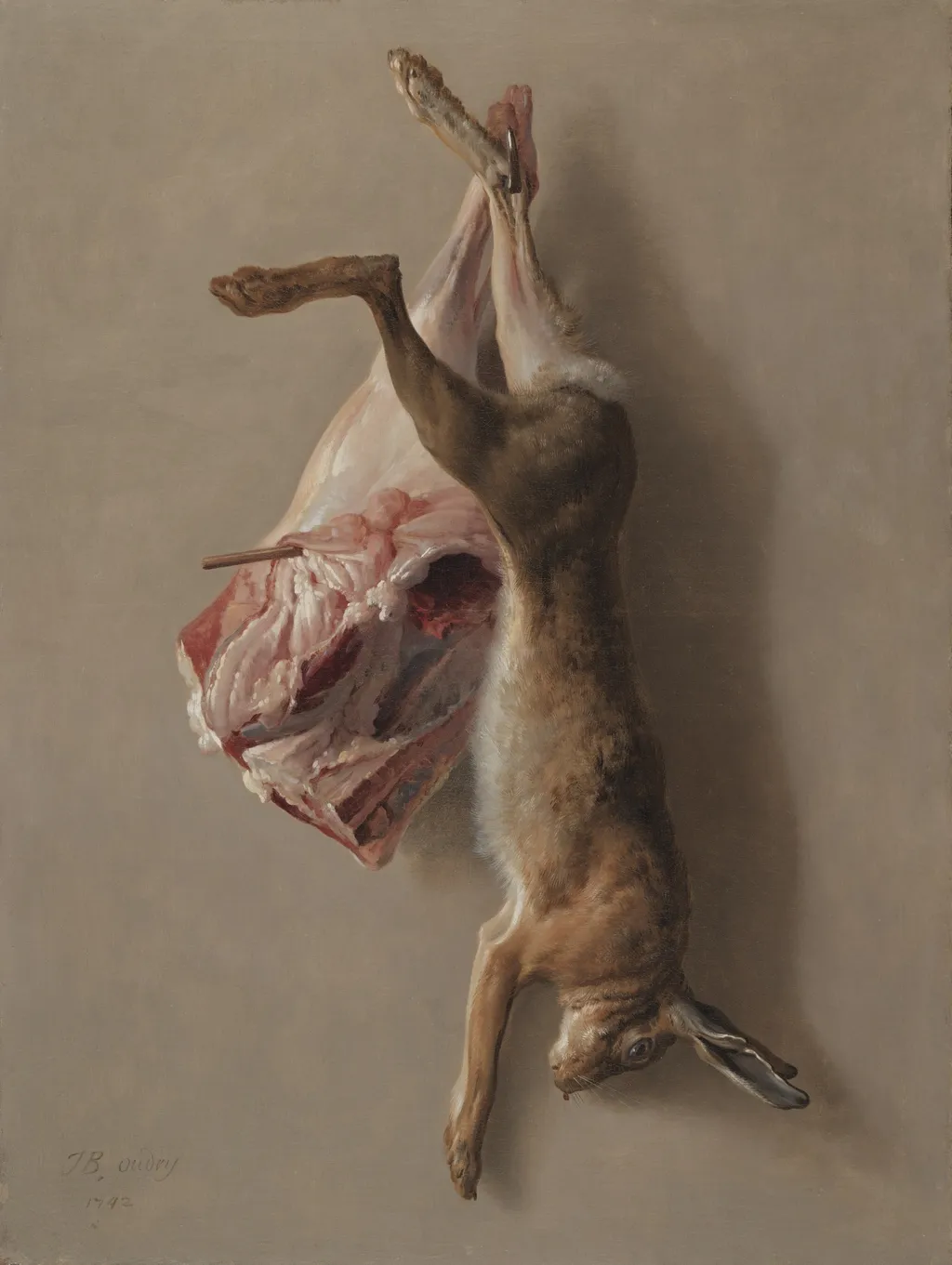
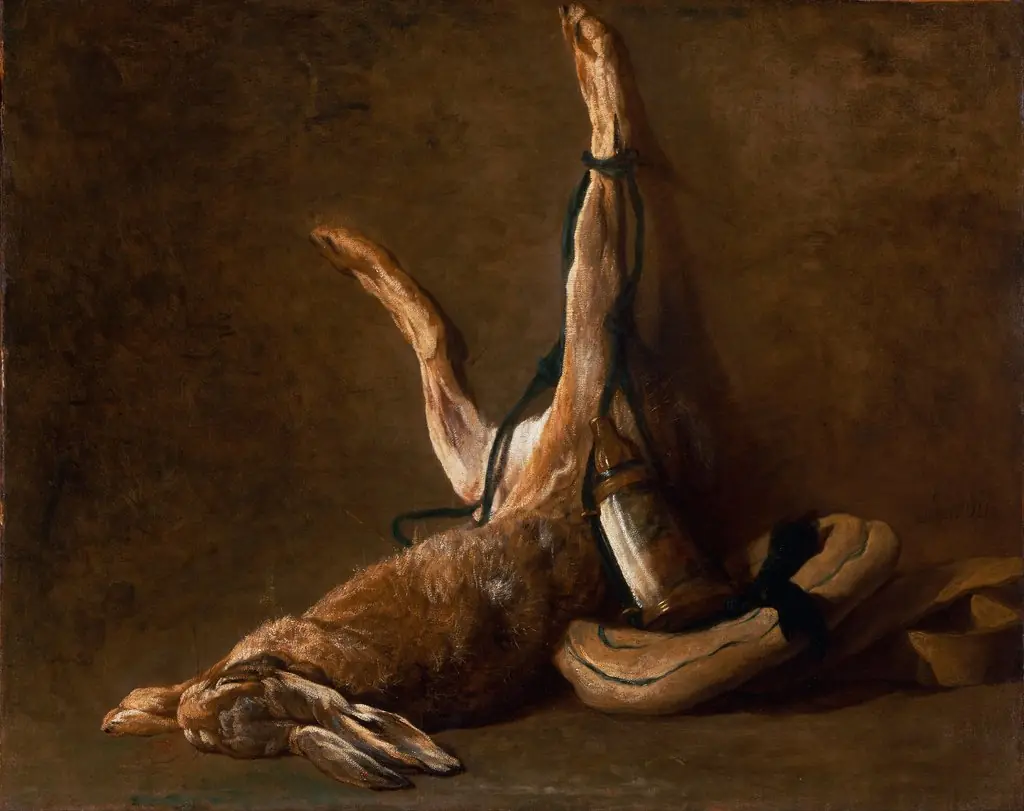
A Hare and a Leg of Lamb is an oil painting by the Rococo painting artist Jean-Baptiste Oudry. It dates from 1742 and is held in the collection of the Cleveland Museum of Art.
About this work
Subject & Meaning
Oudry's focus on dead game reflects Rococo fascination with hunting trophies and the domestic context of a dining room, where the painting originally hung.
The work depicts a freshly killed hare attached to a skinned leg of lamb, both rendered with a trompe-l'œil effect that emphasizes tactile realism. The hare's eye remains open and a single droplet of blood hangs from its nose, while the lamb's flesh is exposed, underscoring themes of abundance and the fleeting nature of life. Oudry's focus on dead game reflects Rococo fascination with hunting trophies and the domestic context of a dining room, where the painting originally hung.
Contemporary reactions describe the scene as uncannily lifelike yet simultaneously inert, highlighting a tension between naturalistic detail and symbolic representation of mortality.
Technique & Style
A Hare and a Leg of Lamb is an oil painting on canvas measuring 98.2 by 73.5 centimeters, signed and dated "J.B. Oudry / 1742" at the lower left. Oudry employs a trompe-l'œil technique to render a skinned leg of lamb suspended behind a dead hare, both affixed to a wall-mounted hook. The hare is depicted with its eye open and a single droplet of blood suspended from the tip of its nose, lending the composition an illusionistic immediacy.
Oudry's handling of dead game was a signature subject, and the canvas has been characterized as "uncannily real," though some critics have judged it "lifeless and inert...both highly contrived and utterly dead," reflecting the tension between its virtuosic naturalism and the inert stillness of its subjects.
History & Provenance
A Hare and a Leg of Lamb, an oil on canvas painting by Jean-Baptiste Oudry, was created in France in 1742. The work, measuring 98.2 × 73.5 cm, was originally commissioned for display in a dining room and later passed through Galerie Cailleux before being owned by Eugene Thaw. In 1969 the Cleveland Museum of Art acquired the painting from Thaw's collection via the John L. Severance Fund, where it is held under accession number 1969.53.
Oudry's reputation for rendering dead game is reflected in the trompe-l'œil depiction of a skinned lamb behind a dead hare, a composition described as both strikingly realistic and meticulously contrived. No exhibition history beyond its acquisition and current placement at the Cleveland Museum of Art is documented in the available sources.
Context
The painting's trompe-l'œil realism and macabre subject have drawn sharply divided scholarly responses. Some critics praise the work as uncannily lifelike, aligning it with Oudry's reputation for meticulously rendered game pieces commissioned for domestic and hunting contexts. Others dismiss it as inert and contrived, emphasizing the artificiality of the composition's frozen violence.
Within Oudry's oeuvre, the work typifies his Rococo-era still lifes of dead animals, reflecting the period's fascination with naturalistic illusion and gastronomic display. Its later placement in the Cleveland Museum of Art's collection, secured through the John L. Severance Fund in 1969, underscores its enduring, if contested, status in the European still-life tradition.
Overview
Jean-Baptiste Oudry, a French Rococo painter and engraver, created A Hare and a Leg of Lamb in 1742. This oil painting presents a still life composition focused on game and butchered meat. It exemplifies Oudry's skill in depicting natural subjects with a detailed and realistic approach, characteristic of his work in the mid-18th century. The piece is signed and dated by the artist.
Own this work as a print
Artist & collection

Artist
Jean-Baptiste Oudry was a French Rococo painter, engraver, and tapestry designer. He is particularly well known for his naturalistic pictures of animals and his hunt pieces depicting game. His son, Jacques-Charles Oudry, was also a painter.