Artwork
Spring
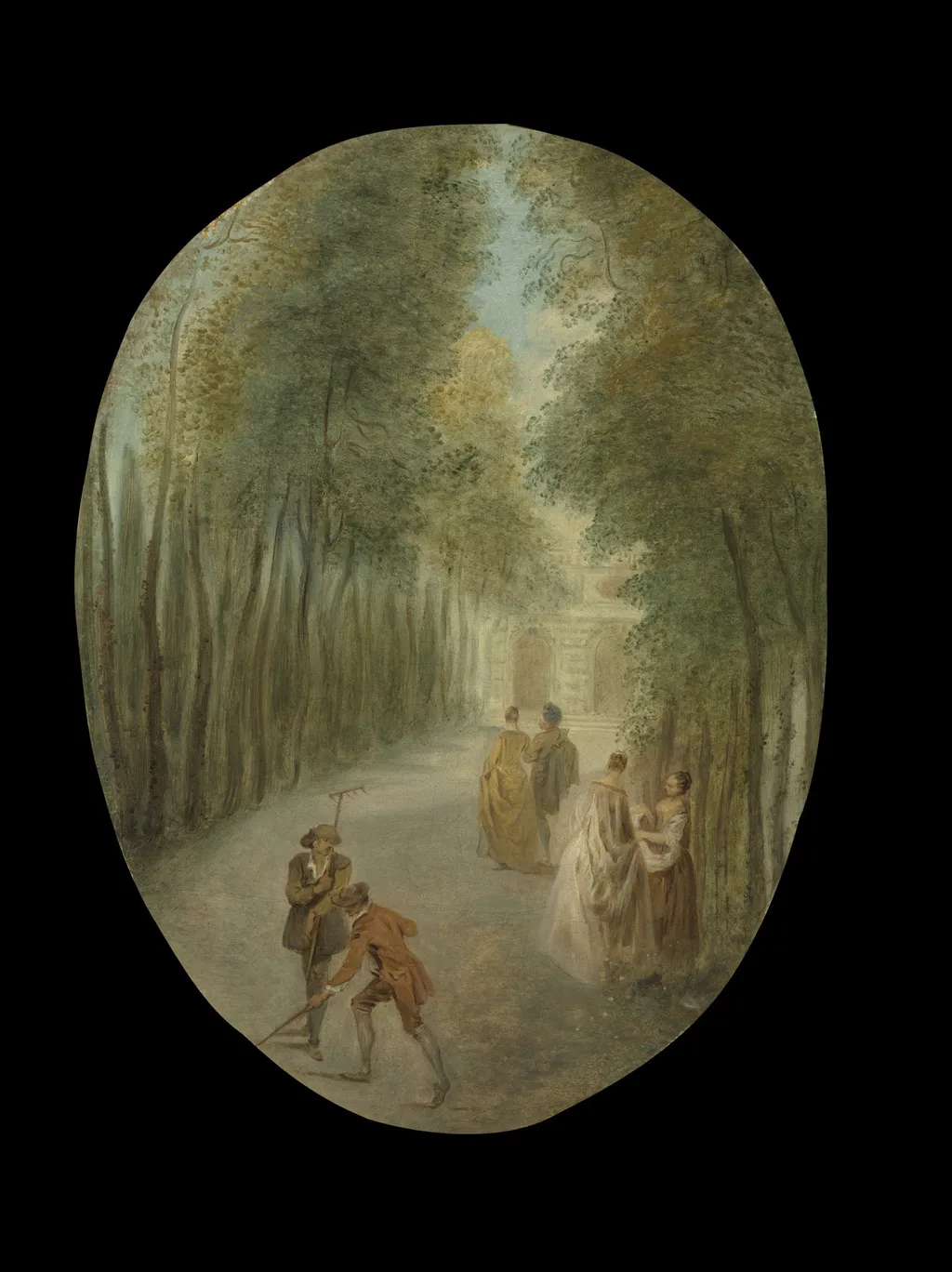
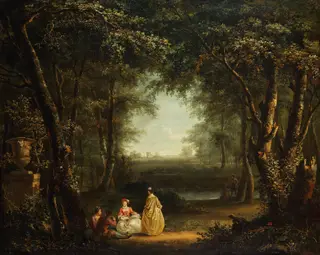
Spring is an oil painting by the Rococo painting artist Jean-Baptiste Pater. It dates from 1728 and is held in the collection of the Cleveland Museum of Art.
About this work
Technique & Style
Stylistically, the work belongs to the Rococo idiom, emphasizing elegant figures, refined costume, and a lush, park-like setting bathed in diffused daylight.
The painting is executed in oil on canvas, a traditional support for eighteenth-century French pastoral scenes. The handling shows the light, feathery brushwork characteristic of Pater’s fête galante manner, with softly blended passages and delicate highlights that define foliage and flesh. Forms are rendered with a silvery tonality and a gently modeled plasticity, creating an airy, luminous atmosphere.
Stylistically, the work belongs to the Rococo idiom, emphasizing elegant figures, refined costume, and a lush, park-like setting bathed in diffused daylight. The composition is arranged in gentle diagonals and curving rhythms, guiding the eye through clusters of figures and verdant surroundings without sharp contrasts.
History & Provenance
Jean-Baptiste Pater created the oil painting Spring in France in 1728. The work measures 65 cm in height and 53.7 cm in width. At some point in its history, the painting was held by the New York-based dealer Wildenstein & Company.
It is currently part of the collection at the Cleveland Museum of Art, where it is cataloged under the accession number 1951.486.
Spring, painted by Jean-Baptiste Pater in 1728, is held in the collection of the Cleveland Museum of Art. Its inventory number at the museum is 1951.486. The work was previously owned by Wildenstein & Company before entering the museum's holdings.
Overview
Jean-Baptiste Pater’s oil painting Spring (1728) depicts a tranquil woodland scene where a narrow path leads toward a luminous opening. On the left, two laboring figures, one kneeling, the other holding a rake, are rendered in muted earth tones. To the right, three women in pale, flowing gowns walk together toward the light, their garments contrasting with the dark foliage and creating a gentle sense of calm.
Subject & Meaning
The composition juxtaposes work and leisure, suggesting a seasonal transition from toil to renewal. The men’s agricultural activity anchors the painting in the everyday, while the women’s forward motion toward the bright clearing evokes the arrival of spring’s promise. The interplay of shadowed forest and illuminated space underscores a subtle narrative of hope emerging from darkness.
Context
During the early 1700s, French art shifted toward lighter, decorative subjects that celebrated leisure and nature. Pater’s Spring exemplifies this trend, integrating pastoral motifs with a refined, courtly aesthetic. The painting’s focus on everyday figures within an idealized landscape mirrors contemporary tastes for scenes that combined realism with an elegant, almost theatrical presentation.
Own this work as a print
Artist & collection
Artist
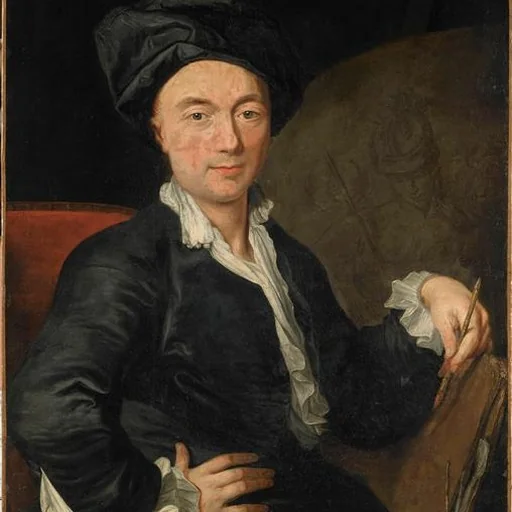
Jean-Baptiste Pater (December 29, 1695 – July 25, 1736) was a French rococo painter.

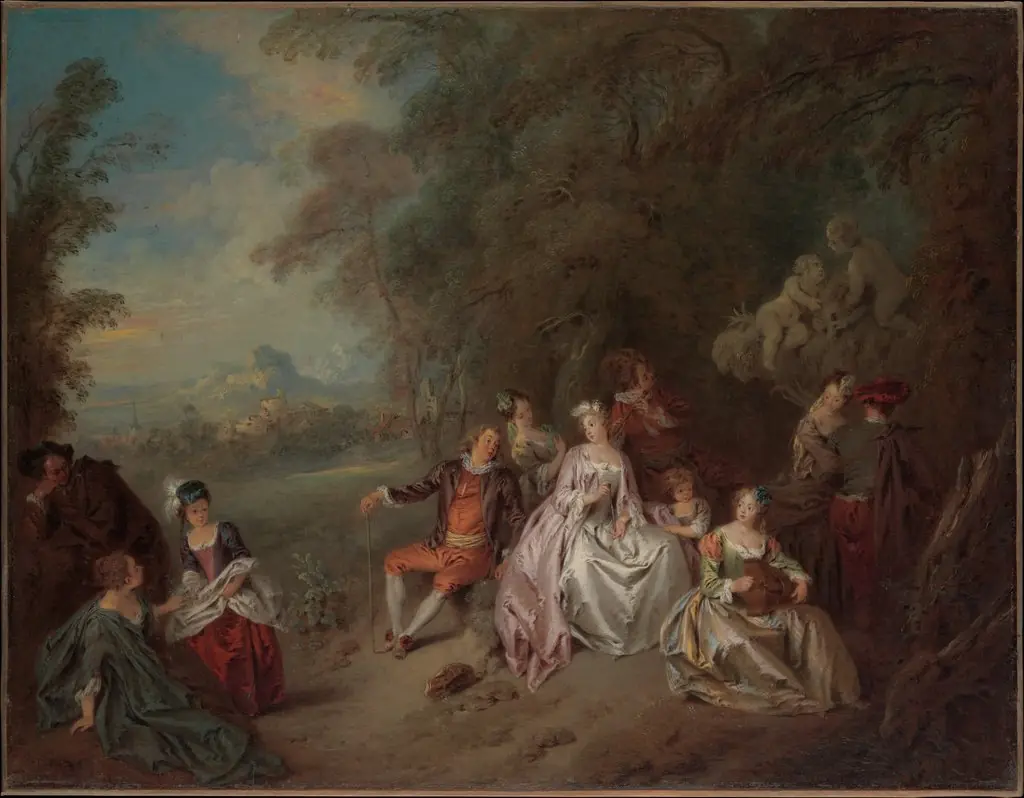
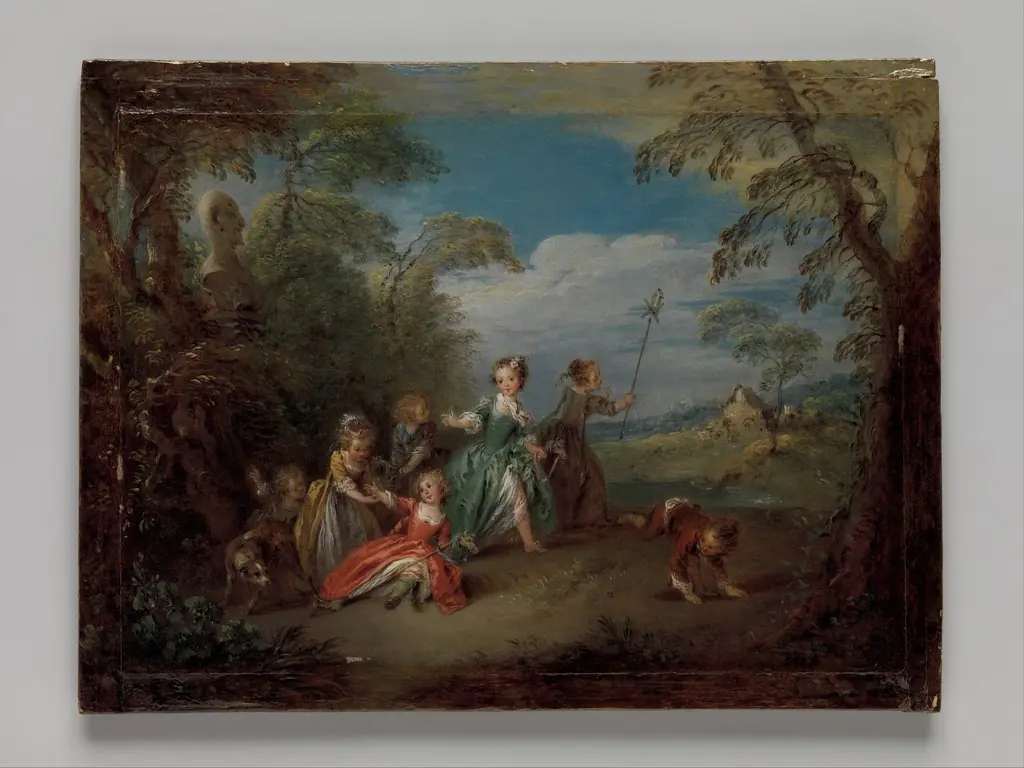
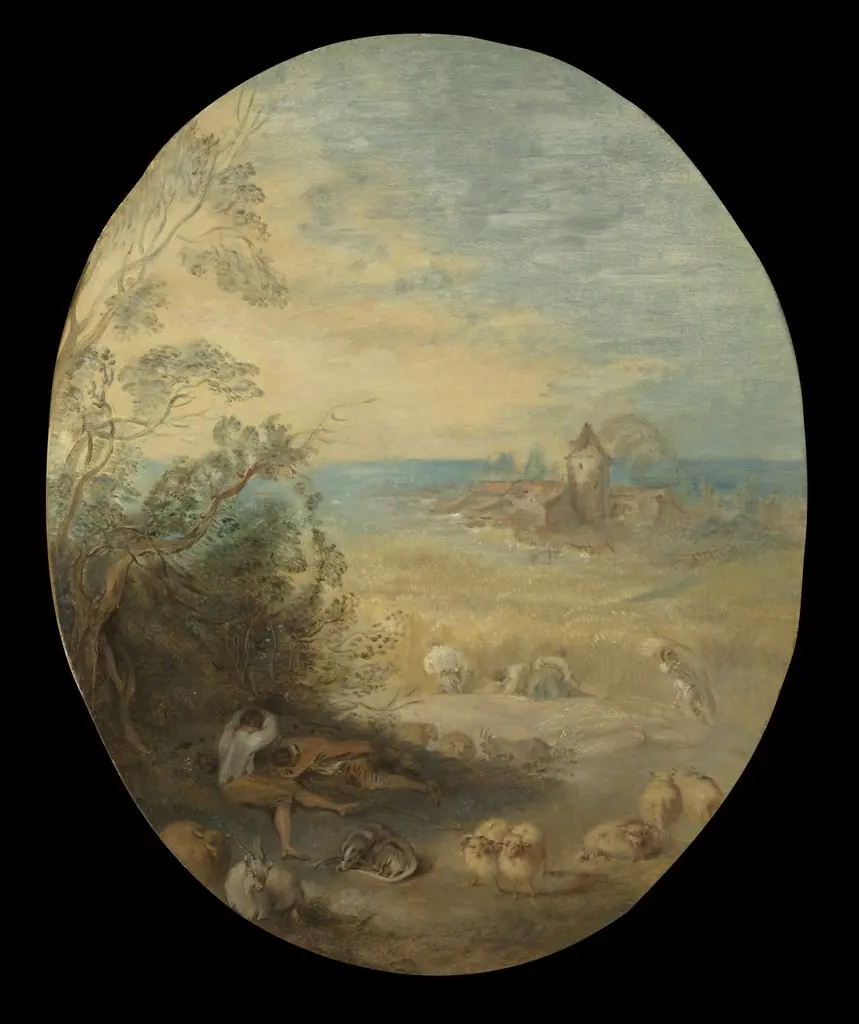
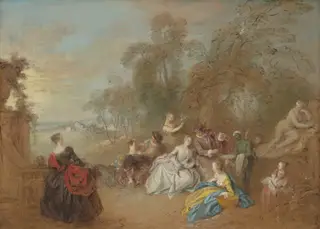
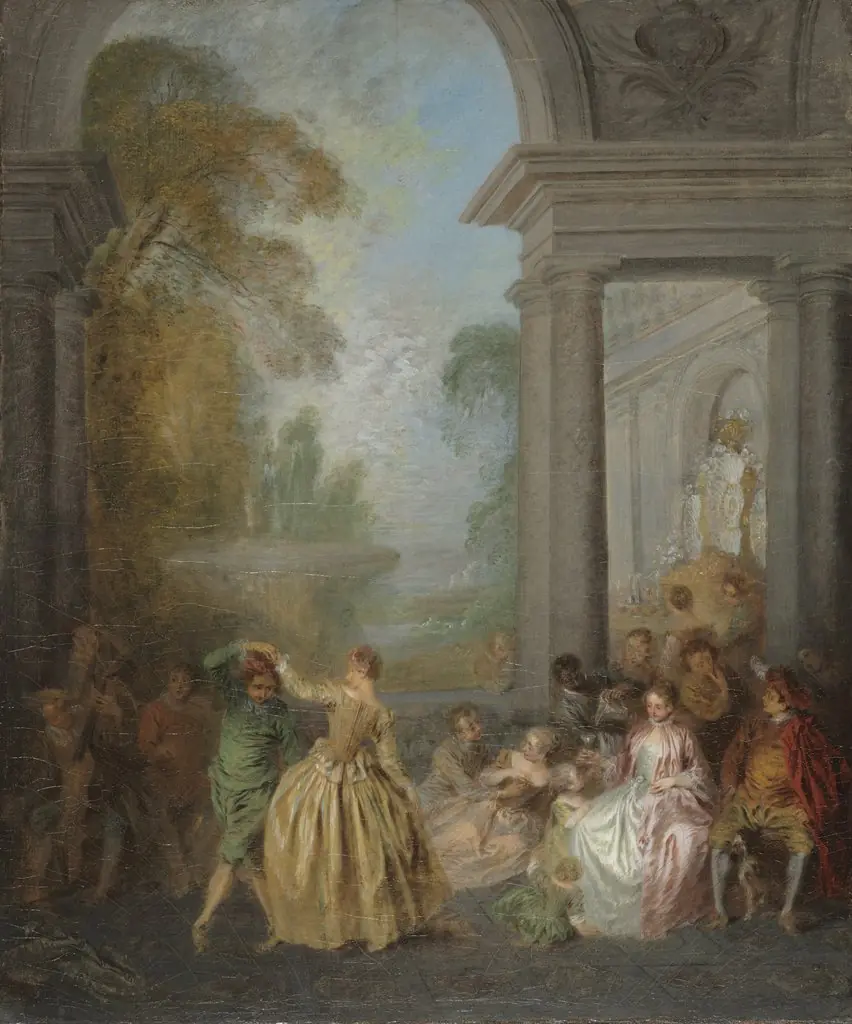
- Spring
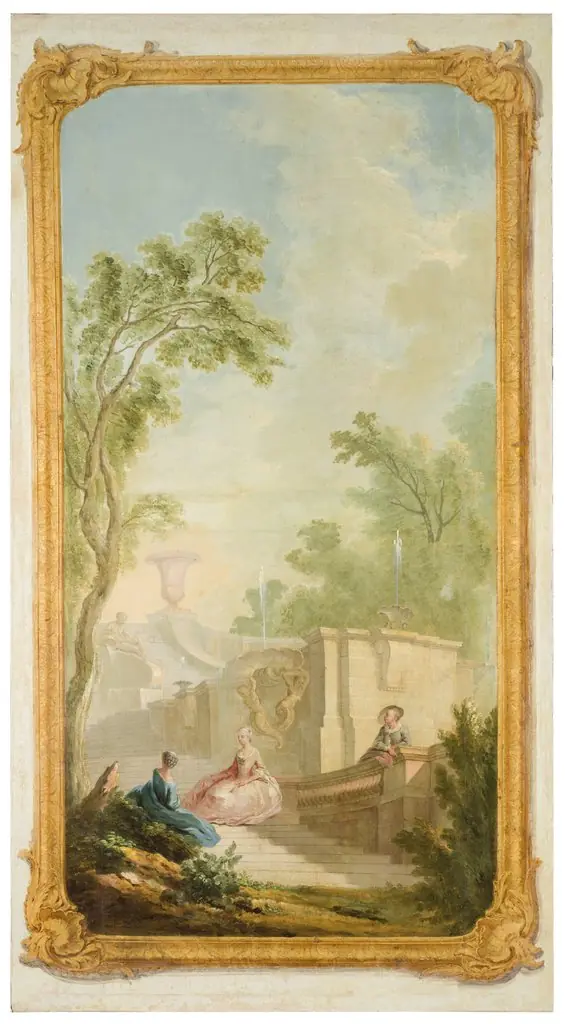 Park Landscape with Figures beside a Fountain. Decorative Painting for a Private Residence.
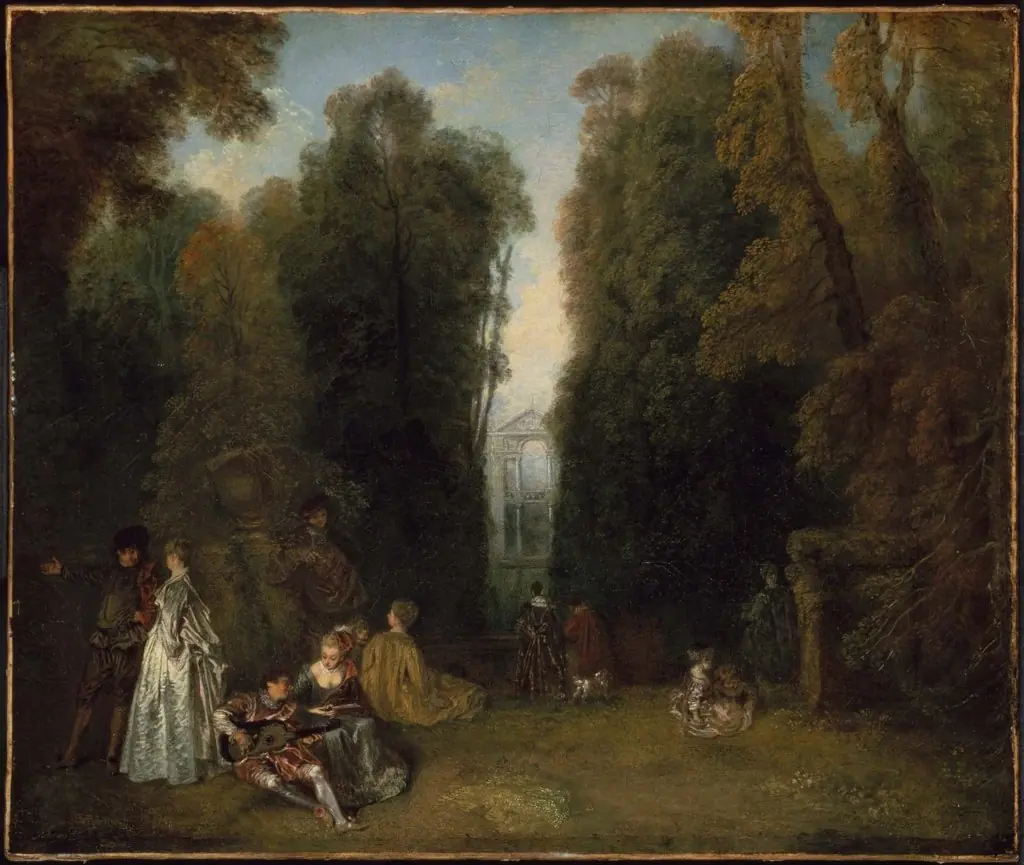 View through the Trees in the Park of Pierre Crozat
 Arcadisch landschap met linksvoor kinderen met een vogel en een hond
 Promenading in a Park
 Promenading in a Park
 The Cascade
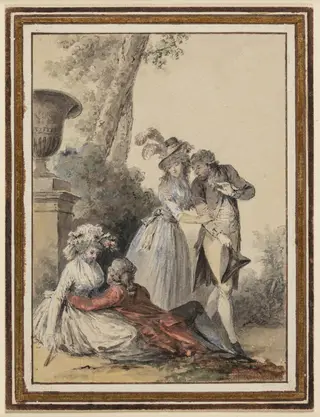 To galante par i en have, det ene liggende, det andet stående
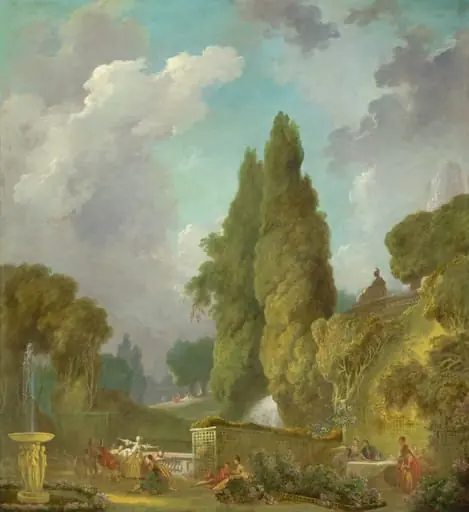 Blindman's Buff
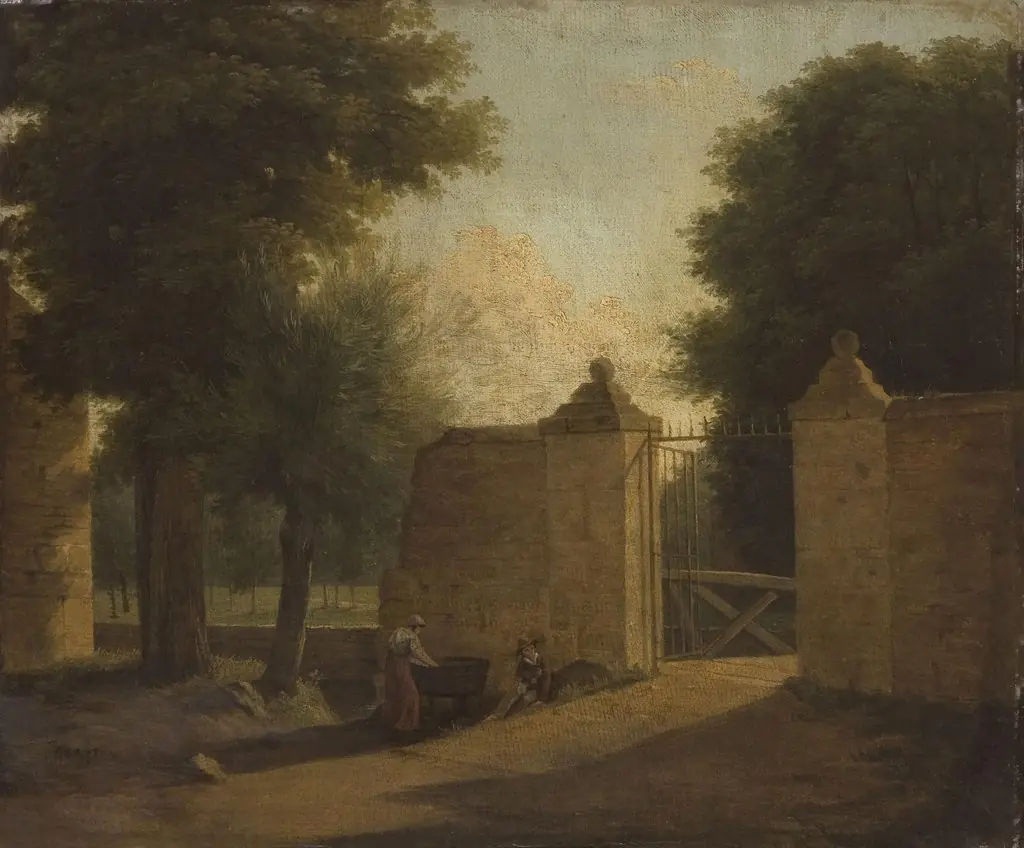 Village Lane and Gateway
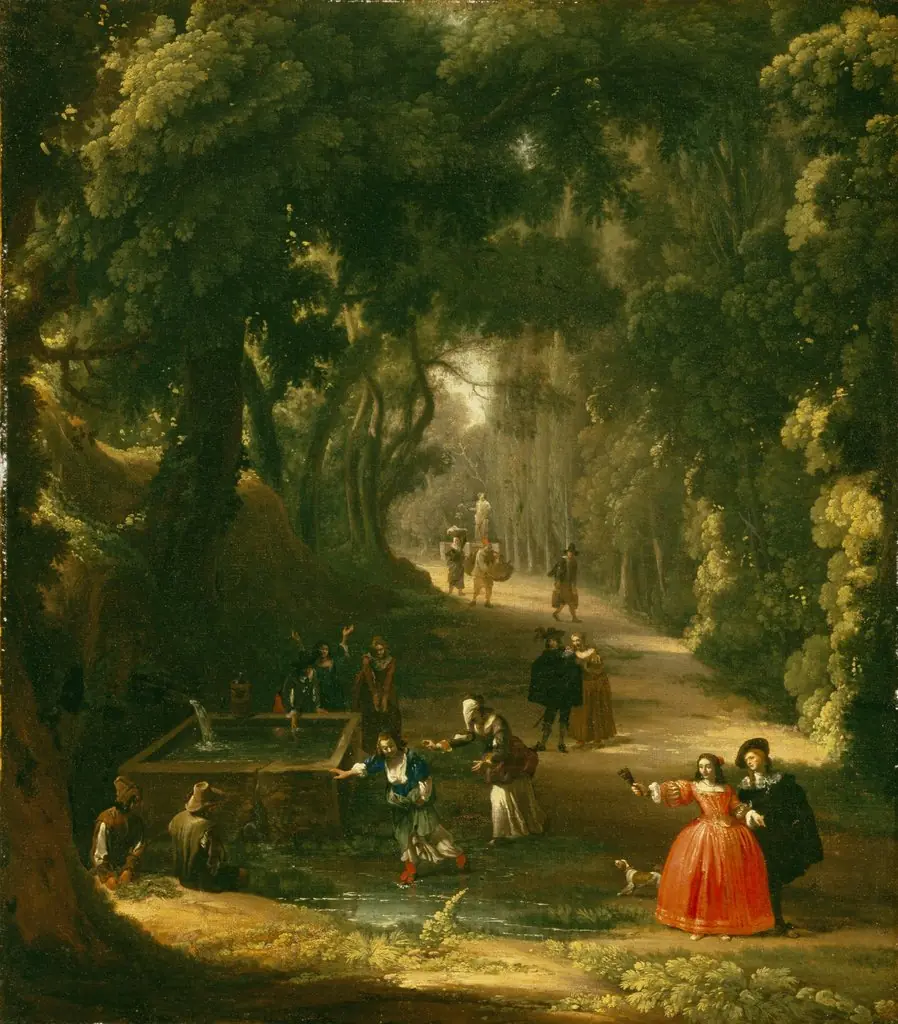 Blindman's Buff
 Music-Making Society in the Forest