Artwork
The Death of Caesar
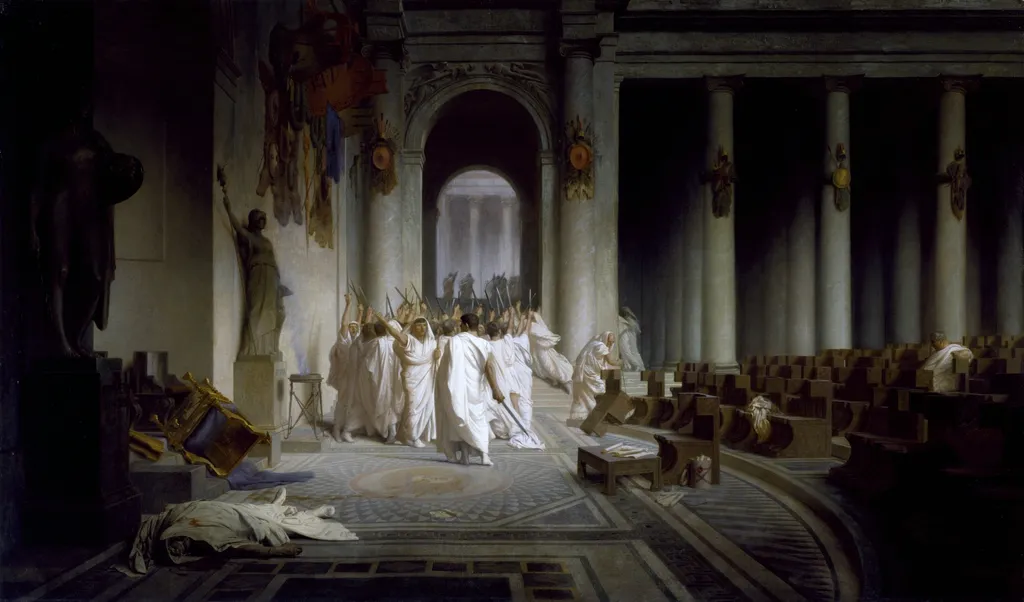
The Death of Caesar is an oil painting by the Academic Art artist Jean Léon Gérôme. It dates from 1859 and is held in the collection of the Walters Art Museum.
About this work
Subject & Meaning
Jean-Léon Gérôme's painting depicts the immediate aftermath of the assassination of Julius Caesar on the Ides of March, 44 BC, within the Curia of Pompey.
Jean-Léon Gérôme's painting depicts the immediate aftermath of the assassination of Julius Caesar on the Ides of March, 44 BC, within the Curia of Pompey. Rather than showing the violent act itself, the composition focuses on the jubilant conspirators walking away with raised swords, leaving Caesar's bloodied corpse lying at the feet of Pompey's statue. The scene emphasises the isolation of the dead dictator, surrounded by an empty senate house where only a single figure remains seated in contemplation of the coup d'état.
This choice to portray the consequences of violence rather than the event aligns with Gérôme's broader artistic approach to historical tragedy.
History & Provenance
Jean-Léon Gérôme first exhibited a version of The Death of Caesar at the Paris Salon of 1859. A larger completed canvas, shown at the Universal Exposition of 1867, passed through the collection of M. J. Allard before moving to John Taylor Johnston, whose estate sold the work at a New York auction in 1876. The painting later entered the collection of John Jacob Astor and was handled by the dealer Boussod, Valadon et Cie.
It was acquired at a New York sale on 5 April 1917 by the American philanthropist Henry Walters. Upon his death in 1931, Walters bequeathed the work to the Walters Art Museum in Baltimore, where it remains today.
Among the exhibitions documented by the Walters are "I, Claudius: Art in the Age of Julio-Claudians" (Walters Art Gallery, 1977–1978); "The Second Empire 1852–1870: Art in France under Napoleon III" (Grand Palais, Philadelphia Museum of Art, Detroit Institute of Arts, 1978–1979); "Triumph of French Painting: Masterpieces from Ingres to Matisse" (Baltimore Museum of Art, Royal Academy of Arts London, Albright-Knox Art Gallery, 2000–2002); and "The Spectacular Art of Jean-Léon Gérôme" (J. Paul Getty Museum, Musée d'Orsay, Museo Thyssen-Bornemisza, 2010–2011).
Context
Gérôme's depiction of the aftermath of violence, rather than the act itself, became a defining characteristic of his academic style, evident also in works like The Execution of Marshal Ney and The Duel After the Masquerade. Critics praised the work's smooth, polished technique, with one observer suggesting the scene resembled a photograph taken at the moment of the catastrophe. The painting's cultural resonance was immediate; in 1869, American illustrator Thomas Nast parodied the composition in Harper's Weekly to critique the impeachment of President Andrew Johnson.
Exhibited at the Brussels Salon in 1860, the work earned Gérôme the title of Knight of the Order of Leopold. The painting remains a key example of Second Empire art, featured in major retrospectives including the 2010–2011 exhibition at the J. Paul Getty Museum and the Musée d'Orsay.
Legacy
The painting established Gérôme's reputation early in his career; after its exhibition at the Brussels Salon in 1860, the artist was knighted into the Order of Leopold. Critics praised the work's hyper-realistic quality, with one observer noting that the smooth technique created an illusion so convincing it appeared to be photographed at the scene of the catastrophe. This approach of depicting the aftermath of violence rather than the act itself became a signature element of Gérôme's style, visible in later works such as The Execution of Marshal Ney.
The image entered popular culture quickly, serving as the basis for an 1869 political cartoon by Thomas Nast in Harper's Weekly, titled The Political Death of Bogus Caesar, which substituted President Andrew Johnson for the Roman dictator to comment on his impeachment proceedings. The work has maintained its prominence through inclusion in major retrospectives, including the comprehensive survey held at the J. Paul Getty Museum and the Musée d'Orsay between 2010 and 2011.
Overview
Jean-Léon Gérôme's 1867 oil painting, The Death of Caesar, captures the immediate aftermath of a pivotal historical event. The work depicts the scene following the assassination of Julius Caesar, with the conspirators departing the site of their act. This painting is a notable example of Gérôme's historical genre works and is housed in the collection of the Walters Art Museum in Baltimore, Maryland.
Technique & Style
Gérôme employed a refined, smooth painting technique to achieve a striking illusion of reality in The Death of Caesar. His meticulous attention to detail and polished surface finish aimed to immerse the viewer directly into the historical moment. This commitment to verisimilitude was so effective that contemporary observers noted the painting's photographic quality, suggesting it appeared as if captured directly from the scene itself.
Artist & collection

Artist
Jean-Léon Gérôme was a French painter and sculptor in the style now known as academicism.

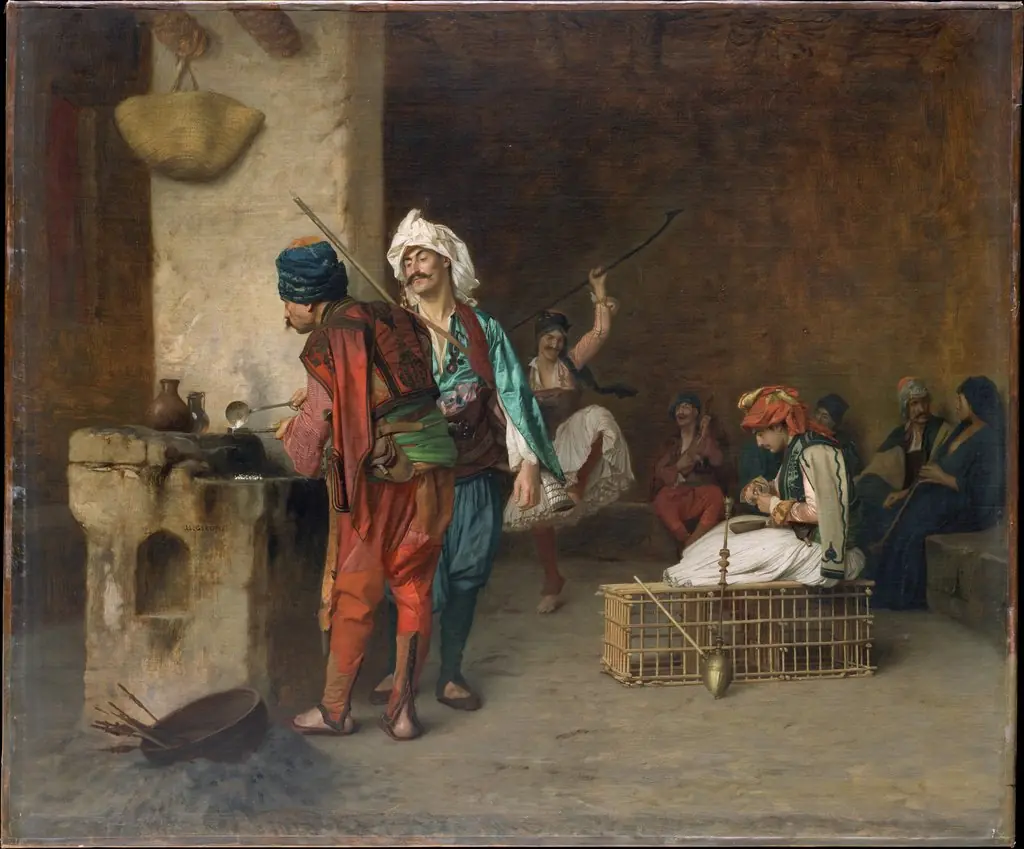
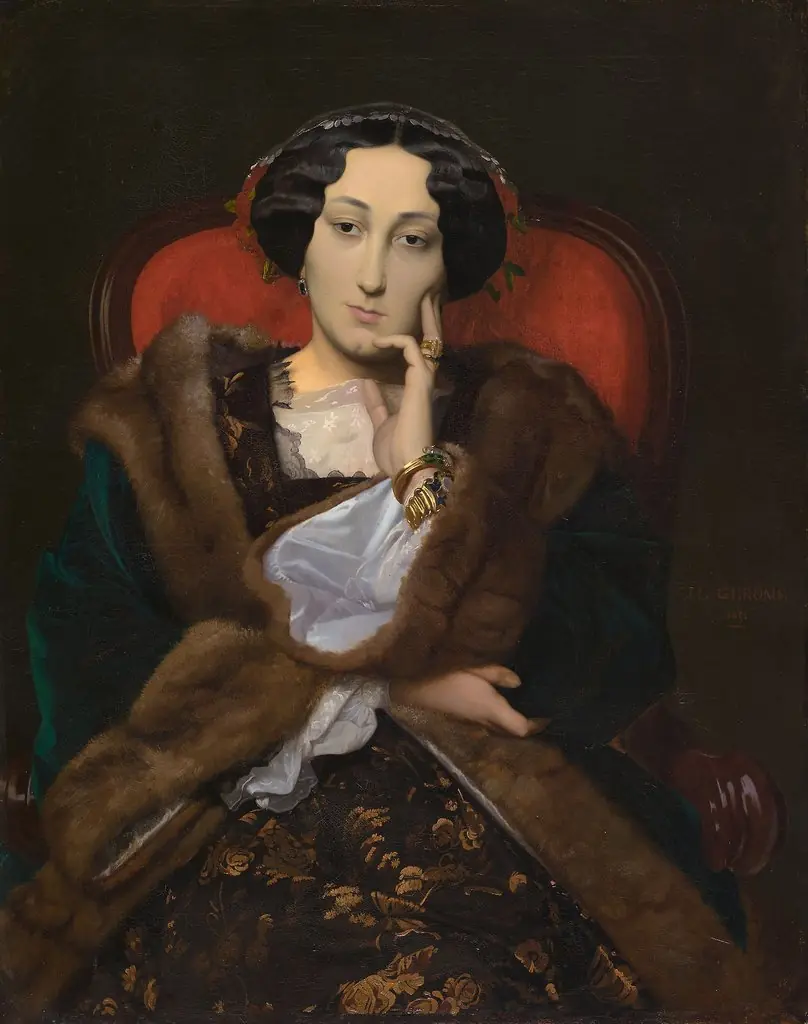
- The Death of Virginia
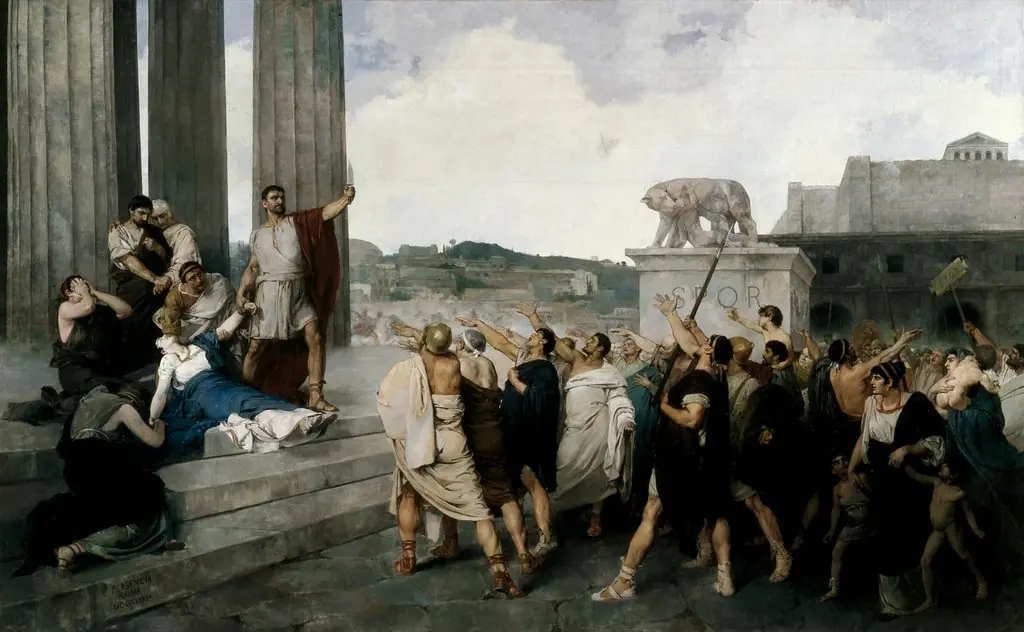 Origen de la República Romana (año 598 antes de la era cristiana)
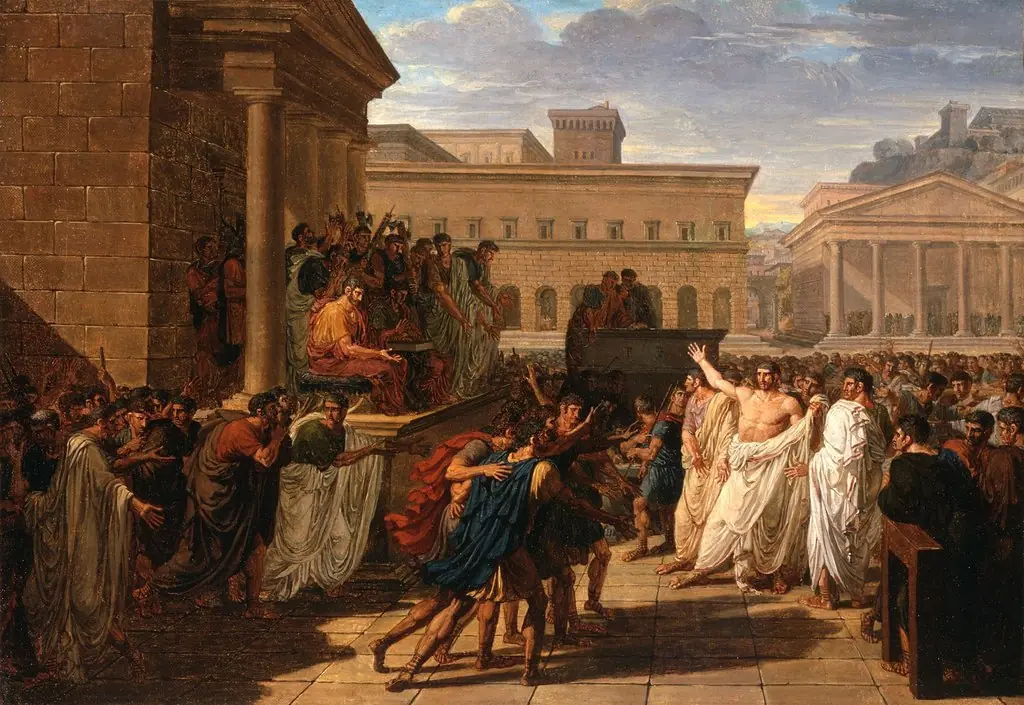 Brutus Listening to the Ambassadors from the Tarquins
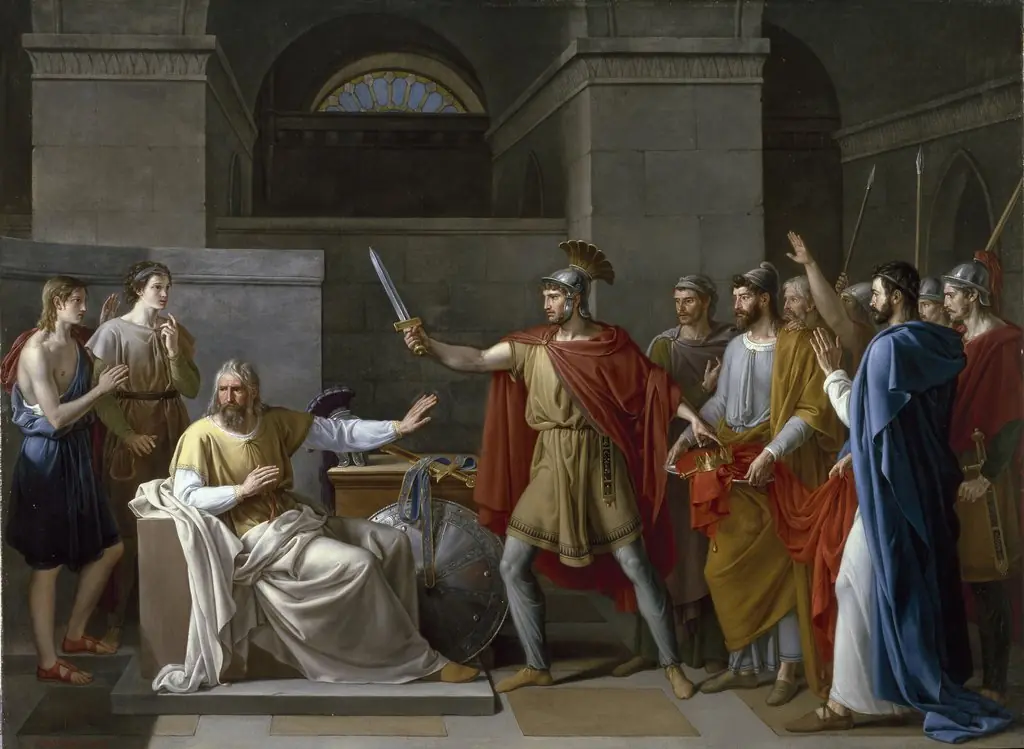 Wamba renouncing the Crown
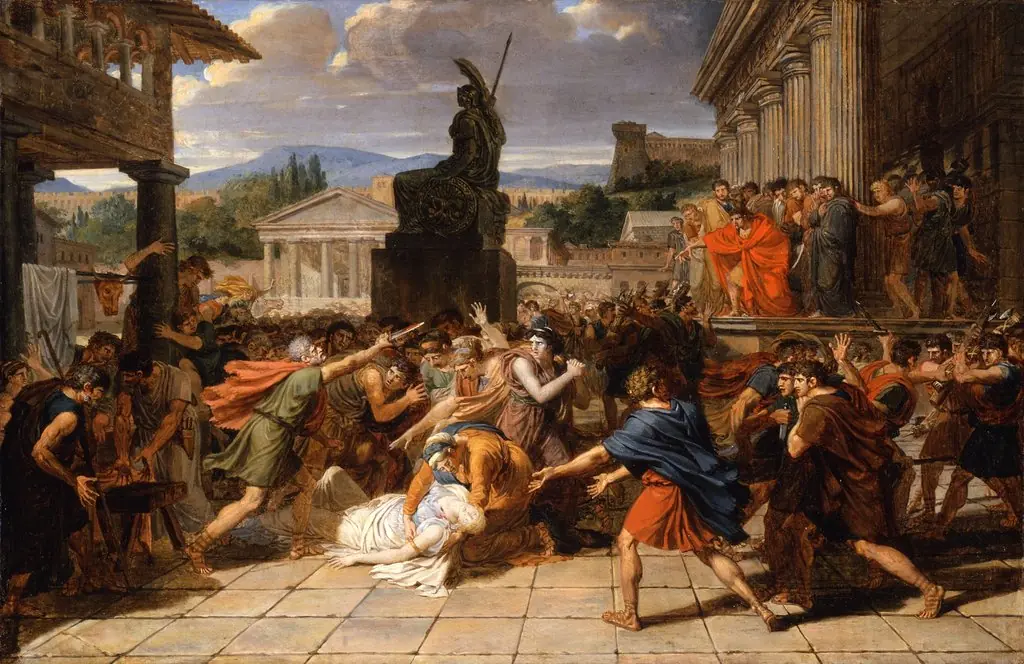
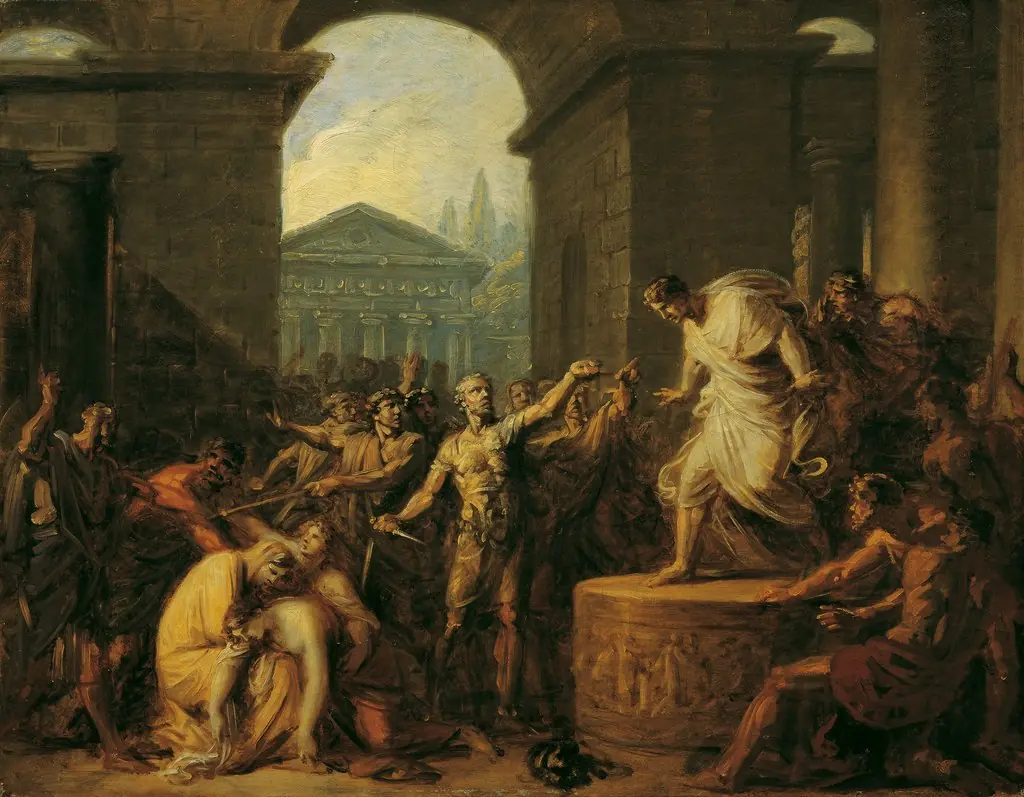 The Death of Virginia
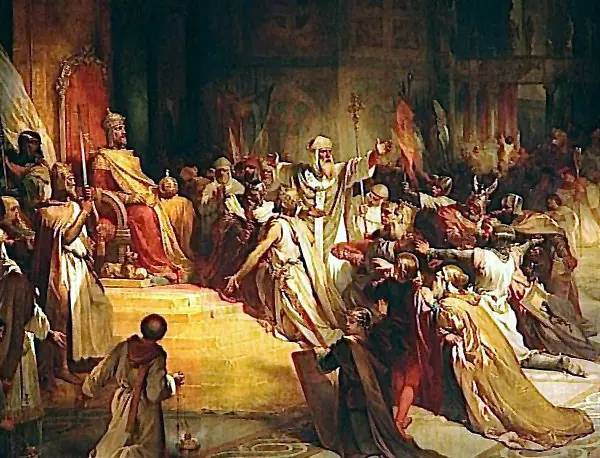 Baudouin couronné empereur de Constantinople, 16 mai 1204
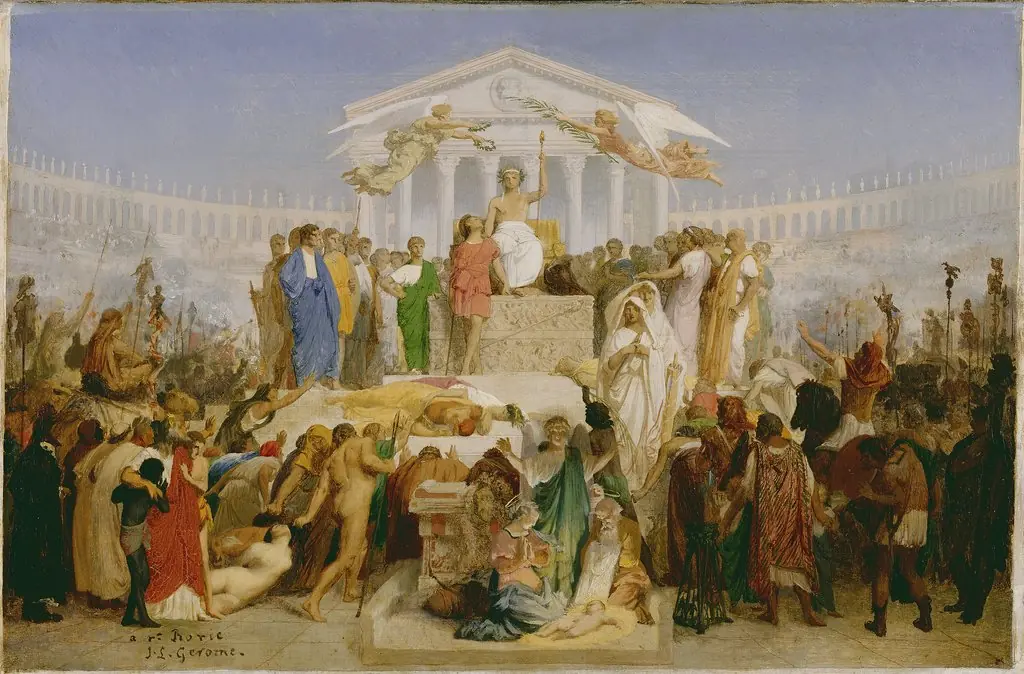 The Age of Augustus, the Birth of Christ
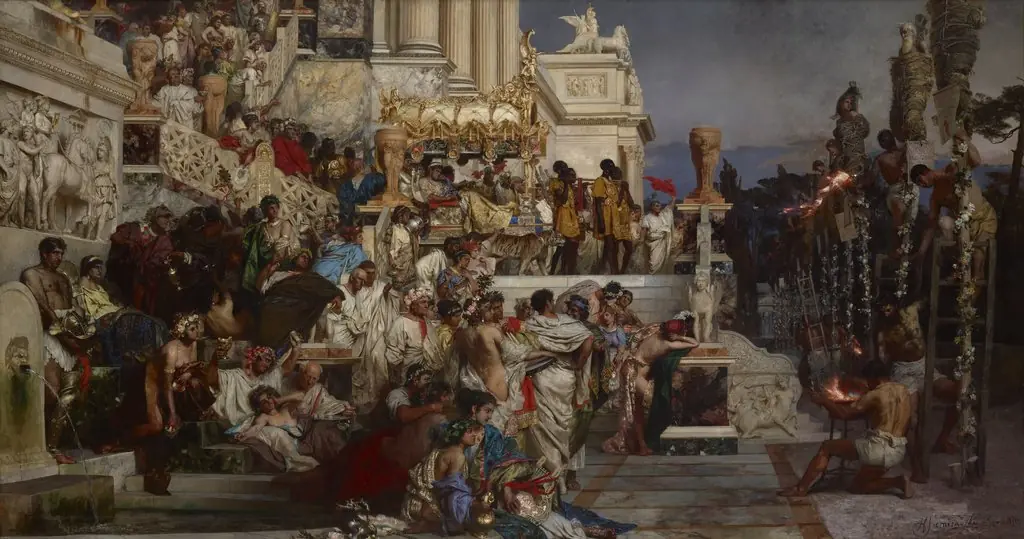 Nero's Torches
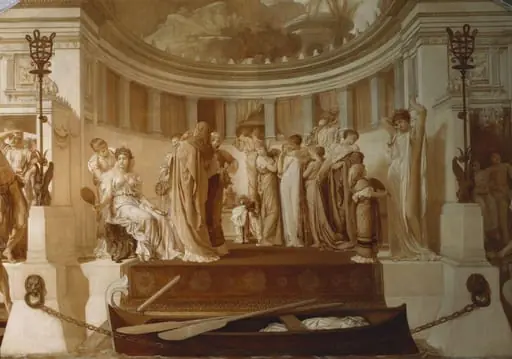 Half-size monochrome cartoon for the spirit fresco 'The Arts of Industry as Applied to Peace'
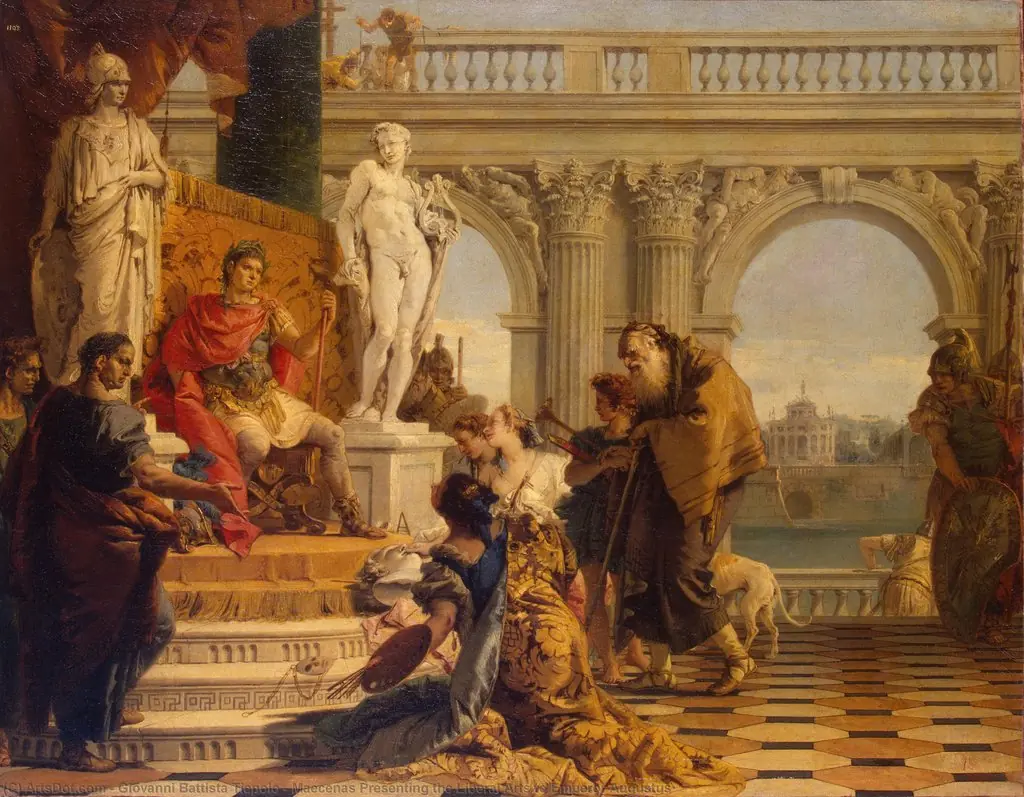 Maecenas Presenting the Liberal Arts to Emperor Augustus
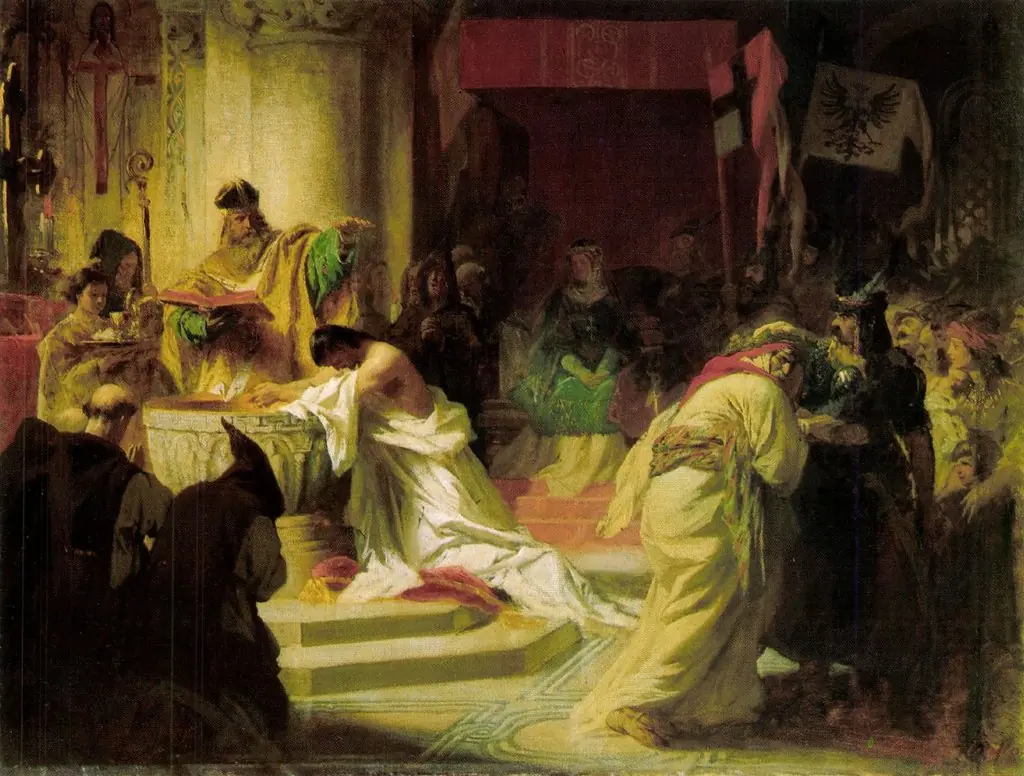 The Baptism of Vajk
 Metellus Raising the Siege