Artwork
A Eunuch's Dream
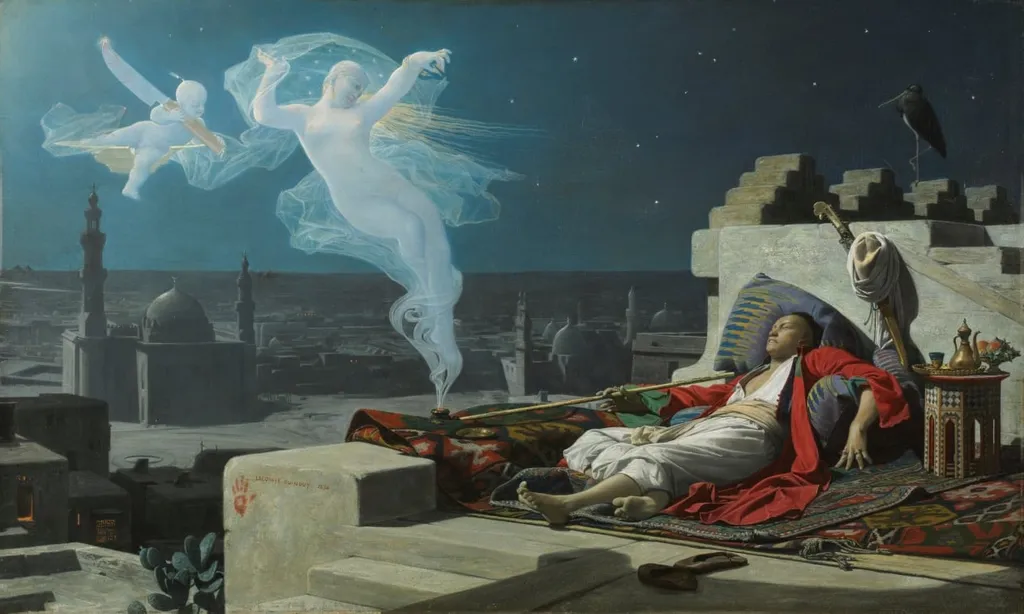
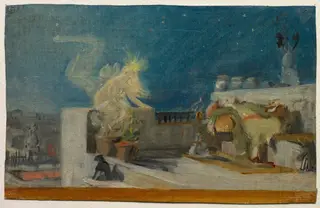
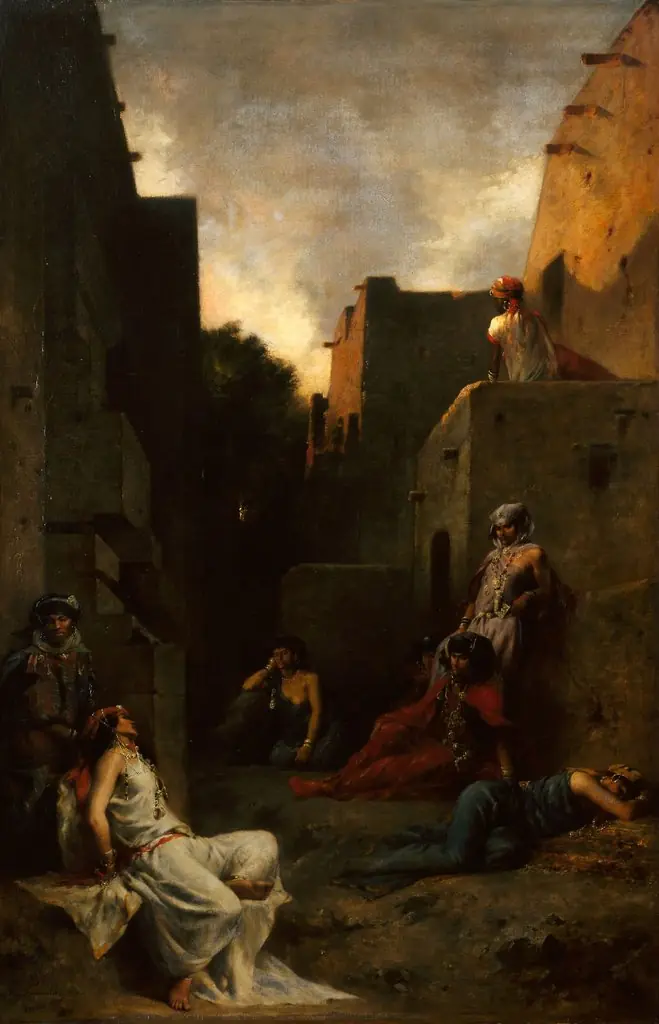
A Eunuch's Dream is an unspecified painting by the Impressionist artist Jean Lecomte du Nouÿ. It dates from 1874 and is held in the collection of the Cleveland Museum of Art.
- Accession no.
- 1991.173
- Credit line
- Seventy-fifth anniversary gift of Mrs. Noah L. Butkin
About this work
Overview
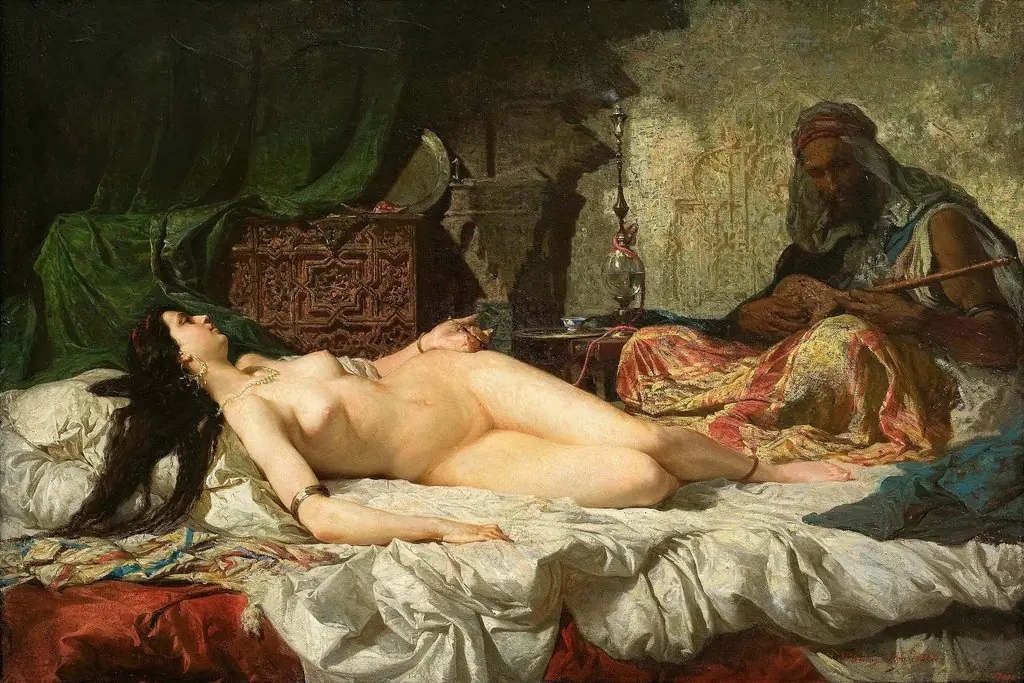
This painting illustrates a scene from Charles Montesquieu’s 1721 epistolary novel, Persian Letters, portraying a eunuch in a state of opium-induced reverie.
This painting illustrates a scene from Charles Montesquieu’s 1721 epistolary novel, Persian Letters, portraying a eunuch in a state of opium-induced reverie. He dreams of intimacy with a harem slave, yet the presence of a child holding a bloodied knife and a protective khamsa symbol underscores the impossibility and peril of his desire. The composition blends fantasy with ominous warning, rooted in 18th-century European interpretations of Eastern courts.
Subject & Meaning
The eunuch’s dream reflects a tragic yearning for bodily connection he is physically barred from achieving. The woman in his vision, serene yet distant, is accompanied by a child wielding a knife, suggesting violence as the inevitable consequence of transgressing social and anatomical boundaries. The khamsa, a talisman against misfortune, frames the scene as both a warning and a lament for unattainable longing.
Technique & Style
The artist employs chiaroscuro to isolate the dreaming figure in a pool of warm light, contrasting with the shadowed figures around him. Smoke from the opium pipe curls into the air, blurring the boundary between reality and illusion. The child’s knife glints sharply, drawing the eye to the scene’s underlying tension. Details are rendered with restrained precision, avoiding ornamental excess to emphasize psychological unease.
History & Provenance
The work emerged in the early 19th century, influenced by European fascination with Orientalist narratives following the publication of Persian Letters. It was likely created by a French or French-trained artist responding to literary and colonial interest in the imagined East. The khamsa’s inclusion suggests awareness of Islamic protective symbols, though its placement near the signature may reflect decorative convention rather than religious practice.
Context
In early 19th-century Europe, depictions of harems and eunuchs were popular tropes, often used to explore themes of desire, power, and repression. Montesquieu’s novel had framed these figures as both exotic and psychologically complex. This painting engages with that legacy, not as satire or ethnography, but as a quiet meditation on bodily limitation and the illusions of control.
Legacy
The painting contributes to a broader visual discourse on Orientalism, where Eastern settings became canvases for European anxieties about sexuality and identity. Its restrained symbolism, blood, smoke, talisman, avoids melodrama, instead inviting contemplation of unfulfilled longing. It remains a subtle artifact of how literature shaped visual culture’s treatment of power, desire, and the body.
Artist & collection

Artist
Jean-Jules-Antoine Lecomte du Nouÿ (10 June 1842 – 19 February 1923) was an Orientalist French painter and sculptor.