Artist
Jean Lecomte du Nouÿ

France
Jean Lecomte du Nouÿ is a France Academic Art artist. 3 works are cataloged here, principally at Cleveland Museum of Art.
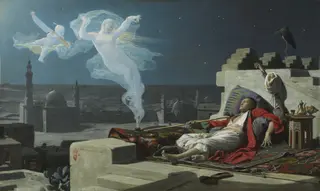
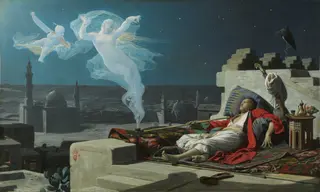
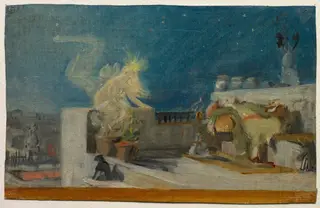
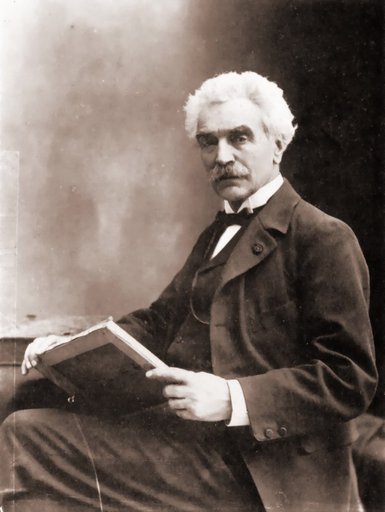
Jean-Jules-Antoine Lecomte du Nouÿ (10 June 1842 – 19 February 1923) was an Orientalist French painter and sculptor. He was strongly influenced by the works and teachings of Charles Gleyre and Jean-Léon Gérôme. Lecomte du Nouÿ found inspiration for his art through extensive travels to Greece, Turkey, Egypt, Romania and Italy. The thematic content of Lecomte du Nouÿ's work was mainly figural, but also spanned over a vast range of imagery throughout his career, including classical, historical and religious. Lecomte du Nouÿ is known for remaining faithful to his detailed, realistic style throughout the extent of his career, despite the onset of the Impressionist, Fauvist and Constructivist artistic movements during his lifetime. His work is said to have contributed significantly to the establishment of an iconic repertoire representing the Orient in the nineteenth century. A Parisian street was named after him in 1932.
Overview
Jean-Jules-Antoine Lecomte du Nouÿ (10 June 1842-19 February 1923) was a French painter and sculptor who became one of the leading figures of Orientalist academic art in the late nineteenth and early twentieth centuries. Working across history painting, genre scenes, religious subjects, and portraiture, he maintained a detailed, realistic style throughout his career even as Impressionism, Fauvism, and Constructivism transformed the art world around him. His extensive travels through Greece, Turkey, Egypt, Romania, and Italy provided the material for an iconic repertoire of Orientalist imagery that significantly shaped Western visual conceptions of the Middle East and North Africa.
Biography & dates
Born in Paris on 10 June 1842, Jean-Jules-Antoine Lecomte du Nouÿ came from a family of Piedmontese origin that had settled in France in the fourteenth century and attained noble status. His father Jules Louis Michel Lecomte was a musician, and his younger brother André Lecomte du Nouÿ (1844-1914) became an architect. Displaying artistic talent from an early age, he reportedly painted portraits of his father and uncle by age six. In 1861, at nineteen, he entered the atelier of Charles Gleyre, where he learned the foundations of individualistic style and creative visual presentation. He subsequently studied under Émile Signol and finally Jean-Léon Gérôme, from whom he absorbed the precision required for la belle nature, the Academic ideal of depicting nature in its most beautiful form. He debuted at the Paris Salon in 1863 with Francesca da Rimini et Paolo aux enfers, and exhibited there regularly for decades, becoming a member of the Société du salon des artistes français and receiving an honorable mention in 1901. In 1865 he made his first journey to the Orient with fellow painter Félix Auguste Clément, traveling to Cairo. Later voyages took him to Greece and Turkey in 1875, and subsequently to Egypt and Romania. He spent extended periods in Romania, where his brother was called to restore monuments in 1892, and painted portraits of the royal family including King Carol I and Queen Elisabeth (Carmen Silva). He returned to Paris before his death on 19 February 1923 at 80 boulevard Flandrin, and was buried at Montparnasse Cemetery. His personal life included three marriages: first in 1876 to Valentine Peigné-Crémieux, who died that same year at age 21 but whose influential Jewish family, including her grandfather Senator Adolphe Crémieux, remained connected to him; second to Caroline Évrard (1851-1892), with whom he had his only child, the future architect and archaeologist Jacques Théodore Jules Lecomte du Nouÿ (1885-1961); and third to Térésa Marie Fisanne (or Fizanne), born 1862 in Nantes, who survived him.
Style & movement
Lecomte du Nouÿ operated firmly within the academic tradition, adhering to the rule-based, well-developed skill and formal composition championed by the École des Beaux-Arts. His Orientalist works are characterized by subdued realism, precise draftsmanship, and meticulous attention to the human form, qualities reinforced by his training with Gleyre and Gérôme, principal representatives of the neogrec movement. He frequently employed half-light to lend dramatic and melancholic qualities to his compositions. While fundamentally conservative in his Catholic, traditionalist outlook, some scholars such as Alan Braddock have argued that his work was modern in its engagement with contemporary issues, directly and indirectly addressing colonialism, international trade, gender, religion, and history from a conservative perspective. His palette has been described as cool and somewhat muted, with fine characterization distinguishing his figures. Despite the revolutionary artistic movements of his lifetime, he never abandoned his detailed realistic approach, making him a steadfast representative of academic art against the tide of modernism.
Major works
Lecomte du Nouÿ's career was marked by significant institutional recognition and state acquisitions. His 1866 painting Invocation de Neptune (The Invocation of Neptune) earned an honorable medal at the Paris Salon; it is now at the Musée des beaux-arts in Lille. In 1872 he received the second Grand Prix de Rome for La Mort de Jocaste (The Death of Jocasta). The French government purchased Les Porteurs de mauvaises nouvelles (The Bearers of Bad News) in 1872 for the Luxembourg Museum, Le Charmeur (The Sorcerer) in 1873 for the Musée des beaux-arts in Reims, and Eros-Cupido in 1874 for the Musée des beaux-arts in Tours. In 1873, jointly with the Paris municipal council, the state commissioned two large compositions for the Église de la Sainte-Trinité in Paris: Saint Vincent de Paul ramène des galériens à la foi (1876) and Saint Vincent de Paul secourant les Alsaciens et les Lorrains après la guerre de 1637 (1879). Other notable works include Le Songe de l'eunuque (1874), now at the Cleveland Museum of Art, and L'Esclave blanche (The White Slave, 1888), one of his most reproduced paintings, held at the Musée d'Arts de Nantes. His 1863 debut work Francesca di Rimini et Paolo aux enfers is at the Musée Paul Valéry in Sète. In sculpture, he exhibited Le Fer qui donne du pain, a marble of a peasant sharpening his scythe, at the Salon of 1905; it is now at the mairie of Sermaize-les-Bains. His sculptural works also include Pour la liberté, dédié aux enfants de Paris (1900) at the Brussels Musée royal de l'Armée et de l'Histoire militaire, and Le Divin Chanteur, Orphée (1913) at the Versailles hôtel de ville.
Influences & students
Lecomte du Nouÿ's artistic formation was shaped by three principal teachers. Charles Gleyre (1806-1874) provided his initial training from 1861, instilling the importance of individualistic style and creative visual presentation. Émile Signol (1804-1892) was another early instructor. Most decisively, Jean-Léon Gérôme (1824-1904) perfected his understanding of academic precision and la belle nature. Gleyre and Gérôme together represented the leading exponents of the neogrec movement, to which Lecomte du Nouÿ adhered. His literary influences were equally significant: Dante's Divine Comedy inspired his 1863 debut; Aeschylus's Oresteia informed La Sentinelle grecque (1865); Sophocles's Ajax inspired La Folie d'Ajax (1868); and Théophile Gautier's Roman de la Momie directly inspired Les Porteurs de mauvaises nouvelles (1872), which in turn influenced Frank Frazetta's cover for the Conan the Destroyer album. Montesquieu's Lettres persanes inspired Rêve de Chosroës (1875). There is no record of his own pupils or teaching activity in the provided sources.
Legacy
During his lifetime, Lecomte du Nouÿ received numerous honors: the 1866 Salon honorable medal, the 1872 second Prix de Rome, and appointment as Chevalier de la Légion d'honneur in 1876. He was also named Commandeur de l'ordre royal de Roumanie. He participated in the Paris World Expositions of 1878 and 1889, exhibited in Cairo and Alexandria from 1892 to 1894, and showed at the Salon des artistes françaises in 1913. Posthumously, a street in Paris's 16th arrondissement, the rue Lecomte du Nouÿ, was named after him in 1932. His critical reputation has been mixed: Jules-Antoine Castagnary abhorred Les Porteurs de mauvaises nouvelles, while Jules Claretie noted it magnetized the crowd. Julien Green later cited the same painting as a source of troubling eroticism. The 2004 exhibition "From Homer to the Harem: The Art of Jean Lecomte du Nouÿ" at the Dahesh Museum of Art in New York, curated by Roger Diederen with accompanying catalogue raisonné, represented a significant reassessment, presenting approximately 100 paintings, studies, and drawings and cementing his place as a major, if conservative, figure in nineteenth-century Orientalist visual culture.
Works by Jean Lecomte du Nouÿ
Collections represented

Artists in a similar vein