Artwork
The Odalisque
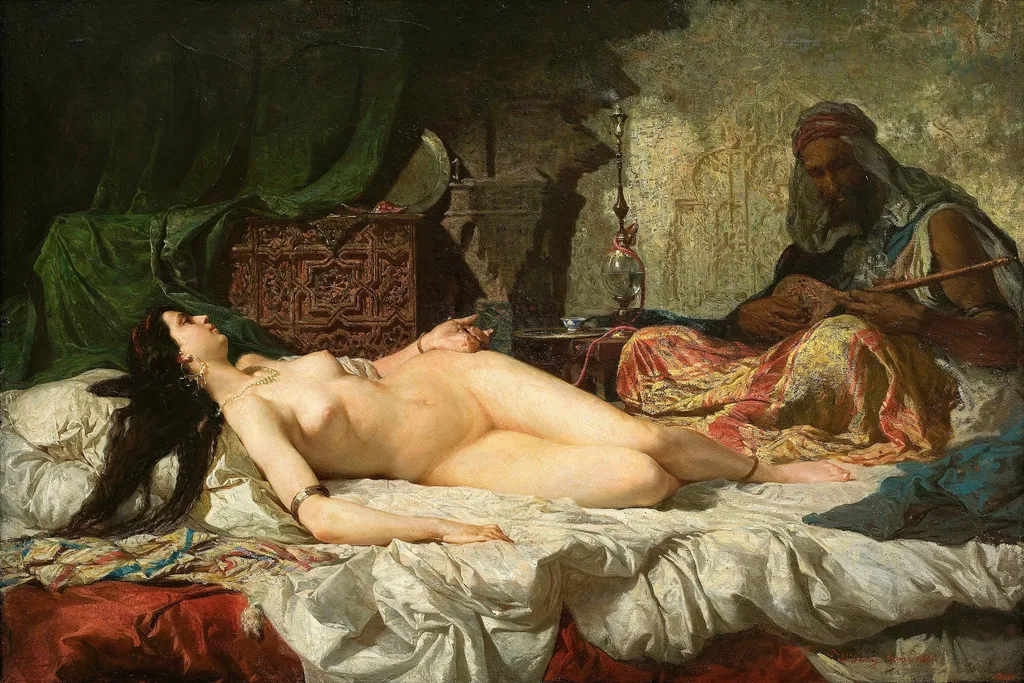
The Odalisque is an oil painting by the Orientalist artist Mariano Fortuny Marsal. It dates from 1861 and is held in the collection of the Museu Nacional d'Art de Catalunya.
About this work
The Odalisque is a painting by Mariano Fortuny Marsal. It's an oil painting made in 1861.
This painting is part of the collection at the Museu Nacional d'Art de Catalunya in Barcelona. The fact that it's held in a national museum suggests it's a significant work.
You can learn more about the artist who created this work, Mariano Fortuny Marsal.
Subject & Meaning
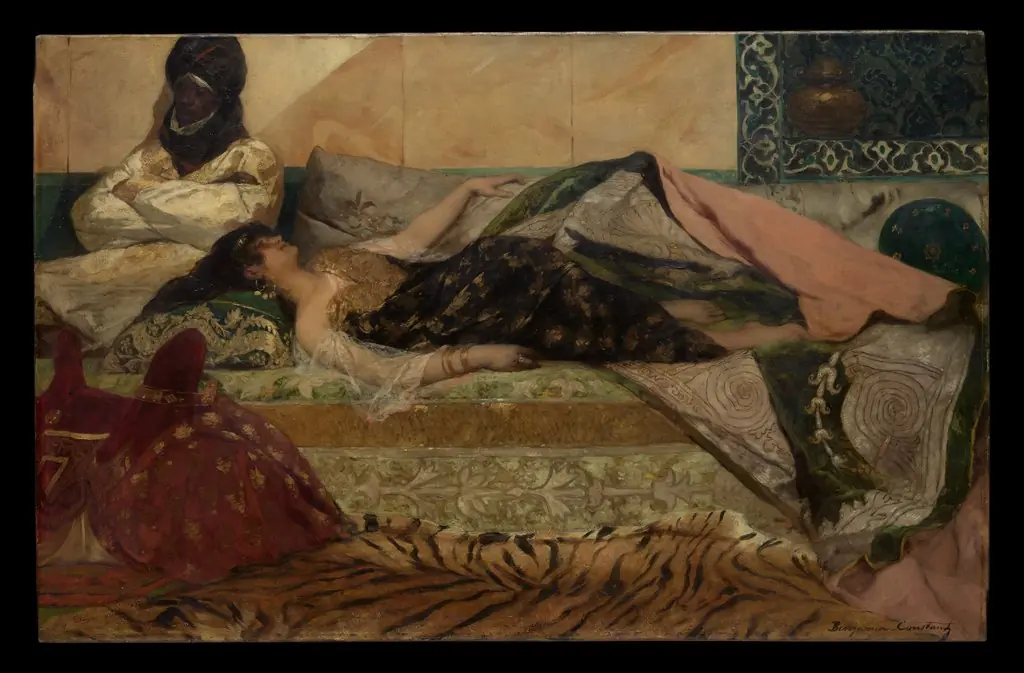
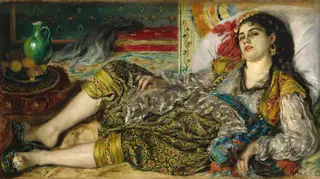
The painting depicts a nude odalisque, or concubine, reclining on a white sheet with long dark hair, embodying the sensual focus of the composition through dramatic lighting. In the shadowed background, a clothed male figure, likely a eunuch, sits cross-legged playing a stringed instrument resembling a lute or baglama near a hookah and tea cup. These props, combined with the subject matter, firmly place the work within the Orientalist movement, reflecting the artist's fascination with North African culture following his 1860 visit to Morocco.
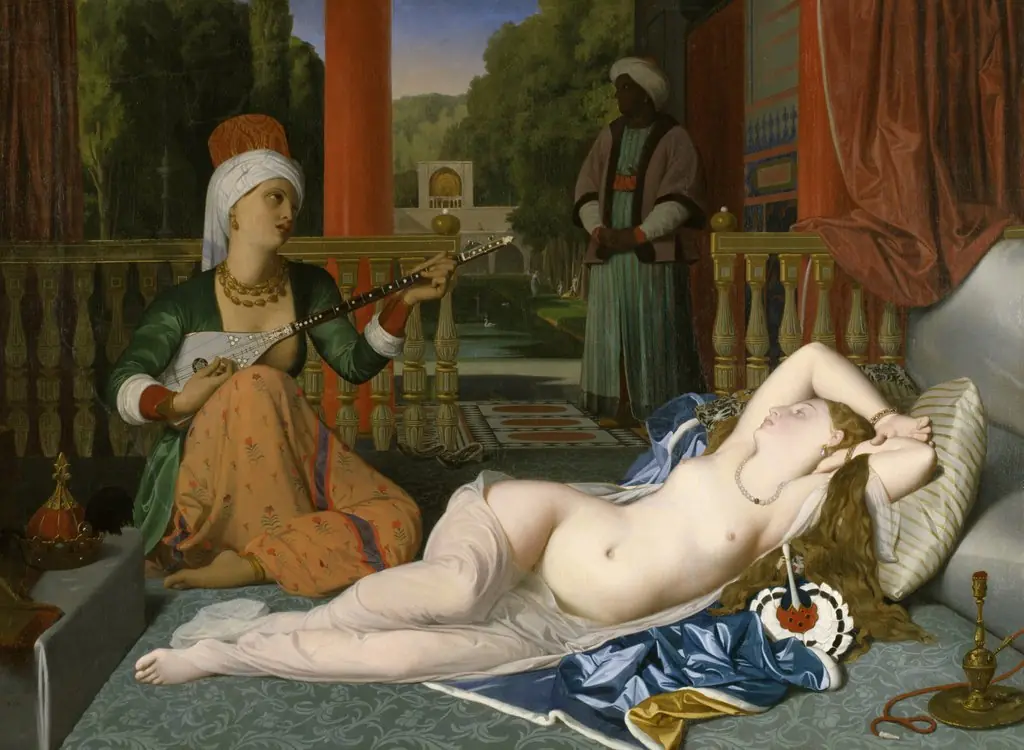
The iconography draws direct inspiration from Jean-Auguste-Dominique Ingres's "Grande Odalisque," utilizing the harem setting to explore themes of exoticism and slavery. The contrast between the illuminated female form and the dimly lit male attendant emphasizes the odalisque's status as an object of desire within an imagined Eastern domestic sphere.
Technique & Style
The Odalisque is an oil painting executed by Mariano Fortuny in Rome in 1861, on a cardboard support measuring 56.
The Odalisque is an oil painting executed by Mariano Fortuny in Rome in 1861, on a cardboard support measuring 56.9 cm in height by 81 cm in width. The composition is organized around a strongly lit nude woman in the foreground, whose luminous flesh tones are set against a white sheet, while a male figure in the background is rendered in shadow, creating a pronounced chiaroscuro contrast that heightens the sensuality of the central figure.
Stylistically, the work belongs to the Orientalist movement and incorporates recognizable Eastern motifs such as a hookah, a tea cup, and a lute-like baglama played by the background figure. The reclining pose and compositional structure show clear formal affinities with Ingres's Grande Odalisque of 1814, and the handling also reflects the influence of Eduardo Rosales's Sleeping Woman of 1859, both painted in Rome.
History & Provenance
The Odalisque was painted by Mariano Fortuny Marsal in Rome in 1861. It was produced as part of the artist's pension scholarship obligations, which required him to send paintings to the Provincial Deputation of Barcelona; The Odalisque was the first work dispatched, arriving on 14 February 1862 with a letter from the artist. Although not originally listed among the mandated subjects, the canvas was sent and later entered the collection of the Museu Nacional d'Art de Catalunya (MNAC) in Barcelona, where it remains on permanent display. The painting is an oil on cardboard measuring 56.9 × 81 cm.
Context
The Odalisque (1861) is an oil on cardboard work by Mariano Fortuny Marsal, categorized as a nude within the Orientalist genre. The painting shows a reclining nude odalisque before a Turkish man holding a baglama, surrounded by a hookah, bed sheet, and other oriental accessories. Executed in Rome during Fortuny's pensionado stay, it was dispatched to Barcelona's provincial board in February 1862 as the first oil composition he submitted, despite the board's original thematic requirements.
Contemporary scholarship, including Doñate et al.'s 2004 monograph, interprets the piece as a dialogue with Ingres's Grande Odalisque and Rosales's Woman Asleep, marking its significance in Fortuny's Orientalist output and in 19th-century Spanish art.
Overview
Mariàno Fortuny's 1861 oil painting, The Odalisque, presents a scene featuring a reclining odalisque and a male figure. This work is a notable example of the Spanish artist's output from the mid-19th century. Executed with oil paints, the piece is currently housed within the collection of the Museu Nacional d'Art de Catalunya in Barcelona, where it represents a significant part of the institution's holdings.
Own this work as a print
Artist & collection
Artist
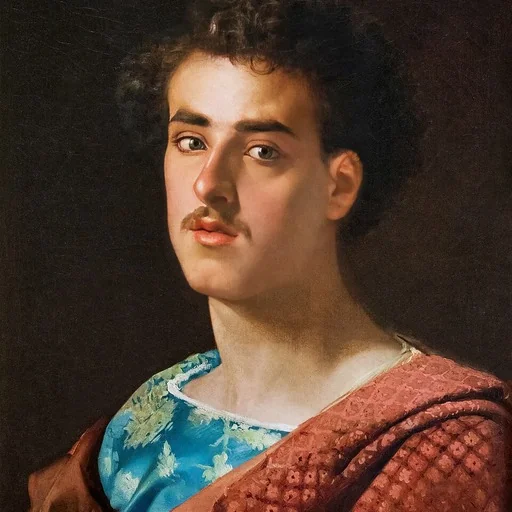
Mariano Fortuny y Marsal (Catalan: Marià Fortuny i Marsal, pronounced; June 11, 1838 – November 21, 1874) was a Spanish painter known for works focusing on Romantic fascination with Orientalist themes, historicist genre…