Artwork
Portrait of Olga Zherebtsova
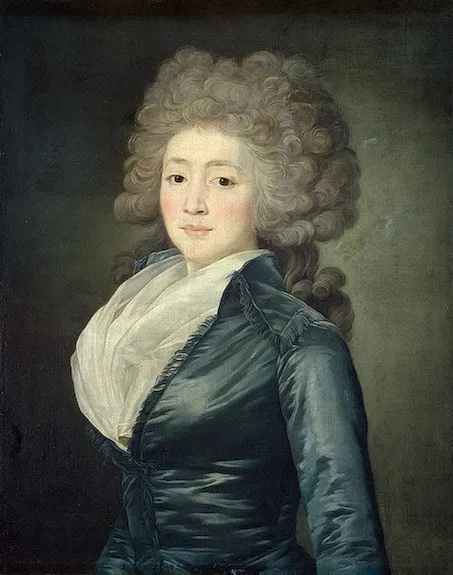
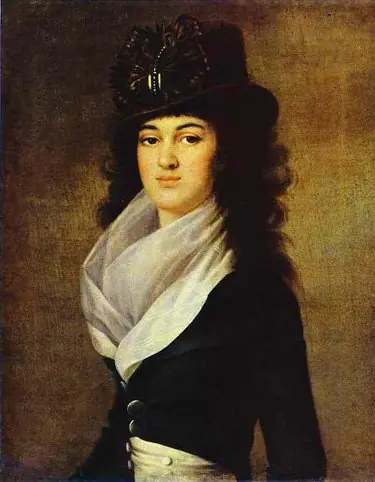
Portrait of Olga Zherebtsova is an oil painting by the Rococo painting artist Jean-Louis Voille. It dates from 1793 and is held in the collection of the Hermitage Museum.
About this work
Overview
The painting is held in the collection of the Hermitage Museum in Saint Petersburg, where it is accessioned as work number 37954.
The Portrait of Olga Zherebtsova is an oil on canvas painting by the French artist Jean-Louis Voille, dated 1785. Measuring 73.5 by 58 centimetres, the work depicts a Russian aristocrat and socialite at the height of her influence, rendered in the refined manner of late eighteenth-century French portraiture. The painting is held in the collection of the Hermitage Museum in Saint Petersburg, where it is accessioned as work number 37954. As a document of both artistic technique and political biography, the portrait occupies a significant place among Voille's surviving works and serves as a rare visual record of a woman who moved at the centre of Russian and European court intrigue.
Subject & Meaning
The sitter, Olga Alexandrovna Zherebtsova (1766-1849), was born into the powerful Zubov family and became known variously as Madame Gerebtzoff following her marriage. She was the sister of Prince Platon Zubov and Counts Nikolay and Valerian Zubov, favourites and political allies of Catherine the Great. After Catherine's death in 1796, her brothers fell from favour and conspired with Count Pahlen against Paul I; the conspirators reportedly met at Zherebtsova's house to plan the assassination. She subsequently followed her lover, Charles Whitworth, 1st Earl Whitworth, to England, where she was rumoured to have become mistress to the Prince Regent and to have borne a natural son, George Nord. In her later years she returned to Russia and became patron to the writer Alexander Herzen, who recalled her with admiration in his memoirs. Voille portrays her without jewellery or attributes, the simplicity of the image belying the complexity of her political life. The absence of emblematic objects focuses attention on her direct gaze and powdered coiffure, markers of aristocratic status and self-possession.
Technique & Style
The painting is executed in oil on canvas, a standard support for French portraiture of the period. The figure is presented half-length, turned three-quarters toward the viewer against a dark, muted background that lightens subtly toward the right. Light falls from the upper left, illuminating the white fabric wrapped around her neck and shoulders and creating soft highlights on the dark blue satin jacket, while the right side of the figure recedes into shadow. The brushwork is smooth and controlled, with particular attention paid to the sheen of the satin and the texture of the abundant, powdered curls. The face is rendered with smooth, pale skin and pink cheeks, the dark eyes meeting the viewer directly. This restrained palette and polished finish are characteristic of Voille's manner, which combines the formal conventions of court portraiture with a subtle naturalism in the handling of fabrics and flesh tones.
History & Provenance
The portrait was painted in France in 1785, during the period when Voille was active as a portraitist to European aristocracy. The work entered the collection of the Hermitage Museum, where it remains today. It has been exhibited and reproduced in scholarly contexts, including a listing with the museum's work ID 37954. The painting has also appeared on the art market, with a reference to Sotheby's Old Master Paintings sale in 2004 indicating its circulation in commercial channels prior to or concurrent with its museum holding. The Wikimedia Commons file history records its digital documentation from Hermitage Museum sources in February 2010.
Context
Jean-Louis Voille (1744, after 1803) was a French portrait painter who worked extensively for the Russian court and European nobility during the final decades of the eighteenth century. His portraits of Russian aristocrats form a significant body of work documenting the elite of Catherine's reign and its aftermath. The dating of the Zherebtsova portrait to 1785 places it early in the sequence of Voille's Russian commissions, before the political upheavals that would follow Catherine's death. The Wikimedia Commons file for this work notes a broader dating range of circa 1780-1790 based on clothing and hairstyle, though the corpus source specifies 1785; the earlier date would situate the portrait before Zherebtsova's full involvement in political conspiracy, preserving her image as a young aristocrat rather than an active intriguer. Scholarship on Voille remains limited, and the portrait has received less critical attention than his more famous commissions, yet it stands as a significant example of French artistic influence on Russian visual culture.
Legacy
The portrait's afterlife is inseparable from the notoriety of its subject. As Zherebtsova's biography became coloured by allegations of conspiracy, extortion, and royal intrigue, the painting acquired value as a rare visual document of a figure who occupied the margins of major political events. Herzen's admiring portrait in My Past and Thoughts lent her a posthumous respectability that contrasts with contemporary rumours. The painting's presence in the Hermitage ensures its accessibility to scholars of Russian history and French painting, while its reproduction through Bridgeman Images and Wikimedia Commons has extended its reach to wider audiences. The work exemplifies how a seemingly conventional aristocratic portrait can sustain historical interest through the biography of its sitter, transforming a private commission into a public document of eighteenth-century European political culture.
Artist & collection

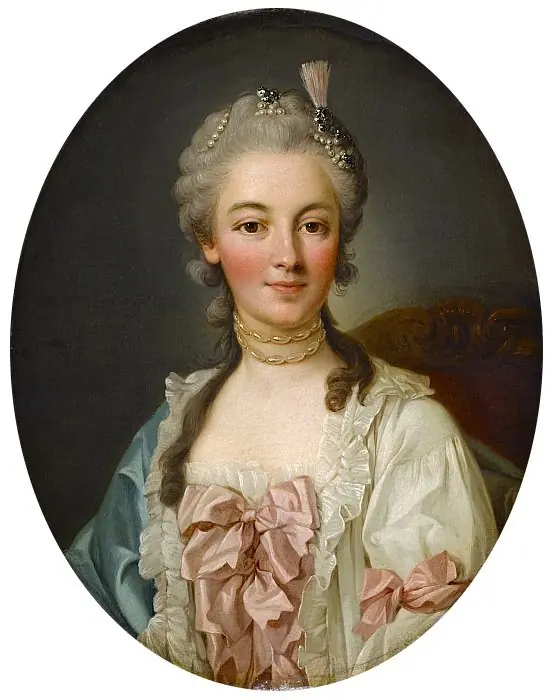 Countess Teresa Kinska Poniatowska
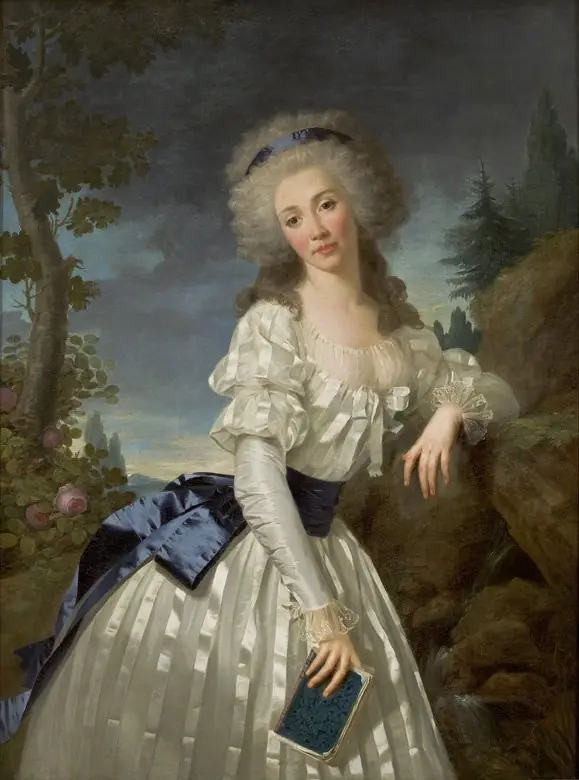 Retrato de uma dama com livro junto a uma fonte
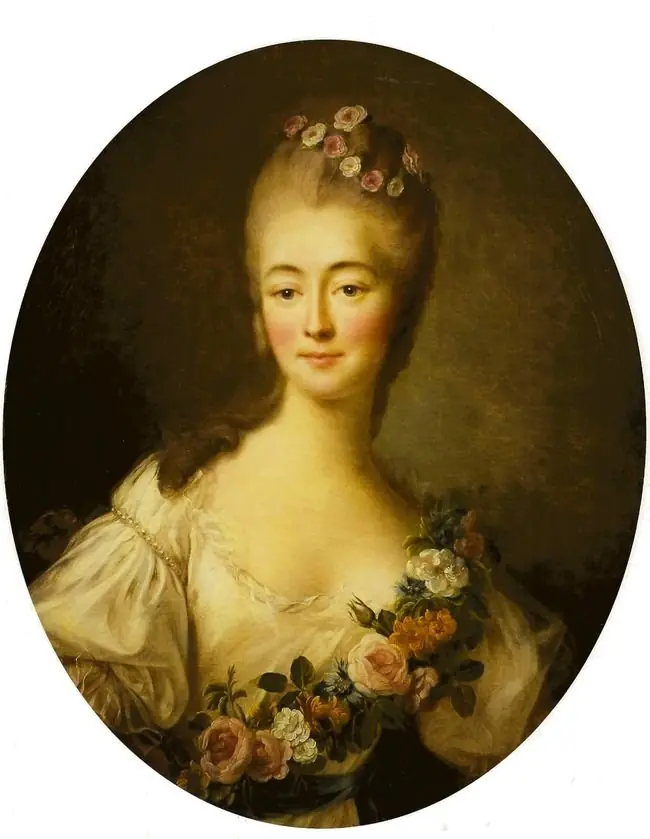 Portrait of the Countess Du Barry as Flora
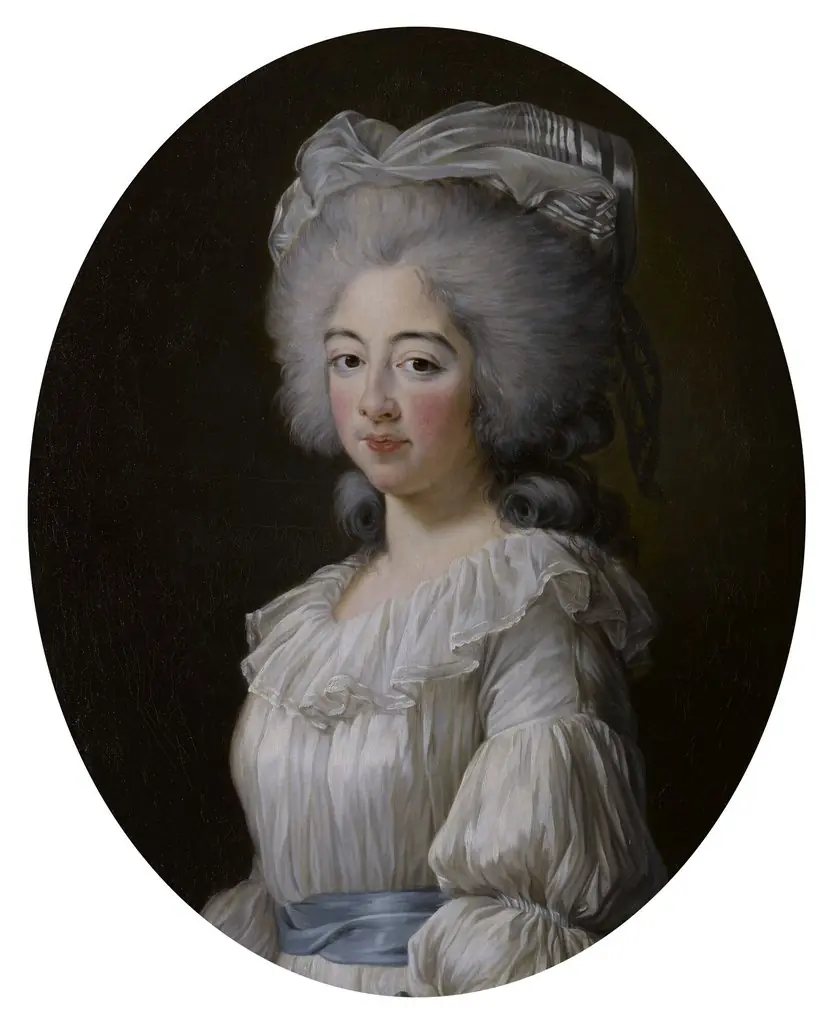 Portrait of Marie Joséphine of Savoy (1753-1810), Countess of Provence
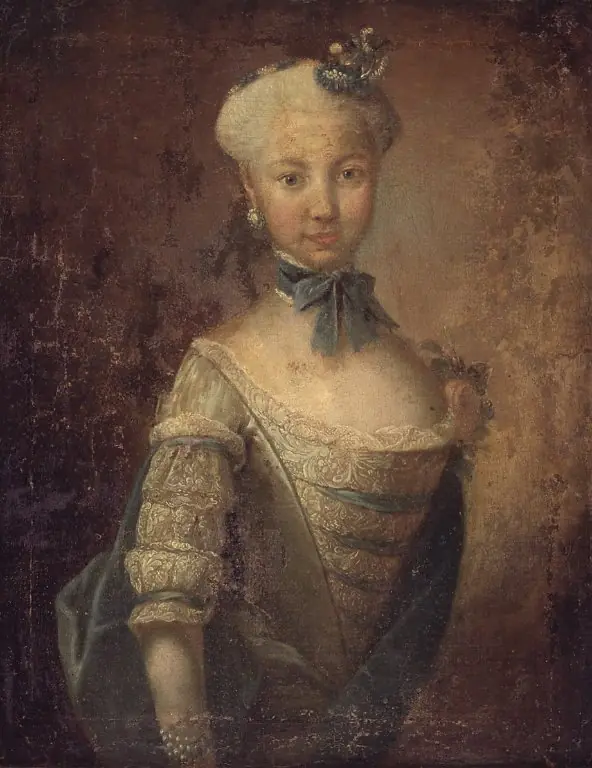 Portræt af en lille pige
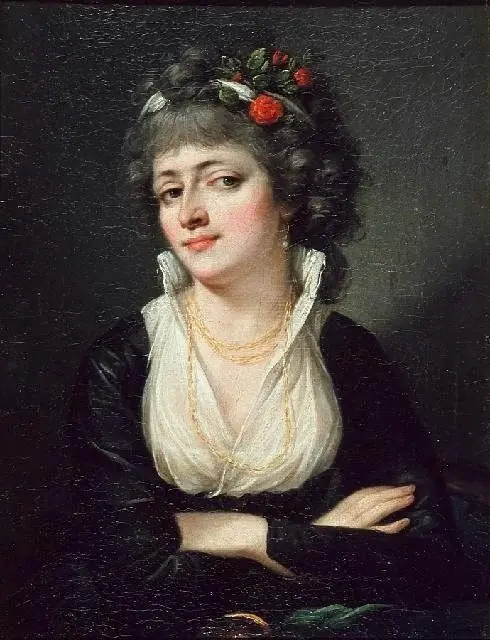 Portrait of Julia Potocka (1766-1794)
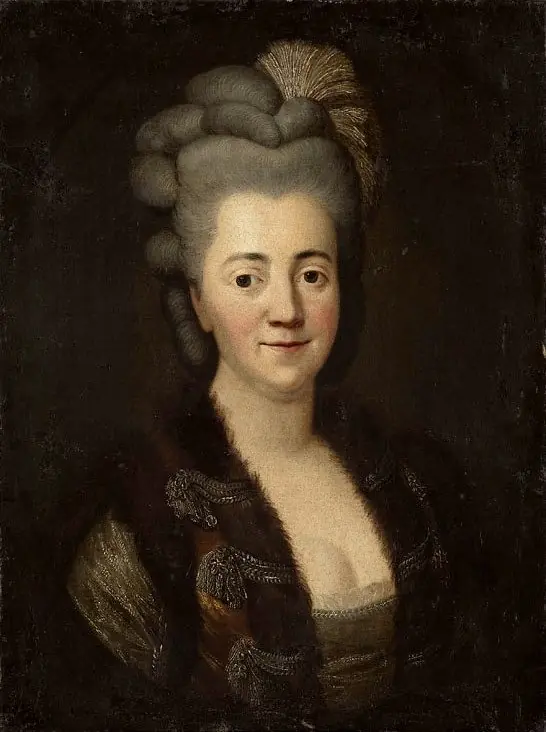 Portrait of a lady
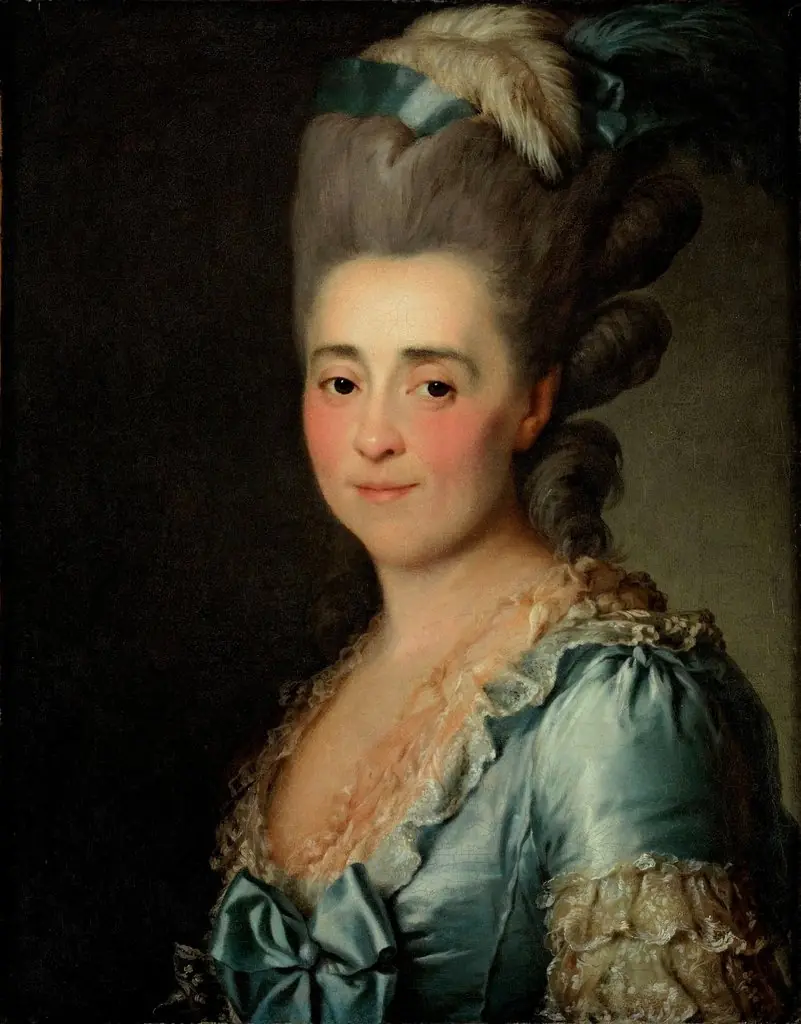 Portrait of Natalia Saltikova (1742-1782)
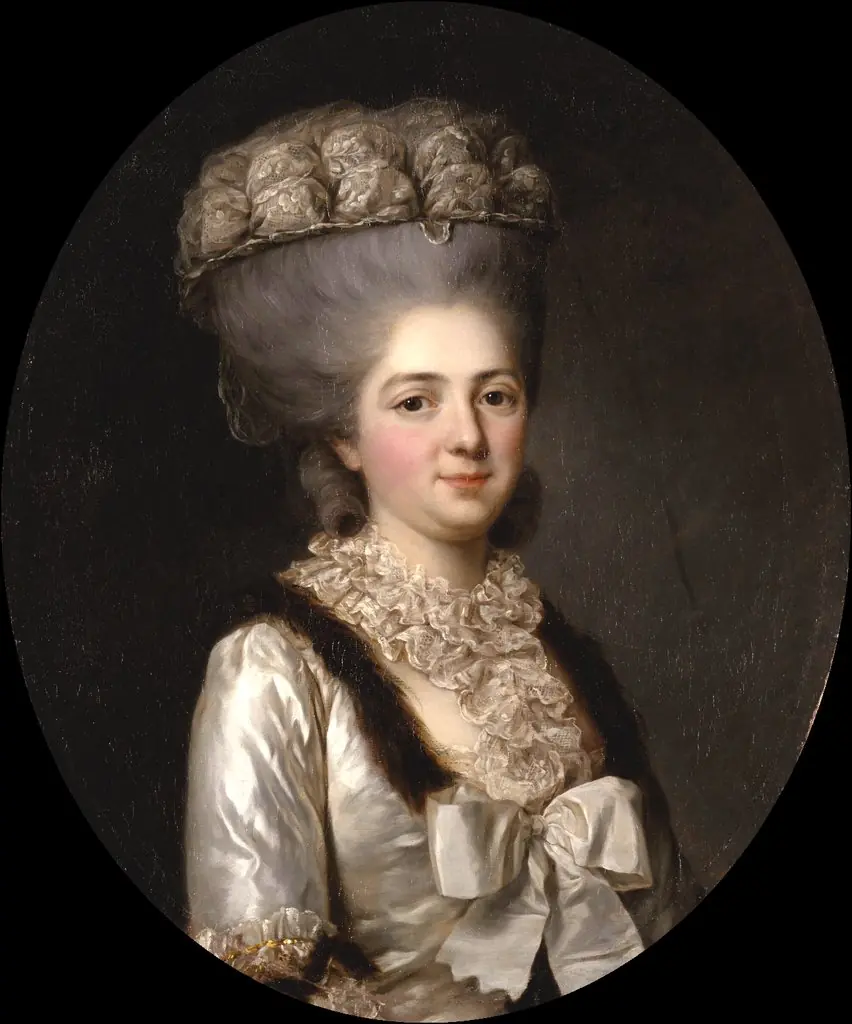 Marie-Louise-Thérèse-Victoire de France, dite Madame Victoire (1733-1799)
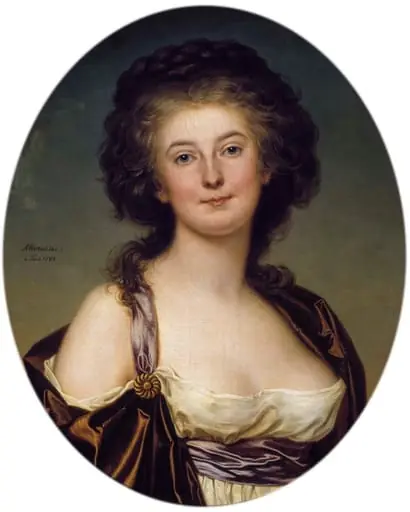 Laulajatar ja näyttelijätär Beata Charlotta Eckerman
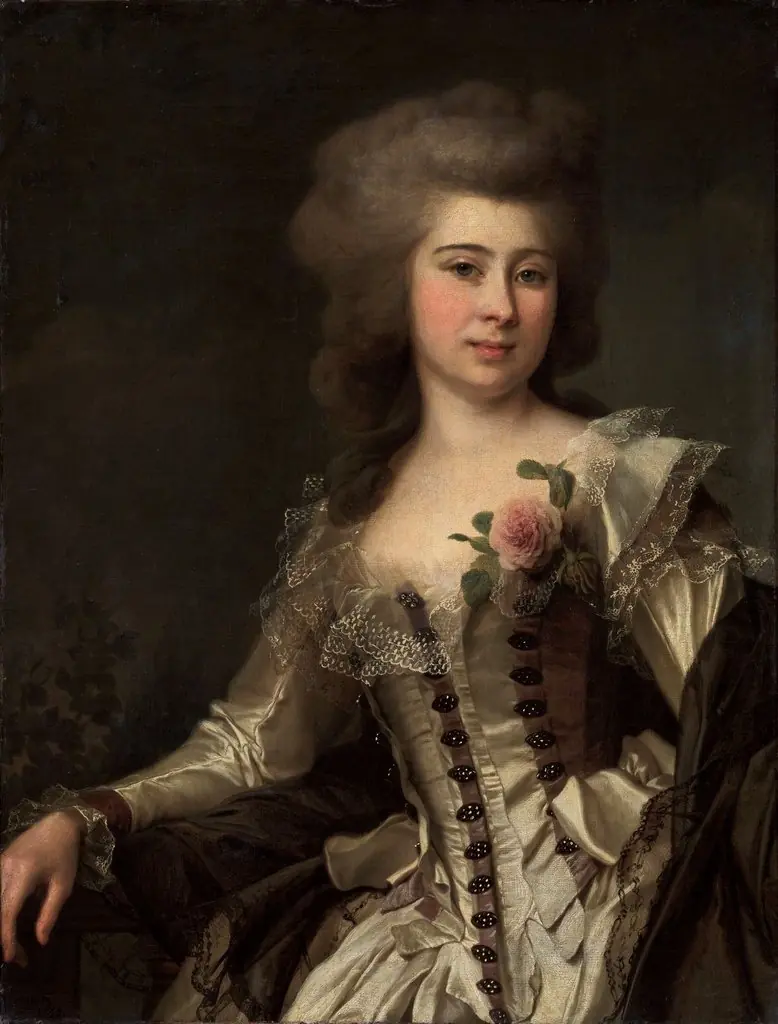 Portrait of an Unknown Woman with a Rose
- Portrait of Elżbieta Sieniawska.